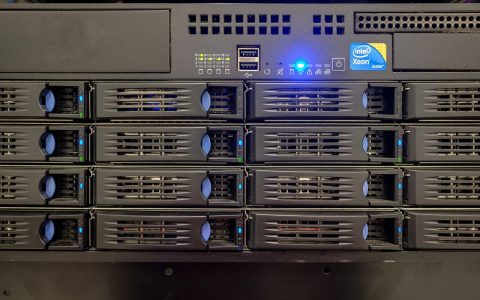
When converting long-form manuscripts, legal briefs, technical documentation, or unpublished creative works into spoken audio, sending your text to cloud-based voice platforms introduces significant confidentiality risks. Modern cloud synthesis services rely on remote API endpoints where prompts are logged, cached, and sometimes reviewed for model training. For security-conscious professionals and independent creators operating under strict confidentiality standards, relying on external servers is simply unviable. Implementing a dedicated local open source AI text to speech privacy US pipeline provides an air-gapped, zero-telemetry solution that processes sensitive documents entirely on local hardware without sacrificing natural voice cadence or expressiveness.
Running neural text-to-speech (TTS) engines locally guarantees complete sovereign ownership of your text and generated audio tracks. However, transitioning from convenience-oriented commercial APIs to self-hosted software requires navigating a complex technical landscape. Open-source speech synthesis tools vary dramatically in hardware requirements, Real-Time Factor (RTF) performance, phonetic accuracy, and prosody control. Lightweight models can generate audio on modest laptop CPUs in seconds, while multi-billion parameter neural architectures demand dedicated graphics processing power to deliver lifelike emotional tone. This guide provides an exhaustive analysis of the leading offline TTS engines, detailing how to evaluate, install, and optimize a local pipeline for private long-form audiobook generation.
Why Offline Speech Synthesis Matters for Document Privacy
Commercial text-to-speech services operate on a centralized software-as-a-service model. When you paste text into a web application or submit payloads to a cloud API, your data traverses public networks and lands on vendor storage infrastructure. Even when providers outline explicit privacy policies, remote data handling inevitably exposes your content to specific security vulnerabilities:
- Data Retention and Server Logging: Standard API architectures frequently log inbound request payloads for diagnostic troubleshooting, error monitoring, and performance telemetry. These logs may persist on cloud servers for 30 to 90 days.
- Model Training Usage: Unregistered or free-tier cloud platforms often reserve the right to aggregate user submission text to fine-tune future foundation models, effectively converting your proprietary prose into training data.
- Man-in-the-Middle and Vendor Breaches: Data transmitted over external connections, even when encrypted in transit, remains vulnerable to third-party compromise if service provider infrastructure experiences a security incident.
- Voice Biometric Tracking: When using cloud-based zero-shot voice cloning features, reference sample audio containing your voice is uploaded to vendor clusters, raising long-term biometrics and identity privacy concerns.
By shifting to an air-gapped local deployment, all computation occurs directly within system memory (RAM) and local graphics memory (VRAM). No network packets leave your network card during synthesis. This isolated environment provides absolute privacy, zero bandwidth dependence, and unrestricted document processing volume without recurring subscription fees or artificial daily rate limits.
Key Technical Metrics for Evaluating Local Speech Models
To construct an efficient self-hosted voice pipeline, you must evaluate open-source speech models across several practical engineering metrics. Choosing the wrong engine can lead to severe processing bottlenecks on extended manuscripts or poor audio playback quality that induces listener fatigue.
1. Real-Time Factor (RTF)
Real-Time Factor measures computational throughput by comparing the time required to render an audio clip against the actual playback duration of that clip. The mathematical formula is:
RTF = Processing Time (seconds) / Audio Playback Duration (seconds)
An RTF of 1.0 means that a 10-minute book chapter takes exactly 10 minutes to render. An RTF of 0.10 means the same 10-minute chapter processes in just 1 minute. Lower RTF numbers reflect greater speed. For long-form audiobooks containing 80,000 to 120,000 words (which equal roughly 8 to 12 hours of total audio), choosing a model with a low RTF on your specific hardware is critical to avoid multi-day render times.
2. Naturalness and Mean Opinion Score (MOS)
MOS is an industry standard metric ranging from 1.0 (unintelligible, heavily robotic) to 5.0 (indistinguishable from a human speaker). Commercial cloud voices usually rate between 4.2 and 4.5. Top-tier open-source engines now achieve 4.0 to 4.4 MOS scores locally. Evaluating naturalness involves listening for proper prosody (sentence-level pitch rhythm), appropriate breath insertions, clean vocal tract resonance, and natural cadence around complex punctuation marks like em-dashes and parentheses.
3. Hardware Resource Footprint
Neural voice engines rely on varying compute paradigms. Traditional parametric or lightweight acoustic models run inside CPU runtimes like ONNX, drawing minimal power and using less than 1GB of system RAM. Modern auto-regressive or diffusion-based models require thousands of parallel tensor cores found on modern NVIDIA GPUs (CUDA framework) or Apple Silicon Unified Memory architectures, demanding between 6GB and 16GB of dedicated video memory.
In-Depth Comparison of Top Local TTS Engines
The open-source AI audio ecosystem features several mature frameworks, each tailored for specific computational environments and user priorities. Below is a comparative breakdown of the primary local speech engines available for offline execution.
| Engine / Model | Primary Architecture | Min. Hardware Requirements | Average RTF (Mid GPU/CPU) | MOS Rating Target | Best Application |
|---|---|---|---|---|---|
| Piper TTS | VITS / ONNX Runtime | Low (Modern x86 CPU / Raspberry Pi) | < 0.05 (Blazing fast) | 3.8 – 4.1 | Rapid document scanning & low-spec PCs |
| StyleTTS2 | Style Diffusion / Discriminators | Medium (NVIDIA 6GB VRAM) | 0.10 – 0.25 | 4.3 – 4.5 | Retail-quality fiction audiobooks |
| Coqui XTTS v2 | GPT Auto-regressive + HiFi-GAN | Medium-High (NVIDIA 8GB VRAM) | 0.20 – 0.40 | 4.2 – 4.4 | Zero-shot voice cloning & character reads |
| Bark (Suno) | Transformer Audio Language Model | High (NVIDIA 12GB+ VRAM) | 0.80 – 1.50 (Slower) | 4.0 – 4.3 | Short dramatic dialogue snippets |
1. Piper TTS: The Lightweight Efficiency Standard
Piper is an exceptionally fast, self-contained open-source text-to-speech engine optimized for local execution via the ONNX runtime framework. It utilizes the VITS (Variational Inference with adversarial learning for end-to-end Text-to-Speech) architecture, allowing it to synthesize highly intelligible speech directly from phoneme representations without requiring intermediate acoustic feature conversion.
- Privacy Architecture: Operates as a completely air-gapped single binary or Python package. Emits no network traffic and requires no background daemon servers.
- Audio Expressiveness: Clean, clear, and highly intelligible. While it lacks deep emotional variance or dynamic whisper/sigh capabilities, its speech cadence is crisp and easy to follow over multi-hour listening sessions.
- Resource Utilization: Incredibly lightweight. Runs easily on low-power consumer CPUs, taking up less than 500MB of RAM without requiring a dedicated graphics card.
- Audiobook Suitability: Ideal for non-fiction literature, technical reference manuals, academic research papers, and quick iterative audio proofreading.
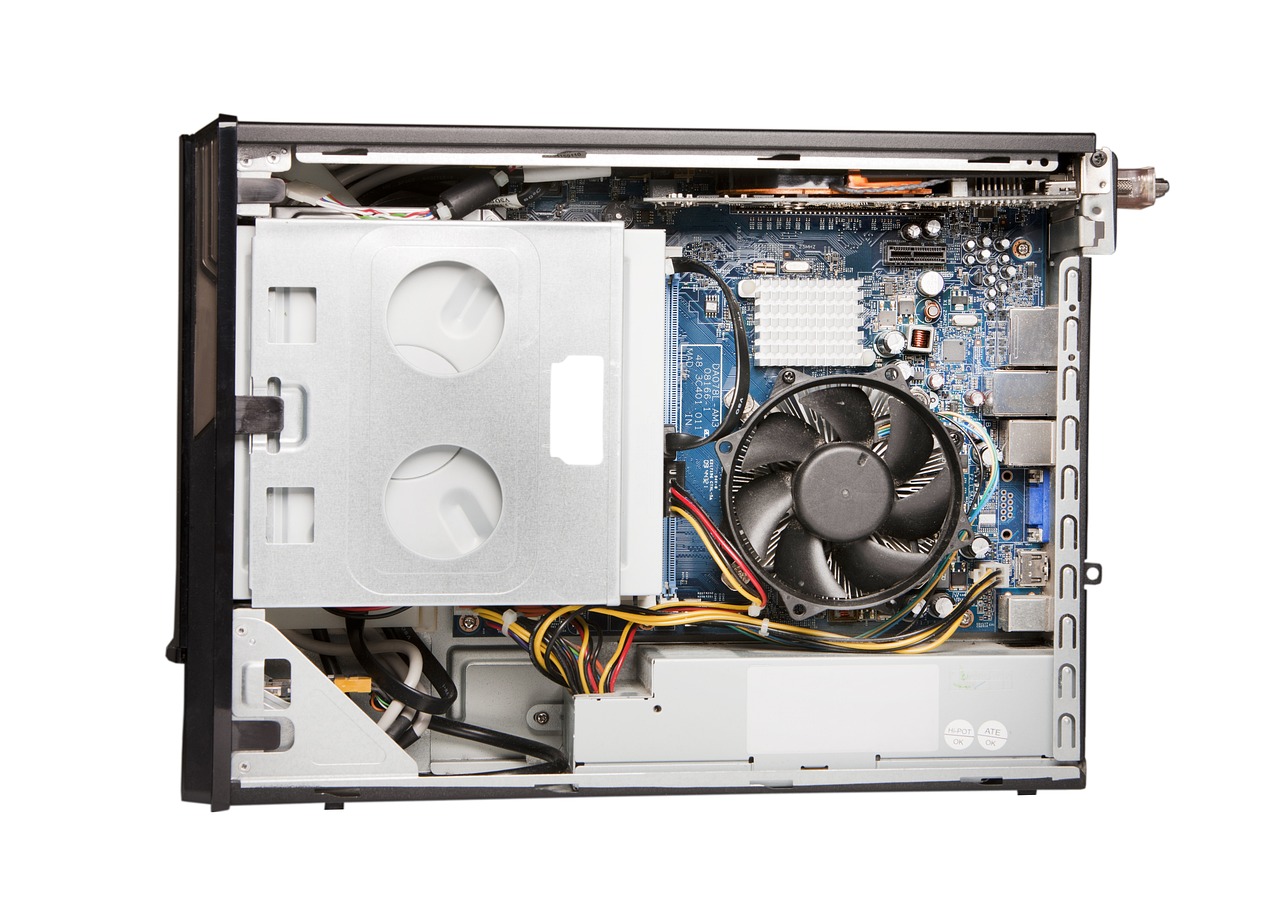
2. StyleTTS2: State-of-the-Art Prosody and Human Expressiveness
StyleTTS2 represents a significant leap forward in local voice naturalness. It models speech variability using style diffusion alongside non-autoregressive parallel generation. By mapping target sentences onto a continuous style space, StyleTTS2 naturally varies pitch, sentence rhythm, and vocal stress across paragraphs, avoiding the robotic cadence common in budget TTS tools.
- Privacy Architecture: Built on Python, PyTorch, and CUDA. Executes completely within local VRAM environments with zero external dependency calls.
- Audio Expressiveness: Exceptional naturalness. Handles complex literary prose, subtle sarcasm, exclamations, and natural pauses with human-like accuracy.
- Resource Utilization: Requires a modern dedicated GPU with at least 6GB to 8GB of VRAM or Apple Silicon with unified memory for optimal generation speed.
- Audiobook Suitability: The gold standard for self-hosted novel reading, narrative fiction, and commercial-grade audio publishing.
3. Coqui XTTS v2: Flexible Multilingual Voice Cloning
Coqui XTTS v2 is an advanced multi-language voice synthesis model engineered for zero-shot voice cloning. By analyzing a brief 3 to 10-second reference WAV file of a clean speaker sample, XTTS v2 extracts speaker embeddings locally and matches pitch timbre, regional accent, and room acoustics without requiring time-consuming fine-tuning cycles.
- Privacy Architecture: Self-hosted codebase. Speaker audio reference samples and voice clone vectors remain stored on local encrypted disks.
- Audio Expressiveness: Rich, deep, and highly convincing vocal replication. Capable of maintaining speaker identity across massive text files while supporting cross-lingual synthesis across 16+ languages.
- Resource Utilization: Demands moderate to high VRAM (minimum 8GB recommended). Runs efficiently on mid-tier NVIDIA RTX series GPUs or modern M-series Mac hardware.
- Audiobook Suitability: Excellent for multi-narrator audiobooks, custom character dialogue tracks, or authors who want to synthesize their own books using a brief sample of their own voice.
4. Bark by Suno: Generative Audio Transformer
Bark uses a transformer-based autoregressive architecture that treats audio synthesis like a language model task, generating semantic audio tokens from text prompts. Beyond standard vocal reading, Bark can generate ambient non-verbal sounds such as laughter, throat clearing, hesitation pauses, and background soundscapes.
- Privacy Architecture: Fully open model weights available for offline deployment via PyTorch and Hugging Face local model transformers.
- Audio Expressiveness: Highly realistic and human-sounding, but can suffer from stochastic instability, hallucinated vocal noises, or dropped words over long continuous paragraphs.
- Resource Utilization: Resource intensive. Consumes 8GB to 16GB of VRAM and features high RTF values, making full-length book rendering computationally expensive.
- Audiobook Suitability: Best reserved for short audio clips, dramatic character interludes, or sound effect integration rather than continuous long-form chapter narration.

Hardware Sizing and System Requirements for US Setups
Configuring a local voice generation environment requires selecting open-source frameworks that align with your desktop or workstation hardware. Below is a breakdown of optimized system tiers for local TTS processing in the US market.
Tier 1: Standard Consumer CPU (Laptops, Thin Clients, Budget Workstations)
If your system lacks a discrete NVIDIA graphics card and relies on integrated Intel HD or AMD Radeon graphics, prioritize lightweight CPU-bound inference engines.
- Primary Framework: Piper TTS (compiled with ONNX runtime CPU execution provider).
- System Memory: 8GB to 16GB DDR4/DDR5 System RAM.
- Target Throughput: RTF < 0.08. Renders a standard 10,000-word chapter in under 4 minutes on an Intel Core i7 or AMD Ryzen 7 processor.
Tier 2: Mid-Range Workstation (NVIDIA RTX 3060/4060, Apple Silicon M1/M2/M3)
Mid-tier systems featuring discrete CUDA capabilities or unified memory architectures unlock neural multi-pass models without excessive render latency.
- Primary Frameworks: StyleTTS2, Quantized Coqui XTTS v2 (FP16/INT8 execution).
- Hardware Allocation: 8GB to 12GB VRAM or 16GB Unified Memory.
- Target Throughput: RTF ~0.15 – 0.25. Full 80,000-word book generation completed in 1.5 to 3 hours of automated batch rendering.
Tier 3: Enterprise & High-End Creator Rigs (NVIDIA RTX 3090/4090, Apple M2/M3 Max)
Top-tier creator hardware equipped with high VRAM bandwidth allows high-precision model execution and simultaneous multi-threaded chapter processing.
- Primary Frameworks: Unquantized FP32 StyleTTS2, High-resolution Coqui XTTS v2 multi-voice pipelines.
- Hardware Allocation: 16GB to 24GB+ VRAM or 32GB+ Unified Memory.
- Target Throughput: RTF < 0.05 on GPU. Massive parallel rendering allows complete library audiobook conversions in under an hour.
Step-by-Step Architecture for a Zero-Leakage Offline Audiobook Pipeline
Building a fully automated, offline audiobook production pipeline requires coordinating text preprocessing, local inference, and audio mastering scripts. Here is a robust technical workflow to transform plain text into production-ready audiobooks without leaking data.
Step 1: Text Ingestion, Sanitization, and Sentence Chunking
Raw text extracted from PDF, EPUB, or Markdown files contains formatting artifacts that degrade neural TTS performance. Unwrapped line breaks, random footers, or unformatted special characters must be scrubbed prior to inference.
- Extract raw text locally using open-source utilities like
pandoc,pdfplumber, orebooklib. - Strip out headers, page numbers, footnotes, and URL links using regular expressions in Python.
- Segment long text into sentence-level chunks (100 to 250 characters) using natural language toolkits like
spacyornltkto maintain sentence boundaries and prevent model buffer overruns.
Step 2: Air-Gapped Model Execution and Batch Rendering
Configure your TTS runtime inside a isolated Python virtual environment (venv) or a Docker container with local port forwarding only.
- Download all pre-trained weights and configuration JSON files directly from verified open repositories during initial setup.
- Set environment variables to force offline execution:
HF_HUB_OFFLINE=1andTRANSFORMERS_OFFLINE=1. - Pass the sanitized text array sequentially into the inference engine, outputting high-fidelity uncompressed 24kHz or 44.1kHz WAV files for each sentence block.
Step 3: Audio Concatenation, Level Normalization, and Packaging
Raw synthesized WAV chunks must be stitched together into cohesive chapters and adjusted to meet standard audiobook loudness specifications.
- Stitch sentence-level WAV files into full chapter tracks using local audio tools like
FFmpegorpydub. - Apply peak normalization and dynamic loudness matching via local scripts to ensure consistent volume targets (matching the -18dB to -23dB RMS target standard for audiobooks).
- Combine processed WAV chapter tracks into a single optimized M4B audiobook container complete with cover art, track titles, and embedded chapter markers.
Common Pitfalls and How to Avoid Them
While running local AI speech generation ensures total privacy and control, developers and creators frequently encounter technical obstacles during large-scale conversions.
1. Phonetic Errors on Specialized Terminology
Neural speech models sometimes mispronounce technical jargon, foreign names, or domain-specific terminology. Cloud services fix this via dynamic online dictionaries, but local engines rely on fixed G2P (Grapheme-to-Phoneme) libraries like eSpeak-NG. Solve this by building a custom phonetic replacement dictionary in your Python preprocessing script that swaps complex terms with plain phonetic spellings (e.g., swapping