When analyzing smart motorized window shades vs thermal curtains energy savings US homeowners must evaluate both physical insulation and human behavior. When direct sunlight hits glass windows on a hot summer afternoon, your HVAC unit runs continuously to keep indoor temperatures stable. Windows are typically the thermal weak points in any residential building envelope, accounting for a substantial portion of overall home heating and cooling energy loss. Managing solar heat gain—blocking direct radiant solar energy in the summer while taking advantage of passive solar warming in winter—is one of the most effective methods to lower monthly utility bills across American households.
Both window treatment styles aim to regulate indoor heat transfer, but they accomplish this goal through fundamentally different mechanisms. Traditional thermal curtains rely on dense, multi-layered fabrics, specialized coatings, and heavy linings to physically trap air and block light. Smart motorized shades use electric motors, digital controllers, and automated scheduling to deploy shades at exact solar intervals—even when no one is home to adjust them manually. Choosing the right option for your home requires understanding how solar radiation interacts with residential window glass, how convective air loops form, and how human consistency impacts long-term efficiency.
Understanding Window Heat Transfer: SHGC and U-Factor
To accurately compare how different window treatments reduce energy consumption, it helps to review the primary energy metrics that govern heat flow through residential glass: Solar Heat Gain Coefficient (SHGC) and thermal transmittance (U-factor).
Solar Heat Gain Coefficient (SHGC) represents the fraction of incident solar radiation admitted through a window, expressed as a number between 0 and 1. A lower SHGC indicates that less solar heat penetrates into the building. In warm, sunny regions—such as the American Sunbelt, the Desert Southwest, and the Southeast—stopping solar radiation before it heats interior floors, walls, and furniture is essential for reducing cooling energy demands.
U-Factor measures the rate of heat flow through a window assembly caused by differences between indoor and outdoor air temperatures. A lower U-factor indicates superior thermal insulation. In cold northern climates during winter, maintaining a low U-factor prevents costly indoor furnace heat from escaping through chilly glass panes.
Standard double-pane glass allows a significant amount of shortwave radiant energy to enter the home. Once this light strikes interior surfaces, it converts into longwave thermal radiation (heat), which becomes trapped inside the living space. Interior window treatments, such as shades or drapes, intercept this energy after it has passed through the glass pane. How effectively a window treatment blocks heat transfer depends on its fabric reflectivity, perimeter sealing, and how reliably it is positioned relative to the sun’s path.
How Thermal Curtains Control Heat
Thermal curtains—also referred to as insulated drapes, blackout curtains, or energy-saving drapes—are constructed specifically to restrict air movement and reflect light. Unlike basic decorative fabric panels, high-grade thermal curtains typically incorporate a multi-layered construction:
- Decorative Interior Fabric: The decorative front layer facing the living space, often crafted from thick cotton, linen blends, polyester, or velvet.
- Insulating High-Density Core: An inner lining composed of dense felt, acrylic foam coating, or non-woven fiber batts that deadens noise and minimizes conductive heat transfer.
- Reflective Vapor and Light Barrier: A white or silver-tinted backing facing the window glass designed to reflect infrared heat waves and visible light back outside before thermal conversion occurs.
When installed correctly, thermal curtains establish a still pocket of air trapped between the curtain fabric and the inner glass surface. Because stationary air is a poor thermal conductor, this trapped air buffer dampens convective heat flow. In the winter, drawing heavy thermal drapes shut prevents radiant heat loss from room occupants toward cold glass, reducing chilly drafts. In the summer, closing reflective curtains prevents incoming sunlight from warming the home interior.
The Mechanics of Smart Motorized Window Shades
Smart motorized window shades combine technical, engineered fabrics—such as honeycomb cellular structures, solar screen weaves, or high-density blackout materials—with quiet internal electric motors and microprocessors. These motorized assemblies connect to home Wi-Fi networks or smart hubs via wireless protocols, enabling seamless control through mobile apps, voice assistants, or automated routines.
The primary advantage of smart motorized shades lies in automated execution. Built-in controllers adjust shade positions based on real-time programmatic rules and environmental parameters:
- Astronomical Solar Tracking: Smart schedules automatically adjust shade positions based on precise local sunrise, sunset, and seasonal sun elevation angles.
- Ambient Light and Temperature Sensors: Wireless sensors placed near window sills signal shades to lower automatically when direct solar irradiance surpasses a set intensity threshold.
- Occupancy and Geofencing Routines: Integration with smart home security systems or smart thermostats enables shades to lower automatically when the home is unoccupied during peak daytime hours.
When constructed with cellular (honeycomb) designs, motorized shades trap air within built-in hexagonal pockets. This structure provides consistent thermal resistance across the entire window glass area while maintaining clean visual alignment along the window casing.

Comparing Energy Savings: The Human Factor vs. Precision Automation
Under controlled laboratory testing, a tightly sealed thermal curtain and a cellular motorized shade can exhibit comparable static thermal resistance. However, dynamic real-world energy savings depend entirely on timing. A window treatment only saves energy when it is deployed at the specific times solar heat gain or heat loss occurs.
This dynamic highlights the main limitation of manual window treatments: reliance on consistent daily human behavior.
The Manual Thermal Curtain Operational Challenge
Maximizing utility bill savings with manual thermal curtains requires residents to make multiple daily adjustments across different elevations of the home:
- Summer Morning Adjustments: East-facing drapes must be pulled completely closed before morning sunlight heats the glass, while west-facing curtains remain open for daylighting.
- Summer Afternoon Adjustments: South- and west-facing drapes must be closed tight before peak outdoor solar buildup, while east-facing drapes can be opened as direct sun moves away.
- Winter Daytime solar heat collection: South-facing drapes must be opened during sunny winter afternoons to collect passive solar warmth, then closed immediately at dusk to insulate against cold night air.
In practice, daily schedules make this level of manual management difficult for most households. Working family members often leave home for eight to ten hours at a time, leaving curtains in static positions. If curtains are left open, solar heat streams inside, causing air conditioning systems to run for hours. If curtains are left closed continuously, living spaces remain dark, forcing occupants to use artificial overhead lighting and losing natural views.
The Automated Smart Shade Solution
Automated smart motorized shades solve the operational challenge by carrying out thermal schedules automatically. During midsummer, an automated system lowers shades on east-facing windows at 7:30 AM, shifts south-facing windows by 11:00 AM, and deploys west-facing shades by 2:00 PM. On clear winter days, smart shades open to absorb free solar heating and lower automatically as ambient light fades to conserve indoor warmth.
Field data from building efficiency studies show that while manual window drapes are typically operated less than once per day on average, automated smart shade systems execute multiple timed adjustments daily. This consistent operation turns theoretical insulation ratings into actual monthly utility bill reductions.
Detailed Comparison: Smart Shades vs. Thermal Curtains
The table below highlights key functional, financial, and operational differences between smart motorized shades and traditional manual thermal curtains:
| Performance Criterion | Smart Motorized Shades | Manual Thermal Curtains |
|---|---|---|
| Primary Insulation Mechanism | Cellular air-trapping pockets or specialized solar reflective fabric weaves | Multi-layer dense woven textile, insulating foam backing, thermal lining |
| Side Air Leakage Control | High (tight side-channel tracks or precision inside-jamb mounting) | Moderate-to-Low (unless secured with side magnetic strips or return hooks) |
| Execution Consistency | Very High (automated solar tracking, schedules, ambient sensors) | Low-to-Moderate (depends entirely on manual human effort) |
| Daylighting Flexibility | High (programmed partial drops, top-down/bottom-up adjustment) | Low (binary open or closed positioning blocks light completely) |
| Average Equipment Cost | High ($250 – $900+ per window depending on fabric and power) | Low ($30 – $120 per window panel pair) |
| Installation Complexity | Moderate to High (requires exact window measurements, mounting, pairing, charging) | Low (straightforward curtain rod installation onto wall studs or anchors) |
| Ongoing Maintenance | Periodic battery recharging/replacement, firmware updates, motor service | Occasional dry cleaning or gentle laundering, dust removal |
| Estimated ROI Payback Period | Longer (8 to 15+ years based on initial capital cost) | Shorter (1 to 4 years based on low initial investment) |
Installation Factors and Perimeter Air Sealing
Improper installation can undermine the energy performance of both thermal curtains and motorized shades. One of the main causes of energy loss around window treatments is the convection loop effect.
Preventing Convective Loops with Thermal Curtains
During cold weather, indoor air touching a cold glass window pane cools quickly and drops toward the floor. If a thermal curtain hangs loosely in front of the window with gaps at the top and bottom, cool air spills out from beneath the bottom hem into the room. This movement draws warm room air down from the ceiling into the top gap, creating a continuous loop of chilling air. As a result, room temperatures drop despite heavy drapes being closed.
To prevent convective loops when hanging thermal curtains:
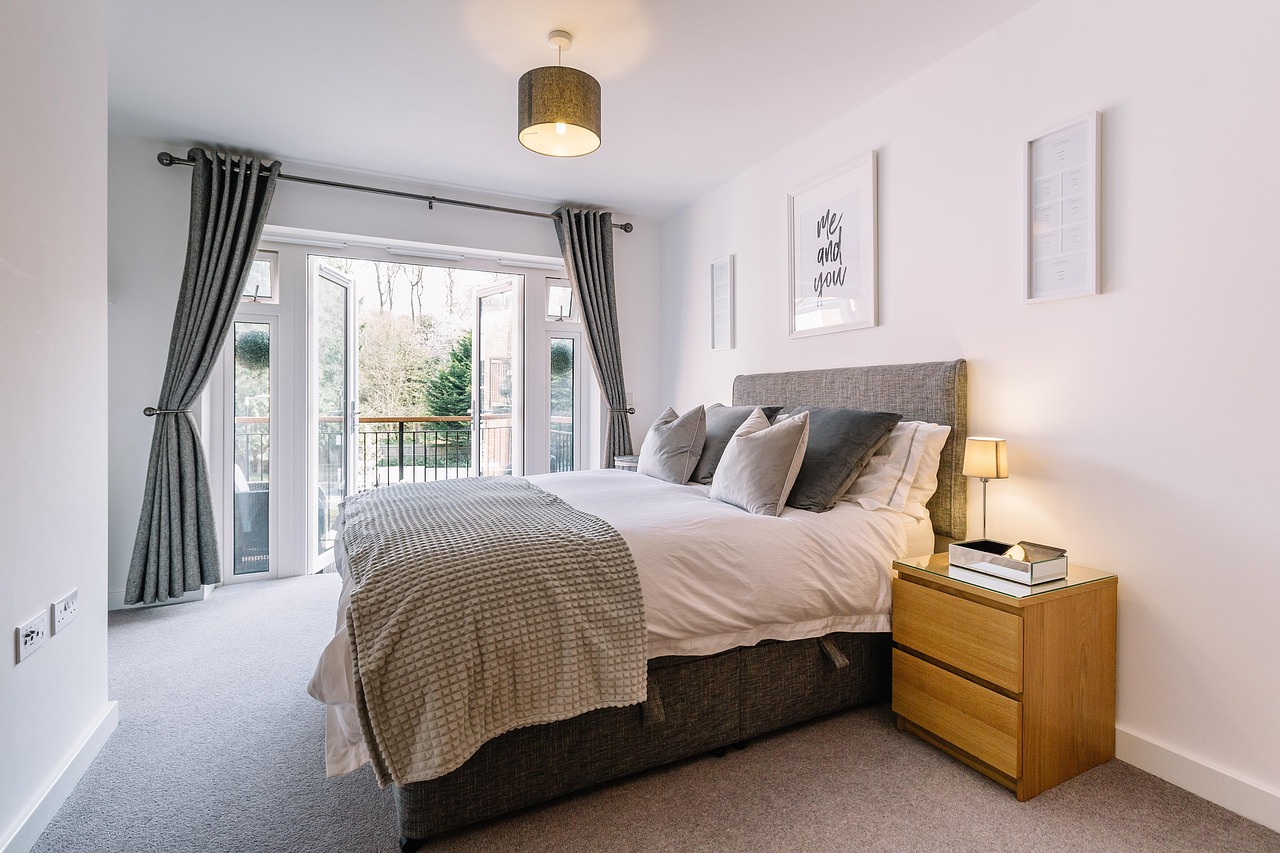
- Mount curtain rods high above the top window trim, extending the rod 4 to 6 inches beyond both sides of the outer window frame.
- Select curved wrap-around or French-return curtain rods that allow the curtain fabric to turn 90 degrees and flush against the wall wall surface.
- Ensure the bottom curtain hem makes contact with the floor or window sill to block cold air spillage.
- Apply magnetic closure strips or hook-and-loop fasteners to hold the outer edges of the fabric tightly against the side wall trim.
Maximizing Precision Fit with Smart Motorized Shades
Smart motorized shades perform best when custom-ordered to fit precise window casing dimensions. Inside-mount motorized cellular shades should sit close to the side jambs, keeping side light gaps narrow (ideally within 1/8 to 1/4 inch).
For high thermal performance, motorized shades can be equipped with side channel tracks—slender aluminum or plastic guide channels mounted directly along the inner window casing. The shade edges glide smoothly inside these tracks, eliminating perimeter light leaks and significantly reducing convective airflow around the window glass.
Upfront Costs, Lifetime Expenses, and Return on Investment
Evaluating long-term financial returns requires weighing upfront equipment costs against expected monthly HVAC utility bill reductions.
Cost Breakdown: Thermal Curtains
Thermal blackout curtains offer an affordable entry point for home energy upgrades:
- Curtain Panels: Quality insulated multi-layer drapery panels range from $30 to $90 per window pair.
- Hardware: Decorative French-return rods and mounting brackets cost $25 to $60 per window.
- DIY Installation: Requires basic tools (tape measure, drill, wall anchors) with zero professional setup fees.
Outfitting a typical single-family home (12 windows) with thermal curtains requires a total investment of approximately $600 to $1,800. If properly operated to reduce cooling and heating energy loss by 5% to 12% annually, utility bill savings can recover the initial cost within two to four years.
Cost Breakdown: Smart Motorized Shades
Smart motorized window shades represent a larger home improvement investment:
- Motorized Shade Assembly: High-quality battery-powered or hardwired motorized shades range from $250 to $900+ per window, depending on fabric selection, dimensions, and motor type.
- Smart Hubs and Bridges: Central wireless controllers, bridge devices, or dedicated light sensors add $100 to $350 to the system cost.
- Installation and Setup: Custom measuring, professional mounting, and network configuration add to total project costs.
Equipping the same 12-window house with automated smart motorized shades costs between $3,500 and $10,000+. While automated precision can yield overall home HVAC energy reductions of 10% to 20% in regions with high solar exposure, financial payback strictly through energy savings typically spans 8 to 15 years.
For this reason, smart motorized shades are best viewed as a broader home upgrade that offers added convenience, improved security, automated privacy, and clean interior aesthetics along with steady energy savings.
Climate Region Considerations across the United States
Geographic location and local weather patterns determine whether thermal curtains or automated smart shades offer the best value for your home.
Hot, Cooling-Dominated Climates (US Sunbelt, Southwest, Deep South)
In states such as Arizona, Texas, Nevada, California, and Florida, intense solar radiation during long cooling seasons accounts for a major portion of summer energy bills.
Automated smart motorized shades are particularly effective in these regions. Lowering solar reflective cellular or screen shades before peak afternoon sun hits window glass prevents thermal radiation from heating interior rooms, reducing peak air conditioning loads. Automated schedules maintain this protection consistently, even when homeowners are away on vacation.
Cold, Heating-Dominated Climates (Upper Midwest, Northeast, Mountain States)
In states like Minnesota, Wisconsin, Maine, and Montana, preventing indoor furnace heat from escaping through frozen window glass during long winter nights is the main priority.
Heavy, multi-layered thermal curtains secured with edge seals provide effective conductive thermal resistance (R-value). Closing thick thermal drapes over cold window glass creates an insulating air buffer that reduces winter drafts and maintains indoor comfort.
Mixed, Four-Season Climates (Mid-Atlantic, Central Midwest, Pacific Northwest)
Regions with warm summers and cold winters benefit from flexible window treatment strategies. Smart cellular shades deliver dual-season performance—cellular fabric pockets retain heat on chilly winter nights, while automated daily schedules block high summer sun. Combining thin motorized roller shades with decorative side-hung thermal curtains provides year-round flexibility and comfort.
Common Installation and Operational Mistakes
Avoid these common mistakes when installing window treatments to improve energy efficiency:
- Selecting Dark Fabric Backings Facing Outward: Dark exterior-facing fabrics absorb solar energy and convert light into heat right against the window pane. Always select window treatments with white, off-white, or silver reflective backings facing the glass.
- Leaving Open Gaps Around Thermal Curtains: Mounting curtains on standard straight rods far from the wall surface creates side and top gaps that promote convective air loops, reducing thermal effectiveness.
- Relying Entirely on Manual Routine Adjustments: Assuming family members will open and close drapes multiple times daily as the sun moves across the sky rarely works out in practice.
- Treating All Window Orientations the Same: Applying identical open/close rules to every window ignores basic solar movement. East and west windows require active summer protection, south windows need seasonal adjustment, and north windows receive little direct solar heat.
- Overlooking Motorized Power Sources: Installing battery-powered motorized shades on high, hard-to-reach second-story windows without considering long-term battery recharging access can create maintenance difficulties later on.
Decision Framework: Which Option Fits Your Home?
Use this evaluation framework to select the right window treatment strategy based on your household priorities, climate, and budget:
Choose Smart Motorized Shades If:
- You have an established smart home network (Apple HomeKit, Google Home, Amazon Alexa, or SmartThings) and want automated schedule integration.
- Your home features hard-to-reach transom windows, clerestory glass, or high double-story window banks.
- Your household is away during peak solar hours, making manual shade adjustments impractical.
- You prefer clean, minimal interior design lines without heavy fabric drapery hanging on walls.
- Your budget accommodates a higher upfront investment in exchange for daily convenience and consistent solar heat management.
Choose Thermal Curtains If:
- You want an immediate, budget-friendly way to reduce window drafts and manage room temperatures.
- Your primary focus is blocking cold winter drafts in a heating-dominated climate zone.
- You prefer classic interior design aesthetics with textured fabrics and decorative drapery rods.
- You are comfortable maintaining a daily routine of manually adjusting drapes in main living areas.
- You rent your home, making custom-fitted motorized shade tracks or hardwired installations impractical.
Frequently Asked Questions
Do smart motorized window shades save more energy than manual thermal curtains?
Smart motorized shades generally yield higher real-world energy savings because automated schedules ensure shades lower during peak solar hours without fail. While thermal curtains offer strong physical insulation, their energy savings depend entirely on how consistently residents manually adjust them throughout the day.
Can you combine thermal curtains and smart motorized shades on the same window?
Yes. Combining inside-mount automated motorized shades with wall-mounted decorative thermal drapes creates an effective hybrid system. The smart shades automatically manage daytime solar heat gain, while the thermal curtains can be closed at night to seal perimeter air gaps and improve winter insulation.
How much do smart motorized shades lower monthly electricity bills?
Depending on home window area, orientation, local climate, and HVAC efficiency, automated motorized shades can reduce cooling energy usage by 10% to 20% during peak summer months by systematically blocking incoming solar radiation.
What fabric type works best for energy-efficient smart motorized shades?
Cellular (honeycomb) fabrics offer the highest insulation values by trapping static air inside hexagonal cells. For hot, sunny climates, solar screen fabrics with light-colored reflective exterior backings effectively block solar radiation while preserving outdoor views.
Conclusion
Both smart motorized window shades and traditional thermal curtains offer practical ways to manage solar heat gain and improve home energy efficiency. Thermal curtains deliver solid physical insulation at an accessible upfront cost, making them a practical choice for budget-focused homeowners who are diligent about daily manual adjustments. Smart motorized shades overcome human inconsistency through precision scheduling, sensor integrations, and seasonal automation, keeping solar heat out while offering everyday convenience.
For many homes, a hybrid approach yields the best results: installing automated cellular smart shades inside the window frame for daytime solar control, paired with decorative thermal drapes on French-return rods for edge sealing and winter insulation. By matching window treatments to your regional climate, window orientation, and daily routine, you can keep your home comfortable while maintaining long-term control over utility costs.