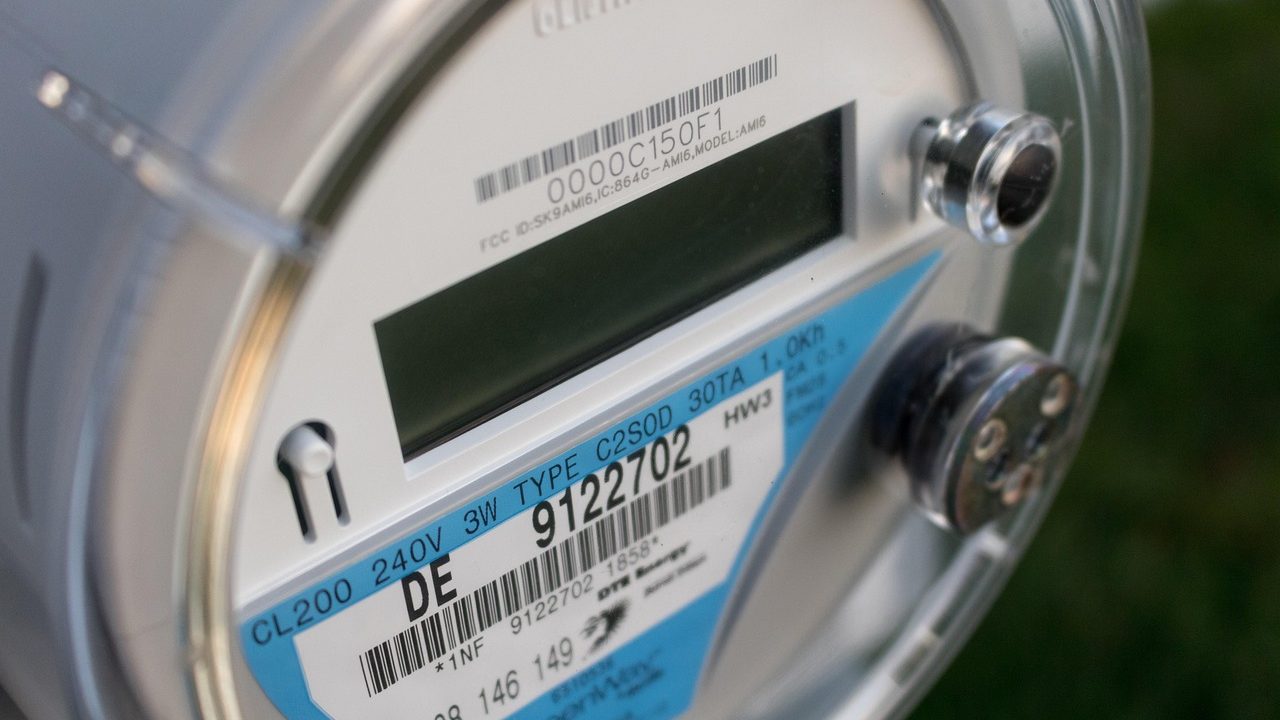
When your monthly power bill arrives, your eyes naturally gravitate toward the largest number on the page: total kilowatt-hours used. For decades, standard household advice focused on lowering that variable number—shutting off lights, setting back thermostats, or installing efficient appliances. Today, however, households conducting an electric utility fixed customer charge audit US residential power customers rely on are finding that non-negotiable fixed fees are consuming an ever-larger portion of their monthly utility budgets.
Across the United States, investor-owned utilities and public power providers are restructuring their rate designs. By increasing mandatory line items known as basic service charges, customer fees, grid connection costs, or minimum monthly bills, utilities ensure steady revenue regardless of how much energy a household saves. Because these mandatory fees apply equally across a rate class—whether to a small apartment or a expansive estate—they disproportionately burden low-usage households, fixed-income seniors, and energy-conscious families. This guide walks you through the step-by-step process of auditing these charges, evaluating state public utility commission (PUC) filings, and taking concrete action to challenge unfair rate increases.
Understanding Fixed Utility Charges vs. Volumetric Rates
To audit your electricity costs accurately, you must first distinguish between the two primary mechanisms electric service providers use to collect revenue: volumetric energy rates and fixed customer charges.
Volumetric rates are assessed on a per-kilowatt-hour (kWh) basis. If your utility charges $0.16 per kWh for electricity delivery and supply, consuming 1,000 kWh results in a $160 volumetric cost. If you reduce your usage to 500 kWh through seasonal conservation, weatherization, or high-efficiency upgrades, your variable cost drops proportionally to $80. Volumetric pricing aligns with classic consumer economic incentives: consumption dictates overall cost.
Fixed charges, conversely, are flat baseline amounts assessed on every billing statement regardless of electricity consumption. Common designations on consumer invoices include:
- Customer Charge / Basic Service Charge: A flat dollar fee billed each billing cycle simply for being connected to the utility’s distribution network.
- Grid Connection / System Access Fee: A recurring line item designated for local line maintenance, transformer capacity, and metering hardware.
- Minimum Monthly Bill: A floor structure specifying that a customer’s total bill cannot drop below a target threshold, even if actual usage charges calculate to a lower dollar figure.
When an electric utility increases its mandatory monthly customer charge from $10 to $25, every ratepayer in that customer class incurs an immediate $180 annual cost increase before turning on a single appliance. For a large home consuming 2,500 kWh monthly, an extra $15 per month represents a minor percentage shift in total expenditure. For a frugal household or small apartment consuming 300 kWh per month, that same $15 fee hike can represent a massive double-digit percentage increase in their total electricity bill.
Why Investor-Owned Utilities Are Raising Fixed Fees
Conducting a rigorous rate audit requires understanding the financial motives and regulatory frameworks driving utility executives to petition state regulators for higher fixed customer charges.
Investor-owned utilities (IOUs) operate as state-sanctioned monopolies. Under cost-of-service regulation, IOUs construct infrastructure—such as power plants, transmission towers, sub-stations, and local distribution wires—and are permitted by state utility commissions to recover those capital costs along with a regulated return on equity (ROE) for shareholders. Historically, utilities recovered both capital expenditures and operating expenses largely through volumetric kWh charges.
Three core structural developments have challenged this traditional business model:
- Flat Energy Demand Growth: Widespread adoption of LED lighting, modern building energy codes, and ENERGY STAR appliances has leveled off residential per-capita electricity growth across many regions.
- Rooftop Solar Expansion: Distributed rooftop solar adoption allows households to generate power on-site, significantly reducing the total volumetric kWh units purchased from the utility grid.
- Grid Capital Investments: Utilities face substantial capital costs to harden distribution infrastructure against extreme weather, replace aging pole infrastructure, and deploy digital smart meters.
To insulate corporate earnings against declining volumetric electricity sales, power companies increasingly request higher mandatory fixed fees from state utility commissions. Securing high fixed charges creates a stable, weather-proof revenue baseline that guarantees shareholder dividends regardless of how aggressively customers conserve energy or generate clean power at home.

Step 1: Gathering and Organizing Your Utility Records
A comprehensive audit begins with systematic document collection. Evaluating whether your utility’s fixed charges are balanced requires comparing historical bill structures across multiple seasons and years.
Collect 12 to 24 Months of Detailed Power Bills
Log into your online utility account and download full itemized PDF statements covering at least two full calendar years. Do not rely on high-level annual summaries or bank transaction histories, as these lack line-item detail. You need complete statements that show itemized supply, transmission, distribution, and administrative fees.
Build a Personal Utility Audit Tracking Sheet
Organize your billing history into a spreadsheet using the following structural categories for each billing cycle:
- Billing Period Start and End Dates
- Total Billed Electricity Consumption (kWh)
- Mandatory Fixed Customer / Service Charge ($)
- Volumetric Distribution Cost ($ and $/kWh rate)
- Volumetric Generation / Supply Cost ($ and $/kWh rate)
- Regulatory Riders, Environmental Fees, and Local Taxes ($)
- Total Monthly Bill ($)
Calculate Your Fixed Cost Ratio
For each month, divide your mandatory fixed charges by your total bill amount to determine your Fixed Cost Ratio. For instance, if your baseline monthly service fee is $24 and your total bill is $80, your fixed cost ratio is 30%. Tracking this percentage across high-usage summer or winter months versus low-usage shoulder months (spring and fall) clearly demonstrates how baseline fees restrict your power to control household expenses.
Step 2: Decoding Your Electric Utility Rate Schedule
The consumer-friendly terms printed on your monthly utility invoice rarely match the formal legal and accounting language used in regulatory filings. To audit your billing accuracy, you must cross-reference your bill with your utility’s official tariff schedules approved by state regulators.
Every regulated electric utility must maintain a public tariff book. You can access these documents via your electric provider’s regulatory affairs web page or through your state public utility commission website. Locate the tariff section corresponding to your service classification, typically labeled Residential Service (Schedule R), Single-Family Residential (RS), or Residential Net Metering (R-NM).
Key Components to Verify in the Rate Schedule
- Approved Customer Charge: Verify that the monthly fixed dollar amount on your bill matches the exact figure approved in the rate schedule.
- Billing Cycle Adjustments: Check whether your utility prorates fixed fees during partial billing cycles when service is established or transferred.
- Minimum Bill Clauses: Identify whether your rate schedule contains a mandatory minimum monthly bill provision that overrides lower usage totals.
- Tiered or Seasonal Volumetric Shifts: Determine whether baseline customer fees change during designated summer and winter seasonal billing windows.
Step 3: Auditing State PUC Dockets and Rate Cases
When an investor-owned electric company seeks to increase fixed customer charges, it must submit a formal general rate case application to its governing state agency (e.g., Public Utilities Commission, Public Service Commission, or State Corporation Commission).
State rate case filings are public records stored in online docket management systems. You can search these portals using your utility’s legal name and filter for filings categorized as general rate cases or rate design proceedings.
Within a rate case docket, search for key procedural documents submitted by the utility, consumer advocates, and commission staff:
- Application and Direct Testimony: The utility’s primary petition detailing its requested increase in fixed baseline revenues and overall revenue requirement.
- Cost of Service Study (COSS): The underlying engineering and accounting study used to justify allocating specific grid costs to fixed residential charges versus variable charges.
- State Consumer Advocate Testimony: Independent evaluations filed by state utility consumer advocates, public counsel, or non-profit consumer groups challenging the utility’s requested fee increases.
- Commission Final Order: The binding regulatory decision approving, modifying, or rejecting the utility’s proposed rate design and fixed charge structure.

Step 4: Evaluating Utility Cost-of-Service Studies
The core battleground in any fixed charge rate dispute centers on the utility’s Cost of Service Study (COSS). Regulators follow established regulatory accounting principles to determine which utility assets and operating costs are directly related to customer connection versus general system usage.
Utility accounting practice distinguishes between two primary customer cost classification methods:
1. Basic Customer Method (Strict Cost Accounting)
Under the traditional Basic Customer Method supported by national consumer advocates, only costs directly caused by adding an individual customer to the electrical network are categorized as fixed customer costs. These strictly include:
- The drop line connecting the distribution line to the home exterior
- The electric meter hardware installed at the property
- Direct meter reading and monthly billing administration expenses
Under this standard, residential fixed customer charges typically range between $5 and $12 per month, as core grid hardware costs are properly recovered through volumetric usage rates.
2. Minimum System Method (Expanded Fixed Cost Allocation)
To justify much higher fixed monthly charges, utilities frequently employ the controversial Minimum System Method. This accounting approach constructs a hypothetical grid designed to carry zero electrical load, classifying a large portion of poles, transformers, primary wires, and substations as basic customer overhead. By treating shared distribution infrastructure as fixed customer costs, utilities petition regulators to approve fixed monthly service fees ranging from $25 to $40 or more.
Auditing this distinction allows consumers to understand whether their local utility is charging for direct billing infrastructure or inappropriately shifting general distribution grid costs into non-negotiable fixed monthly line items.
Impact of High Fixed Fees on Solar and Efficiency ROI
Arbitrarily high fixed customer charges significantly alter household energy economics, directly eroding the financial returns on personal efficiency investments and rooftop solar installations.
Consider a household spending $8,000 to improve attic insulation, seal ductwork, and install a high-efficiency heat pump to lower annual electricity usage by 35%. If the utility recovers 90% of its revenue through variable kWh rates, the household realizes substantial, direct monthly utility savings that offset the upgrade cost over time. However, if the utility shifts a heavy portion of its cost recovery into high fixed baseline fees, the household’s ability to lower its bill through lower consumption is capped, drastically extending the financial payback period.
Similarly, for residential rooftop solar customers, fixed charges function as unavoidable baseline costs that net-metering credits cannot eliminate. As fixed charges grow, the net savings generated by solar generation shrink, diminishing the long-term financial viability of customer-owned clean energy projects.
Auditing Municipal Utilities vs. Investor-Owned Utilities
The process for auditing fixed customer fees varies depending on whether your electric provider is an investor-owned utility, a municipal power company, or a rural electric cooperative.
| Utility Type | Governance Body | Regulatory Audit Pathway | Public Participation Mechanism |
|---|---|---|---|
| Investor-Owned Utility (IOU) | State Public Utility Commission (PUC/PSC) | State PUC formal docket system & Cost of Service filings | Formal administrative public comments & evidentiary hearings |
| Municipal Utility (Public Power) | City Council or Appointed Utility Board | Municipal board meeting minutes & local rate resolutions | Local council public hearings & municipal board meetings |
| Electric Cooperative (Co-op) | Member-Elected Board of Directors | Co-op annual financial reports & board policies | Member annual meetings & board member elections |
While IOUs require state public utility commission approval to alter rate designs, municipal power providers and rural electric cooperatives set rates through locally elected or appointed boards. Auditing public power fixed fees involves requesting rate schedules directly from municipal clerks or reviewing co-op annual financial disclosures to evaluate fixed-fee revenue targets.
How to Challenge Unfair Fixed Charges as a Consumer
Once you complete your audit and identify unfair or excessive fixed charges on your power bill, you can leverage public participation mechanisms to contest those rates.
1. Submit Formal Comments to Your State PUC
When your utility files a general rate case, regulators open a public comment period. File written public comments citing your rate case docket number. Detail your audit findings, explain how high fixed customer fees penalize your energy conservation efforts, and highlight the financial impact on low-usage households.
2. Engage with Your State Utility Consumer Advocate
Most states maintain an independent Office of Consumer Counsel or Public Advocate charged with representing residential ratepayer interests in utility proceedings. Share your audit findings with their staff and support their formal testimony opposing high fixed customer charge allocations.
3. Participate in Local Governance Meetings
If you are served by a municipal utility or electric cooperative, attend public board meetings when rate structures are reviewed. Present clear audit data showing how rising fixed service fees impact fixed-income residents and community energy efficiency goals.
Common Pitfalls to Avoid During a Utility Rate Audit
To maintain accuracy when conducting your power bill evaluation, avoid these common auditing errors:
- Confusing Fixed Charges with Demand Charges: Residential fixed charges are flat monthly dollar fees, whereas commercial demand charges are variable fees based on peak power draw measured in kilowatts (kW).
- Ignoring Seasonal Rate Adjustments: Some utilities adjust volumetric rates or fixed customer fees between summer and winter seasons; ensure your audit accounts for seasonal baseline changes.
- Overlooking Taxes and Local Franchise Fees: State sales taxes and municipal franchise fees are frequently calculated as a percentage of total charges. A higher base fixed charge automatically increases these secondary tax line items.
Comprehensive Utility Fixed Fee Audit Checklist
Use this practical step-by-step checklist to complete your household power bill audit and prepare your findings for regulatory participation:
- Gather Records: Download 12 to 24 consecutive months of itemized PDF utility statements.
- Extract Line Items: Record monthly kWh usage, mandatory fixed charges, variable distribution charges, and generation rates in a spreadsheet.
- Calculate Metrics: Determine your average monthly Fixed Cost Ratio (Fixed Charges divided by Total Bill).
- Verify Tariff Schedules: Cross-reference billed charges against official state-approved residential rate tariffs.
- Track Regulatory Filings: Search your state PUC docket system for pending or recent general rate case applications.
- Analyze Cost Allocations: Review rate case testimony to determine whether the utility relies on the Basic Customer Method or Minimum System Method.
- Submit Consumer Testimony: Draft and file formal public comments with state regulators or municipal utility board members to oppose excessive fixed customer charges.
By executing a systematic audit of your residential power bills and tracking regulatory dockets, you gain the knowledge necessary to protect your household budget and advocate effectively for fair, transparent utility rate designs.