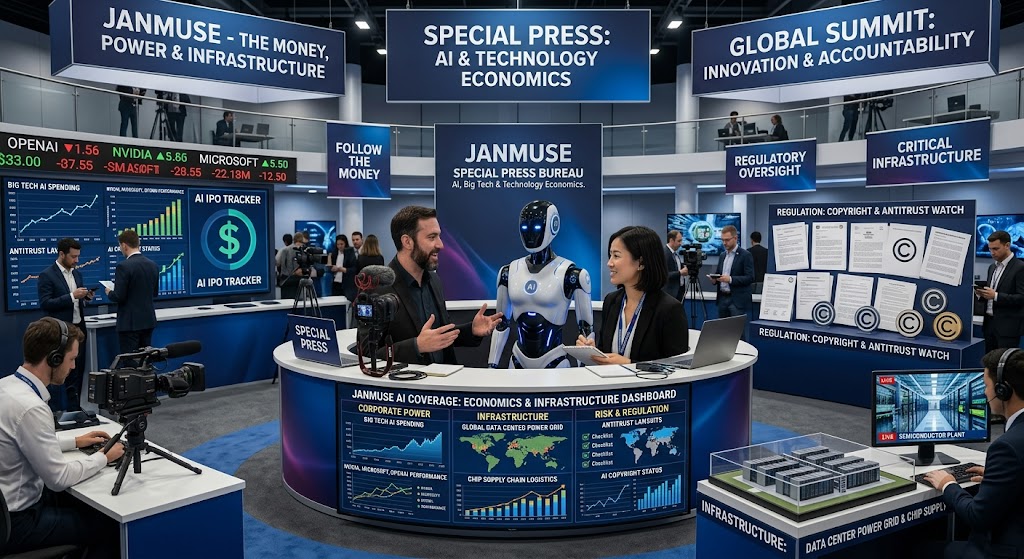
The Times Has Filed a Historic Lawsuit
We are witnessing a seismic confrontation that goes far beyond the walls of a courtroom. The legal battle between OpenAI and The New York Times is not merely a dispute over copyright; it is a fundamental war over the ownership and control of the raw material of human thought. The Times has filed a historic lawsuit, a document that serves as a modern manifesto against the unchecked ingestion of human creativity. It accuses OpenAI of systematically using millions of its copyrighted articles to construct generative AI systems that now directly compete with the very services that produced the training data.
This is a clash of titans that pits the traditional guardians of history and truth against a new, algorithmic infrastructure that claims to synthesize all of human knowledge. Because the outcome of this case will dictate the economic future of intellectual property, it is widely considered the most consequential copyright dispute of this century. At stake is whether the foundational achievements of our journalists, authors, and creators belong to the public and the publishers, or if they have been quietly absorbed into the proprietary bedrock of the machines that seek to replace them.
To understand the speed at which Silicon Valley has reached its current valuation, one must look at the digital enclosure movement currently underway. Much like the historic fencing off of common lands, AI developers are engaged in a rapid transformation of the digital commons, turning public and private web assets into private, proprietary machine intelligence. For years, these tech giants treated the open web as an inexhaustible, free resource, a sprawling library to be harvested without consent or compensation. By scraping billions of data points—everything from personal blogs to the most sophisticated analytical journalism—they built engines that now command multi-billion dollar valuations.
This was not a partnership or a licensing agreement; it was an extraction process. The strategy was simple: treat the entirety of human history, as captured in digital format, as raw input to feed the black boxes of their models. The resulting intelligence, once proprietary, becomes an asset that generates revenue while the original source material is often discarded or rendered irrelevant by the very systems it unknowingly helped build. The existential risk facing legacy media is not just about stolen content; it is about the replacement of the relationship between the reader and the news.
The Core Commercial Engine of Journalism
When an AI chatbot provides a user with a comprehensive summary of a breaking news event, the user has no further incentive to visit the original publication. The core commercial engine of journalism—the ability to drive traffic to an article, showcase an advertisement, or secure a subscription—is being systematically dismantled. These generative systems do not just synthesize knowledge; they regurgitate specific news summaries that act as a substitute for original reporting. As a result, publishers are being starved of the traffic and ad revenue necessary to fund the expensive process of investigative journalism.
This creates a parasitic dynamic where the AI platforms grow stronger by using the very information that they are effectively putting out of business. The fundamental question for the modern economy is whether legacy publishers and AI platforms can ever coexist, or if the logic of the chatbot is inherently designed to hollow out the primary sources it was trained upon. The landscape of this legal battle shifted dramatically when the Trump administration officially entered the fray. By filing a brief in support of OpenAI, the executive branch has shattered the illusion of a neutral regulatory playing field, effectively placing the weight of the federal government behind the AI developer.
As highlighted in recent reports from the Free Speech Center, this move signals a pivot in how the administration views the tension between established intellectual property rights and the growth of emergent technology. By aligning with OpenAI, the federal government is prioritizing the acceleration of AI development, signaling that they view the advancement of large language models as a strategic national interest. This intervention has sent a clear message to the legal community and to the public: in the race for technological dominance, the protection of historical copyright holders will likely take a backseat to the demands of the digital future.
This is a defining moment where state policy and corporate ambition are visibly merging, setting the tone for the entire regulatory approach to machine learning. When the federal government chooses to submit an amicus brief, it is rarely just an opinion; it is a tactical maneuver intended to guide the judiciary’s hand. By stepping in to back OpenAI, the administration is signaling to federal judges that the survival and scaling of AI innovation are matters of state interest. This carries immense weight, as it suggests that the interpretation of long-standing fair use laws should be nudged in favor of technological expansion rather than the preservation of traditional copyright protections.
The brief serves as a powerful instrument, attempting to define the training of large-scale models as a legitimate, even essential, function of modern industry.
By Framing the Dispute in This Way
It effectively asks the courts to view the ‘fairness’ of copyright through the lens of national competitiveness rather than individual ownership. By framing the dispute in this way, the government is attempting to build a protective shield around the AI sector, ensuring that the legal precedents set by this case favor the continued growth of machine intelligence above the claims of those whose data made that intelligence possible in the first place. To truly comprehend the scale of this conflict, we must look beyond the abstract legal briefs and peer into the physical reality of the data centers where this transformation occurs.
These facilities, filled with rows of humming servers, act as the ingestion engines for modern AI, where billions of human words are processed every single day. The technology relies on aggressive, persistent web scrapers that systematically download, index, and tokenize entire domain histories, including decades of carefully paywalled journalistic output. It is a mechanical process of mass consumption, where the nuance of a reporter’s craft is converted into mathematical weights and probabilities. There is no human reading occurring here; it is the raw, high-speed conversion of culture into computational data. This physical infrastructure is the point of collision.
While we debate the ethics of copyright, the machines continue to churn, absorbing the vast archives of our collective history, ensuring that the model is continuously fed a steady diet of human knowledge to sharpen its responses and maintain its competitive edge in the global market. The defense of these systems often rests on the claim that AI training is inherently transformative—a process that creates something entirely new from the ashes of the old. However, this narrative of innovation is increasingly being challenged by the reality of the output.
Critics and researchers point out that these models are prone to a technical loophole that reveals their training methods; they frequently produce near-verbatim copies of their inputs, effectively acting as high-speed replication machines. The New York Times has documented numerous, undeniable instances where OpenAI’s chatbots provided users with paragraphs that were essentially identical to their copyrighted articles, missing only the proper attribution. This undermines the core of the fair use defense. If the model can reproduce the protected work nearly word-for-word, it becomes difficult to argue that the training process has truly created something new.
Instead, it appears that the technology is designed to retain and mirror its source material, raising serious questions about whether these companies are building the next generation of creative tools or simply automating a new form of digital plagiarism. The Free Speech Center has issued a stark warning regarding the implications of the government’s involvement in this case. They argue that by allowing the state to actively tip the scales in private copyright disputes, we risk establishing a dangerous precedent that could fundamentally compromise the independence of the press.
When a Government Chooses Sides in a Battle Involving Media Institutions
When a government chooses sides in a battle involving media institutions, it signals that the state may eventually exert influence over the flow of information itself. By backing the developers who stand to gain from the systematic harvesting of news, the administration is potentially providing a framework where press autonomy is subordinated to the interests of tech corporations. This is not just a matter of legal precedent; it is a question of constitutional health. If the press can be legally stripped of its content without recourse or compensation, its ability to act as a check on power is inherently diminished.
The Free Speech Center fears that we are opening a door that will be difficult to close, inviting state-sanctioned erosion of the economic foundations of independent journalism. At the center of this legal firestorm is the doctrine of fair use—the very mechanism that OpenAI hopes will shield it from liability. The core issue is simple yet profound: can the massive, computational synthesis of text and ideas be classified as a transformative use of protected data, or is it merely a sophisticated, unauthorized commercial exploitation? The defendants argue that their processes fall within the bounds of existing law, meant to foster technological advancement and public knowledge.
However, the plaintiffs contend that taking an entire repository of decades-long newspaper archives without licensing constitutes a wholesale appropriation of value. The outcome will likely hinge on whether the courts believe that the synthesis of information is a public good that outweighs the property rights of the originator. As the debate continues, it highlights a fundamental lack of clarity in our legal system regarding the intersection of copyright and machine learning. Ultimately, the judiciary must decide if the standard licensing fees that sustain our modern press should survive, or if the new era of generative AI will operate entirely outside the old rules of intellectual property.
Inside Washington, the atmosphere has shifted from viewing AI development as a domestic commercial matter to a high-stakes national security race against foreign adversaries. Federal policy makers operate under the cold realization that the window to lead the next era of computation is narrowing, leading to a profound pivot in how they view the law. The prevailing sentiment within the administration is that imposing restrictive copyright mandates or forcing AI firms to pay exorbitant licensing fees for every scraped data point will inevitably stall the progress of American firms.
By Prioritizing Velocity Over Intellectual Property Protection
By prioritizing velocity over intellectual property protection, the White House is making a calculated bet that the long-term strategic advantage of superior AI capabilities outweighs the immediate legal and ethical grievances of the media industry. They fear that if U. S. domestic policy acts as a bottleneck, foreign competitors will not hesitate to exploit that opening, eventually dominating the foundational models that define global technological dominance.
Consequently, the legal rights of content creators are being relegated to a secondary status, seen as friction in a geopolitical contest where the only acceptable outcome is total American supremacy in the artificial intelligence sector, regardless of the domestic industries left in the wake of this aggressive policy approach. AI companies have successfully maneuvered themselves into an enviable position by positioning their survival as synonymous with national security. By framing their proprietary systems as indispensable assets for intelligence, defense, and economic dominance, these platforms have insulated themselves from the standard regulatory scrutiny applied to other tech sectors.
When legal challenges arise, they pivot immediately to the narrative of geopolitical necessity, arguing that crippling their ability to train models on the totality of public knowledge would be a self-inflicted wound against national innovation. This strategy has been incredibly effective, essentially allowing them to bypass traditional copyright laws by leveraging the anxiety surrounding international competition. The executive branch has clearly taken the bait, granting these firms broad latitude to operate without the constraints that would typically bind private actors.
By embedding themselves within the administrative machinery of national strategy, Silicon Valley giants have effectively neutralized the threat of domestic regulation, convincing policy makers that any restriction on their data-scraping infrastructure would ultimately aid hostile foreign states in the race for synthetic intelligence supremacy. While AI engines are built on the back of the internet, the immense financial and human cost of gathering that information remains largely invisible to the users of these systems. Generating an AI model requires billions of dollars in compute, yet that spending does nothing to fund the hazardous, painstaking, and expensive work of original journalism.
Legacy newsrooms spend millions every year maintaining global bureaus, dispatching reporters to dangerous conflict zones, and paying teams of editors to verify facts and hold power to account. These costs are the essential infrastructure of a functional democracy, yet AI platforms bypass these expenses entirely, harvesting the hard-won output of newsrooms without contributing a single cent to the creation of the content they ingest.
It Is a Fundamental Asymmetry
It is a fundamental asymmetry: the model builder spends on processing power while the news organization spends on the reality-based data that makes the model useful in the first place. Without the protection of licensing fees, the very entities that provide the high-quality, truthful information necessary to train unbiased, accurate models are systematically stripped of the capital required to keep their doors open and their reporters in the field. The potential consequences of this legal battle extend far beyond the courtroom, signaling a bleak future for the media industry if the current status quo persists.
Should the courts rule that the training of AI models constitutes fair use regardless of paywalls, the foundational economic model of digital publishing will effectively collapse. For years, major news organizations have relied on subscription revenues to fund their operations, creating a direct value exchange with their readers. If algorithmic scrape engines can bypass these paywalls under the guise of training, they essentially commoditize protected content, turning decades of investigative reporting into free training fodder for competitors. Such a ruling would render paywalls useless against automated extraction, destroying the economic foundation that currently keeps independent, fact-based reporting viable.
It creates a perverse cycle where a publication’s commitment to premium content makes it a prime target for scraping, while AI platforms reap the rewards of this high-value data without providing compensation, ultimately forcing a consolidation where only the most entrenched players can even attempt to survive the resulting loss of subscription stability. The intervention by the administration is not occurring in a vacuum; it is the culmination of years of intense lobbying from the most powerful corners of Silicon Valley.
Major venture capital firms and high-level tech executives have been working the corridors of Washington for months, aggressively petitioning federal agencies to view the current copyright lawsuits as a threat to national infrastructure. These groups argue that protecting the vast investments poured into generative models requires a regulatory environment where copyright liability is minimized or eliminated. By casting the New York Times’ lawsuit as a barrier to innovation rather than a matter of property rights, these lobbyists have successfully aligned their commercial interests with the administration’s national security agenda.
This creates a powerful feedback loop where government agencies, influenced by the very capital firms that stand to gain the most, proactively intervene in judicial processes to protect the industry from the consequences of their scraping practices. It is a clear manifestation of how capital can leverage political narrative to rewrite the landscape of business liability, turning a debate about creative rights into a battle for institutional preservation. We are witnessing a profound ideological pivot in government regulation, where traditional American concepts of private property are being openly sacrificed for the sake of technological primacy.
Historically, a conservative-leaning administration would be the loudest champion of intellectual property rights, arguing that individuals and businesses must control the fruits of their labor.
Digital Creative Legal Creators in Practice
Yet, in this case, we see a complete reversal, with the state actively redefining property rights to favor the development of large-scale digital infrastructure over the rights of original creators. This shift signals that the concept of a ‘national champion’ in AI has reached a status of untouchability, overriding the protections that would normally shield private companies from unauthorized appropriation of their assets. The state has essentially decided that the strategic value of synthetic intelligence output outweighs the legal sanctity of the information used to build it.
By prioritizing the structural growth of AI over traditional creative labor, the government is signaling that it views the future of its digital hegemony as more vital than the preservation of the legal mechanisms that have historically supported a free and independent press. A legal victory for OpenAI in this high-profile case would set a catastrophic precedent for every creative professional in the digital age, from novelists and artists to independent researchers and small-scale content creators. If the courts rule that OpenAI’s training practices are legal, it effectively transforms the entire internet into an open-source quarry for the world’s wealthiest technology firms.
This would legalize the extraction and commercialization of any copyrighted digital asset without compensation, stripping creators of their ability to control how their work is used or to seek payment for its role in training the next generation of AI. It is not just about the newspaper industry; it is about the fundamental right to own the product of one’s intellect. Once this precedent is established, the barrier between creative labor and corporate data harvesting will vanish, leaving authors, musicians, and visual artists with no recourse as their life’s work is synthesized into automated services that compete with them directly.
The systemic threat is an erosion of digital ownership that, once realized, will be nearly impossible to reverse, leaving the creative class fundamentally marginalized in an economy that extracts their value while denying them a share of the profit. As the case moves deeper into the federal court system, it reaches the precipice of a definitive judicial showdown that will shape the internet for decades. Judges are now tasked with the unenviable challenge of reconciling established copyright law with the immense, real-world pressure exerted by an executive branch that views these technological giants as critical to national power.
Property Licensing Publishers Between in Practice
The courts will be forced to determine whether the law remains a rigid protector of property or if it is a fluid instrument that bends to accommodate the exigencies of technological advancement. This decision will define the boundary between technology and property rights for generations to come. It requires judges to weigh the stability of long-standing legal precedents against the aggressive policy goals of the current administration. Will they allow the state to bypass the historical safeguards that protect creative industries, or will they insist that the advancement of artificial intelligence must proceed within the existing framework of property law?
The outcome will leave an indelible mark on the future of the internet economy, deciding whether the digital landscape remains a space for diverse, protected creative contributions or a resource for systemic and uncompensated automated extraction. The media landscape is not merely changing; it is fracturing under the immense weight of the AI revolution. While some publishers have chosen to accept multi-million dollar licensing checks, effectively trading their archives for immediate liquidity, the New York Times has taken a radically different path.
They argue that these deals are structurally insufficient, merely palliative measures that fail to address the long-term survival of the rigorous, expensive newsroom infrastructure required to fuel global democracy. By refusing to settle, the Times signals a deeper anxiety that these licensing fees are a pittance compared to the foundational value of human-verified reporting. This division is tactical and profound. One group of media entities views the current AI licensing model as a desperate attempt to catch a falling knife, hoping that short-term revenue can sustain them before the utility of original journalism is effectively cannibalized. The Times, however, refuses to accept this subordinate status.
They hold that without a fundamental guarantee of intellectual property protection, the entire business model of journalism—built on the pillars of investigative time, travel, and deep research—simply cannot survive the algorithmic onslaught of LLMs that prioritize scale over substance. The prevailing narrative of ‘partnership’ between AI giants and news publishers masks a much colder reality: the illusion of consent. These licensing agreements are frequently signed under significant duress, presented to cash-strapped newsrooms as the only way to avoid becoming completely irrelevant in the age of generative search. It is an ultimatum framed as a collaboration.
AI companies possess an overwhelming asymmetrical leverage; they have already scraped the sum total of human knowledge to build their models, leaving publishers to choose between receiving pennies on the dollar to ‘authorize’ past theft, or facing the prospect of having their intellectual property vacuumed up by technical loopholes anyway.
The Infrastructure of These Deals Is Designed to Normalize Extraction
The infrastructure of these deals is designed to normalize extraction. By framing these payments as ‘licensing,’ AI firms not only buy silence from their largest rivals but also gain the veneer of legitimacy. For the broader internet, this sets a dangerous precedent where information is no longer a public good supported by a thriving ecosystem, but a raw resource to be mined by whichever conglomerate has the computing power to turn human insight into corporate assets. We are approaching a critical failure point in the information ecosystem. When the revenue streams that sustain original, boots-on-the-ground reporting are dismantled, the very inputs that keep AI models accurate begin to vanish.
If these systems succeed in destroying the business models that fuel primary investigation, they will inevitably starve themselves. Models will be forced to train on the digital detritus of their own creation—the synthetic, hallucinated, and repurposed output of previous AI generations. This creates a closed-loop system of systemic data degradation, an information desert where reality is replaced by an echo chamber of recycled claims and unverified distortions. In this scenario, the quality of human intelligence is not merely diminished; it is actively hollowed out. We risk trading a vibrant, challenging, and occasionally messy human information landscape for an artificial one that prioritizes speed and predictability.
When machines stop learning from reality and start learning only from their own past errors, the erosion of objective truth will be total. The result is a society where the feedback loop between the world and the information we use to understand it is severed, leaving us adrift in a sea of manufactured synthetic noise. The intervention of the Trump administration in favor of OpenAI is more than a legal filing; it is a declaration of state-level alignment with a new breed of information monopoly.
By throwing its weight behind the very entities that are actively disrupting the information landscape, the executive branch has signaled a future where the state and corporate AI giants move in lockstep. This is the ultimate legacy of the current trajectory: the creation of a system where the flow of human knowledge is mediated by a handful of state-sanctioned conglomerates. This alignment permanently threatens the independence of the free press, transforming journalism from an adversarial check on power into an obsolete nuisance.
If the machinery of truth-telling is owned by firms that depend on government favor, and if the government views those firms as vital to its own technological supremacy, the space for independent scrutiny narrows to nothing. We are watching the consolidation of a new epistemic regime. In this future, the truth is not what occurred in the world, but what the machine, acting in concert with the state, decides to synthesize. The independence of the press is not just under attack; it is being formally decommissioned.