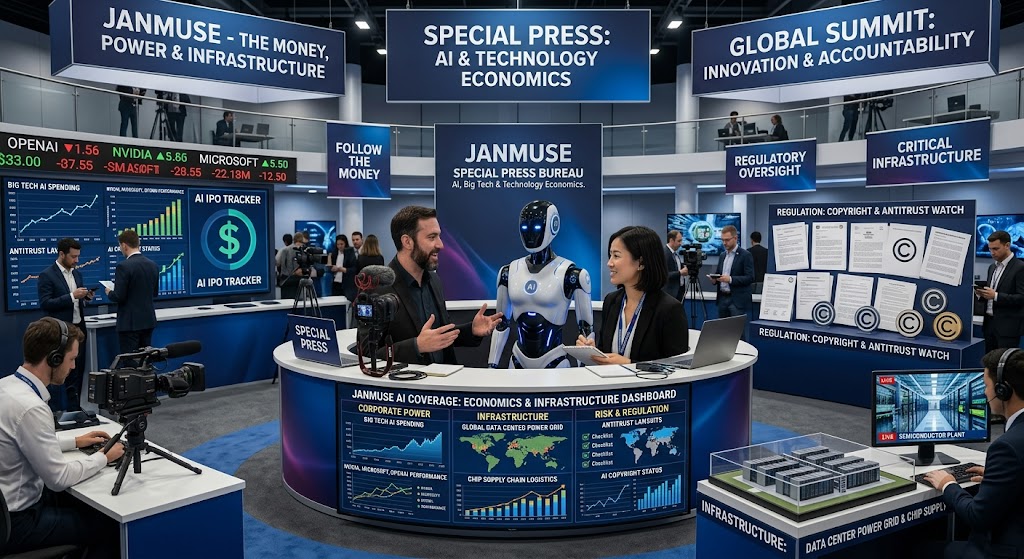
In the Boardrooms of Santa Clara, a Quiet but Earthquake-level Shift Is Underway
In the boardrooms of Santa Clara, a quiet but earthquake-level shift is underway. Nvidia has reportedly moved to acquire Hugging Face in a deal valued at $13 billion. At first glance, the price tag is staggering—a figure that dwarfs many traditional tech acquisitions. But why would the world’s most powerful hardware company, a firm built on the cold, hard logic of silicon and electrical currents, pour such massive capital into a website used by open-source programmers? The answer lies in survival. This acquisition is not merely about expanding a portfolio; it is an insurance policy.
By securing Hugging Face, the central nervous system of AI development and the repository where the global community shares its models, Nvidia is hedging against a future where hardware becomes a commodity. They are locking in the software layer of the AI stack to ensure that no matter how the industry evolves, their silicon remains the mandatory heartbeat of every training run, effectively insulating their dominant ecosystem from future disruption. While Nvidia focuses on the software layer, the physical demand for their chips remains insatiable. In a recent disclosure, it was revealed that Amazon has committed to purchasing an astonishing 2 million Nvidia GPUs.
This is more than a simple transaction; it is a declaration of dependency from the world’s largest cloud provider. Even a tech titan of Amazon’s scale, which possesses nearly unlimited resources and a massive engineering team, finds itself completely beholden to Nvidia’s manufacturing schedule and supply chain. This multi-million chip pledge signals a reality that industry observers have long suspected: in the race to build the infrastructure of the future, there is no shortcut to Nvidia’s silicon. Amazon’s need for this compute power is so acute that they are essentially underwriting the expansion of their own primary competitor.
The dependence is absolute, and the commitment serves as a stark reminder that even the most powerful corporations in the world are currently living within the constraints set by Jensen Huang’s roadmap. We are witnessing the construction of a new breed of corporate power: the dual-moat vertical monopoly. Nvidia is no longer satisfied with merely selling the chips that run the modern world; they are now actively merging their physical hardware dominance with the software registries where AI development happens.
This Dual-moat System Is Rewriting the Playbook for Corporate Power
This dual-moat system is rewriting the playbook for corporate power. By controlling the foundational hardware that powers the data centers and the software distribution hubs where researchers collaborate, Nvidia is creating a locked-loop environment. The end-game here is total, top-to-bottom sovereignty over the AI era. They are effectively ensuring that their products are not just preferred by developers, but baked into the foundational architecture of the internet itself. As they tighten this grip, the question looms: can any other company break a system that controls both the tools of creation and the output of the innovation process?
To truly comprehend the magnitude of Amazon’s commitment to 2 million Nvidia GPUs, we have to look past the headlines and into the sheer physics of compute. A cluster of this scale is not just a building; it is a power plant, a cooling facility, and a massive capital investment rolled into one. Housing 2 million high-end chips requires enormous physical footprints and a steady supply of electricity that rivals the consumption of small cities. This is unprecedented in the history of cloud computing. We are seeing a concentration of hardware capacity that defies previous growth models, turning data centers into industrial-scale factories that output nothing but intelligence.
The logistical nightmare of deploying these units—each drawing hundreds of watts and requiring extreme thermal management—illustrates why Amazon is willing to pay such a high premium. They are essentially racing to build the nervous system of the digital age, and the sheer hardware mass required to do so is fundamentally changing the economics of infrastructure. Amazon Web Services, once the undisputed pioneer of custom infrastructure, now finds itself in an ironic bind. Despite its massive investment in proprietary silicon like Trainium and Inferentia, AWS is still forced to purchase millions of Nvidia units. Why, with all their technical prowess, can’t they simply switch to their own chips?
The answer lies in the harsh reality of the enterprise market. The world’s largest software developers and researchers refuse to migrate their workloads to environments that don’t run on Nvidia silicon. Their code, their workflows, and their libraries are essentially hard-coded to expect the Nvidia environment. AWS, serving a massive customer base, cannot force a migration without risking churn and alienating their most important clients. They are held hostage by the software ecosystem, forced to stock their cloud shelves with Nvidia products because that is the only hardware their customers will trust to run their AI.
They Have the Engineering, but They Lack the Ecosystem Pull to Break Free
They have the engineering, but they lack the ecosystem pull to break free. These enormous pre-orders from hyperscalers like Amazon are doing more than filling server racks; they are effectively underwriting the entire cost of Nvidia’s future research and development. By securing massive capital inflows today, Nvidia can pump billions back into designing the architectures of tomorrow. This creates a self-reinforcing cycle of success. The revenue from current generation chips funds the development of next-gen chips, which are so far ahead of the competition that they secure even more pre-orders. It is a flywheel of dominance that is becoming increasingly difficult for any competitor to jump onto.
By the time an alternative manufacturer designs a chip capable of competing with today’s hardware, Nvidia has already funneled the profits from their massive sales into the development of their next breakthrough. This guarantee of capital essentially ensures that competitors are always chasing a ghost, remaining perpetually a generation behind in the high-stakes game of computing power. The major tech giants are not blind to the trap they are in. For years, Amazon, Google, and Microsoft have been burning billions of dollars on a quest for independence, hoping to break the chains of Nvidia’s pricing power. They have invested heavily in custom silicon—ASICs designed specifically to optimize AI workloads.
Google’s TPU program and Amazon’s Trainium line are direct attempts to create a viable hedge against the Nvidia monopoly. These firms know that if they rely entirely on one vendor for the most critical component of their business, they lose all bargaining power. Designing these chips is a massive undertaking, requiring thousands of the best minds in electrical engineering to compete against Nvidia’s decades of experience. It is a desperate, strategic gamble to reclaim control over their own margins and to avoid being crushed by the ever-increasing costs of the standard hardware in the AI market.
Even when these custom chips perform technically well in lab environments, they face a insurmountable wall once they reach the real world: the compiler trap. Designing the physical hardware is only half the battle; the real difficulty is getting existing software models to run on non-Nvidia architectures. Most AI research is built on a stack that expects the specific structure of an Nvidia GPU. To run that same code on an alternative chip, developers have to go through a nightmarish process of re-compiling and re-optimizing their work. For a researcher moving at breakneck speed, every hour spent fiddling with custom compiler settings is an hour lost to actual innovation.
This friction is so high that it renders most custom silicon impractical for the majority of mainstream users.
To Understand How We Arrived at This Moment
They encounter a wall of technical incompatibility that serves as a moat for Nvidia, keeping users tethered to their hardware simply because the cost of migrating to anything else is too high to justify. To understand how we arrived at this moment, we have to look back to 2006, when Nvidia made a move that would define the next twenty years of the industry. They released CUDA, a proprietary software platform that allowed programmers to use GPUs for general-purpose computing. At the time, modern AI didn’t even exist in the way we know it today. But with CUDA, Nvidia invited developers to write code directly for their chips.
It was a Trojan horse of incredible foresight. By embedding their proprietary language into the bedrock of scientific research, they built a standard that the tech industry is now fully trapped in. For two decades, every new generation of programmer has been trained in the CUDA ecosystem, learning to build on top of Nvidia’s foundation. It was the original trap, a masterclass in platform lock-in that ensured when the AI boom finally arrived, the industry had no choice but to use the only language it had ever truly spoken. For today’s AI researcher, the choice of hardware is not merely a technical preference; it is a calculation of experimental velocity.
If you choose a non-Nvidia chip, you are effectively choosing to work in a desert. You are forced to abandon a vast, lush ecosystem of pre-optimized libraries, frameworks, and community-tested solutions that work seamlessly on Nvidia hardware. Choosing another path means you have to build your tools from scratch, which slows down your pace of discovery to a crawl. The software libraries built on top of CUDA have become the industry standard for a reason: they work, they are fast, and they are everywhere. This represents a set of ‘golden handcuffs’ for the developer.
They might desire the cheaper hardware or the open-source alternative, but they cannot afford to lose the efficiency that comes with the Nvidia ecosystem. The switching costs are simply too high, ensuring that the industry remains firmly within Nvidia’s grasp. To understand the current state of artificial intelligence, one must look toward the platform that has become its gravitational center. Hugging Face is the definitive hub of the open-source AI model universe, functioning as the central repository where millions of developers store, share, and refine their work.
It Is the Github of the Machine Learning Era
It is the Github of the machine learning era, a digital commons where the blueprints for the future of intelligence are exchanged in real-time. For any hardware vendor hoping to influence the next generation of AI breakthroughs, alignment with this platform is not merely an advantage; it is a fundamental requirement. Because so many researchers rely on the pre-configured model architectures hosted within its library, the ecosystem creates a de-facto standard for how AI is deployed.
This immense influence means that whoever controls the distribution channels of these models effectively controls the roadmap of modern computer science, making Hugging Face the most critical piece of real estate in the entire ecosystem. This reality explains the strategic magnitude of Nvidia’s $13 billion deal to acquire Hugging Face. This is far more than a corporate merger; it is a direct, surgical intervention into the software layers where AI developers build, train, and test their most important models. By bringing this platform under its corporate umbrella, Nvidia positions its proprietary technology directly inside the very workflow that every researcher follows.
They are essentially buying the keys to the kingdom, embedding themselves into the foundation of open-source innovation. This move allows Nvidia to influence which hardware architectures are favored by default when a new model is uploaded and optimized for public use. The acquisition transforms the platform from an independent repository into an extension of the hardware vendor’s reach, ensuring that the path of least resistance for any developer is a path paved by Nvidia silicon. It is an unparalleled consolidation of influence, effectively bridging the gap between hardware supply and software distribution.
Predictably, this union has sent shockwaves through the open-source community, sparking intense debate regarding the future of platform neutrality. For years, developers relied on Hugging Face as a democratic space where code remained agnostic to specific hardware architectures. Now, that assumption of neutrality is evaporating, replaced by the encroaching shadow of the hardware king. Many contributors fear that their community commons will gradually be tilted to prioritize Nvidia’s proprietary CUDA optimizations, effectively turning the platform into a gatekeeper that favors one vendor at the expense of competition. This creates a legitimate concern that technical bottlenecks could be introduced, making it harder for models to achieve peak performance on alternative hardware.
As a result, the community is caught in a difficult position, weighing the convenience of a unified, high-performance ecosystem against the growing risks of monopolistic control over their fundamental tools and distribution mechanisms.
When We Analyze the $13 Billion Price Tag Attached to This Acquisition
When we analyze the $13 billion price tag attached to this acquisition, it is essential to look past the conventional logic of a standard financial investment. Strategic analysts increasingly view this transaction as a structural form of corporate health insurance, designed specifically to inoculate Nvidia against the threat of systemic industry disruption. By locking in the primary hub of software development, Nvidia is hedging against a future where the software layer might successfully break free from its proprietary hardware dependency. It is a defensive maneuver of the highest order, intended to guarantee that no alternative software ecosystem can flourish without Nvidia’s implicit or explicit permission.
This acquisition acts as a protective layer, ensuring that the company remains insulated from the volatility of external market shifts, thereby maintaining the stability of their dominance even as the AI landscape evolves toward more commoditized, open-source model architectures. The nightmare scenario Nvidia successfully averted with this move was the potential for a rival chipmaker—such as AMD or Intel—to secure a deep, exclusive partnership with Hugging Face. Had a competitor managed to integrate their own software frameworks natively into the platform, they could have potentially automated the compilers necessary to run models seamlessly on non-Nvidia hardware.
Such an integration would have eroded Nvidia’s primary competitive moat by making it trivial for researchers to switch chips without sacrificing efficiency. By acquiring the platform outright, Nvidia has effectively slammed the door on those alternative paths. They have ensured that the world’s most popular AI model registry remains deeply tethered to the Nvidia infrastructure, preventing competitors from using the open-source movement as a wedge to challenge their hardware hegemony. It is a masterful preemptive strike that keeps the entire industry leaning toward their technology, regardless of what rival hardware might offer.
The sheer scale of Nvidia’s market dominance was laid bare in their latest financial disclosures, which left Wall Street analysts struggling to recalibrate their models. Driven by the relentless vision of CEO Jensen Huang, the company issued forward guidance projecting a staggering 70% revenue growth for Fiscal 2028. This figure obliterated the more conservative market consensus, which had hovered around 44%. For a company already operating at such an enormous scale, a 70% jump represents an unprecedented expansion of economic power. This guidance did not stem from mere optimism; it was rooted in the tangible, high-velocity demand for their latest generation of data center GPUs.
The numbers forced a collective realization among investors that Nvidia is not merely participating in the current AI cycle—it is fundamentally dictating the pace at which that cycle accelerates, reshaping financial expectations for the entire semiconductor sector in the process.
In the Face of Such Extreme Projections, the Inevitable Question Remains
In the face of such extreme projections, the inevitable question remains: is this growth actually sustainable, or are we witnessing the formation of a capital expenditure bubble? Critics often point to the risk of over-investment, yet the evidence suggests a different reality rooted in binding corporate commitments. The hyper-growth narrative is underpinned by concrete agreements, such as Amazon’s massive commitment to procure 2 million units of Nvidia’s newest GPU architecture. These are not speculative orders; they are hard-cash contracts from the world’s largest hyperscalers who are locked into long-term infrastructure wars.
When you see the massive capital expenditure budgets of companies like Amazon, Microsoft, and Google funneling directly into Nvidia’s order book, the aggressive growth forecasts appear remarkably credible. The demand is not just a trend—it is a foundational building block of the modern internet infrastructure, backed by the most significant players in the global economy. This intense lock-in of capital expenditure has created a powerful financial shield for the company, effectively insulating its revenues from the typical fluctuations seen in consumer technology markets. Because the major cloud providers must commit to hardware procurement cycles years in advance, Nvidia’s B2B revenue pipeline is exceptionally stable.
Even if the broader AI software market were to experience a temporary cooling or a shift in consumer demand, the massive, non-refundable investments already committed by hyperscalers ensure that demand for GPU compute remains artificially elevated. This mechanism creates a protective buffer, allowing the company to sustain its growth targets even when market sentiment turns fragile. It is a brilliant financial structure that prioritizes long-term, guaranteed infrastructure demand over the ephemeral nature of end-user AI applications, making Nvidia’s position in the tech hierarchy look increasingly unassailable as these long-term contracts take effect.
Despite this crushing dominance, the industry is not standing still; a quiet revolution is bubbling within the world of open-source frameworks. Projects like PyTorch and Triton are working tirelessly to build a universal software translation layer, an abstraction bridge designed to allow complex AI models to run on any GPU architecture without requiring the deeply entrenched CUDA optimizations. The goal is simple yet revolutionary: to democratize AI compute by liberating software from the tyranny of specific hardware constraints.
Nvidia, However, Is Not a Passive Bystander
If successful, these projects could allow a researcher to move their code from a Nvidia chip to an AMD or an Intel chip with the flip of a switch. It is a direct assault on the proprietary moat that keeps developers trapped in the Nvidia ecosystem, aiming to create a hardware-agnostic future where performance is determined by market competition rather than vendor lock-in. Nvidia, however, is not a passive bystander; they are aggressively countering these compiler translation layers through the sheer force of co-design. By developing their hardware architecture and their microcode simultaneously, Nvidia ensures that they are always one step ahead of the abstraction curve.
The moment a new, more efficient model type is conceptualized in the lab, Nvidia has already engineered a custom chip block designed specifically to handle those operations at the silicon level. Generic software compilers simply cannot match this level of native, hardware-level performance. This concurrent development makes it virtually impossible for software-only translation layers to replicate the raw speed and efficiency of a platform optimized from the transistor up. It is the ultimate weapon in the hardware arms race: building a system where the physical chip and the logical code are so deeply intertwined that attempting to separate them results in an immediate, devastating loss of performance.
In the high-stakes theater of modern compute, silicon is the new currency, and Nvidia acts as the central bank. When demand for specialized GPUs outstrips supply by orders of magnitude, the company that decides who receives the hardware holds sovereign power over the entire tech economy. This is not merely supply chain management; it is a profound tool of corporate diplomacy and calculated leverage. By controlling the allocation flow, Nvidia effectively influences cloud provider behavior, ensuring that those who remain compliant with its expanding ecosystem are rewarded with priority access. Developers are forced to align their roadmaps with Nvidia’s hardware release schedules, creating a feedback loop of dependency.
This power of allocation allows Nvidia to incentivize behavior that secures its dominance, turning physical scarcity into a strategic asset. It forces hyperscalers and startups alike to demonstrate their utility to the mother ship, transforming the simple act of ordering a chip into a high-stakes negotiation of future market allegiance and technical architectural alignment. The reality of this scarcity is best seen in the emergence of a tiered marketplace that risks crushing smaller innovators. When industry behemoths like Amazon commit to staggering deals—such as the reported acquisition of two million Nvidia GPUs—they effectively vacuum up the available supply, leaving little for the rest of the market.
The Dominance of Hyperscale Giants Is Cemented Not Just by Their Own Scale
This massive consolidation creates a structural squeeze where smaller cloud startups are left scrambling for scraps or relegated to inferior compute tiers. These rising innovators struggle to survive as they find themselves unable to secure the top-tier hardware required to train or host cutting-edge models. The dominance of hyperscale giants is cemented not just by their own scale, but by their ability to monopolize the physical pipeline of AI. For the smaller developer, the dream of independent AI innovation is increasingly curtailed by a hardware gatekeeper system that favors those capable of making billion-dollar commitments, effectively crowding out the next generation of cloud disruptors before they even begin.
The final architecture of control is now fully visible: Nvidia has constructed an inescapable trap by fusing physical hardware with the software layer. By securing multi-million GPU orders with titans like Amazon, they anchor the industry to their physical infrastructure. Simultaneously, the acquisition of foundational software directories like Hugging Face acts as a form of corporate insurance, ensuring that even the most experimental open-source models remain tethered to the Nvidia ecosystem. This combined strategy of hardware lock-in and platform ownership secures Nvidia’s role as the undisputed gatekeeper of artificial intelligence.
It is a dual-pronged strategy that leaves no room for escape; if a firm seeks to build or deploy at scale, they must traverse the hardware pipeline Nvidia owns and the software distribution hubs they now curate. This creates a vertical monopoly where the physical silicon and the logical platform are two halves of a single, closed-loop machine, making Nvidia the essential intermediary through which all progress in the artificial intelligence sector must inevitably pass.
Ultimately, the tech landscape has shifted fundamentally; it is no longer governed by who builds the smartest algorithm or the most innovative neural architecture, but by who controls the physical pipelines and the software directories required to compute them. This is the legacy of the monopolist’s expansion: power has migrated away from the developers of models and toward the architect of the vertical stack. As we look at the future of technological progress, it is clear that innovation is no longer a meritocracy of ideas, but a function of access to the underlying hardware substrate.
Nvidia’s rise represents the transition into an era where the gatekeeper determines not only the pace of computation but the direction of the intelligence revolution itself. We are moving toward a reality where the underlying silicon and the software ecosystem are so deeply intertwined that the owner of the stack dictates the boundaries of what is possible, effectively turning the future of intelligence into a proprietary asset held by the few.