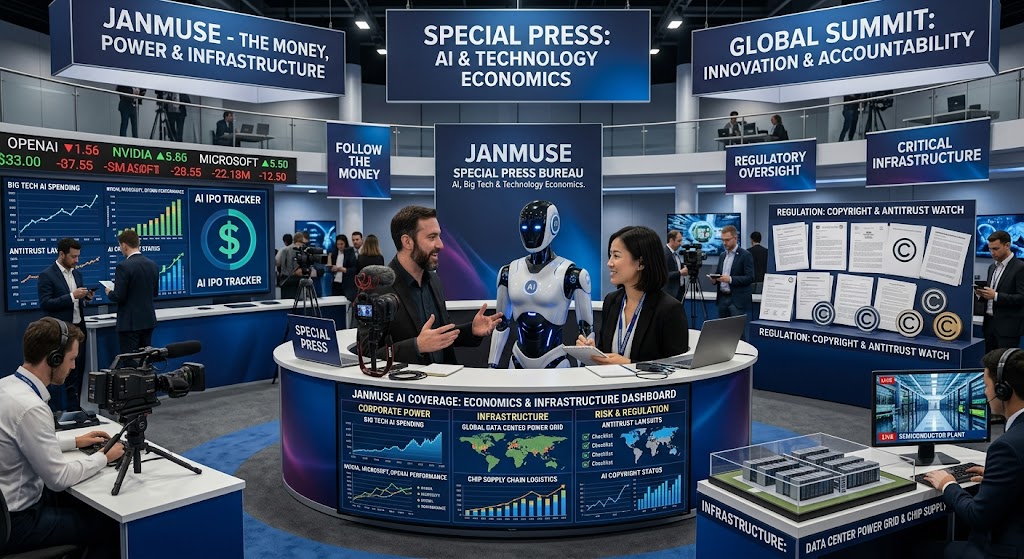
In the Autumn of 2026
The gleaming white columns of the United States Supreme Court have long served as the final arbiter of American intellectual property. But in the autumn of 2026, the quiet corridors of power were rattled by a tectonic shift in the government’s approach to the digital age. For years, the conversation surrounding artificial intelligence focused on ethical guardrails and safety guidelines. Suddenly, the focus has pivoted to the very foundation of generative intelligence: the data used to teach machines how to think, write, and create.
As the federal executive branch stepped directly into the fray, it became clear that this was no longer a private dispute between Silicon Valley pioneers and traditional media institutions. It was a declaration of national policy. The government’s intervention signals a new era where the sanctity of copyright is being balanced—or perhaps superseded—by the perceived national necessity of maintaining an edge in the global AI race.
As the legal landscape transforms, the very definition of transformative use is being rewritten in real-time, forcing tech giants to prepare for a future where their training methods are subject to the highest levels of executive and judicial scrutiny, fundamentally altering how they build the engines of tomorrow. The most startling maneuver in this high-stakes legal drama arrived when the Trump administration formally signaled its support for OpenAI in the ongoing, high-stakes copyright litigation against The New York Times. This move effectively broke the traditional expectations of institutional neutrality.
By choosing to intervene on behalf of the developer, the administration framed the accessibility of training data not as a breach of creative rights, but as an essential element of technological infrastructure. This backing was not merely a procedural filing; it was a policy statement. It posits that the development of large language models is a matter of strategic priority, potentially insulating leading AI firms from the crippling liabilities that threatened to dismantle their training datasets.
Legal observers were left to grapple with the implications: if the federal government views the unrestrained ingestion of copyrighted material as vital for national competitiveness, the path for media entities to seek damages suddenly narrows. This executive backing acts as a powerful deterrent against similar lawsuits, suggesting that the White House is prepared to leverage its authority to prevent the courts from imposing restrictions that could stifle the rapid iteration of generative platforms, effectively placing a thumb on the scale of intellectual property law.
Their Complaint Is Precise
At the heart of the conflict lies the formidable legal arsenal deployed by The New York Times, which has argued that its decades of investigative journalism, analysis, and editorial content represent the core intellectual capital powering modern AI models. Their complaint is precise: the models are not merely learning the patterns of language; they are effectively replicating the professional labor of human journalists without compensation or consent. By systematically consuming copyrighted archives, these generative systems create a parasitic relationship where the AI generates responses that substitute for the original content, thereby eroding the value of the very sources that made them possible.
The Times’ lawyers contend that this unauthorized ingestion constitutes clear infringement, a direct violation of the protections granted to creators under U. S. copyright statutes. Their argument hinges on the premise that the commercial value of these models depends almost entirely on high-quality, verified data—the exact commodity that publishers cultivate. If the court accepts this view, the business model of current AI deployment would face an existential crisis. The litigation serves as a crucible, testing whether the doctrine of fair use can be stretched to accommodate a technology that transforms human creativity into a commodity, stripping it of its original intent and market integrity.
The intervention of the Trump administration, corroborated by reports from Reuters and global news outlets, is viewed by industry insiders as a definitive pivot in American tech policy. While the public focus remains on the specific arguments presented in court, the deeper signal suggests that the White House has identified a national security interest in ensuring that domestic AI firms maintain their technological dominance. These secondary reports underscore a growing reality: the executive branch is actively coordinating its legal strategy to mirror its broader geopolitical agenda.
By publicly aligning with OpenAI, the government has essentially signaled that it views these copyright lawsuits as an impediment to the rapid development and deployment of robust AI systems. This is more than a legal filing; it is an economic directive. As the administration continues to prioritize the scale and capability of domestic models, the judiciary finds itself caught between the demands of legacy copyright protections and the shifting reality of a digital economy.
For tech giants, the government’s intervention provides a necessary shield, a signal that their training strategies, while controversial, are sanctioned at the highest levels, further cementing the role of generative AI as a core pillar of the nation’s 21st-century technological arsenal.
Legal Landscape Hardens Around the Concept of AI Supremacy
As the U. S. legal landscape hardens around the concept of AI supremacy, a collision is occurring on a global map where different, often contradictory, regulatory frameworks are emerging. While the United States moves toward a policy of broad protection for AI developers, the European Union is simultaneously finalizing its stringent compliance architectures under the AI Act, prioritizing transparency and the rights of content creators. Meanwhile, across the Pacific, China is rapidly installing its own set of binding regulations, which emphasize social stability and liability for synthetic media content. These are not just localized legal debates; they represent a fracturing of the global digital environment.
Tech giants are finding themselves trapped in a multi-jurisdictional web, where a training method that is protected by executive order in Washington might be considered a criminal violation in Beijing or a GDPR-breaching offense in Brussels. This collision forces developers to operate under a fragmented set of rules, requiring them to constantly re-engineer their foundational models to survive in distinct, localized markets. The dream of a uniform, global generative platform is rapidly fading, replaced by the necessity of building hyper-localized architectures that comply with a patchwork of state-level red lines.
The cumulative effect of these jurisdictional barriers is forcing a fundamental rethink of global deployment strategies for companies like OpenAI, Google, and Meta. No longer can a single model be deployed with a universal feature set. Instead, tech firms are forced to implement complex geographic filtering and region-specific training protocols to navigate the increasingly hostile legal terrain. In jurisdictions like China, the focus on deepfake liability and developer responsibility requires engineers to build permanent, hard-coded guardrails that prevent the creation of non-consensual synthetic media. In the U. S. , the challenge is navigating the tension between copyright litigation and executive protection, necessitating a hybrid approach that prioritizes data provenance.
These barriers have effectively ended the era of ‘move fast and break things’ as a universal development philosophy. The costs of compliance, legal risk management, and local regulatory adherence have skyrocketed, leading to a landscape where only the largest, best-funded tech giants can afford to maintain a global footprint. The pressure is no longer just about optimizing parameters or increasing token counts; it is about political and legal engineering, where the structure of the software itself must now reflect the geopolitical realities of the countries in which it resides. While the U. S.
debates copyright, China’s approach to AI governance has taken a sharply different, more interventionist turn, focusing on the social implications of synthetic content. Beijing’s recent judicial rulings have established a robust framework for deepfake liability, explicitly placing the burden of responsibility on the developers of the underlying models.
This Is Not Merely an Intellectual Property Issue
Under these mandates, if an AI is used to create misleading or non-consensual imagery or audio, the platform is legally required to demonstrate that it has implemented rigorous verification and safety measures. This is not merely an intellectual property issue; it is a matter of state-mandated social order. These rulings have turned the AI developer into a permanent gatekeeper, responsible for the actions of their users in ways that would have been unimaginable in the early days of the open-web era. The legal risk in China is absolute, with severe consequences for non-compliance, including the potential for total market exclusion.
This regulatory climate has pushed firms to move beyond soft content filters and toward systemic, architectural constraints that are baked into the core of their models, ensuring that the technology is incapable of producing banned content by design, rather than just by moderation. These stringent Chinese rulings are acting as a global forcing function, compelling platforms to install permanent, non-negotiable guardrails against non-consensual synthetic content. The lesson taken from the Chinese legal experiment is clear: the only way to avoid the catastrophic liabilities associated with deepfakes is to build safety into the model’s weightings at the training stage.
As these firms prepare for similar, albeit distinct, regulatory pressures from the EU and potentially even the U. S. in the future, they are moving away from reactive content moderation. Instead, they are engineering ‘safety-first’ models where the prevention of harmful outputs is prioritized over the creative range of the system. This, in turn, influences the global strategy for these companies, as they struggle to adapt these highly restricted, compliant versions of their models for the more liberal American market without degrading the performance that makes the product viable.
The result is a cycle of perpetual redesign, where the tech giants find themselves in a race to build a model that is both powerful enough to compete on the world stage and sufficiently constrained to survive the growing list of international legal red lines that are currently defining the future of artificial intelligence. Across the Atlantic, the regulatory landscape shifts dramatically as the European Union transforms from a passive observer into an active architect of digital governance.
In Brussels, the corridors of power hum with the implementation of the EU AI Act, a framework designed not merely to guide, but to enforce strict compliance through a layered system of oversight.
The European Approach Treats These Models as Infrastructure
Here, the visual manifestation of law is not in courtrooms alone, but in the sophisticated audit trails required of high-risk systems. Data centers and research hubs now operate under the shadow of heavy-duty enforcement mechanisms, where failure to demonstrate algorithmic hygiene risks severe financial penalties that can scale to a significant percentage of global turnover. The European approach treats these models as infrastructure, necessitating a level of transparency that was, until recently, viewed as an antithesis to proprietary innovation.
By mandating rigorous conformity assessments, the EU has essentially forced tech giants to treat the Union not just as a consumer market, but as a mandatory laboratory for ethical, traceable, and legally defensible development. This creates a high-stakes environment where compliance is no longer an optional add-on, but a foundational requirement for any platform aiming to deploy in European territory. Central to this European pressure is the demand for granular visibility into the black box of machine learning training sets. The EU AI Act imposes sweeping requirements for data provenance, forcing companies to maintain exhaustive documentation on every scrap of information ingested by their systems.
Developers are now tasked with justifying the copyright status and origin of massive datasets that were previously treated as bottomless pools of public content. This creates a friction point between the speed of innovation and the necessity of auditability. Tech firms must now implement complex data lineage protocols, ensuring that human rights impact assessments and training data summaries are not just internal checklists, but verifiable documents ready for regulatory inspection. If a model generates output that infringes on privacy or copyright, the audit process must be capable of tracing that output back to its training origin.
This shift fundamentally alters the life cycle of AI development, as companies must now weigh the utility of including certain datasets against the long-term, expensive, and technically difficult burden of documenting them for compliance under the watchful eye of European authorities. The downstream consequences of these international mandates are written in the stark, unblinking language of corporate finance. As regulatory scrutiny intensifies, legal and compliance-related operational expenses have skyrocketed to unprecedented levels. It is no longer enough to hire a handful of policy advisors; firms are now bloating their payrolls with battalions of compliance officers, ethics consultants, and specialized legal teams focused exclusively on AI liability.
Graphics charting these expenditures reveal a sharp, upward trajectory that mirrors the tightening of global legal belts.
This Surge in Spending Is Not Merely a Cost of Doing Business
This surge in spending is not merely a cost of doing business; it is a defensive investment against the potential for massive state-level fines and litigation losses. For the major platforms, this is a calculated expense, a necessary toll paid to maintain market access. However, these figures mask a deeper structural shift within the industry, as capital that once flowed exclusively into R&D and GPU clusters is now being diverted into the machinery of bureaucracy.
The rising cost of legal compliance has effectively raised the entry barrier for the entire field, creating an ecosystem where only the wealthiest players can afford to innovate in an environment characterized by constant, state-imposed legal friction. This financial stratification creates a troubling reality for the smaller players who once formed the backbone of the AI renaissance. For independent researchers and small-scale innovators, the cost of navigating the current legal maze is often prohibitive. Unlike the giants that possess deep-pocketed legal departments to spar with regulators, start-ups are finding themselves squeezed out of the market entirely.
Industry experts frequently point to this dynamic as the unintended, yet profound, byproduct of aggressive regulation. The necessity for rigorous documentation, the threat of copyright litigation, and the expense of compliance software mean that many promising projects are killed in the cradle. Market entry now requires not only brilliance in engineering but an institutional scale capable of absorbing massive legal overhead.
This centralization of power is a direct consequence of the legal squeeze; as compliance becomes the primary obstacle to growth, the industry inevitably trends toward an oligopoly of incumbents who are the only ones capable of subsidizing the massive costs of survival in a regulatory climate that shows no signs of loosening. The pressure to mitigate legal exposure is forcing a total transformation in how AI models are fed and raised. We are seeing a historic pivot from the ‘scrape-everything’ era—where public internet data was harvested indiscriminately—to a more curated, expensive, and cautious methodology.
Modern pipelines are shifting toward licensed data, where companies negotiate large-scale content deals with publishers, or toward the creation of vast, high-quality synthetic datasets that are designed to avoid the copyright quagmires of the past. An animation of this transition reveals the shift clearly: the chaotic, open-stream inflow of the early days is being replaced by filtered, sterilized conduits. This is a deliberate re-engineering of the foundation. By moving away from the gray area of unlicensed web scraping, firms are attempting to build a protective moat around their intellectual property and their models.
This transition is not born of a sudden ethical awakening, but of a cold, rational assessment of the risks associated with the courtroom battles currently unfolding in the United States and elsewhere, where the legality of training on copyrighted material remains the most contentious issue of the decade.
As the Threat of Legal Repercussions Looms
As the threat of legal repercussions looms, tech firms are engaging in the grueling work of cleaning and auditing their historical model data. This process, often compared to scrubbing a massive, messy digital basement, is an attempt to insulate companies against potential court orders that could demand the purging of infringing training data. If a court decides that specific copyrighted works were used illegally, companies must be prepared to demonstrate that they can effectively ‘unlearn’ or excise that information, or at the very least, track its influence to satisfy judicial standards. This requires an exhaustive, layer-by-layer mapping of the neural network’s training history.
It is a technological and logistical nightmare, requiring firms to rebuild the very architecture of their training protocols. They are retrofitting their models to allow for surgical removal of data, ensuring that if they lose a copyright case, they have a mechanism for compliance that does not force them to scrap their entire investment. This defensive posture reflects the high level of anxiety in the tech sector, where every line of code is now considered a potential future liability. A sweeping montage of the AI development landscape reveals a clear, inescapable evolution: we have exited the ‘Wild West’ of the late 2010s and have entered a state-governed phase of development.
Where the early days were characterized by explosive, unregulated expansion, today’s environment is marked by fences, guardrails, and heavy scrutiny. The image of the rogue programmer operating from a garage has been replaced by the image of a massive corporation navigating complex webs of international treaties and executive interventions. This transition is not just a change in scale, but a fundamental change in philosophy. The development of AI is no longer just a technical challenge; it is a geopolitical one. Governments are asserting sovereignty over the digital content that feeds these engines, signaling that the era of complete tech-industry autonomy is over.
This shift is irreversible, reflecting a global societal consensus that the unchecked growth of AI models has reached a point where the risks to intellectual property, personal privacy, and social stability demand a firm, state-mandated hand on the throttle. Ultimately, the emerging reality is that regulatory compliance has become the primary prerequisite for technological viability.
A Model’s Success Is No Longer Judged Solely by Its Parameter Count
A model’s success is no longer judged solely by its parameter count, its creative range, or its reasoning speed, but by its ability to exist within the law. Companies that ignore this shift do so at their own peril, as the legal, financial, and reputational costs of non-compliance have become too high to sustain. The argument is increasingly clear: to thrive in the modern market, AI must be engineered to be compliant from the very start. This synthesis of technical innovation and legal rigor is the new standard of the industry. As the world watches the U. S.
government intervention in major copyright disputes, and observes the binding, harsh nature of international liability rules, it is evident that the future of AI will be defined by its constraints. In this new, regulated world, power is measured not by how fast a system can learn, but by how securely it can operate within the narrowing red lines established by a global legal community that is determined to bring the digital frontiers under the rule of law. The operational architecture of large language models is undergoing a profound transformation as firms grapple with the technical demands of legal compliance. When the U. S.
government recently signaled its support for OpenAI in the ongoing New York Times copyright litigation, it did not merely weigh in on a single court case; it established a pivotal precedent for how machine learning systems handle protected data. For developers, this shift mandates a rigorous, granular re-engineering of training pipelines. Companies are now implementing sophisticated filtering mechanisms and data-scrubbing protocols to distinguish between fair use and proprietary content, attempting to navigate the volatile intersection of intellectual property rights and massive dataset requirements. This is no longer a peripheral concern handled by legal teams; it is now an engineering constraint.
Models are being modified to proactively avoid infringing outputs, utilizing complex weight-adjustment strategies and provenance tagging that track data origins from ingestion to inference. These adaptations are expensive, technically grueling, and essential for any entity hoping to maintain a legitimate product in a landscape where the state has explicitly prioritized the survival of foundational AI developers over traditional copyright protections. As the regulatory floor rises, a distinct economic stratification is emerging within the tech sector. Managing the compliance burden requires more than just algorithmic ingenuity; it demands a massive, dedicated budget for legal counsel, public policy engagement, and the development of compliance-monitoring infrastructure.
For well-capitalized tech giants, these mandates serve as a high barrier to entry, effectively consolidating power by weeding out smaller, under-resourced competitors who cannot sustain the costs associated with navigating these legal red lines.
When the Administration Steps Into a High-stakes Copyright Dispute
When the administration steps into a high-stakes copyright dispute, it effectively validates the survival of the largest players, provided they play by the newly defined state rules. These firms are building what might be called ‘legal moats’—expensive, redundant layers of auditability, content moderation, and licensing agreements that smaller startups simply cannot afford. This dynamic guarantees that future innovation remains concentrated in the hands of the very few who can afford both the massive computational costs of training and the soaring financial toll of permanent, high-level legal defense and regulatory maneuvering. Looking ahead, the global legal landscape appears increasingly fragmented yet convergent in its push for control.
While the United States moves to shield its domestic champions from crippling copyright litigation, other jurisdictions are imposing distinct, equally rigid constraints. European compliance pressures regarding transparency and algorithmic accountability, coupled with China’s strict liability rules for deepfakes and generative content, are creating a matrix of obligations that developers must navigate if they wish to deploy globally. The future of artificial intelligence will not be decided by the speed of its next parameter breakthrough, but by the ability of developers to harmonize these conflicting regional standards into a single, cohesive, compliant output.
We are moving toward a period of ‘enforced maturity,’ where the Wild West era of scraping and scaling is definitively over. The legal and geopolitical environment is effectively forcing a redesign of the global stack, ensuring that future advancements are checked against a ledger of liability that stretches from Washington to Brussels and Beijing, fundamentally altering the trajectory of research and product deployment for decades to come. Ultimately, the ‘global legal squeeze’ is defining the next epoch of digital development, ushering in an era of unprecedented, if restrictive, predictability.
We are witnessing the maturation of AI from a chaotic, experimental frontier into a highly regulated industry governed by the firm mandates of the state. While critics argue this rigid framework may stifle the rapid, uninhibited creativity that defined the initial explosion of generative models, proponents see it as the only viable path toward a stable and secure ecosystem. By mandating accountability through copyright and liability frameworks, governments are effectively forcing the AI industry to prioritize institutional safety over unbridled expansion. The outcome of this global pressure is a, yes, more rigid, but significantly more secure and stable technological environment.
AI will continue to advance, but it will do so within a narrow, state-sanctioned lane. As the dust settles on the high-level interventions and courtroom battles, it is clear that the future belongs to those who have successfully internalized these constraints, proving that in a world where the rule of law is the final arbiter, compliance is the ultimate competitive advantage.