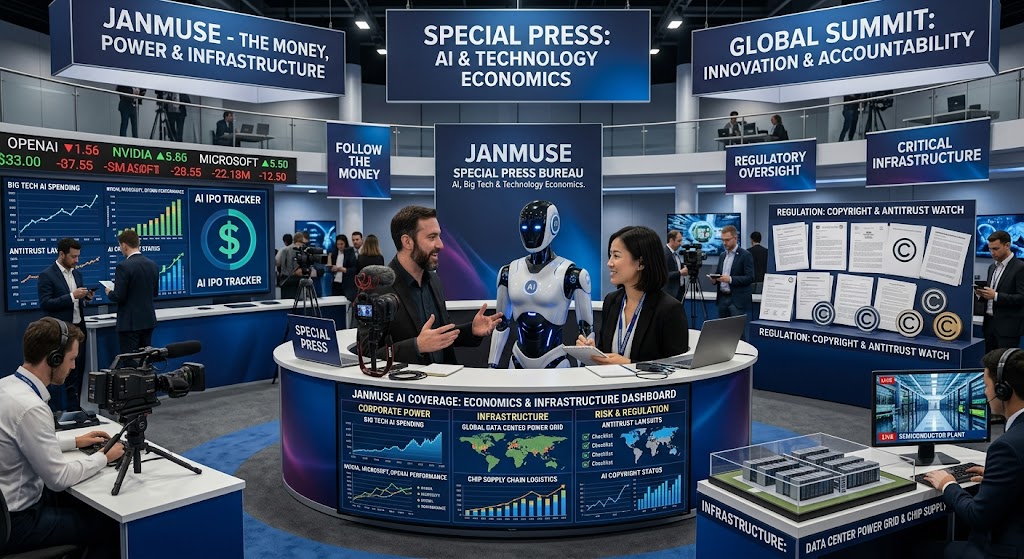
In the Quiet Hum of Modern Existence
In the quiet hum of modern existence, artificial intelligence has become the invisible architect of our daily routines. From the smart assistant flickering to life in a suburban kitchen to the complex algorithms optimizing global logistics, our world is increasingly governed by unseen digital logic. But this cognitive revolution is not occurring in the abstract. It requires a physical substrate—a massive, sprawling network of silicon, fiber optics, and cooling systems. Beneath the seamless interface of your screen lies a hungry machine, one that demands constant, high-speed attention. The sound of these systems is a low-frequency roar, the cooling fans of hyperscale servers pushing heat away from processors that never sleep.
This is the heartbeat of the new economy, an endless cycle of data processing that has necessitated a fundamental transformation of our landscape. We are witnessing the birth of a new physical reality, one where the digital cloud is tethered firmly to the ground, requiring unprecedented amounts of space, power, and capital to remain functional. As AI models grow more complex, the infrastructure demands grow exponentially, turning these silent, whirring facilities into the most critical real estate assets in the modern world. Look past the shimmering glass of the urban skyline and you will find the true monuments of the current decade.
Away from the crowded city centers, across the plains of Northern Virginia and the sun-drenched industrial parks of the West, massive, windowless warehouses are rising from the earth. They are anonymous, fortress-like structures, devoid of people, characterized only by heavy security gates, perimeter fencing, and rows of massive industrial-grade HVAC units. These are not storage facilities for consumer goods, but physical vessels for the digital age. They are the new cathedrals of capital. To the casual observer, they are invisible, blending into the industrial sprawl, yet they represent a massive pivot in how we value land.
The footprint of these facilities is staggering, consuming hundreds of acres at a time to house the racks upon racks of GPU clusters that power our digital lives. They are the hidden anchors of the internet, the tangible locations where virtual intelligence is generated. Each structure is a fortress designed to protect the hardware that constitutes the backbone of global commerce, representing a shift from traditional real estate to a specialized class of digital infrastructure.
Wall Street Has Taken Notice of This Seismic Shift
Wall Street has taken notice of this seismic shift. As the demand for computing power skyrockets, so too does the flow of institutional capital into the sector. We are currently witnessing an unprecedented influx of liquidity, with major investment banks and private equity firms realigning their portfolios to capture the growth of the data center economy. This isn’t just about constructing buildings; it is about the securitization of the internet itself. Financial data visualizations reveal a striking trend: trillions of dollars are being funneled into real estate investment trusts and specialized bond instruments backed specifically by these massive, power-hungry hubs.
This movement is reshaping the real estate bond market, creating a new asset class where the value is derived not from retail space or office leases, but from the relentless growth of AI training workloads. The bond market, traditionally cautious and fixed-income focused, is now betting heavily on the long-term viability of the physical data layer. These facilities are the new engines of growth, and as the capital floods in, the financial sector is codifying the very infrastructure of the future into the language of yields, credit ratings, and long-term security. For bond market strategists, the allure is clear.
In a volatile world, data centers are increasingly viewed as the modern gold standard. They offer something that conventional property cannot: essential, non-negotiable demand. Whether the global economy booms or enters a recession, the requirement for digital compute is inelastic. These facilities are effectively the utility grid of the digital age, and the bonds tied to them are seen as high-security, long-duration assets. Unlike commercial office buildings, which face the risks of shifting remote work trends, a data center is a fundamental dependency for the world’s most powerful technology corporations.
Strategists point to the ‘triple-net’ lease structures common in this sector, where tenants bear all costs and risks, ensuring a steady, predictable stream of revenue for bondholders. It is a level of security that makes this infrastructure inherently attractive to institutional investors seeking safety in an era of technological disruption. When companies like the cloud hyperscalers sign long-term service agreements, they essentially underwrite the debt of the facilities they occupy, turning the warehouse into a highly reliable financial vehicle that serves as a bedrock for the modern debt market. The scale of the investment is difficult to grasp until one sees the figures on paper.
These Charts Are Not Merely Showing Growth
The capital expenditure—capex—of the major cloud service providers has ballooned to levels previously reserved for national infrastructure projects. Each quarter, tens of billions of dollars are poured into the procurement of specialized semiconductors, high-end power equipment, and site development. These charts are not merely showing growth; they are depicting a vertical trajectory that defies historical norms for corporate expansion. This spending surge is driving the bond market frenzy, as companies look to externalize the cost of these projects through massive debt offerings. The scale of the required spending has fundamentally altered the relationship between Big Tech and the capital markets.
These corporations have become the largest builders of infrastructure on the planet, and their ability to sustain this level of investment is the primary catalyst for the current real estate boom. Every rack, every transformer, and every cooling pipe is part of a multi-billion-dollar puzzle designed to win the race for AI dominance. The sheer volume of this capital deployment acts as a magnet for investors, promising that the physical infrastructure will continue to expand at a pace that few industries can match. To satisfy this demand, the landscape itself is being reshaped.
In regions hungry for new development, heavy construction equipment works around the clock, leveling vast tracts of earth to make way for the foundations of these data mega-facilities. It is a scene of industrial intensity that evokes the era of massive railroad construction. Thousands of miles of earth are being shifted to accommodate the sprawl of electrical substations and cooling corridors. The construction process is a race against time; the sooner these buildings can be energized, the sooner they can begin processing the data that companies have already promised their shareholders.
These sites are ecosystems of their own, requiring millions of gallons of water for cooling and a direct connection to the highest-voltage lines available. Every day, the construction footprint grows larger, pushing further into semi-rural areas as the available land closer to dense metropolitan grids is exhausted. This is the physical reality of the digital cloud—a relentless, earth-moving pursuit of square footage that creates a permanent, undeniable mark on the environment, ensuring that the infrastructure remains both massive in scale and strictly bound by the limitations of the local landscape. The true bottleneck, however, lies in the sheer electricity required to run these machines.
A single AI-ready data center rack can consume as much energy as several dozen standard residential homes combined. When thousands of these racks are grouped together in a single facility, the power draw becomes equivalent to that of a mid-sized city. This disparity in energy consumption is creating a massive strain on existing electrical grids.
Graphic Models Clearly Illustrate the Discrepancy
We are shifting from a model where residential and commercial consumption dictated grid planning to one where a handful of data centers can dictate the capacity limits of an entire region. Graphic models clearly illustrate the discrepancy: the dense concentration of power usage in these server racks creates spikes in demand that can destabilize local grids. This is the hidden cost of the AI boom. As the energy density of chips increases, the electrical infrastructure required to support them must also evolve, leading to a constant cycle of grid upgrades and the installation of new, high-capacity substations.
The physical limit of our current grid is becoming a hard wall, forcing developers and utility providers into a frantic, high-stakes game of energy procurement to ensure the lights stay on for the machines. Mapping the modern power grid reveals the consequences of this technological surge. Substations are clustering in unnatural densities around the locations of these new AI hubs, creating a visible heat map of electrical stress. Grid operators are struggling to keep pace, forced to expedite the installation of massive high-voltage lines to deliver power directly to the doorstep of these server farms.
This intense concentration is triggering a scramble for space, as the proximity to existing substations becomes the most valuable asset in the real estate game. If a facility cannot secure a direct, high-capacity link to the grid, it is effectively useless. This constraint is driving the geography of the next generation of data centers, dictating that they must be built where the power is, regardless of the distance to the customers they serve. It is a physical tether that binds the digital future to the current electrical reality.
As we track these lines, we see that the geography of the internet is no longer about fiber optic cables or latency; it is about the geography of electricity. The concentration of substations is the ultimate indicator of where the next wave of capital will land, defining the battleground for power in the 21st century. Inside these silent, colossal warehouses, the heat generated by the relentless processing of AI models is immense. Traditional cooling methods are no longer sufficient to prevent thermal throttling.
We See the Heartbeat of the Modern Data Center
We see the heartbeat of the modern data center: a complex lattice of pipes circulating dielectric fluids directly across the surface of high-performance chip arrays. This liquid cooling system is not a luxury; it is a fundamental requirement for the hardware. As billions of transistors fire simultaneously to train massive language models, the heat density becomes lethal to silicon. Engineers now rely on these closed-loop fluid systems to pull thermal energy away from the processors with far greater efficiency than simple forced air. It is a precise, mechanical dance of fluid dynamics that allows the data center to push its hardware to the absolute edge of performance.
Without this level of engineering, the massive compute clusters that power the AI revolution would effectively melt down within seconds of hitting full load, marking a shift in physical infrastructure where cooling capacity now dictates the limit of software potential. To understand the sheer magnitude of this transition, one must look at the evolution of architectural design within these facilities. For decades, row-based air conditioning units were the standard, relying on cold-aisle containment to shuffle air through server racks. However, modern AI density has rendered air cooling almost obsolete.
If you examine the diagrams of new generation sites, you see a complete abandonment of the ‘raised floor’ architecture in favor of direct-to-chip liquid systems. While air relies on the convection of gas—a notoriously inefficient medium—liquid cooling leverages the superior thermal conductivity of water or synthetic coolants. This allows for significantly higher power densities per rack, shrinking the physical footprint required for the same computational output. Yet, this shift creates a massive infrastructure bottleneck.
The site must now support industrial-grade plumbing and massive external cooling towers, turning what was once a simple warehouse building into a hybrid between a digital vault and a heavy chemical processing plant, with every square inch of cooling capacity monetized as a premium asset. The demand for this cooling and power is physically reshaping our landscape. From the air, the contrast is stark. You see the traditional suburban sprawl—residential streets, schools, and parks—suddenly truncated by the massive, windowless, block-like silhouettes of the new data campuses. These facilities are built on the scale of industrial refineries, sprawling over hundreds of acres.
They are silent, guarded, and entirely disconnected from the communities that surround them, creating a physical and visual disconnect between the digital economy and the local geography. As these campus footprints expand, they cannibalize land that was previously zoned for other uses, forcing a collision between the global hunger for data and local municipal plans.
This Isn’t Just a Building
This isn’t just a building; it is a permanent alteration of the suburban horizon, where thousands of megawatts of potential are stored behind concrete walls, effectively privatizing vast swaths of land once meant for public expansion or housing, while reshaping the regional aesthetic into something entirely synthetic. The tension spills over into town halls, where local residents and policymakers clash with the expansion of these data fortresses. In meetings, the debate is rarely about the internet itself, but about the tangible, local consequences: the massive consumption of power, the noise pollution from thousands of fans, and the strain on regional water supplies used for cooling.
Residents argue over zoning, questioning why a massive, tax-subsidized campus that employs only a few dozen people should displace their neighborhoods or drive up their utility rates. The arguments are fueled by a fundamental struggle for control over the local environment. Utility boards are pressured by tech giants to prioritize data centers over residential lines, leading to long-standing disputes regarding who owns the right to the power grid.
It is a microcosm of the global friction caused by the AI boom; the digital services are global, but the consequences—the hum of the servers, the grid load, and the land use—are intensely local, leaving communities to navigate the fallout of a technological race they never asked to join. Behind these physical campuses lies a sophisticated financial machine. When we look at the ownership structures, we see a global consolidation of assets by a handful of massive institutional players. These entities—ranging from private equity giants to dedicated data center real estate investment trusts, or REITs—now control the fundamental infrastructure of the internet.
They purchase the land, build the shell, and secure the power capacity, essentially turning physical real estate into a high-yield utility. By aggregating these campuses into centralized portfolios, these firms have created a new asset class. They are the landlords of the digital age, and their tenants are the largest cloud providers and AI companies in existence.
The comparison table of these owners reads like a list of the most influential institutional investors in the world, proving that the internet’s backbone is no longer owned by the engineers who designed it, but by the financial firms who recognized early on that data storage is the new gold, and that land with enough power is the ultimate treasury. This concentration of ownership serves a precise financial function: the securitization of infrastructure. Because data centers provide long-term, stable income through massive lease agreements with hyperscalers, they have become the perfect vehicle for bond markets.
REITs Bundle These Multi-year Contracts Into Tradable Financial Instruments
REITs bundle these multi-year contracts into tradable financial instruments, allowing global investors to buy a slice of the digital economy. This process essentially converts the energy and space inside a data center into a liquid asset. By transforming the physical reality of a server rack into a bond, Wall Street can distribute the risk and profit of AI infrastructure far beyond the tech sector. This financialization is a feedback loop; as demand for AI grows, the valuation of these bundles rises, prompting more capital to flow into the construction of more data centers, which in turn fuels further market growth.
It is a sophisticated mechanism that ties the physical heat of a server processor directly to the liquidity of global bond markets, making the data center the cornerstone of modern real estate investment. At the end of this supply chain, the machinery itself is produced with the urgency of wartime manufacturing. On the factory floor, high-speed assembly lines churn out thousands of complex server racks, configured for the specific requirements of AI workloads. These are not standard office servers; they are dense, heavy, and engineered for extreme longevity. Every cable, every chassis, and every power distribution unit is designed to be swapped, upgraded, and maintained without interrupting the facility’s uptime.
The sheer volume of this output is staggering, reflecting the insatiable demand for hardware that can process large language models and neural networks. As the robotic arms place GPUs into these racks, you realize that this assembly line is the final stage of a resource-heavy journey that began with raw materials and finished with a computational powerhouse. This is the industrialization of intelligence, where the physical components of our digital lives are rolled off the line in a perpetual, high-stakes sprint to keep up with the exponential growth of computing requirements.
Finally, the equipment enters the testing phase, where high-density GPUs are put through their paces before being shipped to a cloud site. This is a critical stage; these chips are the lifeblood of the new AI infrastructure, and any failure in testing represents a significant loss in capital. Technicians monitor the thermal and performance benchmarks, ensuring that the GPU clusters can handle the extreme loads of AI training without faulting.
This Stage Highlights the Fragility of Our Infrastructure
This stage highlights the fragility of our infrastructure—these chips represent an immense investment, and their deployment into a site requires absolute reliability. Once the testing is complete, these racks are shipped out to the data centers we’ve been tracking, completing a journey that connects global finance to the literal, microscopic silicon reality of our digital future. It is a testament to how far we have moved from the idea of the cloud being ‘somewhere else’; it is now a vast, physical, and meticulously tested empire of chips, cooling, and capital, waiting to be powered on to perform the next massive computation.
Behind the gleaming exterior of a modern data center lies a supply chain so precarious it could collapse from a single disruption in its foundational layers. Trace the lifecycle of a single AI rack and you start not in a server room, but in a mine where rare earth metals are extracted under intense regulatory scrutiny. These raw materials travel through a global gauntlet: refinement plants, high-precision semiconductor foundries, and finally, specialized packaging facilities where thousands of chips are soldered onto complex boards. Each step is a bottleneck.
Because the lead times for these high-performance components are measured in months or years, any geopolitical tension or localized labor strike ripples upward, threatening to stall the massive data center construction projects Wall Street is currently financing. The sheer physical footprint of these supply chains suggests that the boom is not just a software phenomenon, but a massive mobilization of heavy industry. When a lead time for a critical high-voltage transformer or a specific cooling manifold slips, the entire capital expenditure schedule for an entire institutional bond issuance is thrown into disarray, illustrating the vulnerability inherent in our pursuit of artificial intelligence.
Consider the implications of a worst-case scenario: a localized power grid failure or a significant network disruption at a primary AI hub in Northern Virginia or Silicon Valley. As these facilities scale to support gigawatt-level power demands, their integration into the municipal utility infrastructure becomes a liability. A single substation failure doesn’t just flicker the lights; it halts the training of multi-billion parameter models, causing an immediate, tangible evaporation of invested capital. For the real estate bonds underpinning these assets, an outage represents a breach of operational covenants and a direct hit to the revenue streams of the hyperscalers.
The market, once dismissive of physical downtime, now views these facilities through the lens of mission-critical reliability.
If the Grid Cannot Keep Pace with the Power-hungry Racks
If the grid cannot keep pace with the power-hungry racks—which are currently being packed more densely than anyone envisioned—then the very foundation of the AI-driven real estate market begins to tremble. It is a stark reminder that while the software is ethereal, the hardware requires a degree of uptime consistency that our aging, centralized grid infrastructure was never designed to deliver on such a gargantuan, hyper-concentrated scale. Experts increasingly argue that we have reached a point of long-term decoupling between software innovation and the physical infrastructure required to sustain it.
For years, the prevailing thesis was that software would always be lighter, faster, and more efficient, eventually outgrowing the need for massive hardware footprints. Instead, the AI revolution has mandated the opposite. We are witnessing a ‘re-physicalization’ of the digital world where software performance is explicitly limited by the thermal headroom of a building and the megawatts available at the property line. Investors are realizing that the physical constraints—zoning laws, power availability, and fiber-optic backbones—are now the primary gatekeepers of technological progress.
This decoupling means that even if a new algorithm achieves a massive leap in intelligence, it remains trapped if it cannot be physically housed within a facility capable of dissipating its heat and delivering its power. This shift is reshaping Wall Street’s strategy; the most valuable commodities in the AI era are no longer just the proprietary codes, but the physical shells, the land titles, and the electrical substations that hold the potential for future compute capacity. As we close, we are left with the quiet, persistent hum of an operational server hall—a sound that has become the heartbeat of modern finance.
These rows upon rows of glowing chassis represent the culmination of billions of dollars in bond offerings, engineering feats, and logistical precision. Yet, amidst the sterile beauty of these chambers, there is a fundamental question remaining for the investors who built them: when the hardware eventually ages and the next iteration of compute arrives, what becomes of these massive, purpose-built shells? We are witnessing the birth of a new asset class, one where real estate is valued less by its location near business centers and more by its proximity to the power grid and its ability to handle the extreme physical demands of artificial intelligence.
The boom is reshaping how Wall Street perceives the long-term value of physical space in a digital-first economy. As the lights blink in the server rack, they signal more than just computational power; they signify the consolidation of a new, permanent infrastructure that has irrevocably tied our economic future to the cold, hard steel of the data center floor.