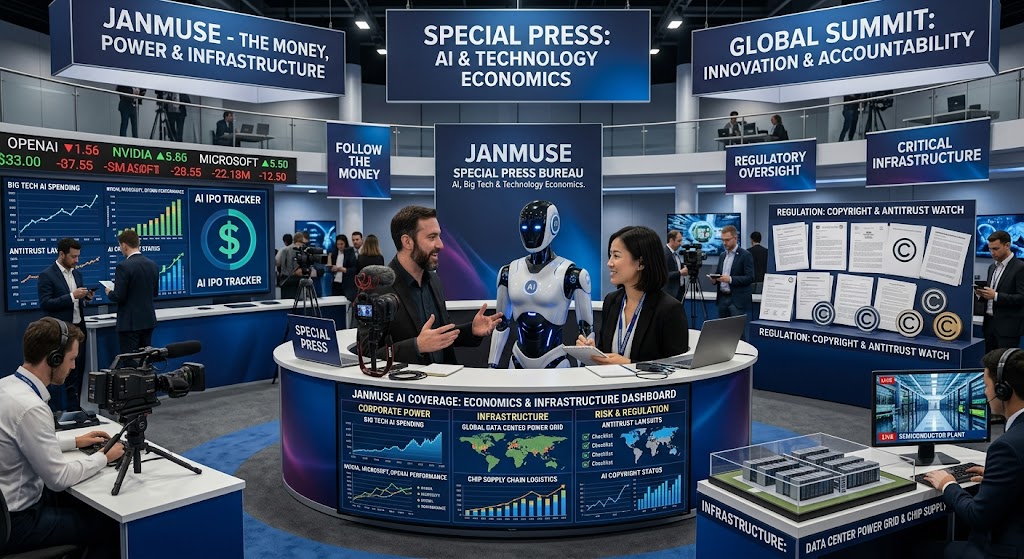
The Media Landscape Shifted Dramatically in October 2026
The media landscape shifted dramatically in October 2026, when USA Today, one of the nation’s most prominent newspaper brands, filed a landmark lawsuit against OpenAI. At the heart of this legal challenge is an explosive allegation: that the artificial intelligence giant has built its commercial success on the backs of thousands of journalists, scraping protected news archives without license or compensation. By demanding two hundred and fifty million dollars in statutory damages, USA Today is not merely seeking a settlement; it is firing a warning shot across the bow of the entire generative AI industry. This filing marks a transition from behind-the-scenes grumbling to an aggressive, high-stakes confrontation.
The core of the complaint hinges on the unauthorized ingestion of proprietary news content, which OpenAI uses to train its Large Language Models. As the industry watches, this case serves as a litmus test for the future of information commerce, forcing a reckoning between the rapid innovation cycles of Silicon Valley and the intellectual property rights that have sustained professional journalism for over a century. The billion-dollar valuations of AI startups now stand in direct opposition to the shrinking margins of the legacy press, creating a volatile, precedent-setting battlefront that could fundamentally redefine how news is gathered, valued, and monetized in the age of automated reasoning.
On Wall Street, the news of the two-hundred-and-fifty-million-dollar lawsuit sent a tremor through the corridors of tech-focused hedge funds and institutional analysts. Investors, long accustomed to a narrative of limitless, frictionless AI scaling, are now being forced to confront the hidden costs of data acquisition. The legal action from USA Today is not an isolated event; it is a signal that the regulatory and litigation environment surrounding AI is hardening. Liability is no longer a theoretical risk—it is a tangible line item on balance sheets that could jeopardize the aggressive expansion plans of tech giants.
For market watchers, this case exposes the fragility of the ‘move fast and break things’ paradigm when it intersects with established media conglomerates. If the courts uphold claims of massive copyright infringement, the cost of training future iterations of models like ChatGPT could skyrocket, as tech companies are compelled to pay market rates for the vast datasets they previously treated as an open-access resource. This shift in risk profile has prompted a frantic reassessment of the viability of AI business models that depend heavily on the ingestion of copyrighted intellectual property.
The Era of Unchecked
The era of unchecked, free data harvesting appears to be coming to a close, leaving venture capitalists to wonder if their massive bets on generative AI are built on a foundation of legal quicksand that could swallow their returns before the next product cycle concludes. To understand the gravity of this lawsuit, one must peel back the curtain on the anatomy of a Large Language Model. At its most fundamental level, an LLM is a probabilistic engine that requires massive quantities of text to ‘learn’ the patterns, nuances, and factual structures of human communication.
The training process begins with the large-scale scraping of the internet, a digital dragnet that captures everything from ephemeral social media posts to decades of archived, high-quality investigative reporting. This data is then indexed, tokenized, and processed through complex neural networks. In the case of USA Today, their proprietary news archives have been ingested as part of a colossal corpus used to fine-tune model responses. When a user prompts an AI, the system does not look for a news article; it calculates the statistical probability of the next word based on the patterns it learned from the millions of articles it was fed during training.
This ingestion process is the mechanical engine behind modern AI performance, yet it is also the very act that media companies claim is a systematic bypass of their rights. Without the high-quality, verified data produced by professional newsrooms, these models would struggle to provide accurate, coherent, and reliable information. The technology, therefore, relies on the output of the very industry it threatens to disrupt, creating an inextricable, parasitic tension at the core of the digital age. The legal crux of the dispute pits two fundamental American concepts against one another: the transformative potential of technological innovation versus the bedrock protections of intellectual property law.
OpenAI and its proponents argue that the ingestion of text for training purposes constitutes ‘transformative use. ’ Under this theory, the AI does not copy or reproduce news articles in a way that competes with the original publications; rather, it creates something entirely new—a generative engine that synthesizes information in novel, productive ways that serve the public interest. However, publishers like USA Today offer a starkly different interpretation: that the process is simple, high-tech copyright infringement. They contend that AI models are effectively cannibalizing their audience by providing direct answers that extract value from their reporting without requiring users to visit the source.
If the AI can summarize a premium paywalled investigation, the incentive for consumers to subscribe to the news outlet vanishes. This shift turns journalism into mere raw material for a tech firm’s product, stripping away the revenue model that sustains deep reporting. The court’s eventual ruling on whether this is a groundbreaking evolution of search and synthesis or a mass-scale theft of creative work will determine whether the news industry receives a financial lifeline or faces further existential erosion in the face of machine-generated competition.
It Is a Calculated Reflection of the Massive Scale of Intellectual Property Utilization
The demand for two hundred and fifty million dollars is not a number plucked from thin air; it is a calculated reflection of the massive scale of intellectual property utilization. Statutory damages in copyright cases are designed not only to compensate the rights holder but also to act as a deterrent against widespread infringement. When thousands of copyrighted articles are ingested into a model that serves millions of daily users, the potential for per-infringement penalties creates a massive financial burden.
USA Today’s legal strategy relies on proving that their specific archives were instrumental in training the model to produce human-like, high-quality journalism, thereby enhancing the commercial value of the AI platform. By quantifying the damages in the hundreds of millions, the publisher is effectively arguing that the value of their reporting is proportional to the success of the AI that relies on it. These figures underscore the transition from the early days of ‘fair use’ experiments to a more rigorous, audit-heavy litigation environment. If courts validate this calculation, it sets a dangerous precedent for tech firms, effectively making the act of training a model a multi-million-dollar transaction per media partner.
This financial pressure is designed to force AI companies to move away from the ‘scraping’ model and toward a structured, licensed marketplace where newsrooms are paid for the vital information they contribute to the digital ecosystem. The escalating litigation has rippled outward, causing a palpable sense of anxiety among venture capitalists who have poured billions into the generative AI boom. For years, the investment case for AI companies was built on a ‘growth at any cost’ mentality, assuming that data would remain an essentially free utility. Today, that narrative is being dismantled in the courtroom.
As companies like OpenAI face mounting legal challenges and the threat of nine-figure settlements, the risk profile for AI-focused venture capital is being fundamentally recalculated. Investors are now forced to factor in potential ‘copyright overhead’—the reality that building a competitive model may require ongoing, expensive licensing agreements with major media conglomerates. This realization is dampening the irrational exuberance that characterized the early AI surge, leading to a more cautious approach where legal feasibility is as important as technical capability. The possibility that successful models could be held liable for their training data has created a ‘wait and see’ atmosphere in Silicon Valley.
If the USA Today case results in a significant financial penalty, it could trigger a wave of similar lawsuits from authors, artists, and music labels, creating a ‘death by a thousand cuts’ scenario for even the most well-funded tech giants. The once-clear path to profitability now looks increasingly cluttered with legal roadblocks, making the future of AI development a gamble against the rising tide of intellectual property enforcement. Before the courtroom doors were flung open, there was a quiet, largely unsuccessful attempt to resolve these disputes through private negotiation.
These Negotiations Frequently Hit a Wall
For months, major media publishers and AI developers engaged in tense, behind-the-scenes discussions, seeking a middle ground that would allow for data access while ensuring fair compensation. These talks aimed to establish licensing frameworks where publishers would be paid for the right to use their archives, creating a sustainable relationship between the news industry and the tech sector. However, these negotiations frequently hit a wall. Tech companies often sought broad, all-encompassing licenses that offered pennies on the dollar, while publishers demanded valuation models that reflected the true commercial importance of their long-form, investigative content.
The gap between what tech giants were willing to pay and what publishers considered an acceptable valuation for their intellectual labor proved impossible to bridge. The failure of these talks revealed a fundamental disconnect: publishers view their archives as precious, irreplaceable assets that are the bedrock of democracy, while AI developers often view them as just another commodity in an ocean of digital text. As the prospect of a mutually beneficial partnership evaporated, the strategy for media outlets transitioned from diplomacy to litigation.
The filing of this lawsuit signals that the era of private, collaborative negotiations has failed, giving way to a public battle where the final word will be delivered by a judge. The strategic pivot of media conglomerates from seeking partners to seeking justice represents a significant shift in corporate philosophy. Where publishers once hoped to position themselves as foundational partners—offering their premium content to help train ‘safer’ and more ‘accurate’ AI models—they have now accepted that their interests may be inherently incompatible with the current trajectory of the AI industry. This pivot is an act of self-preservation.
By moving to the courts, these media organizations are asserting their right to control the dissemination of their work, regardless of the technological advancements that rely on it. This is no longer about finding a seat at the table; it is about protecting the viability of their business models against a technology that has shown an inclination to bypass them entirely. The legal action is a strategic declaration that newsrooms will not be the collateral damage of a new industrial revolution. By pursuing nine-figure statutory damages, they are forcing a confrontation that requires society to decide the value of human-generated, fact-checked information.
This is not merely a dispute over copyright; it is a battle for the autonomy of the press. If they succeed in the courts, they will dictate the terms of their own survival.
A Closer Look at Legal Litigation Content Massive
If they fail, they may be forced to accept a subordinate role in an information ecosystem where their content is mined by machines but their influence is systematically neutralized by the very tools that were supposed to democratize knowledge. Legal experts are now dissecting the USA Today litigation as a potential watershed moment for federal copyright jurisprudence. For decades, the fair use doctrine has served as the bedrock for technological expansion, shielding innovators from the restrictive reach of traditional intellectual property claims. However, this lawsuit challenges that equilibrium.
By seeking two hundred and fifty million dollars, the publishers are testing whether federal courts will view the massive ingestion of proprietary news archives as a transformative technological utility or a wholesale infringement on the expressive work of human journalists. If the court establishes a precedent that mass-scale ingestion for model training requires explicit licensing, the legal landscape shifts dramatically. Such a ruling would essentially codify a new economic entitlement for publishers, effectively ending the era of open-season data scraping that has characterized the rapid growth of generative AI.
Attorneys representing content creators argue that the current scale of usage is far beyond the original intent of fair use, creating a direct substitute for the very journalism that powers these models. The outcome will likely serve as the ultimate litmus test for the sustainability of AI-driven information harvesting. The accumulation of these high-stakes lawsuits is having a palpable psychological impact on the leaders of major AI development firms. Once emboldened by the promise of unfettered innovation, these companies now find themselves trapped in a defensive posture, bracing for a barrage of similar litigation from media entities worldwide.
The legal uncertainty is no longer a peripheral concern; it has become a central factor in boardroom decision-making. As the number of suits grows, the once-buoyant narrative of seamless AI integration is being replaced by a more sober assessment of liability and risk. This cumulative pressure fosters a sense of insecurity regarding the stability of their foundational assets. Engineers and executives are now forced to weigh the pursuit of technical breakthroughs against the looming specter of massive statutory damage payouts. The psychological fatigue of continuous litigation may also be impacting the speed of model iterations, as companies increasingly look for legal safeguards and indemnity clauses.
This shift represents a transition from a tech-centric optimism to a defensive, risk-averse operational model, where every new release is scrutinized for its potential to trigger yet another massive intellectual property dispute in court. OpenAI’s defense remains firmly rooted in the historical interpretation of fair use, positioning its training methods as essential components of modern digital advancement. The company argues that their models do not simply reproduce content but instead engage in a complex analytical process to learn the structure, style, and logic of human language.
They Contend That This Is a Common Practice in the Tech Industry
They contend that this is a common practice in the tech industry, analogous to how search engines indexed the early internet or how researchers analyze existing datasets to gain new insights. By casting their training pipeline as a transformative process, OpenAI aims to maintain the status quo of AI development. They argue that if they were forced to pay for every scrap of data ingested, the cost of innovation would become prohibitive, effectively centralizing the benefits of artificial intelligence in the hands of the few entities that could afford to pay licensing fees.
This defense strategy relies on the hope that the judiciary will see the broader societal benefits of these tools as outweighing the specific copyright interests of individual media organizations, thereby ensuring that AI remains an open-ended, scalable utility rather than a gated, premium product. Beyond the courtroom arguments, there exists a profound technical limitation that complicates the resolution of these lawsuits. Scrubbing specific copyrighted data from a large language model once it has been fully trained is an incredibly difficult, if not impossible, engineering challenge.
Because current architectures rely on millions of parameters derived from a vast, interconnected web of data, removing one set of information risks degrading the coherence and performance of the entire model. AI developers are facing the reality that their training datasets are not just databases that can be pruned; they are deeply integrated into the very neural pathways of the model. This technical hurdle significantly increases the financial risk for companies like OpenAI. If a court were to order the deletion of copyrighted data, the affected organizations might be forced to discard their current models entirely and begin the training process from scratch on a clean, licensed dataset.
The astronomical cost of such a ‘poisoned’ dataset removal highlights the vulnerability of the current software model. Publishers are keenly aware of this technical inflexibility, using the threat of mass deletion to gain significant leverage in settlement negotiations that could reach well into the hundreds of millions. In the chaotic and often unreliable landscape of the digital information ecosystem, high-quality professional journalism stands as the last remaining bastion of verified, human-authored data. As AI models feed on lower-quality web content, they become increasingly prone to hallucinations and systemic bias. Consequently, the premium news archives held by legacy publishers have become the most valuable commodity for training reliable systems.
These archives provide a consistent, fact-checked foundation that is essential for grounding AI in objective reality. The dispute between publishers and developers is, at its core, a fight over the value of this human authority. AI companies desperately need the professional standards of newsrooms to enhance their model credibility, but publishers are beginning to realize that by providing this data, they are fueling the machines that ultimately undermine their reader-based business model. This creates a paradox where the very quality that makes journalism indispensable to AI is also what gives it the legal standing to demand compensation.
As the Demand for ‘clean’ Training Data Grows
As the demand for ‘clean’ training data grows, professional newsrooms are recognizing that their journalistic integrity has a quantifiable market value that they are no longer willing to give away for free. The valuation of news archives has shifted from historical record-keeping to a form of strategic infrastructure for the AI age. For decades, these archives were seen as legacy assets—expensive to maintain and difficult to monetize—but they are now viewed as the raw materials for a new, trillion-dollar industry. This change in perspective has sparked a surge in copyright enforcement.
Publishers have begun to view their decades of reporting not as static history, but as an active, evolving asset that can be packaged for licensing. The realization that their archives are being used to train the very systems that will replace them has forced publishers to treat their data with the same level of security as a proprietary algorithm. By framing their archives as essential infrastructure, newsrooms are establishing a new benchmark for corporate valuation.
This strategic move is intended to ensure that if these archives are to be the fuel for the next generation of artificial intelligence, the owners of that fuel will demand a perpetual royalty stream or a significant, lump-sum settlement. This valuation pivot signals the end of the experimental phase of AI integration and the beginning of a hard-nosed, commercialized relationship between tech firms and content creators. When we analyze the projected software margins of AI firms against the rising tide of litigation, the economic fragility of the current business model becomes clear.
These companies have invested billions into research, development, and massive compute costs, operating under the assumption that the training data would be essentially free or available under loose fair-use interpretations. The introduction of nine-figure copyright lawsuits disrupts these financial projections. If developers are forced to pay significant licensing fees or comply with high-cost settlements, the operating margins of their products will shrink dramatically. This litigation effectively adds a massive ‘content tax’ to every query, challenging the viability of the ad-supported or low-subscription models that currently underpin many AI services. If these legal costs are passed on to consumers, the increased pricing could dampen the mass-market adoption needed for scale.
The struggle for profitability is now being fought on two fronts: internal engineering costs and external legal obligations. For investors, the long-term outlook for AI software is becoming increasingly tied to the resolution of these copyright disputes, which threaten to turn high-growth projections into stories of prolonged legal attrition. The escalating legal liability surrounding copyrighted training data represents a fundamental threat to the long-term scalability of the modern AI software model.
Scalability Requires Access to Vast
If copyright holders successfully restrict the pool of data that can be used for training without explicit, expensive licenses, the ‘unlimited’ growth narrative of generative AI hits a hard, legal ceiling. Scalability requires access to vast, high-quality datasets, but if that data is increasingly locked behind paywalls and protected by vigorous, high-stakes litigation, the cost of acquiring it could become prohibitive for all but the largest players. This creates a market bottleneck where only the most well-capitalized firms can afford to train competitive models, potentially leading to a monopolistic ecosystem.
Furthermore, if the legal system dictates that AI companies must constantly monitor and verify the licensing status of every piece of data in their training sets, the velocity of innovation will likely plummet. The threat of legal action is fundamentally changing the calculus of scaling, forcing firms to balance the desire for infinite intelligence against the harsh, finite realities of legal compliance and intellectual property rights. This battle is defining the boundaries of the future, dictating not just who controls the data, but who controls the future of machine intelligence. The media landscape is fracturing into two distinct camps: the collaborators and the crusaders.
On one side, some legacy publishers have opted for strategic partnerships, trading data access for multi-year licensing deals that offer a predictable, albeit controlled, revenue stream. These organizations view the integration of AI as an inevitable technological evolution and prefer to shape the terms of engagement rather than fight them. Conversely, publishers like USA Today are taking a stand in the courtroom, viewing the unauthorized scraping of their journalistic output not as a technological necessity, but as a systematic theft of intellectual property. This divide is more than just a difference in business philosophy; it reflects a deep-seated tension regarding the value of human-authored news in an automated age.
By initiating high-stakes litigation, organizations like Gannett are essentially attempting to force a market correction, arguing that the convenience of an AI-driven future cannot be built upon the uncompensated labor of an entire industry. The industry is watching this schism closely, as the outcome will determine whether journalism is compensated as a primary provider of information or relegated to a background utility harvested for free. For smaller publishers, the financial risk of being excluded from the current wave of licensing negotiations is profound.
While massive media conglomerates have the legal and financial resources to command a seat at the table, regional and independent outlets often lack the leverage to secure similar agreements. As the big players solidify their position and normalize the practice of paid licensing, smaller publishers risk being left in an economic limbo. They face a double-edged sword: if they do not participate in AI ecosystems, they lose critical referral traffic and visibility in an increasingly AI-centric search environment.
If They Participate Without a Formal Licensing Framework
However, if they participate without a formal licensing framework, their content continues to feed the very machines that might eventually render their subscriptions obsolete. This imbalance creates a structural vulnerability. Without a unified industry standard or collective bargaining power, smaller newsrooms are forced to decide whether to fight an uphill legal battle against tech giants they cannot afford to challenge, or to accept nominal payments that may not reflect the long-term erosion of their unique market value. The financial viability of local news—already precarious—now hangs in the balance as licensing deals become the new gatekeepers of digital economic survival.
Looking ahead, the industry is drifting toward a potential royalty-based internet, where every act of machine learning training triggers a transaction. If current litigation leads to a series of legal precedents affirming that copyright protection extends to AI training sets, the era of open-web scraping will likely come to a sudden end. Instead, we may see the emergence of a tiered data marketplace where high-quality journalism is placed behind secure APIs that track and monetize every ingestion of content. While this could provide a sustainable revenue lifeline for struggling news organizations, it creates immense complexity for AI companies.
They would need to build sophisticated infrastructure to handle thousands of individual, fluctuating royalty agreements, effectively turning the internet into a ledger of micro-payments. This shift would fundamentally change the cost structure of generative AI, moving it from a model built on scale and efficiency to one built on recurring operational overhead. If the internet becomes a metered toll road for data, the velocity of innovation in AI could stall, hampered by the sheer bureaucratic weight of tracking intellectual property rights across billions of data points.
Ultimately, the conflict between USA Today and OpenAI serves as a proxy for a much larger collision: the clash between the Silicon Valley ethos of ‘move fast and break things’ and the institutional mandates of American journalism. For years, tech platforms operated under the assumption that the web was a public commons for data extraction. The news industry is now asserting that the content they produce—honed through rigorous editorial standards and human judgment—is not a commodity to be mined, but a product to be protected. As we reach the end of this current cycle of litigation, the stakes remain clear.
The legal system is being asked to redefine what constitutes fair use in the age of generative intelligence, and in doing so, it is defining the future of intellectual labor. Whether AI firms are forced to pay for their foundations or the court decides that information processing remains beyond the reach of copyright, one thing is certain: the era of frictionless, uncompensated access to the world’s news is ending. The final result will establish the economic blueprint for the next half-century of digital media, determining whether the machines of the future are built to support the institutions of the past or replace them entirely.