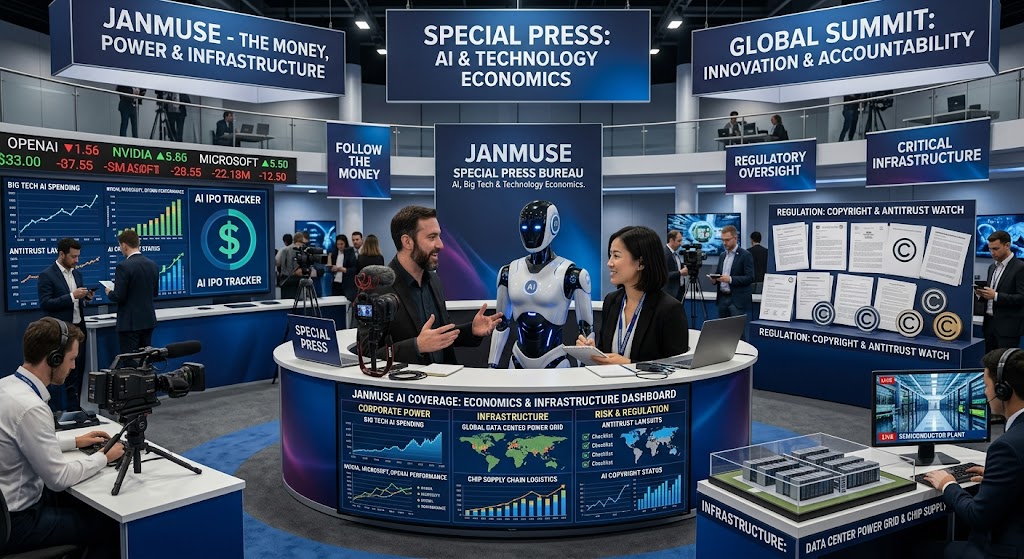
We Are Currently Witnessing the Most Accelerated Industrial Arms Race in Human History
We are currently witnessing the most accelerated industrial arms race in human history, a period defined by the frantic, high-stakes construction of vast digital citadels. Across the American landscape, vast server farms hum with the quiet, terrifying intensity of massive GPU clusters, devouring electricity at a pace that rivals the energy grids of entire small nations. This is not merely technological progress; it is an aggressive, foundational recalibration of how intelligence is manufactured, stored, and deployed. Beneath the surface of every consumer-facing AI interaction lies a physical infrastructure so immense that it pushes the boundaries of our current grid capacity and environmental stewardship.
The sheer scale of this deployment—millions of specialized processors working in silent, algorithmic unison—represents a trillion-dollar bet that we are on the precipice of a new economic epoch. As these laboratories move from the experimental phase into full-scale industrial integration, the pressure to demonstrate not just novelty, but absolute, repeatable, and scalable financial viability has become the singular, all-consuming focus of the Silicon Valley elite. To understand the true nature of this transformation, we must analyze the tripartite forces currently pinning down the AI industry. First, we have the drive for pure, pre-IPO profitability—a signal to investors that these experimental labs have evolved into sustainable, cash-generating engines.
Second, we confront the tidal wave of copyright litigation, where publishers and media giants are finally pushing back against the unauthorized ingestion of their intellectual property. And third, we face the silent crisis of power, where the immense hunger of these digital models forces tech conglomerates to pursue dedicated nuclear energy deals to secure their future. These three factors—profitability, litigation, and power—do not exist in isolation. They form a complex, suffocating squeeze that defines the modern enterprise AI market.
As labs strive to satisfy the bottom line, they are simultaneously forced to build their own private energy grids and defend their right to train models against a mounting wall of legal precedent that threatens to rewrite the rules of digital ownership forever. The latest financial disclosures from Anthropic provide a startling glimpse into this high-stakes pressure cooker. In the third quarter of 2026, the company reported an astonishing 16. 8 billion dollars in revenue, a massive figure that serves as a proof of concept for the viability of large-scale, enterprise-ready AI services.
This milestone is not just a rounding error in the tech sector; it is a declaration of maturity.
By Achieving This Revenue Plateau
By achieving this revenue plateau, Anthropic has effectively signaled to the capital markets that the theoretical potential of generative AI has successfully transitioned into a tangible, high-velocity revenue stream. Yet, this success carries a heavy burden. The disclosure also highlighted the company’s first adjusted profit, a critical metric aimed at calming nerves and preparing for an inevitable, high-profile initial public offering. But as the ledger shifts from red to black, the expectations placed upon the lab grow exponentially. Every dollar of profit is a testament to their technical capability, but also a target for those who seek to claim a share of the value created by these models.
To place this 16. 8 billion dollar figure in perspective, one must observe the explosive 45 percent quarter-over-quarter growth rate. In any other industry, such an expansion would be the result of decades of market penetration; here, it is the product of a compressed, hyper-aggressive deployment strategy. This growth trajectory is significantly sharper than the traditional SaaS benchmarks that once defined Silicon Valley success, illustrating that the demand for AI intelligence is currently decoupled from traditional economic cycles. However, this velocity creates a fundamental structural risk. When an organization scales at 45 percent every three months, the internal infrastructure, the legal framework, and the energy consumption must expand in lockstep.
The sustainability of this growth is now the primary question for analysts and critics alike. If this revenue surge is the baseline, the future valuation depends not only on continued growth, but on the lab’s ability to insulate itself from the external pressures of legal liability and the physical limits of energy production. As the profits soar, so too does the scrutiny surrounding the raw materials—the data—used to build these systems. The recent lawsuit brought by USA Today against major AI developers highlights the sharpening conflict between the producers of human knowledge and the architectures designed to synthesize it.
The complaint alleges systemic copyright infringement, arguing that the models have effectively cannibalized original reporting and creative work without compensation or oversight. This is not merely a dispute over minor usage; it is a fundamental challenge to the ‘fair use’ justifications that have allowed the industry to flourish in its infancy. For publishers, this is a fight for existence in an ecosystem that threatens to render their primary content distribution models obsolete. For the labs, it represents a looming shadow over their future capability, as the potential loss of access to high-quality training datasets could stall the trajectory of model improvement that is essential for maintaining their massive revenue growth.
The demand of 250 million dollars by USA Today serves as a chilling precedent for the broader AI sector.
While Some May View This as a Manageable Cost of Doing Business
While some may view this as a manageable cost of doing business, the legal reality is far more complex. If this suit succeeds, or even if it merely forces a series of multi-million dollar settlements, it sets a standard for how every other media organization will approach AI entities. The cost of ‘training data’ is moving from a near-zero expenditure to a variable that could potentially erode profit margins to the point of unviability. The financial weight of these legal liabilities is a direct counter-pressure to the revenue growth we’ve observed.
If an IPO-bound lab must weigh the value of a new model release against the risk of massive, recurring copyright damages, the pace of innovation itself may be forced to slow. We are entering a transition from a ‘move fast and break things’ era to one defined by strict legal boundaries and the slow, grinding process of litigation. Even if these companies solve the challenges of revenue and legal liability, they face an equally insurmountable barrier: the sheer, brutal thermodynamic reality of modern computation. The massive GPU clusters required for training the next generation of foundational models have outgrown the capacity of the public energy grid.
Tech giants are no longer relying on standard utilities; they are pivoting toward dedicated nuclear power, investing directly in the construction and integration of modular reactors to ensure a constant, reliable supply of electricity. This is a profound shift in corporate identity. The AI lab of the future is essentially a power utility company that happens to perform heavy computation as a secondary function. This transition to nuclear baseload represents a massive capital expenditure, often hidden in the deeper footnotes of quarterly reports, which is essential to keep the lights on in the massive, remote data centers where the intelligence is being generated.
Why must these companies turn to nuclear power? Because the energy requirement of training and maintaining modern AI is not just high; it is unrelenting. Standard electrical grids, prone to fluctuation and demand-side shortages, cannot support the stability required for continuous, multi-month training runs. A single interruption in power can cost millions of dollars in lost progress and wasted hardware cycles. Independent, dedicated baseload energy—specifically from nuclear sources—provides the consistent, carbon-neutral, and high-density power that GPU clusters demand. This creates a fascinating paradox: while these firms pursue the most advanced, abstract forms of digital intelligence, they are tethered to the most traditional, physical, and heavy-duty forms of industrial energy production.
The pre-IPO profit-litigation-power squeeze is, at its heart, a struggle to balance these disparate worlds. The labs are racing toward a future of super-intelligence, yet they are finding that the cost of reaching that future is a deep, inseparable dependence on the tangible, expensive, and heavily regulated world of physical power and legal property rights.
Anthropic’s Q3 Revenue Reaching $16
Mapping the convergence of these three pressures requires looking at the balance sheet as a living document of conflict. Anthropic’s Q3 revenue reaching $16. 8 billion, a 45 percent quarter-over-quarter leap, signals that the era of pure research-led expenditure is giving way to the era of enterprise-scale profit. Yet, this milestone hides the tectonic friction beneath. The firm is not simply scaling software; it is balancing the massive, immediate capital outflows required for persistent power, the looming shadow of hundreds of millions in copyright litigation, and the intense internal drive to demonstrate profitability before an IPO.
Each dollar earned is currently being funneled into a ‘sprint to the surface’ where the company must prove it is a viable commercial entity despite being burdened by the very inputs that make its intelligence possible. The balance sheet is no longer a static report; it is a battleground where digital innovation fights for space against the heavy, physical, and legal realities of modern infrastructure and property claims. To visualize this squeeze, consider the flow of capital as a pressurized pipeline. On one end, you have the massive influx of subscription and enterprise-tier revenue that defines Anthropic’s recent $16. 8 billion quarterly milestone.
On the other, the outflows are equally immense, driven by nuclear power procurement agreements and the mounting risk of legal judgments, as evidenced by the $250 million demand from USA Today against AI developers. The profitability we see is a razor-thin margin maintained by extreme efficiency, yet it is constantly threatened by the volatility of these costs. If the energy spend stays high and the legal liabilities crystallize into actual court-mandated payouts, the current pre-IPO ‘profitability’ could evaporate instantly.
Investors are looking at a system where profit is a temporary state, achieved through monumental effort, but one that is fundamentally tethered to the rising costs of owning the energy grid and settling with the creators of the data used for training. Investors have begun to interpret copyright litigation not as a minor regulatory nuisance, but as a long-term, systemic liability that challenges the very unit economics of foundational AI. When publishers like USA Today initiate high-stakes lawsuits seeking damages in the hundreds of millions, they are fundamentally altering the cost-to-acquire-data profile for every major AI lab.
From the perspective of the capital markets, these lawsuits create a ‘liability overhang’ that can discourage risk-averse institutional investors.
We Have to Ask
If every iteration of an AI model comes with the potential for massive class-action settlements or mandatory licensing fees, the path to a predictable, profitable IPO becomes significantly murkier. The market is currently weighing whether these firms can outrun the legal system with pure innovation, or if they will eventually be forced to adopt a tax-like structure where a portion of every dollar earned is directly diverted back to the media companies whose work provided the original bedrock of machine intelligence. We have to ask: is the current pre-IPO profit being bought through an unsustainable manipulation of spending?
By deferring legal settlements and securing massive, long-term debt or equity commitments to build out nuclear power capacity, companies may be front-loading growth while ignoring the long-term cost of their footprint. This suggests that the profitability being touted in current financial reports is potentially fragile. It is a ‘synthetic profit,’ earned by leveraging the existing ecosystem of energy and information without fully compensating for either. If these labs were forced to pay the true, market-based cost for their training data and their energy at the same time, the margin would likely collapse.
The current strategy seems to be one of reaching a public market exit before these ‘shadow costs’ fully materialize, shifting the burden of long-term legal and environmental remediation onto the public shareholders of the post-IPO company, rather than the original venture-backed entity. The 2026 report on publisher rights highlights a critical turning point in how society values digital information. As firms like Anthropic reach a scale where their revenue exceeds that of major media conglomerates, the power imbalance becomes impossible to ignore. The litigation trend—spearheaded by suits like USA Today’s claim—is a push to redefine intellectual property in the age of generative models.
For the industry, this is not just about the $250 million price tag; it is about establishing a precedent that training data is a licensed asset rather than public domain raw material. If the legal system sides with the publishers, the entire operational model of LLMs will have to change. Labs will no longer be able to ingest the entire internet for free. They will need to negotiate individual licensing agreements, effectively turning the ‘open data’ web into a ‘gated marketplace,’ which would fundamentally shrink the potential scale of future models and slow the momentum of technological advancement. Is newsroom copyright the ultimate bottleneck for scaling artificial intelligence?
When we examine the dependency of these models on high-quality, human-curated journalism, it becomes clear that there is a symbiotic trap. The models need the precision and factual integrity of professional journalism to remain useful, yet the cost of defending those copyrights in court is beginning to outpace the benefit of the data itself.
If News Organizations Successfully Weaponize Copyright to Block AI Access
If news organizations successfully weaponize copyright to block AI access, they essentially create a ‘data drought’ that forces AI labs to either pay exorbitant fees or retreat into lower-quality, synthetic data sources. This creates a fork in the road: do we build AI that is intellectually stunted by a lack of real-world human insight, or do we finally create a sustainable economic model where AI profits are shared with the creators of the foundational knowledge? This debate is the defining bottleneck for the next decade of AI development. We are witnessing a profound transition as AI companies evolve from pure software entities into utility-infrastructure-software hybrids.
Historically, tech companies were defined by low capital intensity—write code, scale globally, and keep energy costs manageable. Today, that model is dead. To stay ahead, these labs are buying nuclear power directly, building massive data centers, and managing the physical energy production that was once the sole domain of traditional power utilities. This move is a recognition that software cannot scale beyond the physical constraints of the grid. By becoming energy producers, these firms are no longer just selling intelligence; they are selling the reliable delivery of industrial-scale compute.
This transition requires a massive shift in talent, risk management, and capital allocation, turning software engineers into energy traders and infrastructure managers, and forcing investors to evaluate them on the same metrics used for traditional, capital-heavy industrial conglomerates. Finally, we must consider the geopolitical implications of energy-secure AI labs. As the most advanced AI companies lock in dedicated nuclear power sources to ensure their models never stop learning, they are essentially creating ‘sovereign compute zones. ‘ These labs are no longer just companies; they are strategic national assets.
When an American AI lab secures a dedicated nuclear reactor, it creates a moat that no competitor can cross without similar energy independence. This is leading to a new form of digital-industrial nationalism, where the ability to train the next generation of super-intelligence is directly tied to the ability to control and secure high-density power. The pre-IPO firms that succeed in this transition will be the ones that view themselves not as software platforms, but as the central energy-hubs of the future global economy. They are not just building software—they are building the energy-dense physical architecture of the next century’s intellectual power. The headlines scream of Anthropic reaching $16.
8 billion in quarterly revenue, an eye-watering forty-five percent jump that signals a maturing business model. But for institutional investors, the word ‘profit’ needs a forensic lens. We are seeing adjusted profitability, a term that often masks the massive cash burn required to sustain these gargantuan training runs. When a company claims profitability before an IPO, they are often stripping away the capital expenditures—the multi-billion dollar GPU acquisitions and the massive energy contracts—that define their true operational reality.
While the Revenue Figures Are Undeniable
While the revenue figures are undeniable, the gap between adjusted net income and actual free cash flow remains the most critical metric for any analyst trying to value a company that is essentially subsidizing its own existence. Investors must be wary of the ‘adjusted’ tag; it is the difference between a self-sustaining enterprise and a venture that remains tethered to a constant, accelerating drip of external capital. The operational cash flow is the only ledger that tells the truth about the long-term viability of these models in a post-subsidy world.
Relying on top-line revenue as the singular north star for an AI lab’s success is a dangerous, if not misleading, benchmark. In the current frenzy, revenue growth is frequently conflated with market dominance, yet in the foundational AI sector, revenue is often just a reflection of high-volume customer acquisition at prices that barely cover the inference costs. We are witnessing a ‘growth-at-all-costs’ strategy designed to create the illusion of a traditional SaaS giant, but the underlying economics are fundamentally different.
When an AI company pushes for top-line growth, they are often training their models at massive scales that generate significant liability, not just in hardware costs but in long-term intellectual property obligations. If you look at the Q3 figures that have brought Anthropic to the precipice of an IPO, you see a company operating on a razor-thin margin where every dollar of revenue is offset by the compounding costs of model maintenance. To judge these firms solely on revenue is to ignore the looming ‘debt’—legal, environmental, and computational—that they are accruing to fuel that very growth.
As we cast our eyes toward the IPO landscape of 2026 and 2027, the math becomes increasingly complex for potential public investors. The path to an initial public offering is no longer just about demonstrating a functioning product or a growing user base; it is about justifying the triple-threat burden of litigation, energy expenditure, and high-frequency R&D. The current market environment is demanding a level of fiscal transparency that many labs have avoided during their private-funding heyday. When firms like Anthropic present their books for an IPO, they will face unprecedented scrutiny regarding their ‘hidden’ liabilities. Investors will ask: how much of the profit is tied to unsustainable energy subsidies?
What is the true reserve amount for publisher copyright lawsuits?
Market Expectations for Transparency Regarding Legal Contingencies Are Hitting a Fever Pitch
The 2026 window will be defined not by the sheer size of the companies going public, but by their ability to prove that they can remain profitable after accounting for these structural constraints. We are moving from an era of growth-story IPOs to an era of ‘show me your balance sheet’ skepticism. Market expectations for transparency regarding legal contingencies are hitting a fever pitch, especially following the news of the USA Today lawsuit against OpenAI. Publishers are no longer merely testing the waters; they are aggressively seeking damages—in the hundreds of millions—that strike at the heart of the generative AI revenue model.
As Anthropic and its peers prepare for the scrutiny of a public listing, they are under increasing pressure to disclose the potential impact of this litigation on their long-term margins. A single unfavorable ruling could set a precedent that turns these foundational models into massive liabilities rather than assets. Investors now demand to know if these labs have ring-fenced funds for copyright settlements. Transparency, once a secondary concern during the high-growth phase, is now a prerequisite for any IPO valuation.
The market will no longer tolerate the ‘move fast and break things’ mantra when it involves legal risks that could effectively bankrupt an enterprise if the courts decide that training data has been misappropriated on a systemic scale. This tripartite squeeze—balancing profitability, legal defense, and nuclear-scale power—is effectively raising the barrier to entry so high that it threatens to lock out smaller labs entirely. We are witnessing the solidification of an oligopoly where only the wealthiest players can afford to play the game.
If you are a startup attempting to build a foundational model today, you don’t just need talented engineers; you need a massive legal team to handle copyright litigation and a dedicated energy procurement division to secure the power required to train the next generation of LLMs. This environment is creating a ‘moat of scale’ that ensures that only the giants can survive. By embedding such high fixed costs into the business model, the industry is effectively pulling up the ladder behind them.
Smaller firms will find it nearly impossible to raise the capital necessary to compete when the market requires them to account for the same prohibitive power and legal costs that characterize the leaders. Innovation is becoming a luxury of the ultra-well-capitalized, changing the competitive fabric of Silicon Valley. Ultimately, the argument is clear: large-scale AI is no longer a software race; it is a battle of resource procurement.
This Is the New Industrial Revolution
The companies that emerge as the winners of this cycle will not necessarily be the ones with the most brilliant algorithms, but the ones that successfully locked down the most reliable and affordable energy sources and managed their legal liabilities with the greatest precision. This is the new industrial revolution, where ‘compute’ is the primary commodity, and access to the power grid is the primary strategic advantage. When we look at the trajectory of Anthropic and its contemporaries, we see the transition from being pure software entities to being energy-intensive, legally-engaged utility-like organizations. The ‘AI war’ is being fought in data centers and nuclear plants, not just in code repositories.
The companies that can sustain their growth through this resource-heavy gauntlet will dictate the future of the technology, while those that fail to secure their physical and legal underpinnings will find themselves unable to participate in the next wave of intelligence scaling. The future of the AI ‘profit’ narrative will be written by how well these firms reconcile their soaring ambitions with the rigid constraints of the physical world. For years, the narrative was centered on the infinite scalability of software, but reality has set in.
Whether it is the $250 million copyright risk or the massive capital expenditure required for nuclear-powered data centers, the industry is being forced to ground itself. As we move closer to the IPOs of the next two years, the valuation of an AI lab will depend on its ability to prove that its profit isn’t just a byproduct of cheap debt and unsustainable scaling, but a stable result of real-world operational efficiency. We have reached the maturity stage of this technology, where the ‘magic’ of LLMs is being measured against the ‘brutality’ of balance sheets.
The next generation of success won’t be measured in parameter counts or benchmark scores alone, but in the stability of cash flow in the face of escalating real-world costs and legal volatility. Looking ahead, the next major milestone for Anthropic and its competitors is not just a technological breakthrough, but a financial one: the successful navigation of their IPOs while keeping their energy and legal risks in check. They are playing a high-stakes game of balance. If they succeed, they become the new pillars of the global economy, as vital and entrenched as the power grids they are currently investing in.
If they stumble, the repercussions will be felt across the entire venture capital ecosystem, signaling a cooling of the AI gold rush. We are moving toward a 2027 where the winners are decided by their resilience to the ‘squeeze. ‘ They have set the course, and now they must prove that their foundations are solid enough to weather the storms of litigation and the immense, ongoing demand for energy. The promise of super-intelligence remains, but the path to achieving it has become significantly more expensive and significantly more complicated, marking the true transformation of AI from a visionary project into a formidable, and deeply challenged, industrial reality.