The Digital Landscape Is Currently Defined by an Insatiable Hunger for Raw Power
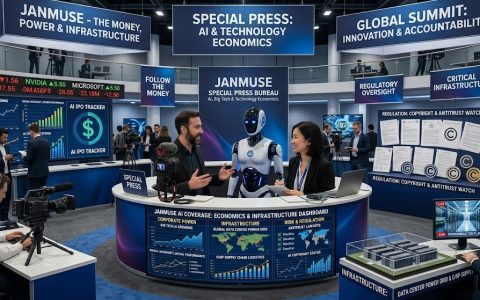
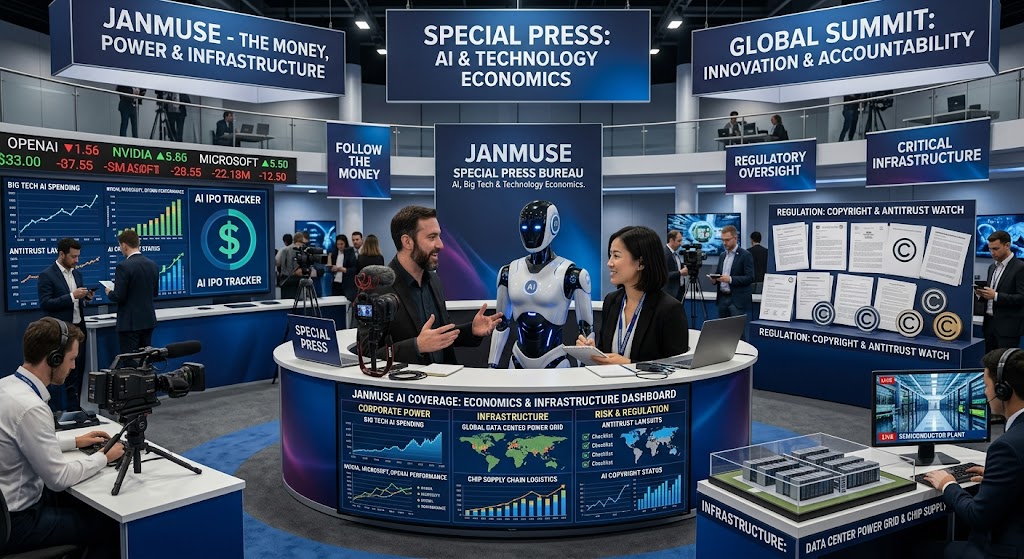
The digital landscape is currently defined by an insatiable hunger for raw power. On screen, we see the numbers flickering—a relentless, exponential climb representing the cost of compute. This is not merely about server racks or cooling systems; it is the thermodynamic cost of intelligence. As model parameters reach into the trillions, the energy required to train these neural networks has spiraled into the billions of dollars. Each iteration of a foundational model now requires a capital investment equivalent to the GDP of a small nation.
We are witnessing a transition from traditional software development, where costs were largely limited by human talent, to an industrial-scale arms race where the limiting factor is electricity and high-end silicon. The data visualization before you captures this upward trajectory, showing how the barrier to entry for top-tier artificial intelligence is hardening into a wall of capital expenditure that only the wealthiest entities can breach. This represents the new economic floor for any organization that claims to be at the frontier of AGI development, turning the pursuit of machine learning into a high-stakes, capital-heavy infrastructure game that leaves little room for error.
When we talk about the target of thirty billion dollars in fresh fundraising, we are moving past the territory of budget management and into the realm of market hegemony. This figure is a strategic declaration. It tells the global markets that OpenAI is not just interested in surviving the current wave of technological development, but in dictating its pace and shape. By securing such a massive infusion of capital, the firm intends to crowd out potential challengers, signaling to investors and competitors alike that the path to dominance is paved with overwhelming financial resources.
It is a show of force, designed to ensure that when the next generation of reasoning models arrives, OpenAI is the only player capable of delivering them at such an immense, infrastructure-intensive scale. In the hyper-competitive arena of AI, thirty billion is a tool of containment—a financial moat intended to insulate the company from the volatility of public interest and the encroaching shadows of rival firms that are also scaling their ambitions to an unprecedented level. The gears of this massive fundraising machine have shifted into high gear, as recent intelligence confirms an acceleration in OpenAI’s capital-raising timeline.
According to emerging reports from the front lines of the tech industry, the urgency behind this move is palpable.
Urces Indicate That the Push for These Funds Has Intensified
Sources indicate that the push for these funds has intensified, effectively moving the schedule forward to finalize the round before the calendar year closes. This isn’t just about replenishing the company’s treasury; it is a tactical synchronization. By accelerating the fundraising process, OpenAI is moving to lock in its valuation and solidify its position in the market before the broader tech ecosystem is forced to react to the shifting sands of public competition. The data points from current news cycles confirm that this is a proactive, rather than reactive, maneuver.
The firm is clearing the path, moving with a speed that suggests they have calculated the exact moment their capital needs to be liquid to effectively counter or capitalize on the upcoming shifts in the industry’s landscape. The reports coming out of major outlets like Reuters provide a window into the intensity radiating from the heart of San Francisco. Within the corridors of OpenAI, the atmosphere is defined by this race against the clock. We are seeing a concerted effort to finalize the terms of this massive raise, not just because the capital is needed for GPUs and electricity, but because timing is the ultimate currency in this game.
The urgency described in these accounts highlights a clear management strategy: gain the upper hand before the competition shifts. It reflects an awareness that the public markets will soon be looking toward alternatives, and OpenAI needs to be firmly entrenched as the industry standard before that narrative can be diluted. The pressure to secure this funding is a direct response to the encroaching reality of competitor milestones. This is the organizational equivalent of a sprint, where the prize is not just the cash itself, but the competitive leverage gained by being the first and the loudest voice in the conversation.
At the center of this financial maneuver is a looming shadow: the Anthropic IPO. The tension here is structural. Anthropic, a primary contender in the quest for the most advanced foundational models, is preparing to step into the glare of the public markets. For OpenAI, this represents a significant moment of disruption. If Anthropic successfully goes public, it will create a new benchmark for valuation and investor sentiment, potentially drawing capital and scrutiny away from OpenAI’s private model. By pushing for their thirty billion dollar round now, OpenAI is attempting to preemptively set the valuation bar.
They are creating a world where their own scale and momentum are so massive that when Anthropic hits the ticker tape, it is measured against an already established titan.
When a Firm Like Anthropic Moves Toward an IPO
The visuals of this struggle represent a chess match played with billions of dollars, where the goal is to make the competitor’s public debut look like an echo of a trend that OpenAI has already commanded, rather than the start of a new, rival wave. When a firm like Anthropic moves toward an IPO, the fundamental nature of the business narrative shifts. Market analysts note that transitioning from private venture capital to public equity changes how a company is perceived—and how it behaves. An IPO forces a level of transparency and quarterly reporting that can be both an advantage and a burden.
It invites the public to own a piece of the AI revolution, which can provide a massive surge in credibility and cash, but it also imposes external discipline. For competitors, an Anthropic IPO is a moment where the ‘research lab’ image must officially give way to the ‘public corporation’ reality. Experts observe that this transition forces the company to prove its business model under a microscope. This is exactly what OpenAI seeks to avoid, or rather, to mitigate through their own fundraising efforts.
By remaining in the private sphere while securing massive, multi-billion-dollar injections, OpenAI maintains the ability to dictate the long-term strategic direction without the immediate, quarter-by-quarter pressure of public market expectations. To understand why thirty billion dollars is necessary, we must look at the brutal operating economics of modern AI. When you break down the cost of training a next-generation foundation model, the figures are astronomical. We are talking about massive GPU clusters running for months, generating electricity bills that can power small cities, and data ingestion pipelines that require petabytes of proprietary information.
Compare this against current SaaS revenue models; while revenue is growing, the cost of development is scaling faster. This is the classic trap of the AI industry: the cost of the intelligence produced is currently tethered to the exponential increase in hardware efficiency, but the price of that hardware is rising alongside the demand. OpenAI is betting that by funding the construction of these massive clusters today, they will achieve a ‘compute-first’ advantage that allows them to scale their services faster than their rivals. It is a gamble that future revenue will justify the crushing burn rate required to keep the lights on and the chips churning today.
The final variable in this equation is the most grounded: the raw link between electricity consumption and capital requirements. Every dollar raised is essentially a proxy for a kilowatt-hour of power. To build the GPU clusters required for the next leap in reasoning capability, OpenAI must physically consume more energy than most major technology firms. This means the thirty billion dollars is not just for software engineers; it is for land, for power grid connections, and for the specialized hardware that transforms electricity into logic.
As These Models Expand
As these models expand, the bottleneck for success moves away from the code and toward the physical grid. The capital requirements here are effectively a toll one must pay to enter the game. If you cannot secure the funding to purchase the silicon and the energy, you cannot compete in the race for AGI. This is the reality behind the fundraising headlines: a desperate, necessary dash to secure the power and the hardware that will define the next chapter of human computation. To understand the sheer magnitude of this thirty-billion-dollar injection, one must first map the complex web of OpenAI’s ownership. It is not a traditional venture capital play.
Instead, it is a hybrid beast—part non-profit mission, part for-profit engine. The incoming capital does not merely buy equity in a startup; it funds the gargantuan expansion of a machine that, in theory, belongs to humanity. Yet, as the figures grow, the influence of these massive institutional investors creates a new kind of gravity. While the original board maintains theoretical control over the non-profit mission, the massive influx of liquidity exerts an undeniable pull on the strategic direction. Every new venture partner brought into the fold effectively increases the pressure to demonstrate not just breakthroughs in research, but consistent, commercial returns.
The ownership structure is now a delicate balancing act, where the non-profit mandate is increasingly entangled with the fiduciary responsibilities owed to a roster of investors who expect the highest-growth returns in the history of Silicon Valley. It is a structure built for a different era, now stretched to its breaking point by the staggering cost of scaling intelligent systems to an industrial level. This structure creates a profound friction: the pursuit of AGI—an objective that requires extreme, long-term patience—colliding with the relentless efficiency required by thirty-billion-dollar fundraising rounds.
When the goal is an entity that might surpass human cognitive capacity, the traditional quarterly rhythm of corporate finance feels almost absurd. Yet, the fundraising machine demands acceleration. For OpenAI, the challenge is to maintain its ethos while moving at a velocity that satisfies the most aggressive capital allocators in the world. Investors are not just buying into software; they are buying into the premise that efficiency is the enemy of innovation.
They Want the Company to Spend
They want the company to spend, to build, and to scale, yet they simultaneously demand the organizational discipline of a profitable, late-stage conglomerate. This duality creates a psychological and operational tax on the leadership team. Every executive decision is now filtered through two opposing lenses: does this move bring us closer to the breakthrough of artificial general intelligence, or does it satisfy the metrics of a market waiting for the next big milestone? It is a high-wire act that forces a constant tension between idealistic ambition and capitalistic reality. The latest move to secure thirty billion dollars is designed to construct what industry insiders call a ‘capital moat.
‘ This is not a barrier of legal patents or proprietary code alone, but a physical fortification built of silicon and scale. By raising such an astronomical sum, OpenAI is effectively signaling that the barrier to entry is now so high that only a handful of entities on the entire planet can possibly keep pace. When you command thirty billion dollars, you are not just funding research; you are cornering the global market for the most advanced compute hardware. You are locking in long-term supply chains for high-end GPUs that are currently in finite supply.
For smaller labs, the game is no longer about having a better idea or a more elegant algorithm. The ‘capital moat’ ensures that by the time a rival attempts to reach a similar level of reasoning, they will find themselves staring at a wall of infrastructure they cannot replicate. You cannot simply iterate your way to this level of capability without the sheer, brute-force volume of compute that only massive, front-loaded capital can provide. It makes the playing field increasingly vertical, leaving most challengers effectively locked out before they even begin their primary sprint.
However, the strategy of the capital moat carries a hidden, systemic risk: the potential for rapid commoditization. History is replete with examples of industries where massive infrastructure investment was rendered vulnerable by a sudden shift in technology or a rival who found a way to achieve parity on a shoestring budget. If OpenAI spends thirty billion dollars to build a monolith, it becomes a target. If competitors—or even open-source collectives—discover ways to achieve similar reasoning capabilities with a fraction of the hardware, the value of that massive capital investment could crater overnight.
We are seeing the early signals of this tension in the market, where ‘small’ models are beginning to demonstrate surprising efficacy compared to the giants. If the barrier to entry is maintained solely by massive spending, the company becomes highly susceptible to an innovation that favors frugality over bulk.
The Race Is Therefore Not Just About Building the Biggest Model
The race is therefore not just about building the biggest model, but ensuring that the model is so fundamentally superior that the cost of scaling it becomes irrelevant. If the giants fail to maintain that lead, the sheer scale of their expenditure could turn from a moat into a weight, pulling the organization down as the rest of the industry pivots toward cheaper, leaner alternatives. Who are the players fueling this thirty-billion-dollar fire? The investor profile for this round is a fascinating study in high-stakes risk appetite.
We are looking at a blend of sovereign wealth, institutional giants, and venture firms who have collectively decided that the risk of missing out—the existential ‘FOMO’—is far greater than the risk of failure. This is not traditional, cautious capital. It is aggressive, offensive, and highly speculative. These investors are betting that the future of the global economy will be written in tokens and inference cycles. They view the current landscape—marked by the looming Anthropic IPO—as a closing window of opportunity. Their risk appetite is singular: they believe in a ‘winner-takes-all’ outcome where the delta between the first-place lab and the runner-up is the difference between total market dominance and irrelevance.
By backing OpenAI with such intensity, these investors are effectively gambling on the speed of light—literally, the speed at which their machines can process information. They are the ultimate speculators in a civilization-scale experiment, where the potential returns are projected not in millions, but in the total transformation of global labor and creative output. There is a profound psychological weight that descends upon an organization when it becomes a thirty-billion-dollar entity. For the executives at OpenAI, this valuation is not just a line item on a balance sheet; it is a heavy, invisible shackle.
Every product release, every research paper, and every architectural decision now carries the burden of this enormous capital expectation. It shifts the culture from one of collaborative, open-ended scientific curiosity to one of defensive, metrics-driven output. The weight of this valuation forces leaders into a mode of ‘constant delivery,’ where the need to signal progress to the market often outstrips the pace of actual, meaningful breakthroughs. You can see this in the frantic energy of the leadership, the push for more frequent, higher-profile product drops, and the subtle shift in rhetoric from ‘solving AGI’ to ‘building the future of the internet.
‘ This pressure is a corrosive force on long-term decision-making. When you are beholden to a thirty-billion-dollar valuation, you cannot afford to wait for the breakthrough that takes years; you are forced to manufacture the appearance of progress in months. It is a psychological trap that turns the leaders into custodians of a valuation rather than pioneers of a new intelligence.
This Concentration of Capital Has Triggered a Massive Migration of Talent
This concentration of capital has triggered a massive migration of talent—a drain from academia and smaller startups toward the labs that hold the keys to the compute kingdom. If you are a world-class machine learning researcher, where do you go? You go to the facility that has the H100s, the energy, and the funding to build a model that will actually change the world. The thirty billion dollars functions as a massive vacuum, pulling the most brilliant minds away from the fringes of academia and into the core of the well-funded labs. This talent drain is the true force multiplier of the industry.
It means that the most inventive, creative, and skilled people are not working on the broadest range of problems, but are instead narrowing their focus toward the singular, compute-heavy objectives of their employer. We are seeing a homogenization of intelligence, where the industry’s collective IQ is locked into a battle for incremental improvements on the same architecture. The labs that can pay the most, and provide the most compute, are winning this war of attrition, effectively controlling the next decade of intellectual development through the simple, overwhelming power of their payroll. It is worth acknowledging exactly how these massive compensation packages are funded.
They are not the result of product revenue, but the byproduct of the fundraising cycle itself. When a firm raises thirty billion dollars, a significant portion of that capital is immediately earmarked for the talent war. It is a feedback loop: investors provide money, the company uses that money to hire the talent who will then build the technology that justifies the next, even larger round of funding. This is the operating economic reality of modern AI development. Compensation packages that reach into the millions for individual researchers are effectively subsidized by the investors’ belief in the future.
As long as the funding keeps flowing, the compensation keeps rising, creating a rarefied class of ‘AI elites’ whose lifestyle is tied entirely to the endurance of the capital bubble. If the funding were to dry up, or if the market were to lose interest, this entire compensation structure would collapse. It is a fragile equilibrium, maintained solely by the conviction that the next milestone will be so revolutionary that it renders current costs trivial. It is the most expensive talent war in history, and it is entirely leveraged on the expectation of a future that has yet to be built.
The Contrast Between These Two Titans Could Not Be Sharper
The contrast between these two titans could not be sharper. On one side, OpenAI operates within the opaque, highly guarded fortress of private equity. Their fundraising rounds, now reaching thirty billion dollars, are conducted behind closed doors, shielded from the immediate, daily volatility of the public market. This allows them to project long-term vision without the reflexive scrutiny of quarterly earnings reports or the erratic pressure of retail shareholders. In stark contrast, the impending Anthropic IPO will drag its fundamental economics into the light. Public listing is an act of exposure.
Once they hit the ticker, every operational decision, every burn rate calculation, and every safety research expenditure will be subjected to the relentless judgment of public equity analysts. For Anthropic, the transition from a private entity to a publicly traded company means surrendering the luxury of mystery. Their safety protocols, once considered an internal governance priority, will be analyzed by investors as potential liabilities or, conversely, as market-differentiating assets.
This is the great divergence: OpenAI doubles down on private control to maintain its velocity, while Anthropic prepares to open its books, testing whether transparency can serve as a catalyst for trust and capital efficiency in a market that remains deeply uncertain about the long-term utility of the systems being built today. When a firm goes public, the governance structure shifts from a select group of visionary donors and partners to a diverse, often demanding, body of shareholders. As Anthropic moves toward its debut, the industry is watching to see how public pressure influences their core mission.
Will the requirements of institutional investors force a retreat from their rigorous, safety-first alignment strategies? Or will the public market validate those choices as essential for sustainable growth? This shift is profound. In a private model, safety can be a private commitment; in a public model, it becomes a line item that must be defended in earnings calls. There is a inherent tension here between the democratization of ownership and the central control required for the development of safe artificial general intelligence.
As shareholders begin to exercise their influence, the narrative of ‘AI safety’ might transition from a moral imperative into a risk-mitigation strategy designed to appease auditors and compliance officers. The question remains whether the public market has the patience for the long-horizon, non-linear progress that these systems demand, or if the requirement to hit quarterly milestones will impose a new, faster, perhaps more dangerous cadence on the development cycle.
Public Investors Are Buying Into a Future
Public investors are buying into a future, but they are doing so with a demand for accountability that may fundamentally reshape what it means to be an AI-first organization. We are witnessing the end of the experimental phase of the AI gold rush. The current trend—OpenAI’s aggressive thirty billion dollar capital sprint—suggests a future where AI development is defined by insurmountable barriers to entry. By aggregating this much capital before competitors can reach the public markets, the largest firms are attempting to solidify a permanent, unassailable lead. We are trending toward an oligarchy of infrastructure.
The long-term trajectory suggests that only a handful of organizations will possess the financial gravity to train the next generation of frontier models. As the price tag for compute continues to climb, we see the sector consolidating into a battle between those who can command massive private funding and those who can successfully navigate the scrutiny of the public stock exchanges. This is not just about product market fit; it is about the weaponization of capital.
The strategic trajectory is clear: future AI supremacy will not be decided solely by the quality of algorithms, but by the ability to sustain the most intense spending rates in the history of the tech industry. We are heading into a period of extreme institutionalization, where the players are getting fewer, the stakes are getting higher, and the capital requirements are becoming so vast that they effectively rewrite the rules of competition. As the sun sets over Silicon Valley, the skyline itself seems to echo this seismic shift in the digital economy.
The cranes and glass towers that define the region are no longer just symbols of software companies; they are the physical manifestations of the largest capital mobilization event of the twenty-first century. This landscape has transformed from a place where garage startups disrupt incumbents into a center of massive, industrial-scale infrastructure. The sheer scale of the investment flowing into OpenAI and their competitors is carving a new topography into the earth. Tomorrow’s industry leaders will not look like the lean, agile firms of the last decade.
They will look like utilities, defined by massive data centers, proprietary power grids, and an unbreakable grip on the talent and capital that drive the engine of progress. As the shadows lengthen across the valley, we see the transition taking hold: the era of the individual dreamer is fading, replaced by the era of the institutional giant. We have arrived at the start of the next chapter, where the future is no longer a question of what we can invent, but who has the resources to endure the climb.
The race is no longer a sprint; it is an endurance test for the entire global economy, played out in high-stakes dollars and the silent, growing capacity of the silicon that will define the coming age.