When planning a home renovation on a budget, finding high-quality materials at a fraction of retail price is the ultimate goal. For DIY renovators comparing an online flooring liquidator vs big box store clearance US options offer, sticker prices on deep discount products can be intoxicating. Seeing luxury vinyl plank (LVP), engineered hardwood, or waterproof laminate listed at 50% to 70% off original retail naturally invites quick action. However, the true price of closeout flooring rarely stops at the per-square-foot figure printed on the tag or displayed on a banner ad.
Navigating closeout channels requires balancing advertised savings against hidden expenses like freight fees, strict non-return policies, liftgate access charges, and the high financial risk of running short on mismatched manufacturing batches. Whether you are buying clearance laminate and luxury vinyl plank flooring from a digital overstock vendor or picking through end-of-pile cartons in the clearance aisle of your local home improvement center, each path presents distinct trade-offs. This guide breaks down the true delivered cost, logistical demands, and material risks of both sourcing strategies so you can protect your renovation budget and end up with a flawless floor.
Understanding the Discount Sourcing Landscape
Discount flooring comes from distinct excess supply channels. Understanding where these products originate helps set realistic expectations for availability, quality, and box conditions before spending a single dollar. Liquidators and big-box clearance racks serve entirely different roles in the building supply supply chain.
How Online Closeout Liquidators Acquire Stock
Online flooring liquidators operate as large-scale brokers and inventory clearers for manufacturers, importers, and regional distributors. When a major brand updates its product lines, cancels a dealer program, or faces warehouse capacity limits, thousands of square feet of perfectly good inventory become liability assets. Liquidators purchase these bulk overstock lots, discontinued product lines, and container overruns at pennies on the dollar.
Because online liquidators operate out of massive central distribution hubs, they can handle volume that local retailers cannot store. However, their business model relies on moving inventory fast with minimal overhead. That means customer service is often streamlined, return windows are extremely tight or non-existent, and shipping costs are passed directly to the buyer.
Furthermore, liquidators often acquire factory seconds or “cabin grade” lots. These products may contain visual defects, surface blemishes, or slight milling irregularities that did not pass strict first-quality quality control checks. While often sold at incredible discounts, these runs require significant grading and culling during installation.
How Big-Box Clearance Aisles Accumulate Stock
National home improvement centers accumulate clearance inventory through a completely different pipeline. Their clearance endcaps and back-aisle pallets usually consist of three main categories:
- Store-level planogram resets: When corporate headquarters changes the core display offerings, remaining stock of phased-out styles is marked down locally to free up shelf space.
- Customer returns and open-box orders: Special-order flooring that was over-ordered or returned by contractors often lands on clearance racks, sometimes with minor box damage or taped carton ends.
- Orphaned cartons: Leftover stock from larger production runs that cannot be restocked because the rest of the lot sold out across the region.
Because big-box clearance happens at the individual store level, inventory is highly fragmented. A store in one town might have 400 square feet of a premium LVP, while a store ten miles away has only three crushed boxes of the same material. Finding enough material for a whole room often requires scouring multiple store locations in your metropolitan area.
The Real Math: Sticker Price vs. Delivered Cost
The most common mistake budget shoppers make is evaluating flooring strictly on advertised per-square-foot pricing. Comparing an online price tag directly against a big-box shelf tag creates a false equivalency because freight and handling costs operate under completely different financial rules.
| Cost Factor | Online Liquidator | Big-Box Clearance Bin |
|---|---|---|
| Base Material Cost | Often lower per sq. ft. on mid-to-large quantities | Variable; steep markdowns on small leftover quantities |
| Freight & Delivery | $150–$400+ flat pallet rate or freight weight scaling | Free if self-hauled; local flat truck rental (~$20–$50) |
| Residential Surcharges | Liftgate ($50–$100), delivery notification ($25+) | None when picked up in-store |
| Overage Requirement | Must buy 15%–20% extra (cannot reorder matching run) | Must buy all available stock if total sq. ft. is limited |
| Sales Tax Context | Applied based on destination state regulations | Standard local sales tax applies immediately |
Calculating True Square-Foot Expense for Online Orders
Flooring is heavy. A standard pallet of luxury vinyl plank or laminate easily weighs between 1,500 and 2,500 pounds. Shipping a payload like this via less-than-truckload (LTL) freight carries substantial baseline fees regardless of whether you buy 300 square feet or 1,200 square feet.
Consider a practical scenario: You find a high-end 8mm LVP on an online liquidator site priced at $1.49 per square foot for a 500-square-foot project. The base material cost comes to $745. However, LTL freight to a residential address adds $260, a liftgate service fee adds $65, and a residential delivery fee adds $40. The total delivered cost rises to $1,110. Dividing that real cost across your 500 square feet reveals a true price of $2.22 per square foot—a 49% increase over the advertised sticker price.
To evaluate an online purchase accurately, always calculate the fully landed cost per square foot using this formula:
$$\text{Landed Cost per Sq. Ft.} = \frac{\text{Base Price} + \text{Freight} + \text{Liftgate Surcharges} + \text{Taxes}}{\text{Total Net Square Feet}}$$
Calculating True Square-Foot Expense for Local Clearance
Now look at the big-box clearance alternative. You spot a marked-down LVP in the store clearance rack tagged at $1.99 per square foot. If you need 500 square feet and possess a truck or SUV capable of hauling the payload safely across two trips, your material cost is $995 plus local sales tax. There are no freight delivery fees, no liftgate charges, and no waiting period. In this realistic scenario, the local store’s higher sticker price actually yields a lower total project cost.
Online liquidators generally become cost-effective only when total volume exceeds 800 to 1,000 square feet, allowing the fixed freight overhead to distribute across a larger total square footage. For small rooms like bathrooms or laundry nooks, local clearance aisles win on pure math almost every time.

Lot Dye-Match Risks in Discount Flooring
One of the most expensive hazards in closeout purchasing involves lot dye-match risks in discount flooring. Flooring materials—including click-lock laminate, sheet vinyl, engineered wood, and luxury vinyl plank—are manufactured in discrete production runs called batches or dye lots.
Why Dye Lots and Run Numbers Matter
During a manufacturing run, chemical pigments, print film alignments, embossing depth, and core formulations remain perfectly stable. Once a run finishes and machinery is recalibrated for a new batch, minute variations enter the process. These variations are virtually invisible when looking at an isolated plank, but when two different production runs are installed side by side across a wide room, the differences scream for attention:
- Color cast shifts: One batch may lean slightly warm/yellow, while another trends cool/grey under natural sunlight.
- Gloss level discrepancies: Differences in topcoat curing can cause one section of the floor to look matte while the adjacent section shows a satin sheen.
- Locking mechanism micro-tolerances: Milling machines recalibrate over time. A 0.2mm variance in tongue-and-groove profiles between batch #104 and batch #208 can cause loose joints, difficult engagement, or vertical lip discrepancies (ledging) that cause early edge wear.
Managing Dye-Lot Consistency with Online Liquidators
Major online liquidators usually sell off full pallets from a single manufacturing run. If you buy a full, sealed pallet containing 800 square feet, the likelihood of receiving identical dye-lot numbers across every box is high. However, if your order requires a pallet plus three loose cartons to hit your target square footage, the liquidator may pull those loose cartons from leftover open-stock piles originating from a completely different production year.
Always instruct the vendor in writing prior to shipment that all boxes must share the exact same run, batch, or dye-lot number. If they cannot fulfill the order from a single lot, you must decide whether to adjust your square footage or walk away from the deal.
Navigating Mixed Dye Lots in Big-Box Clearance Bins
In local home improvement center clearance sections, dye-lot consistency is an absolute minefield. Clearance racks are often dumping grounds for leftover boxes from multiple projects. Box labels may reveal that six cartons came from Run A, four cartons from Run B, and two cartons from an untagged return stack.
If you purchase mixed dye lots, you must plan a deliberate installation strategy. Before applying adhesive or clicking planks together, lay out materials from every carton across the floor to inspect color consistency under ambient room lighting. Mix planks from different boxes during installation (a technique known as “racking”) to blend subtle tone differences evenly across the space rather than creating sharp, noticeable color lines across the room.
Freight Logistics and Curbside Delivery Realities
Buying from an online flooring liquidator means entering the commercial freight system. Unless you regularly receive palletized freight, the logistics can catch you off guard and cause major headaches on delivery day.
Curbside Delivery Restrictions vs. In-Home Placement
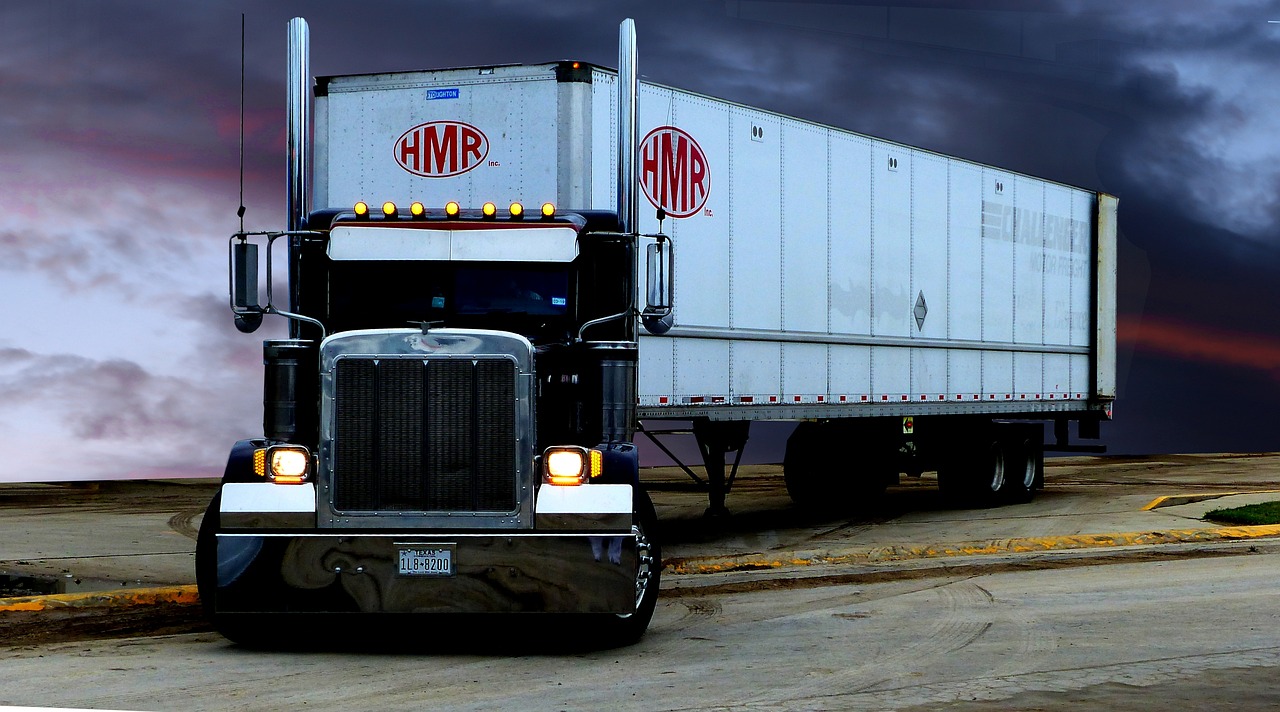
Freight companies operate under strict labor and liability guidelines. Standard residential freight delivery is exclusively curbside. The delivery driver is responsible only for bringing the semi-truck as close to your property line as safely navigable, lowering the pallet off the truck bed using a hydraulic liftgate, and rolling the pallet onto the edge of your driveway or curb.
Drivers will not:
- Break down the pallet and hand-carry cartons into your house, garage, or backyard shed.
- Wheel the pallet up steep inclines, loose gravel driveways, or unpaved paths.
- Navigate narrow alleys, dead-end cul-de-sacs, or low-hanging tree branches that block a 53-foot tractor-trailer.
If your street cannot accommodate a full-sized commercial truck, the freight carrier will hold your shipment at their local distribution terminal. You will then be required to drive to the terminal with an appropriate truck or trailer to pick up the pallet yourself, negating the convenience of home delivery while you still pay the full shipping charge.
Required Receiving Protocols for Freight Shipments
When an LTL delivery arrives, you are legally taking custody of the shipment. You must follow a rigid inspection procedure before signing the delivery receipt (Bill of Lading):
- Inspect the shrink wrap: Ensure the plastic wrapping around the pallet is intact and original. Torn or re-taped wrapping indicates the pallet was disturbed or dropped during transit transfers.
- Count every carton: Verify that the total box count matches the shipping bill exactly.
- Check for visible box crush: Examine corners and bottom rows for structural crushing, band marks, or puncture holes caused by forklift tines.
- Document damaged goods on the paperwork: If you see crushed corners, write “DAMAGED: [Number] boxes crushed, exposed plank corners” directly on the driver’s copy before signing. Never sign the receipt cleanly if there is visible external damage.
Return Policies, Warranties, and Hidden Financial Risks
The consumer protections you take for granted with standard retail purchases rarely apply in the world of closeout flooring. Understanding liability boundaries prevents painful financial losses if problems pop up during or after installation.
Online Liquidator Return Constraints
Most online closeouts operate under strict final-sale policies. Even those that offer return windows usually charge prohibitive fees that make returning materials financially unfeasible:
- Restocking fees: Standard restocking charges range from 15% to 30% of the material’s purchase price.
- Return freight liability: Consumers must pay full, non-discounted freight rates to ship heavy pallets back to the liquidator’s warehouse. Return freight often costs twice as much as original outgoing rates because individual consumers lack corporate shipping discounts.
- Prohibition on partial returns: If you over-order by four boxes, liquidators will almost never accept partial carton returns.
Big-Box Clearance Return Policies
Big-box store clearance policies vary by retailer and item condition. While standard retail items enjoy a 90-day return window, items tagged as yellow-sticker clearance, open-box, or final markdown frequently carry non-refundable restrictions printed directly on the store receipt.
If the clearance item is returnable, you carry the advantage of dropping off unopened extra cartons directly at the customer service desk in town, getting immediate refund credit without shipping penalties. Always verify the store manager’s policy on clearance items before completing the transaction at the register.
The Reality of Manufacturer Warranties on Clearance Stock
When buying clearance laminate and luxury vinyl plank flooring, assume manufacturer warranties are severely limited or entirely void. Flooring warranties generally stipulate that coverage applies only to first-quality, active product lines sold through authorized retail channels.
Common warranty exclusions on closeout inventory include:
- Discontinued status (the manufacturer no longer maintains replacement stock for claims).
- Cabin-grade, utility-grade, or second-quality classification (sold “as-is” with known visual defects).
- Lack of proof of purchase through an authorized dealer network.
Rather than relying on non-existent warranty protection, protect your investment by performing thorough material inspections and adhering strictly to proper subfloor preparation and installation guidelines.
Calculating Safety Margins and Material Overages
Calculating necessary material overage is far more critical when buying closeout flooring than when buying standard active inventory. If you miscalculate and run short while installing an active retail floor, you simply drive to the store or order another box online. When working with closeout materials, once the lot sells out, additional matching stock is gone forever.
Standard Overage vs. Closeout Overage Formula
For standard active product lines, flooring professionals recommend adding a 10% waste factor to net room square footage to cover cut waste, angle trimming, and minor plank damage. For closeout and clearance materials, that allowance must increase significantly:
- Straight, rectangular room layouts: Add a minimum 15% overage factor.
- Complex room layouts (diagonals, multiple doorways, closets, stairs): Add a 20% overage factor.
- Second-quality, rustic, or clearance bin stock: Add a 20% to 25% overage factor to account for culling damaged or unusable planks out of the box.
To calculate your total required square footage using a closeout safety margin, use this simple formula:
$$\text{Total Square Feet Needed} = \text{Measured Room Sq. Ft.} \times (1 + \text{Overage Percentage})$$
For example, if your room measures 450 square feet and you are using closeout LVP with a recommended 15% overage margin:
$$450 \times 1.15 = 517.5 \text{ sq. ft.}$$
Always round up to the next full box increment. If the closeout product is packed in 22-square-foot cartons, divide 517.5 by 22 to get 23.52, meaning you must purchase 24 full cartons.
Step-by-Step Decision Framework for DIY Shoppers
To determine whether an online liquidator or a local big-box clearance aisle fits your upcoming project, run through this practical step-by-step decision matrix.
Step 1: Quantify the Project Scope Accurately
Calculate your net space and apply the closeout overage formula. If your project requires less than 400 square feet (such as a powder room, small bedroom, or laundry room), local big-box clearance endcaps are usually your best financial choice. Freight charges from online liquidators will severely inflate the per-square-foot cost on small runs. Conversely, if your project spans 800 to 2,500 square feet, online closeout liquidators offer superior selection and scale.
Step 2: Assess Site Accessibility and Unloading Capabilities
Be honest about your physical capacity and property access. Can a 53-foot commercial freight truck safely navigate your street? Do you have a flat, paved driveway suitable for a pallet jack? Are you physically capable of moving 1,500 to 2,500 pounds of flooring inside your garage plank by plank within a couple of hours of delivery? If the answer to any of these questions is no, buying locally in store where you control transport is significantly safer.
Step 3: Conduct a Mandatory Dye-Lot and Box Inspection
If buying locally, inspect every box on the rack. Verify that production run numbers, wear layer thickness specifications, and tongue-and-groove profiles match precisely across every box you load into your cart. Reject crushed boxes showing internal plank corner damage.
If buying online, require written confirmation via email from the sales department stating that all boxes on the pallet will originate from a single, identical manufacturing run. Keep this written confirmation as documentation in case a mixed lot arrives on the pallet.
Step 4: Establish an Unboxing and Acclimation Protocol
Once materials arrive at your home, never jump straight into installation. Store the closed cartons flat in the climate-controlled installation space for at least 48 hours (or as specified by manufacturer instructions) to allow temperature and humidity acclimation.
During installation, open four to five boxes simultaneously. Pull planks sequentially from alternating boxes to mix shade variations evenly across the floor. This blending technique mitigates subtle batch variations and creates a balanced, natural visual finish across the entire room.
Common DIY Mistakes When Buying Discount Flooring
Even experienced DIYers can make costly mistakes when navigating closeout channels. Avoiding these common pitfalls will save time, money, and frustration during your installation:
- Ignoring wear layer thickness: A cheap LVP deal is no bargain if the wear layer is only 6 mil in a high-traffic hallway. Aim for at least 12 mil for residential spaces and 20 mil for busy homes with pets.
- Skipping underlayment checks: Some clearance planks have attached pad underlayment, while others require separate underlayment rolls. Failing to factor in underlayment costs skews your financial calculations.
- Not checking subfloor flatness requirements: Click-lock clearance floors require strict subfloor tolerances (typically 3/16 inch variation over 10 feet). Thinner clearance planks will telegraph subfloor imperfections rapidly.
- Failing to buy extra matching trim: Transition strips, stair noses, and quarter-round molding matching the clearance floor color are often completely unavailable once a line is discontinued. Buy trim before finishing your order.
Frequently Asked Questions
Can I mix two different dye lots if I run out of flooring?
Mixing two different dye lots across the middle of a room is strongly discouraged because color, sheen, and texture variations will be obvious. However, if you run short, you can use the secondary dye lot inside closets, under cabinets, or along hidden perimeter walls where visual differences are unnoticeable.
Are factory seconds or cabin-grade floors worth buying?
Factory seconds and cabin-grade floors offer steep discounts, but they come with defect rates ranging from 15% to 30%. You must order significantly more material and spend extra time culling damaged planks, repairing defects with putty, or using compromised pieces for edge cuts. They are best suited for rustic spaces, basements, or experienced DIYers.
What should I do if my LTL freight delivery arrives damaged?
Document all visible damage directly on the Bill of Lading (driver’s delivery ticket) before signing it. Take clear photos of the damaged shrink wrap, crushed boxes, and exposed plank edges while the pallet is still on the truck or driveway. Contact the online liquidator immediately with your documented proof to file a freight claim.
How can I find matching transition strips for discontinued clearance flooring?
Finding exact matching trim for closeout or clearance flooring can be difficult. Look for coordinating aluminum, vinyl, or unfinished wood transitions at local home improvement centers that can be stained or painted to closely match your discount floor color.
Final Verdict: How to Choose the Right Channel
Selecting between an online flooring liquidator vs big box store clearance US options comes down to project volume, delivery logistics, and risk tolerance.
Choose an online flooring liquidator if:
- You are flooring a large area (800+ square feet) where volume dilutes freight costs.
- You require a consistent single dye lot to cover an open-concept floor plan.
- You have a suitable property for commercial truck access and can handle heavy offloading.
- You accept final-sale terms in exchange for low per-square-foot baseline pricing.
Choose local big-box clearance bins if:
- Your project is small (under 400 square feet) and can be completed using leftover stock.
- You want immediate material access without waiting for freight scheduling.
- You want to eliminate expensive freight surcharges and residential delivery hassles.
- You value having a local store front for simpler returns on unopened extra materials.
By running the real math on freight charges, verifying dye-lot integrity before installation, and maintaining adequate overage buffers, you can confidently turn closeout flooring deals into lasting, beautiful home improvements.