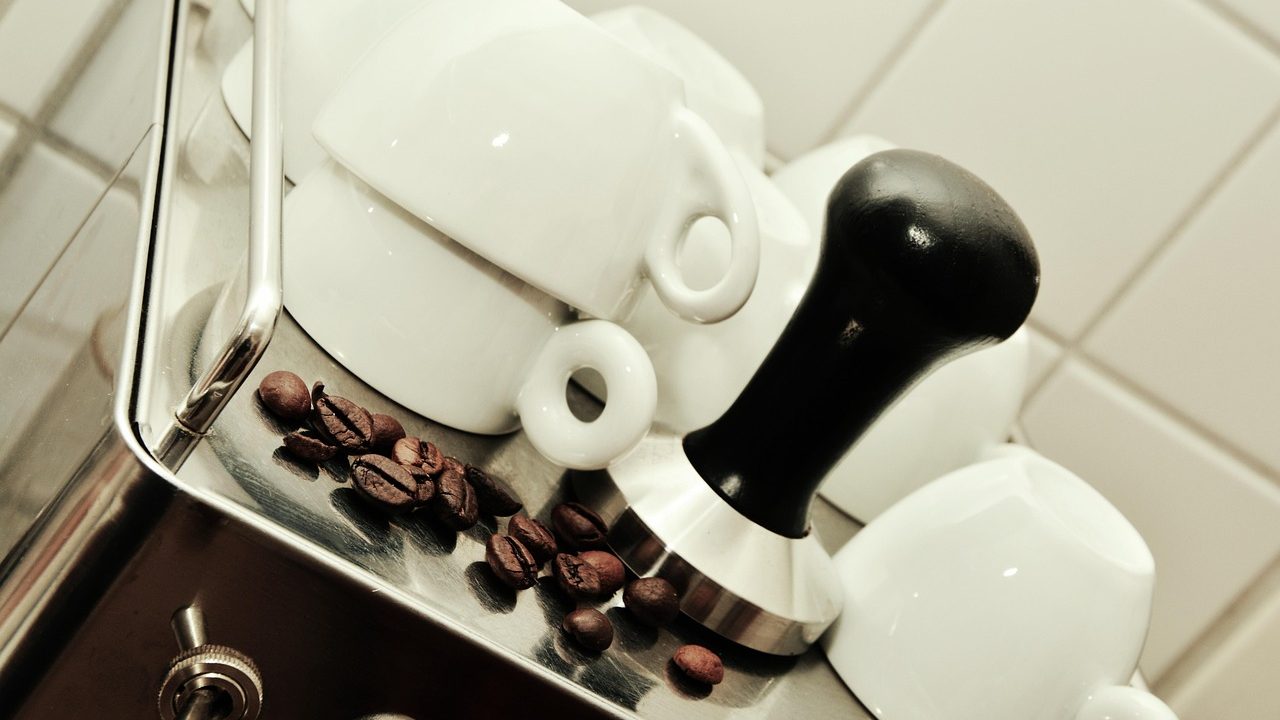
For dedicated home baristas, the jump from high-end consumer gear to commercial coffee equipment represents the ultimate performance upgrade. Commercial dual-boiler units from legendary Italian and European manufacturers feature heavy rotary vane pumps, saturated group heads, massive copper or stainless steel boilers, and micro-metric temperature stability that standard kitchen appliances cannot rival. However, navigating the secondary equipment market introduces significant financial and mechanical exposure. Understanding the practical refurbished commercial espresso machine warranty risk US home baristas face is essential to avoiding unexpected rebuild costs, missing components, or unserviced scale damage hidden inside heavy brass fittings.
While saving 30% to 60% off the retail price of a $6,000 to $15,000 machine is undeniably appealing, commercial espresso gear is engineered for high-throughput coffee shops, not residential domestic kitchens. When these units are decommissioned, their mechanical health depends almost entirely on how consistently the previous operator managed water filtration, performed daily backflushing, and adhered to preventive maintenance schedules. Navigating the secondary market requires a clear framework for evaluating vendor types, reading warranty terms, inspecting scale accumulation, assessing electrical demands, and calculating the true cost of ownership.
Specialty Coffee Refurbishers vs. Restaurant Equipment Liquidators
Where you purchase a pre-owned commercial espresso machine directly determines your operational risk and downstream repair liabilities. The secondary market generally divides into two distinct seller channels: specialized coffee equipment refurbishers and general restaurant equipment liquidators. Conflating these two seller categories is one of the most common mistakes prospective home buyers make.
Specialized refurbishers focus exclusively on coffee machinery. Their in-house technicians perform full teardowns of incoming trade-in or off-lease machines. They replace wear-and-tear components like group gaskets, shower screens, anti-vacuum valves, safety relief valves, and shaft seals. They descale boilers through controlled chemical baths and bench-test machines under operating temperature and pressure for several consecutive days. These vendors understand the nuances of PID microcontrollers, volumetric dosing flowmeters, and needle valves. Consequently, their retail prices are higher, but their machines arrive fully serviced, calibrated, and backed by functional post-sale warranties.
On the opposite end of the spectrum are online restaurant equipment liquidators. Liquidators buy out closing coffee shops, bakeries, bars, and corporate cafeterias in bulk, selling inventory in “as-is, where-is” condition. These sellers rarely possess the specialized bench equipment or factory-trained technicians required to properly inspect, plumb, or pull shots on an espresso machine. Liquidator listings usually feature basic photography, vague descriptions such as “powered on when tested,” and zero operational history regarding water treatment or service intervals. Buying from a liquidator effectively shifts all diagnostic, labor, and parts liabilities entirely onto the buyer.
| Evaluation Criteria | Specialty Coffee Refurbisher | Restaurant Equipment Liquidator |
|---|---|---|
| Pre-Sale Inspection | Full teardown, pressure test, thermal profiling | Basic power-on check (if performed at all) |
| Boiler Condition | Descaled, flushed, hydrostatically tested | Unknown; high risk of severe mineral scaling |
| Replaced Parts | Gaskets, o-rings, vacuum valves, group seals | None; original worn commercial parts intact |
| Warranty Coverage | 30 to 90 days parts & labor (vendor backed) | None; sold “As-Is” with final sale terms |
| Price vs. New Retail | 25% to 45% discount | 50% to 80% discount |
Decoding the Fine Print: What Warranties Exclude
Even when purchasing from a reputable specialty refurbisher that advertises an explicit written guarantee, buyers must carefully examine the warranty documentation. Commercial espresso machine warranties differ fundamentally from consumer appliance coverage. Commercial terms assume the equipment will be installed by a certified commercial technician and operated on a dedicated, professionally conditioned water line.
The Residential Installation Void Clause
Many commercial equipment manufacturers and regional distributors explicitly state in their terms that warranty coverage is voided if the machine is installed in a residential dwelling. Commercial machines operate on high voltages, draw high continuous amperage, and maintain static hydraulic pressure when plumbed directly into municipal water lines. Insurance liabilities drive this restriction. If a vendor’s warranty policy requires professional installation sign-off from an authorized commercial service company, installing the unit yourself in a residential kitchen nullifies your warranty immediately upon installation.
Water Quality and Scale Exclusions
Virtually every commercial espresso machine warranty excludes damage caused by hard water, mineral scaling, or improper water filtration. Scale is classified as a lack of routine maintenance rather than a defect in factory materials or workmanship. If a heating element burns out two weeks after delivery because calcium scale bridged the gap between heating coils, the repair bill falls entirely on the home owner. Refurbishers typically require proof that incoming feed water maintains hardness levels below 3 to 4 grains per gallon (GPG) or total dissolved solids (TDS) within 70 to 120 ppm before honoring water-circuit or element claims.
Labor versus Parts-Only Coverage
Home buyers must scrutinize whether a refurbished warranty covers both labor and replacement parts or parts only. A “90-day parts warranty” sounds reassuring, but shipping a 150-pound dual-boiler machine back to a refurbisher’s facility costs several hundred dollars each way in LTL freight charges. Alternatively, hiring a local field technician charges $120 to $180 per hour just to diagnose a faulty solenoid valve or failing pressurestat. Unless the seller maintains a local service network or covers freight costs for warranty claims, a parts-only warranty offers limited protection against unexpected expenses.
Scale Build-Up and Boiler Pathology
Scale accumulation is the single largest hidden liability when buying second-hand commercial espresso equipment. Potable tap water contains dissolved minerals, primarily calcium and magnesium carbonates. When water is heated inside a commercial boiler to produce steam (often reaching 250°F to 260°F) or brew water (195°F to 205°F), these dissolved minerals precipitate out of solution and adhere to hot internal metal surfaces.
Understanding Dual Boiler Espresso Machine Refurbishment Risks
When evaluating dual boiler espresso machine refurbishment risks, understanding the physical distinction between steam boilers and brew boilers is essential. Steam boilers experience high evaporation rates because water leaves the vessel as pure steam vapor, leaving all dissolved mineral salts behind inside the tank. Over months or years of commercial service without routine boiler flushes, the mineral concentration inside the steam boiler multiplies rapidly, forming thick scale deposits over boiler walls, liquid level probes, and heating element sheaths.
Heavy scale deposits create several mechanical points of failure:
- Thermal Insulation & Element Burnout: Limescale acts as a thermal insulator. When coated on a copper or stainless heating element, heat cannot dissipate efficiently into the water. The element’s internal nickel-chromium resistance wire overheats and burns out.
- Auto-Fill Probe Failure: Water level sensing probes coated in chalky mineral crust fail to complete electrical circuits correctly. This causes the control board to either continuously overfill the boiler until water spurts from the steam wand or stop filling altogether, leaving heating elements exposed to dry air.
- Flaking and Valve Blockages: When a scaled machine is decommissioned, drained, shipped, and rehydrated, thick scale crusts crack and break loose. These sharp mineral chips travel into narrow 0.8mm to 1.0mm gigleur orifices, flowmeters, and three-way solenoid valves, causing sudden blockages or continuous leaks.
The Danger of Acid Descaling on Old Boilers
A common mistake made by liquidators and inexperienced DIY restorers is performing aggressive chemical descaling without fully disassembling the boiler. Submerging a heavily scaled copper boiler in concentrated citric, sulfamic, or orthophosphoric acid solutions without stripping every fitting can ruin the machine. Acid strips copper from internal walls, thins aged solder joints, and creates pinhole leaks in heat exchangers. Furthermore, partially dissolved scale turns into a heavy slurry paste that settles into group head channels, causing permanent flow restrictions.
Rotary Pumps, Solenoids, and Flow Control Wear Limits
Commercial espresso machines rely on mechanical components designed for continuous duty cycles. While these industrial components are far more durable than the plastic vibratory pumps found in domestic appliances, they experience measurable wear and eventual mechanical fatigue.
Rotary Vane Pump Wear Profile
Rotary vane pumps utilize a graphite rotor with sliding graphite vanes spinning inside a brass or stainless steel pump chamber to deliver smooth, quiet 9-bar brewing pressure. These pumps depend on incoming water flow to lubricate and cool their internal carbon bearings. If a commercial machine was operated without water pressure in a busy shop, or if incoming feed water contained fine particulate sediment due to exhausted carbon pre-filters, the carbon vanes score and wear down rapidly.
A worn rotary pump may still register 9 bar on a static blind basket pressure gauge, but its volumetric flow rate under actual coffee extraction loads will drop significantly. This causes shot pressure to collapse during brewing, producing uneven extractions and sour flavor profiles. Replacing an industrial rotary pump and motor assembly costs between $200 and $450 in raw parts alone.
Solenoid Valve Degradation
Commercial group heads, expansion lines, and auto-fill circuits use two-way and three-way electromagnetic solenoid valves. These valves consist of brass bodies, stainless steel plungers, and small rubber or Viton sealing pads. Over thousands of heat cycles, these rubber seals harden, deform, or absorb coffee oils. This results in common faults like persistent water dripping from the exhaust port, slow boiler fills, or an inability to hold stable pressure during pre-infusion.
The Electrical and Plumbing Reality Check for Home Kitchens
Before purchasing any pre-owned commercial unit, you must confirm that your residential utility infrastructure can support industrial coffee equipment. Ignoring these physical requirements often leads to expensive electrical and plumbing retrofits that erase any initial purchase savings.
Voltage and Current Demands
Most commercial multi-boiler machines operate on 208V to 240V single-phase power, drawing anywhere from 15 to 30 amps under peak heating loads. While select single-group commercial machines (such as the La Marzocco Linea Mini, GS3, or Nuova Simonelli Appia II 1-Group) offer 120V models, larger commercial units require dedicated 240V circuits with specific NEMA 6-15, 6-20, or L6-30 wall outlets. Connecting a 240V commercial machine to a standard 120V household kitchen outlet is impossible without installing a step-up transformer or running a dedicated circuit from your main breaker panel.
Even 120V commercial machines draw 15 to 20 amps continuously when operating steam and brew boilers at the same time. Standard residential countertop circuits are often shared with microwaves, blenders, or refrigerators, leading to frequently tripped breakers unless a dedicated 20-amp kitchen circuit is available.
Water Supply and Drainage Requirements
Commercial rotary pumps require a direct line water connection with incoming line pressure between 30 and 45 PSI to prevent pump cavitation. They cannot pull water efficiently from an unpressurized open reservoir unless paired with an external flojet pump system and pressure accumulator tank.
Additionally, commercial drip trays feature large drain outlets designed to connect to 3/4-inch reinforced flex tubing routed down to a floor drain or waste pipe. Operating a commercial unit at home without direct plumbing and dedicated drainage requires managing under-counter water supply carboys, wastewater containers, and bypass pumps, adding noise, complexity, and potential leak hazards to your kitchen.
Inspecting a Used Commercial Machine: Step-by-Step Checklist
If you have the opportunity to inspect a pre-owned or liquidated commercial machine in person before buying, use this step-by-step diagnostic checklist to evaluate its physical and mechanical condition.
- Perform an Internal Visual Inspection: Remove the body panels. Inspect the wiring harness, spade connectors, and heating element terminals. Look for brown, brittle, or melted wire insulation, which indicates electrical resistance overheating caused by loose terminals or shorting elements.
- Check for Mineral Efflorescence: Search for chalky white or greenish crust around boiler flanges, vacuum relief valves, pressurestat fittings, and group necks. Green crust on brass or copper indicates active or historical water leaks under operating pressure.
- Inspect the Boiler Sight Glass: If the unit has a boiler sight glass, evaluate water clarity. Cloudiness, dark discoloration, or heavy white scaling inside the glass tube indicates severe boiler contamination and poor maintenance.
- Test the Rotary Pump Shaft: With the machine powered off, detach the pump head from the drive motor shaft. Spin the pump shaft by hand. It should turn smoothly with firm, uniform resistance. If it feels gritty, catches, or is locked solid, the internal graphite vanes have shattered or scaled up.
- Check Group Head Water Flow: Bring the machine up to full operating temperature. Engage the brew switch and observe water distribution from the shower screen. The water should fall in a smooth, rain-like pattern without spurting or spraying sideways. Sideways jetting indicates scale obstruction inside the group jet or dispersion block.
- Measure Static and Dynamic Pressure: Portafilter pressure gauges measure pump performance. Verify that the pump reaches 9 bar smoothly without loud squealing, metallic chattering, or pressure fluctuations.
Calculating the True Cost of Ownership
To determine whether buying a refurbished commercial unit makes practical financial sense compared to purchasing a new high-end prosumer dual-boiler machine, calculate the total cost of ownership across a three-year period.
Consider this real-world cost comparison framework:
| Cost Component | New Prosumer Unit (120V) | Liquidator Refurbished Commercial Unit |
|---|---|---|
| Initial Purchase Price | $3,200 | $1,800 |
| Freight / Palletized Shipping | Free Ground Shipping | $250 – $450 Freight LTL |
| Rebuild Parts (Gaskets, Valves, Element) | $0 (Included) | $300 – $600 |
| Electrical / Plumbing Retrofit | $0 (Standard Outlet) | $300 – $800 (240V Line & Plumbing) |
| Water Filtration System | $150 (Pitcher/Pouch) | $300 – $500 (Commercial BWT/RO System) |
| Total Estimated Investment | $3,350 | $2,950 – $4,150 |
When factoring in freight shipping, electrical installation, commercial water treatment, and initial replacement parts, an apparently cheap auction unit can quickly match or exceed the total cost of a brand-new prosumer machine backed by a full factory warranty.
Frequently Asked Questions About Used Commercial Espresso Gear
Prospective buyers frequently encounter specific operational and logistical questions when shopping for pre-owned commercial machines. Below are clear answers to common questions regarding home installation, maintenance, and warranty protections.
Can I run a commercial espresso machine on standard tap water?
Running a commercial espresso machine on untreated tap water is one of the quickest ways to cause premature boiler failure. Tap water contains varying levels of calcium, magnesium, and chlorides. Minerals cause scale accumulation, while chlorides cause irreversible pitting corrosion on stainless steel boilers. Commercial machines require dedicated filtration systems—such as decarbonizing ion-exchange resin cartridges or reverse osmosis systems with mineral re-injection—to maintain water hardness within safe operational windows (3 to 4 GPG) and protect your investment.
Is it safe to leave a commercial espresso machine powered on 24/7 at home?
In commercial coffee shops, machines are often left on continuously to maintain thermal equilibrium across heavy brass group heads and large copper boilers. In a home environment, leaving a commercial unit powered on 24/7 increases electrical consumption significantly and accelerates wear on rubber group gaskets, silicone seals, and vacuum valves. Most home baristas use smart plugs or heavy-duty digital timers rated for the machine’s full amp load to schedule warm-up cycles 45 minutes before morning brewing rather than running the unit continuously.
What should I do if a seller offers a parts-only warranty?
A parts-only warranty means the seller will provide replacement components if a part fails during the warranty window, but you are responsible for all labor and shipping costs. If you receive a parts-only warranty, ensure you either possess the technical skills required to replace heating elements, solenoid valves, and pressurestats yourself, or establish a relationship with a local independent coffee equipment repair technician who can perform field service calls.
Making an Informed Purchase Decision
Investing in a refurbished commercial espresso machine can yield an extraordinary home coffee bar setup, offering unmatched steam power, heavy-duty durability, and long-term serviceability. However, achieving success requires careful risk management early in the decision-making process.
Prioritize reputable specialty refurbishers who offer documented bench testing, internal component photos, clear water quality guidelines, and comprehensive warranty coverage. Avoid uninspected liquidator auctions unless you possess the technical skill, plumbing knowledge, electrical capacity, and budget required to perform a complete machine restoration.