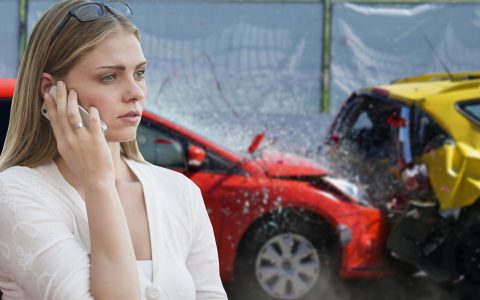
When you purchase comprehensive and collision coverage, it is easy to assume your vehicle is fully protected against any scenario on the road. However, thousands of drivers each year discover a frustrating financial reality after an accident caused by someone else: their own policy requires them to pay a $500 or $1,000 deductible up front, even when they bear zero fault for the crash. This shortfall stems directly from the auto insurance underinsured motorist property damage gap US drivers frequently encounter when navigating complex state insurance requirements and policy endorsements.
While state laws require drivers to carry minimum liability limits, those baseline thresholds have failed to keep pace with the rising costs of modern vehicle repairs, advanced driver-assistance system (ADAS) calibrations, paint matching, and car rentals. If an underinsured or uninsured driver smashes into your vehicle, or if you are the victim of a hit-and-run incident, relying solely on standard collision coverage can leave you footing hefty initial costs. Understanding how underinsured motorist property damage (UMPD) endorsements work—and how hit and run property damage deductible waivers operate—is essential for safeguarding your household budget against other drivers’ financial shortcomings.
Understanding the Anatomy of Auto Property Damage Coverage
To understand where coverage gaps originate, you must first separate the three distinct insurance mechanisms that pay for physical damage to a motor vehicle: Property Damage Liability (PDL), Collision Coverage, and Uninsured/Underinsured Motorist Property Damage (UM/UMPD).
Property Damage Liability (PDL) is the third-party coverage carried by the driver who causes an accident. If another motorist runs a red light and strikes your vehicle, their PDL policy is legally obligated to pay for your repairs, lower market value losses, and loss-of-use costs (such as a rental car). However, PDL protection is strictly capped by the policy limits selected by that driver—or by the minimum legal mandates set by their state.
Collision Coverage is a first-party policy line that pays to repair or replace your vehicle after an accident, regardless of who caused it. While collision coverage ensures your car gets fixed even if the at-fault driver has no insurance, it comes with a major caveat: you must satisfy your designated collision deductible before your insurer pays a single dollar toward the repair bill.
Uninsured and Underinsured Motorist Property Damage (UMPD) serves as a direct bridge between third-party fault and first-party recovery. UMPD is a first-party endorsement designed specifically to step into the shoes of the at-fault driver when that individual either lacks insurance entirely, carries limits lower than your total repair costs, or flees the scene of the crash. Depending on state regulations and insurer policy terms, UMPD often features lower deductibles than standard collision coverage or includes provisions that waive your deductible entirely.
The Mechanics of the Underinsured Motorist Property Damage Gap
The gap in property damage coverage occurs whenever the cost to repair or total your vehicle exceeds the legally available coverage limits of the driver who caused the crash, while your own policy structure forces you to absorb the difference through out-of-pocket deductibles or strict coverage caps.
Consider a standard scenario on US roadways today. Many states maintain statutory minimum property damage liability requirements as low as $10,000 to $25,000. If an underinsured motorist driving with a minimum $15,000 liability policy collides with your late-model SUV, causing $28,000 in structural and body damage, the at-fault driver’s insurance company will tender its maximum policy limit of $15,000 and refuse to pay any additional amount. This creates an immediate $13,000 property damage gap.
| Coverage Element | At-Fault Driver Liability (PDL) | Standard Collision Policy | UMPD Endorsement with Waiver |
|---|---|---|---|
| Primary Role | Pays third-party damages up to cap | Pays first-party damage regardless of fault | Covers excess or uninsured damage |
| Deductible Obligation | None for the victim | Full deductible paid by insured | Low or waived deductible |
| Rental Vehicle Coverage | Subject to liability cap | Requires separate rental endorsement | Often included in UMPD limits |
| Hit-and-Run Protection | Non-existent (driver unknown) | Covered, but subject to deductible | Covered if hit-and-run criteria met |
If you lack a dedicated UMPD policy or state-specific coverage rider, your primary recourse is to file a claim under your own collision coverage for the remaining $13,000. While your insurer will pay for the repairs, you will be required to pay your full collision deductible (typically $500 or $1,000) directly to the repair shop. Furthermore, if you do not carry collision coverage on an older vehicle, you are left personally responsible for collecting the unpaid $13,000 balance directly from the at-fault driver through civil litigation—a process that rarely yields recovery against judgment-proof individuals.
Why Standard Collision Deductibles Apply to Hit-and-Run Accidents
One of the most persistent consumer misunderstandings in auto insurance centers on hit-and-run accidents. Policyholders frequently express frustration upon learning that when an unidentified driver side-swipes their parked car or rear-ends them in traffic and flees, their insurer classifies the event under collision coverage, triggering a full deductible.
Insurers apply collision deductibles to hit-and-run incidents for fundamental risk management and contractual reasons:
- Absence of an Identified Second Party: Insurance contracts require an identifiable third party to pursue subrogation—the legal process where your insurer recovers its payout from the party at fault. Without an identified driver, license plate, or verified liability policy, your insurer cannot recoup its claim expenditures.
- Fraud Prevention Standards: From an underwriting perspective, single-vehicle accidents (such as striking a parking garage pillar, garage door, or mailbox) closely resemble hit-and-run damage. Deductibles serve as a risk-sharing mechanism to deter fraudulent claims where drivers attribute self-inflicted vehicle damage to phantom hit-and-run motorists.
- Contractual Trigger Mechanics: Standard auto insurance contracts define collision as the impact of your covered auto with another object or vehicle. If the second party vanishes, the claim defaults to standard first-party collision rules unless specific UMPD or hit-and-run state statutes override the primary contract language.
How UMPD Insurance Claim Rules Navigate Damage Claims
Navigating UMPD claims requires a clear understanding of key statutory provisions and carrier-specific regulations. Understanding baseline UMPD insurance claim rules enables vehicle owners to properly document losses and enforce contractual protections after a collision.
In states where UMPD is offered or mandatory, claiming benefits under this endorsement depends on meeting strict evidentiary thresholds:
1. Verification of Fault and Underinsured Status
Unlike standard collision coverage, which pays regardless of fault, UMPD requires you to prove that the opposing driver was legally responsible for the crash and that their liability limits were either non-existent or insufficient to cover the physical property damage. This usually demands a formal police report, eyewitness statements, dashcam footage, or an admission of fault documented at the scene.
2. The Exhaustion Rule
When dealing with an underinsured driver (as opposed to a completely uninsured driver), most UMPD policy provisions require the primary driver’s property damage liability limits to be fully exhausted before your UMPD coverage kicks in. For example, if the at-fault driver has $10,000 in liability limits and causes $15,000 in damage, your insurer will only process a UMPD claim for the $5,000 balance after receiving formal documentation that the third-party insurer has tendered its full $10,000 limit.
3. Prompt Notification and Reporting Timelines
To qualify for UMPD coverage—especially in hit-and-run scenarios—policy terms typically demand strict notification windows. Many state regulations require hit-and-run incidents to be reported to local law enforcement within 24 to 72 hours, and to the insurance carrier shortly thereafter. Failing to file a police report within the statutory timeframe can result in a denial of UMPD benefits, leaving you with standard collision deductibles as your only alternative.
Unpacking Hit and Run Property Damage Deductible Waivers
A crucial tool for eliminating out-of-pocket costs after an accident with an uninsured or hit-and-run driver is the deductible waiver. Broadly speaking, deductible waivers operate in two forms within contemporary US insurance contracts: Collision Deductible Waivers (CDW) and UMPD Reduced/Waived Deductibles.
A Collision Deductible Waiver (CDW) is an optional endorsement attached to your primary collision policy. Under a CDW rider, your insurer agrees to waive your standard collision deductible if you are involved in an accident caused by an uninsured or underinsured driver, provided certain contract conditions are fulfilled.
The operational mechanics of a hit and run property damage deductible waiver depend heavily on state law and specific policy wording. Insurers generally classify eligibility into two distinct categories:
Identified Uninsured Motorist Trigger
In many states (such as California), a collision deductible waiver only applies if the uninsured driver is positively identified. The policy owner must supply the name, license plate number, or driver’s license number of the uninsured motorist who caused the damage. In these jurisdictions, a classic hit-and-run—where the driver flees without leaving any identifying information—will not trigger the deductible waiver, leaving the policyholder responsible for their standard collision deductible.
Physical Contact and Phantom Vehicle Rules
In states that allow hit-and-run events to qualify under UMPD or deductible waivers, strict physical contact rules generally apply. The insured vehicle must make actual direct physical contact with the fleeing vehicle. If a driver swerves to avoid an erratic motorist and crashes into a guardrail without touching the other vehicle (a “phantom vehicle” scenario), the claim is classified as a single-vehicle collision, requiring the payment of the full collision deductible.
State-by-State Variations in UMPD Availability and Regulations
Auto insurance rules in the United States are governed primarily at the state level, creating a complex patchwork of availability, coverage caps, and mandatory options for property damage protection. Understanding how your state categorizes UMPD is critical when building your auto policy.
State approaches to UMPD generally fall into one of four primary regulatory frameworks:
- Mandatory UMPD States: States such as Vermont, Virginia, and Maryland require drivers to carry UMPD as part of their basic auto policy unless specifically rejected in writing. In these jurisdictions, UMPD operates alongside minimum liability limits and typically features statutory deductible maximums (often set between $200 and $500).
- Optional / Offer-Required States: In states like Texas, Indiana, and South Carolina, insurers are legally required to offer UMPD to policyholders whenever liability coverage is purchased. The driver has the choice to accept or reject the coverage in writing. In Texas, for instance, standard UMPD comes with a statutory $250 deductible for property damage claims.
- States Where UMPD and Collision Are Mutually Exclusive: In select insurance markets, insurance regulations prohibit drivers from stacking UMPD on top of collision coverage. If a policyholder elects full collision protection, the insurer is not permitted to sell a separate UMPD rider. Instead, protection against uninsured drivers is absorbed into the collision policy, often through a Collision Deductible Waiver (CDW) rider.
- States Prohibiting UMPD for Hit-and-Run Property Claims: Several states restrict UMPD payouts exclusively to accidents involving identified uninsured drivers. In these states, if a driver flees the scene and remains unidentified, state law forbids UMPD from covering the vehicle repairs, forcing the owner to use standard collision coverage and absorb the corresponding deductible.
Evaluating Your Coverage Needs: Deductible Savings vs. Premium Costs
Deciding whether to add UMPD or a Collision Deductible Waiver to your policy requires analyzing your vehicle’s value, current collision deductible, local driving environment, and personal cash flow tolerance.
To determine if closing the property damage gap makes financial sense for your policy, evaluate these core factors:
1. The Value of Your Vehicle Relative to Your Emergency Fund
If you drive a modern vehicle worth $25,000 or more, an underinsured driver with a $10,000 policy limit poses a significant financial threat. If your vehicle is totaled in a severe accident, the third-party insurer will write a check for $10,000, leaving a $15,000 gap. If you do not have comprehensive collision coverage with low deductibles or a dedicated UMPD policy with higher financial caps, absorbing that loss can compromise your personal finances.
2. Uninsured Driver Proportions in Your Region
Uninsured driver rates vary significantly across different states and metropolitan regions. In locations with higher rates of uninsured motorists, adding a UMPD rider or deductible waiver provides essential protection against a heightened risk of hit-and-run incidents or accidents with uninsured drivers.
3. Premium Cost vs. Deductible Exposure
Adding a UMPD endorsement or a Collision Deductible Waiver to an existing auto insurance policy is usually quite affordable, often adding only $10 to $50 per year per vehicle. Compared to the out-of-pocket cost of a $500 or $1,000 collision deductible following a hit-and-run incident, a deductible waiver endorsement often pays for itself after a single non-fault incident.
Step-by-Step Guide: How to Handle an Underinsured or Hit-and-Run Property Damage Claim
If your vehicle is involved in a collision caused by an underinsured or fleeing driver, following a structured process helps protect your contractual rights under UMPD insurance claim rules:
Step 1: Secure the Scene and Document All Evidence
Safety always comes first, but as soon as it is safe to do so, document the incident thoroughly. Take photos of all involved vehicles, physical skid marks, point-of-impact damage, and surrounding road signs. If the other vehicle flees, attempt to note the make, model, color, and partial license plate digits, along with a description of the driver.
Step 2: File an Immediate Police Report
A formal police report is essential when filing a UMPD claim or requesting a hit and run property damage deductible waiver. State laws and policy terms often mandate that a hit-and-run crash be reported within a strict window (typically 24 to 72 hours). Ensure the officer records all known details, including the driver’s identifying information or the fleeing vehicle’s direction of travel.
Step 3: Exchange and Verify Insurance Information
If the at-fault driver remains at the scene, obtain their full name, phone number, insurer, policy number, driver’s license number, and vehicle registration. Do not accept cash settlements at the scene or agree to delay reporting the incident to insurance providers.
Step 4: Notify Your Insurance Carrier Promptly
Report the claim to your insurance carrier and explicitly state that you wish to evaluate coverage under your UMPD endorsement or Collision Deductible Waiver. Provide your insurer with the police report number and the third-party driver’s insurance details.
Step 5: Coordinate Independent Repair Estimates
Obtain detailed repair estimates from certified auto body facilities. Modern vehicle repairs often involve complex sensor recalibrations, bumper replacement, and specialized paint matching. Ensure all structural and electronics estimates are itemized so your insurer can compare repair costs directly against the third-party driver’s liability cap.
Step 6: Track Subrogation and Deductible Recovery
If you initially paid a collision deductible while your insurer processed the claim, inquire about the status of subrogation. When your insurer successfully recovers funds from the underinsured driver or their carrier, they are legally required to reimburse your deductible on a primary basis in most jurisdictions.
Real-World Scenarios: How Coverage Gap Protection Plays Out
To better understand how these endorsements operate in practical situations, consider three common real-world examples:
Scenario A: The Underinsured Parking Lot Collision
A driver hits your parked SUV while attempting to pull into a space, causing $8,500 in body and suspension damage. The at-fault driver stays at the scene but carries their state’s minimum property damage liability limit of $5,000. Their insurer tenders the full $5,000 limit. If you have a UMPD policy rider with a $250 statutory deductible, your insurer pays the remaining $3,500 balance, and you pay only $250 out of pocket—rather than your standard $1,000 collision deductible.
Scenario B: The Fleeing Driver in an Identified Waiver State
Your sedan is rear-ended at a red light by a pickup truck that immediately speeds away. You manage to record the vehicle’s license plate on your dashcam before calling the police. Because local law enforcement identifies the uninsured registered owner using the plate number, your Collision Deductible Waiver (CDW) is activated, and your vehicle is repaired under your collision policy with zero deductible required.
Scenario C: The Unidentified Phantom Vehicle
Late at night, an oncoming vehicle swerves into your lane. You turn sharply to avoid a head-on crash and hit a concrete retaining wall, causing $12,000 in damage. The other vehicle flees without making physical contact. Because there was no physical contact and no identified third party, state regulations classify this as a single-vehicle collision. Your claim must be processed under standard collision coverage, requiring you to pay your designated deductible before repairs begin.
Common Pitfalls and Misconceptions in Property Damage Claims
When dealing with property damage claims following a crash with an underinsured or fleeing driver, policyholders frequently run into several avoidable traps:
- Assuming “Full Coverage” Eliminates Out-of-Pocket Costs: The term “full coverage” is an informal industry phrase generally meaning a policy includes liability, collision, and comprehensive coverage. It does not mean you have zero deductible or unlimited property damage protection. Without explicit UMPD riders or deductible waivers, you remain responsible for your collision deductible regardless of fault.
- Failing to Identify Hit-and-Run Drivers Where Required: In states where deductible waivers require driver identification, failing to capture a license plate number or witness contact details can leave you stuck paying the collision deductible, even if you filed a police report promptly.
- Signing Full Liability Releases Too Early: If you are contacted by an underinsured driver’s insurance company offering a quick settlement check for your property damage, exercise caution. Signing a general release of liability in exchange for a partial payout can legally forfeit your right to claim excess property damage under your own UMPD policy. Always consult your carrier before signing liability waivers.
- Overlooking Rental Car and Personal Property Sub-Limits: Standard property damage claims often include secondary expenses such as car rentals, damaged child safety seats, or personal property inside the vehicle. Ensure these line items are fully tallied when determining whether an underinsured driver’s policy limits have been exceeded.
Frequently Asked Questions About UMPD and Coverage Gaps
Can I buy UMPD coverage if I already carry collision insurance?
It depends on your state. In many states, UMPD and collision coverage can be carried together to provide secondary protection and lower deductible requirements. In other states, laws make UMPD and collision mutually exclusive; in those states, protection against uninsured drivers is provided via a Collision Deductible Waiver (CDW) endorsement on your collision policy.
What happens if the at-fault driver’s insurance company denies the claim?
If the at-fault driver’s insurance carrier denies coverage (for example, due to a lapsed policy or an excluded driver), the driver is considered uninsured. In this situation, you can file a claim under your Uninsured Motorist Property Damage (UMPD) policy or collision policy with a deductible waiver rider.
Will filing a UMPD claim increase my insurance rates?
In most US states, insurance regulations prevent carriers from raising premiums for claims where you were completely at fault and not negligent. However, rate restrictions vary by state, so it is always wise to confirm local guidelines with your agent or state insurance department.
Does UMPD cover custom aftermarket parts and accessories?
Standard UMPD policies cover factory equipment. If you have added custom wheels, upgraded audio equipment, or specialized racks, you may need a separate Custom Parts and Equipment (CPE) endorsement to ensure those items are fully covered in an underinsured motorist claim.
Auditing Your Auto Policy for Protection Against Coverage Gaps
Navigating the auto insurance underinsured motorist property damage gap US vehicle owners experience comes down to proactive policy planning rather than post-accident damage control. By taking the time to review your policy declarations page before an incident occurs, you can easily spot and correct vulnerabilities in your coverage structure.
Take these practical steps to audit your current policy setup:
- Check Your State’s UMPD Mandates: Confirm whether UMPD is offered or legally mandated in your state, and review how your policy handles hit-and-run property damage claims.
- Compare Your Collision Deductible to a Waiver Rider: Weigh the modest annual cost of a Collision Deductible Waiver or UMPD endorsement against your willingness to pay a $500 or $1,000 out-of-pocket collision deductible after an accident caused by someone else.
- Align Your Property Coverage Limits with Real-World Repair Costs: Make sure your first-party coverage limits keep pace with the market value of your vehicle and the high cost of modern automotive technology repairs.
Understanding policy mechanics, keeping accurate records, and selecting the right policy riders ensures that when an underinsured or hit-and-run driver hits your vehicle, your insurance policy covers the damage without disrupting your personal finances.