
When monthly household bills arrive, fixed utilities like electricity, water, and gas receive intense scrutiny. Yet sanitation charges often slip past unnoticed. Homeowners frequently set up municipal garbage collection when moving into a property, select a standard container size recommended by the city, and continue paying the recurring fee year after year without a second thought. However, taking the time to audit municipal trash collection bill statements can reveal opportunities for immediate savings, as many local governments structure their waste management fees on a tiered volume model.
Municipalities and private haulers operating under city contracts generally price trash collection by bin capacity. A standard large cart—typically holding 96 gallons—costs noticeably more each month than a medium 64-gallon or small 32-gallon container. If your household consistently generates only a half-full bin each week, you are paying for phantom capacity. This guide explains how waste utility pricing works, how to assess your actual trash output, and how to successfully navigate the process of downsizing your service to lower your monthly expenses.
Understanding Municipal Waste Utility Pricing Models
To successfully lower your sanitation charges, you first need to understand how your local government or utility provider bills for waste collection. Unlike water or electricity, which are metered precisely by consumption units like gallons or kilowatt-hours, trash collection is typically billed through a flat rate tied to container size or service frequency. Cities adopt these tiered volume structures to encourage waste reduction, offset landfill tipping fees, and manage municipal fleet efficiency.
In many jurisdictions, the base sanitation fee covers a standard 64-gallon or 96-gallon roll-out cart. Households that generate excess waste can request secondary carts or extra trash cart service for an additional monthly fee. Conversely, residents who commit to waste reduction, composting, and rigorous recycling can often request smaller primary containers to secure a lower utility tier. Recognizing how your specific municipality structures these tiers is the foundational step of your audit.
Furthermore, waste management economics rely heavily on regional landfill capacity and environmental compliance costs. As local landfills near capacity, tipping fees—the charges private and municipal haulers pay to dump waste—rise steeply. Cities pass these costs directly to residents through general utility adjustments or specific container surcharges. When you audit your municipal trash collection bill, you are essentially evaluating how efficiently your household interfaces with these broader municipal economic pressures. Understanding these underlying cost drivers helps demystify why your bill looks the way it does and provides the necessary leverage when speaking with municipal customer service representatives about your service tier options.
Step 1: Locate and Review Your Itemized Sanitation Statement
The initial phase of any thorough utility audit involves gathering your historical billing data. Pull up your last twelve months of municipal utility statements or property tax bills, depending on how your city collects sanitation fees. In some regions, waste collection appears as a dedicated line item on a combined utility bill alongside water and sewer; in others, it is bundled into annual property assessments or billed directly by a contracted private waste hauler.
Review the statements for specific details. Note the exact monthly or quarterly cost, any environmental fees, recycling surcharges, and charges for extra carts or specialized pickups. Establish your baseline annual expenditure for waste management. If your bill has steadily increased due to across-the-board municipal rate hikes, reducing your container size is one of the few actionable ways to counteract those rising costs.
Pay careful attention to the billing cycle details. Some municipalities bill monthly, while others bill quarterly or biannually, which can obscure small incremental price increases. If your sanitation fee is tied to your property tax assessment, look closely at the district codes and line-item descriptions. Homeowners often discover that they are paying for special sanitary district fees or stormwater add-ons that warrant closer examination against local service maps. By tracking these expenses month over month or year over year in a simple spreadsheet, you create a clear financial picture that highlights seasonal anomalies or unexpected billing jumps.
Step 2: Conduct a Household Waste Audit
Before contacting your city or waste provider to request a container change, you must determine whether your household can genuinely function with a smaller bin. An audit of your actual waste output prevents you from prematurely downsizing, which could lead to overflowing bins, prohibited loose garbage, or costly overflow fees if you end up needing extra trash cart service later.
For two consecutive weeks, monitor your trash generation closely before collection day. Note how full your current cart is when you roll it to the curb. Is the lid completely shut with room to spare, or is trash packed down tightly? Pay attention to what fills your bin. Often, recyclable materials, cardboard boxes that haven’t been broken down, and food waste take up the vast majority of volume in a residential trash cart.
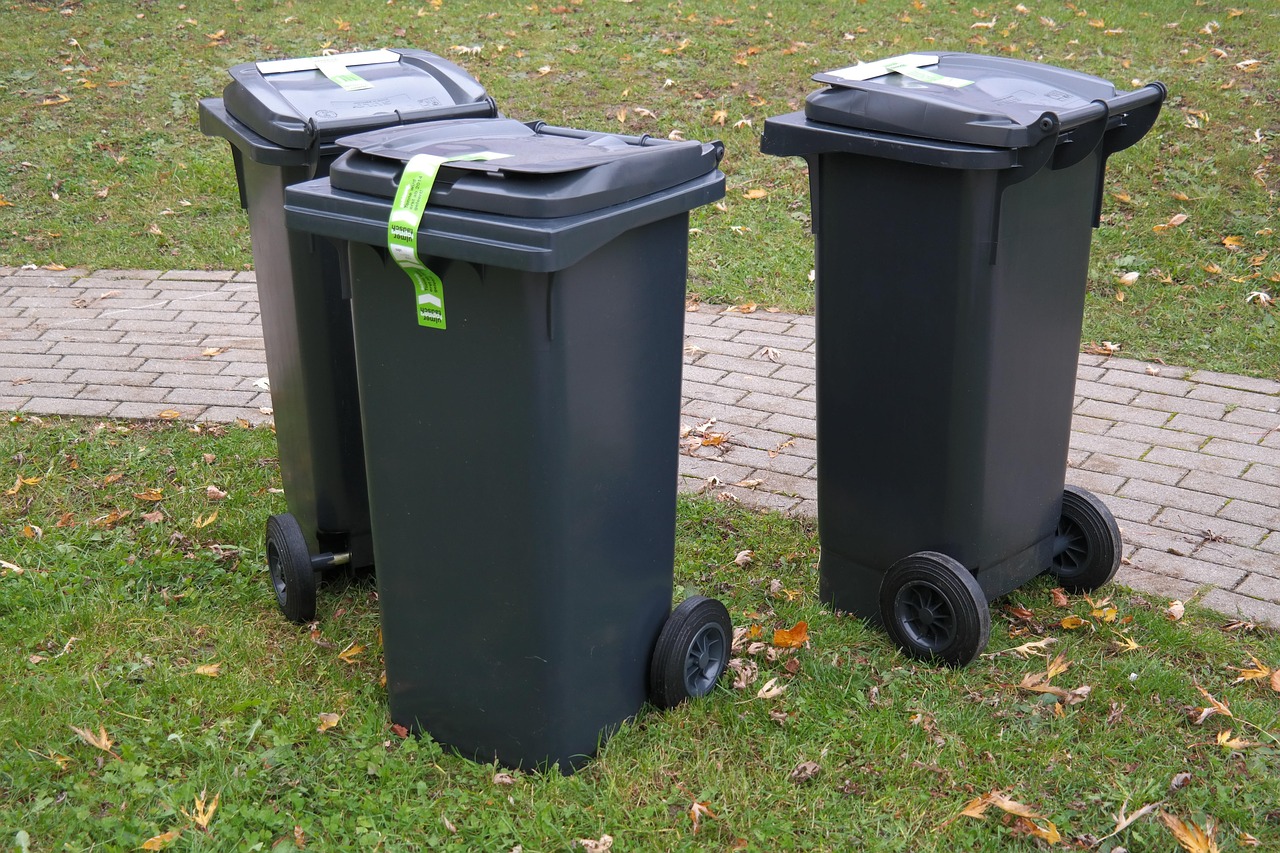
To execute a rigorous waste audit, keep a simple log near your indoor kitchen trash can. For fourteen days, note the volume of bags you produce and, crucially, categorize what is inside them. Are you tossing unflattened Amazon shipping boxes? Are you throwing away food scraps that could easily be composted? Are clean glass jars and aluminum cans ending up in the general refuse bin instead of your recycling container? Identifying these behavioral habits allows you to optimize your waste streams before shrinking your primary cart.
If your bin is consistently less than half full on collection day, your household is an ideal candidate to drop down one container size. For example, if you currently utilize a 96-gallon cart but rarely fill more than a 64-gallon capacity, downsizing will yield immediate monthly savings without creating disposal headaches.
Evaluating Bin Sizes: 32, 64, and 96 Gallons
Municipalities typically offer three standard residential container sizes. Understanding the practical capacity of each tier helps you choose the right replacement during your audit process:
- 32-Gallon Cart: Roughly equivalent to a traditional metal garbage can or a small wheeled bin. Ideal for single occupants, couples, or households with aggressive recycling and composting habits.
- 64-Gallon Cart: The mid-tier option suited for average three-to-four-person families who manage their packaging and food waste responsibly.
- 96-Gallon Cart: The large industrial-style rollout bin designed for large families, multi-generational households, or homes that generate high volumes of non-recyclable refuse.
When evaluating these options, consider your local recycling and organic waste rules. Many cities that provide curbside green waste or food scrap collection drastically reduce the volume of general landfill trash households produce. Diverting organic waste into a green bin often makes a smaller grey or black trash cart entirely feasible.
It is also worth noting the physical dimensions and maneuverability of these containers. A 96-gallon cart is bulky, heavy when fully loaded, and can be cumbersome to store in tight side yards or garages. Downsizing to a 32-gallon or 64-gallon bin often provides an unexpected ergonomic bonus, making garbage day significantly easier to manage physically, particularly for senior homeowners or those with steep driveways.
The Hidden Costs of Extra Trash Cart Service
Many homeowners inadvertently drive up their sanitation bills by acquiring secondary bins when their primary container overflows. While having two large carts offers convenience, the financial penalty can be steep. Municipalities frequently charge an elevated rate for second carts—sometimes equal to or greater than the cost of the first primary bin.
If your audit reveals that you are paying for extra trash cart service, investigate whether better waste management habits could eliminate the need for the second container entirely. Breaking down cardboard boxes, crushing plastic containers, utilizing community recycling drop-offs for overflow items, and starting a backyard compost pile can easily consolidate two overflowing bins into a single smaller container, cutting your secondary service charges completely.
Furthermore, some municipal utility districts implement punitive fee structures for unauthorized extra bags placed beside standard carts on collection day. If automated truck operators spot loose bags on the ground, they may log an infraction, resulting in an automated surcharge added directly to your next billing statement. Eliminating secondary containers requires disciplined sorting, but the monthly cash flow benefits are immediate and permanent.
Navigating Municipal Policies and Exchange Fees
Once you have decided to downsize your container, you must navigate your local sanitation department’s administrative procedures. Municipal policies regarding container exchanges vary widely. Some cities offer a free annual bin exchange, viewing it as a positive step toward municipal sustainability goals. Other jurisdictions charge a one-time delivery or exchange fee to cover the labor and logistics of swapping out the heavy plastic carts.
Contact your city’s public works department, sanitation division, or customer service portal to inquire about their specific container change policy. Ask the following critical questions:
- Is there a one-time fee to exchange our current large cart for a smaller size?
- What is the exact monthly or quarterly bill reduction associated with moving from our current tier to the lower tier?
- How long does the exchange process take once requested?
- Are there restrictions on requesting a larger bin back if the smaller size proves insufficient?
Factoring in any one-time administrative exchange fee is essential for calculating your true net savings. If a city charges a twenty-dollar swap fee, but downsizing saves you ten dollars a month, you will break even in just two months and enjoy pure savings thereafter. Always request written confirmation of your new billing rate once the exchange is processed to ensure customer service representatives correctly updated your utility ledger.
Addressing Common Concerns and Potential Pitfalls
Homeowners often hesitate to downsize their garbage bins due to common misconceptions or fear of operational friction. Anticipating these challenges ensures a smoother transition.
The most common concern is holiday volume. Households naturally produce more packaging, wrapping paper, and food waste during major holidays and family gatherings. Many municipal utilities allow temporary extra bags during designated holiday weeks without penalizing you for exceeding your cart size. Check your local guidelines regarding side-yard bags during peak seasons.
Another pitfall is compaction. Residents sometimes attempt to force excessive waste into a smaller bin by forcefully stomping or compacting the contents. Avoid this, as automated collection trucks rely on bins tipping cleanly into the hopper. If a bin is packed so tightly that waste jams inside, the mechanical arm may fail to empty it completely, leaving your trash behind on the curb.

Odor and pest management also concern homeowners transitioning to smaller bins, especially in warm climates. When waste occupies a smaller space, organic materials can become more concentrated. To mitigate this, ensure all food waste is securely sealed in compostable or plastic bags before tossing it into the bin, rinse out food containers, and periodically hose down the interior of your cart with a mild detergent solution.
Maximizing Savings Through Comprehensive Recycling and Composting
To successfully maintain a downsized waste container over the long haul, you must optimize your diversion streams. Landfill diversion is not just an environmental talking point; it is a direct financial strategy for reducing utility overhead. When you separate materials correctly, your residual trash footprint shrinks dramatically.
Review your city’s accepted recycling list carefully. Many municipalities have tightened their recycling acceptance criteria due to international market shifts, banning certain plastics or requiring pristine, washed containers. Complying with these rules prevents your recycling bin from being rejected or contaminated, which ensures that your paper, cardboard, metal, and approved plastics successfully leave your property without taking up precious landfill cart space.
Additionally, consider home composting for kitchen scraps, coffee grounds, and yard trimmings if local municipal organic waste collection is unavailable or insufficient. Organic waste frequently accounts for thirty to forty percent of an average household’s total weekly refuse weight. Diverting this material into a backyard bin or tumbling composter instantly transforms your waste profile, making a 32-gallon or 64-gallon sanitation tier effortlessly manageable.
Frequently Asked Questions About Municipal Waste Audits
Homeowners exploring sanitation audits often encounter specific administrative scenarios. Here are answers to common questions regarding container changes and utility billing adjustments:
- What happens if I downsize my bin and find it is too small? Most municipal sanitation departments allow a grace period or a one-time courtesy swap back to a larger size within 60 to 90 days, though a minor administrative fee may apply. Always verify this trial window before confirming your downgrade.
- Are HOA communities subject to municipal waste rules? In many planned communities, the homeowners association contracts directly with a private hauler for bulk community rates. In these cases, container changes must be coordinated through your property management company rather than city hall.
- Does recycling cost extra on my municipal bill? In most modern municipal structures, basic recycling collection is bundled into the standard utility fee or incentivized to encourage diversion. However, adding specialized secondary recycling bins can sometimes incur minor handling fees depending on local ordinances.
Long-Term Maintenance of Your Sanitation Expenses
An audit of your municipal waste utility fees should not be a one-time event. Household demographics and consumption habits change over time. Children grow up and leave home, new roommates arrive, or lifestyle changes alter your purchasing patterns. Make it a practice to review your sanitation charges annually alongside your other household utility expenses.
By maintaining awareness of how your city structures its waste tiers, keeping up with local recycling programs, and aligning your container size with your actual physical output, you ensure that you never pay a penny more than necessary for municipal trash collection.