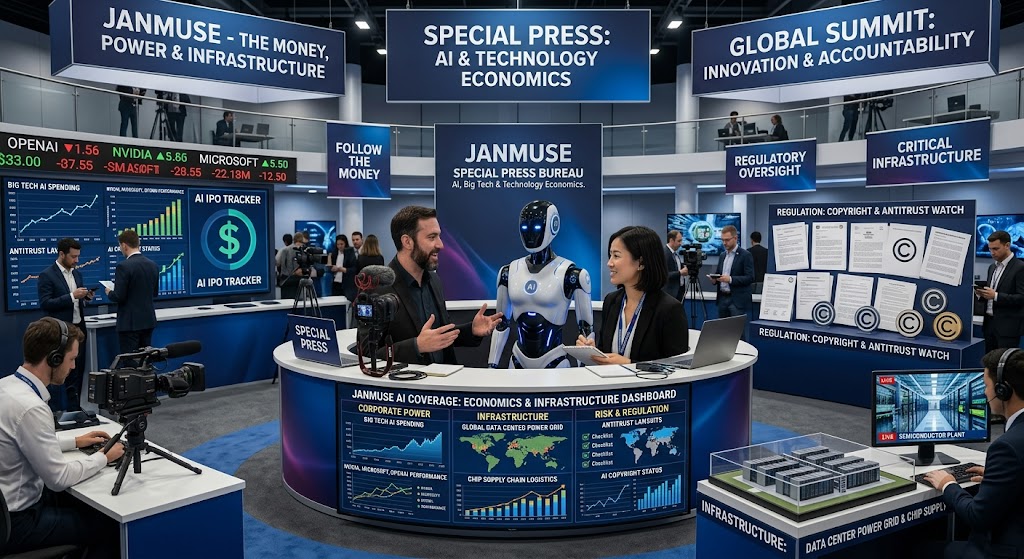
Contrast This with the Dusty, Hallowed Halls of Traditional Archives
In the silent, climate-controlled corridors of modern server farms, the hum of high-speed cooling fans creates the heartbeat of the twenty-first century. Here, trillions of parameters are being processed, digested, and turned into the foundations of human knowledge. Contrast this with the dusty, hallowed halls of traditional archives—the stacks of leather-bound volumes and the smell of aging paper that have preserved our collective history for centuries. These two worlds, once distinct, are now colliding in a digital crucible. The information age has hit a friction point, one that asks not just how we store our data, but who owns the right to define the future of human intelligence.
As the infrastructure of artificial intelligence expands at an unprecedented scale, it relies on a ravenous appetite for human-generated text. This collision isn’t just a technical challenge or an aesthetic clash; it is the fundamental struggle between the legacy of the printing press and the aggressive, cloud-based ambition of the next industrial revolution, setting the stage for a conflict that will dictate the rules of the digital frontier for decades to come. The conflict between The New York Times and OpenAI has reached a critical juncture, representing far more than a typical intellectual property dispute.
At its core, this is a battle for the soul of the creative economy and the future of information distribution. For The Times, the case is a matter of institutional survival and the integrity of the professional journalistic craft. For OpenAI, it is a binary choice between the continued development of transformative technology and the threat of catastrophic liability. As the lawsuit winds through the legal system, it has become a focal point for every major entity in the media and tech sectors. We are witnessing a high-stakes standoff where the traditional protections of copyright law are being tested against the relentless, innovative momentum of generative AI.
This legal juncture serves as a proxy war for larger questions: Can the creators of intellectual value coexist with the machines that learn from them, or is the current path destined to leave one side diminished? The outcome here will redefine the boundaries of what constitutes original work in an age of automated synthesis.
The Initial Legal Salvo Was Unambiguous
The initial legal salvo was unambiguous. The New York Times filed a landmark complaint alleging that OpenAI had effectively engaged in massive, systematic intellectual property theft. Their core premise was clear: by using millions of articles to train their Large Language Models without authorization, OpenAI was essentially creating a product that competes directly with the very source material that gave it life. The filing framed the issue as an existential threat to the Fourth Estate, arguing that the value of news gathering is being harvested and repurposed in a way that bypasses the traditional licensing models that sustain investigative journalism.
By stripping away the context and compensation, the tech giants were accused of creating a parasitic feedback loop. As outlined in legal filings from late 2026, this was not merely a disagreement over fair use; it was presented as a fundamental violation of the economic compact between content creators and the platforms that distribute them. The move signaled a turning point, suggesting that legacy institutions were no longer willing to wait for regulatory clarity and would instead seek justice in the open court. Experts across the legal and media landscapes have begun to quantify the specific damages claimed by legacy media conglomerates in this new, fraught environment.
These firms argue that the economic impact of unauthorized AI training is not just a loss of current revenue, but a degradation of the entire market for human-authored content. By providing users with comprehensive, synthesised answers that synthesize reporting without referring the reader back to the original source, AI companies are effectively capturing the value that news organizations depend on to stay solvent. Financial analysts note that this shift creates a dangerous precedent: as high-quality human journalism becomes a free utility for AI training, the incentive for deep-dive investigation and original reporting collapses.
The damages, therefore, are not just calculated in licensing fees or royalty payments; they are being framed as a systemic loss of public service value. Economists are warning that unless a fair compensation framework is established, the structural integrity of professional media may be irrevocably damaged, leaving the public square vulnerable to the inaccuracies and hallucinations often inherent in the very AI models currently profiting from that stolen labor. In a development that stunned the legal community, the Trump administration intervened in this ongoing battle, filing a formal statement of interest that leaned heavily in favor of OpenAI.
The Administration’s Argument Is Strategic
This move, documented in early September 2026, fundamentally shifted the power dynamics of the case. By stepping in, the government signaled that its priority is the preservation and acceleration of American AI development over the traditional copyright protections held by media institutions. The administration’s argument is strategic: it posits that the national interest in leading the global artificial intelligence race necessitates a broad, permissive interpretation of fair use. This filing essentially provided a legal shield for OpenAI, suggesting that the training of AI models is a public good—one that should not be stifled by what the administration characterized as outdated, restrictive licensing hurdles.
For many observers, this was a clear demonstration of the state’s intent to clear the path for private capital, ensuring that the heavy investment pipelines required for AI infrastructure remain unburdened by legal liabilities that could otherwise slow the pace of deployment. The administration’s decision to side with OpenAI triggered a lightning-fast reaction from the international media landscape, with outlets from Malaysia to Europe scrambling to parse the geopolitical implications of the news. The consensus across global headlines was immediate: the United States had thrown its significant weight behind the tech industry, essentially setting a de facto international standard for AI development.
For many, this was a clear signal that the U. S. government views AI sovereignty as a national security imperative, regardless of the individual legal challenges brought by legacy institutions. International observers noted that this intervention would likely embolden AI developers in other jurisdictions to push back against stricter copyright enforcement. The news was met with a mixture of anxiety and awe; while creators feared a race to the bottom for intellectual property rights, industry advocates saw it as a necessary, pragmatic alignment to keep pace with the hyper-competitive global landscape.
The message resonating through the international news cycle was clear: in the battle between the old world of copyright and the new world of machine intelligence, the government has chosen its side. Legal scholars are now working overtime to interpret the administration’s specific application of the fair use doctrine. Traditionally, fair use is a nuanced, case-by-case analysis. However, the government’s argument is far more expansive, asserting that the transformational nature of AI—the ability to learn patterns and generate novel insights from massive datasets—is an inherently transformative use of information that does not infringe upon the original creators’ rights.
Scholars point out that by labeling AI training as ‘fair use,’ the government is attempting to codify a future where content is treated as raw fuel for machine learning rather than protected property.
It Is a Bold, High-risk Legal Strategy
This interpretation suggests that the ‘transformative’ aspect of AI production outweighs the potential market harm to the source material. It is a bold, high-risk legal strategy. Critics argue that if this interpretation holds, it could effectively dismantle the incentive structures that protect authorship. Supporters, however, argue that this doctrine is the only way to ensure the progress of AI technology, framing the debate as a choice between technological stagnation or a radical rethinking of modern copyright law. Contextualizing the fair use argument as a pillar for future AI development reveals the true ambition of this intervention.
By standardizing this legal defense, the government is not just winning a single case; it is establishing a durable precedent that will shield capital-heavy training pipelines from the threat of crippling licensing liabilities. This legal framework is essential for the continued flow of venture capital into the AI sector. Without the assurance that training on publicly available data is legally protected, developers would face immense risks that could stall innovation indefinitely. By providing this backing, the state is effectively lowering the barrier to entry for building large-scale models, thereby cementing the power of current infrastructure providers who can afford the immense computational costs.
This is the new architecture of corporate power: a synthesis of state support, massive data aggregation, and a legal immunity that ensures the machines can keep learning. As we move forward, it is clear that the precedent set here will define the economics of the information age, fundamentally rebalancing the power between those who create original human content and the machines that seek to define the next era of technological progress. The fundamental tension between the cost of scaling intelligence and the legal realities of data ownership has reached a fever pitch.
Developing a state-of-the-art large language model requires capital investment in the billions, with the vast majority of those resources funneled into computational power and talent. If each scrap of training data were subject to a rigorous, negotiated licensing fee, the underlying mathematics of AI profitability would collapse. This financial analysis is why the current legal conflict is so visceral; for developers, the ability to train on the breadth of human knowledge isn’t just an efficiency gain, it is a binary requirement for the product’s existence.
Licensing Liabilities Represent an Existential Threat to This Business Model
Licensing liabilities represent an existential threat to this business model, potentially stripping away the competitive advantage of massive data ingestion pipelines. The industry argues that the sheer volume of data required makes traditional licensing an administrative impossibility, a blockade that would ensure only the wealthiest entities could ever afford to experiment with frontier AI, thereby freezing the current state of technology in a perpetual, proprietary silo. Imagine a wall built of thousands of individual copyright claims, each one a potential gatekeeper for the data required to train a foundational model.
If a court were to rule against OpenAI in the ongoing New York Times case, it would effectively be placing a permanent liability wall around the internet’s historical archives. For infrastructure developers, such a precedent would mean that the training of a new model would essentially be a high-stakes auction where they could be sued out of existence before the first epoch of training is completed. This liability wall isn’t just about financial damages; it is about the power to prevent the development of competitive models.
By demanding authorization for every ingestion point, rightsholders would gain the ability to dictate which companies can build artificial intelligence, shifting power from the engineering laboratories to the legal departments of major media conglomerates. The government’s intervention signals a refusal to let this wall become the governing structure of the digital age, preferring instead a landscape where AI development remains unconstrained by individual licensing bottlenecks. The United States government has begun to view AI infrastructure not merely as a commercial sector, but as a critical national asset. In the wake of the recent intervention, the official posture is clear: artificial intelligence represents the next frontier of geopolitical security.
By backing OpenAI in this copyright dispute, federal actors are signaling that they will not permit legal ambiguity to hinder the scaling of these machines. This framing places AI on a similar footing to energy or defense infrastructure, where the needs of the collective, strategic interest often override individual property claims. The tone emanating from the administration suggests that the race for intelligence is as significant as the space race was in the mid-twentieth century. To regulators, a loss for the technology providers is a loss for the nation, a self-inflicted wound that would outsource our cognitive future to entities not bound by the same domestic pressures.
By Asserting That AI Training on Vast Datasets Constitutes Fair Use
This is a strategic pivot that prioritizes the velocity of innovation over the traditional, incremental protections of the copyright ecosystem. Government support, in this context, functions as a powerful, de facto subsidy that transcends direct financial aid. By asserting that AI training on vast datasets constitutes fair use, the state is effectively shielding companies from the massive transactional costs of securing intellectual property. This represents a massive transfer of value from the creators of information to the owners of the infrastructure capable of digesting that information.
In the market, a subsidy is usually a tax credit or a grant; here, it is the removal of a barrier to entry, a legal clearance that allows for the frictionless ingestion of human output on an industrial scale. This effectively socializes the cost of training while privatizing the resulting intelligence. It ensures that the entities already equipped with the data-centers and the engineering expertise can proceed without the burden of negotiating with the thousands of sources they rely on. This is not just a court case outcome; it is an industrial policy decision that favors the concentration of data-processing power at the highest level of the American corporate hierarchy.
For the creators themselves—the journalists, novelists, and photographers whose lifework forms the bedrock of these training sets—the shift in federal perspective feels like a catastrophic devaluation of intellectual property. Conversations with those impacted reveal a profound sense of loss, as their work is repurposed without consent or compensation to train competitors that may eventually replace them. They see their creative leverage being stripped away, replaced by a legal reality where their expression is merely raw material for an automated process. The loss isn’t just economic; it is a fundamental challenge to the concept of authorship.
When an AI can synthesize the style, tone, and specific knowledge embedded in a human career, the creator no longer controls the destiny of their craft. For these creators, the government’s intervention on behalf of the AI companies feels like a betrayal of the democratic principles that copyright was intended to serve: the idea that the individual should hold rights over the fruit of their own cognitive labor. We are witnessing a seismic shift in federal law: a transition from seeing content as ‘property’ to seeing content as ‘training data. ‘ This reclassification is perhaps the most significant legal development of the decade.
Traditionally, intellectual property law was designed to protect the integrity and commercial control of creative works. However, the emerging federal consensus treats vast datasets as public resources necessary for the advancement of the information economy.
By Framing Content as Training Data
By framing content as training data, the law effectively renders the nuance of ownership moot, categorizing the ingestion of material as a transformative process rather than a derivative one. This change is not accidental; it is a pragmatic recalibration aimed at ensuring that American technology firms can continue to scale models without being bogged down by the complexities of the existing copyright framework. This represents the erosion of the creator’s absolute right to deny access to their work, favoring a utilitarian approach that prioritizes the development of artificial intelligence over individual proprietary claims. The relationship between Silicon Valley’s high-powered lobbying apparatus and federal policymakers has become increasingly inextricable.
Investigative scrutiny into the timing and nature of the government’s intervention in the OpenAI case suggests a long-term strategic alignment that spans administrations. Lobbyists have effectively argued that the survival of American technological hegemony depends on the ability to train on the global internet without the drag of systemic litigation. This isn’t just about one company; it is about the broader infrastructure of the AI era. These lobbyists provide the technical narrative for why the current copyright laws are antiquated, steering the policy discussion toward the necessity of fair use in the digital age.
As these relationships deepen, the boundary between corporate goals and national policy blurs, leading to a regulatory environment that consistently prioritizes the interests of tech conglomerates. The result is a legislative and legal landscape designed to minimize friction for the architects of our next-generation information machines, often at the expense of established property rights. Ultimately, the moral and ethical weight of this situation rests on the question of power: who gets to define the boundaries of the next era of human progress? When tech conglomerates successfully influence legal outcomes that dictate the usage of global cultural output, they are essentially setting the moral standard for the information age.
The ethical cost of this consolidation is the silencing of the human voice behind the data, reducing the richness of individual creative expression to a mere input in a probabilistic model. If our legal system is designed primarily to facilitate the efficiency of these corporations, then the value we place on original, individual human thought is being fundamentally recalibrated.
This Is the Profound Moral Trade-off of Our Time
We are moving toward a future where the machines are empowered to build upon our work, while we are increasingly sidelined from the rewards and the control of that process. This is the profound moral trade-off of our time: the pursuit of total information dominance balanced against the loss of the individual’s sovereign rights to their own intellectual legacy. This legal alignment marks a pivotal turn in the global race for artificial general intelligence, signaling that the United States is prioritizing rapid technical deployment over traditional intellectual property barriers.
By effectively insulating developers like OpenAI from the catastrophic liability of massive copyright licensing claims, the federal government has handed the domestic AI sector a strategic advantage that few nations can match. In the context of geopolitical competition, where the speed of training large-scale models determines long-term technical supremacy, this judicial stance serves as a protective layer for capital-heavy infrastructure. The message to the industry is clear: the path toward AGI is now a matter of national interest, and the legal hurdles that once threatened to halt these intensive training pipelines are being lowered.
This maneuver positions the US not just as a pioneer of the technology, but as a proactive architect of an ecosystem where state-backed stability allows private firms to scale without the paralyzing fear of litigation from content creators. It is a calculated gamble on the premise that global dominance in the AI sector justifies the subordination of legacy copyright frameworks to the imperatives of innovation and speed. The American trajectory stands in stark contrast to the tightening regulatory environment in the European Union and parts of Asia, where copyright protections for human authors remain more robustly enforced against generative platforms.
While the European approach frequently prioritizes the sanctity of intellectual property rights and mandates transparency regarding training sets, the current US administration has opted for a different philosophy. By framing AI training as a form of fair use, the government is essentially creating a jurisdictional haven for AI development. This divergence reflects a fundamental choice: move fast by leveraging the entirety of the open web, or move cautiously within a landscape of negotiated licensing and rigid ethical compliance. As international markets grapple with these conflicting standards, the US position forces a reckoning among foreign competitors who fear that stricter domestic laws might put them at a permanent economic disadvantage.
And the Economic Value Derived from It
This regulatory chasm is widening, and the US decision to shield its leading innovators suggests that the future of digital content—and the economic value derived from it—will be decided by which nation offers the most permissive environment for the ingestion of human knowledge into silicon. The long-term impacts of the government’s intervention are set to ripple far beyond the immediate conclusion of the New York Times copyright case. As documented in late 2026, the administration’s decision to side with OpenAI functions as a catalyst for a broader shift in how digital information is categorized and monetized.
This precedent effectively codifies the ‘fair use’ interpretation of training data, a move that minimizes the financial liability of AI companies and consolidates their control over digital infrastructure. For the media industry and creative sectors, the verdict signifies a transformation of their archival history into a public utility for machine learning. The stability afforded by this federal support ensures that training pipelines can proceed with a massive reduction in projected licensing costs, securing a market environment where the biggest players possess the most resources to ingest the sum of human output.
By validating this model, the government has essentially rubber-stamped a transition where individual works of journalism and art are treated as raw material rather than protected property. The era of the digital monopoly has gained a powerful ally in the state, ensuring that the infrastructure of tomorrow is built on the uncompensated labor of yesterday. As we look toward the horizon of this technological epoch, the state has clearly emerged as the final arbiter of what constitutes intellectual property in a digital age. The government’s role has shifted from being a neutral defender of creator rights to a facilitator of massive corporate infrastructure expansion.
This change represents a seismic shift in our societal values: we are moving from a system of individual ownership toward a model of aggregated utility, where the sovereignty of the artist or author is subordinated to the collective power of the model. The ethical stakes of this transition are immense, as the tools we have used to share human experience are now being repurposed to mimic it with industrial efficiency. In the end, the landscape of digital ownership is being redrawn, and the power to define the limits of machine cognition is concentrated in the hands of those who command both the silicon and the law.
We are entering a new, managed reality where the machine is empowered to inherit our creative heritage, leaving the original architects of that knowledge to navigate a future where their influence is increasingly invisible, commodified, and ultimately, peripheral to the goals of a centralized intelligence.