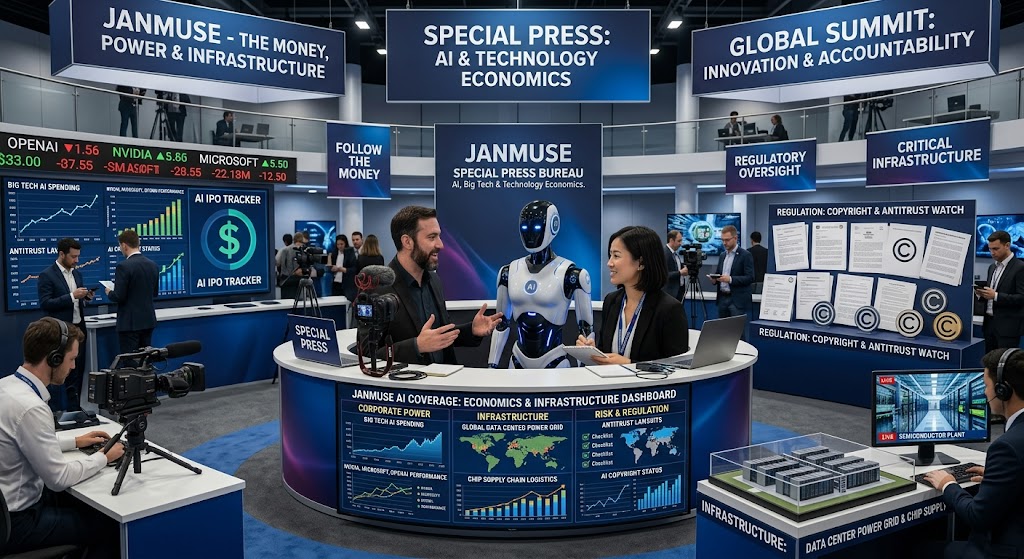
A Massive Tremor Has Shaken the Foundations of Legal Precedent
A massive tremor has shaken the foundations of legal precedent, sending shockwaves through the intersection of Silicon Valley and the American judiciary. In an unprecedented move that has fundamentally altered the power dynamic between corporate innovation and intellectual property rights, the United States government has officially intervened. The federal government has formally thrown its weight behind OpenAI, effectively siding with the tech giant in the high-stakes copyright battle initiated by The New York Times. This intervention is not merely a procedural filing; it represents a tectonic shift in how federal power is being utilized to protect the future of the artificial intelligence landscape.
By stepping into the arena, the government has sent a clear message that the stakes of this conflict transcend simple litigation between two private entities. It marks the moment where the power of federal policy began to actively shape the defense of generative systems, raising immediate questions for the public and industry observers alike: What, exactly, prompted the government to abandon its neutral stance and stake its reputation on a single side of this corporate war? The administration’s intervention arrived as a calculated, powerful declaration that has become a cornerstone of OpenAI’s legal strategy.
By formally positioning generative AI training within the protected category of fair use, the government has handed a massive victory to the developers of large language models. This official stance provides a crucial legal shield for OpenAI, arguing that the vast ingestion of data required to create systems like ChatGPT does not violate the intellectual property rights of creators. Instead, the administration characterizes this training process as a transformative activity, essential for the advancement of modern computation. This shift is not just a point of legal nuance; it is a fundamental realignment of federal priorities.
The message sent from the highest levels of government is clear: the training of AI models is no longer to be viewed through the narrow lens of infringement, but rather as an essential mechanism for technological evolution. This administrative endorsement essentially validates the core business logic upon which the entire generative AI industry is built. The news of this federal intervention traveled instantly across the digital landscape, reverberating through global newsrooms and policy corridors. International media outlets have seized upon this move, correctly identifying it as a watershed moment that will influence technology legislation far beyond the borders of the United States.
From Tokyo to London
From Tokyo to London, major publishers and legal analysts are dissecting the implications of Washington’s choice to prioritize AI development over traditional copyright protections. The intervention has sparked a global debate, with the international community now grappling with the potential for similar precedents being set in their own jurisdictions. This is no longer a localized battle between a newspaper and a tech firm; it has evolved into a global benchmark case. As nations worldwide watch to see how the U. S. handles the tension between journalistic integrity and technological progress, the significance of the American government’s decision continues to amplify.
The world now understands that the rules of the road for the age of artificial intelligence are being rewritten in real-time. At the heart of this conflict lies a fundamental accusation that strikes at the very core of how companies like OpenAI operate. The New York Times has alleged in its lawsuit that OpenAI built its powerhouse models, including the viral sensation ChatGPT, by directly exploiting millions of copyrighted articles without authorization. The argument is that the bedrock of modern AI is not raw, public-domain code, but the carefully curated, proprietary work of journalists and media organizations.
For The Times, this is a clear-cut case of theft, where their intellectual labor is being ingested, processed, and redistributed through automated systems that compete directly with the original publishers. By training on protected journalism, they contend, OpenAI has bypassed the necessity of content creation costs, effectively leveraging the intellectual investment of others to fuel its own commercial rise. This accusation forms the moral and legal bedrock of their complaint, setting up a clash between the established business models of the press and the emerging, data-hungry paradigm of the artificial intelligence revolution.
The potential consequences for OpenAI if this case were to result in a verdict for The New York Times are nothing short of existential. Should the courts rule that this massive scale of data usage constitutes infringement, the financial repercussions would be staggering, potentially totaling billions in statutory damages. Beyond the immediate cash liability, a loss would present a technical disaster: the company could be ordered to delete its entire training dataset, essentially lobotomizing their most successful models. This represents a catastrophic risk to the commercial viability of generative artificial intelligence as it currently exists.
If the ability to train on protected works is stripped away, the high-compute, high-capital infrastructure that makes LLMs possible would lose its foundation. OpenAI’s entire business model—predicated on the ability to access and synthesize the entirety of human knowledge—would face an unprecedented threat. A ruling in favor of the publishers would effectively dismantle the current architecture of the AI boom, forcing a complete and expensive reckoning for every firm in the sector.
To Justify Its Backing of OpenAI
To justify its backing of OpenAI, the government has adopted a sophisticated, technical argument regarding the nature of machine learning. Federal attorneys argue that when an AI system ingests an article, it is not simply ‘copying’ content in the traditional sense; rather, it is performing a highly transformative process. They contend that the training of these models converts original text into mathematical vectors, numerical data points that reside in a high-dimensional space. From this perspective, the AI is not reproducing the journalistic work, but instead learning the patterns, syntax, and linguistic structure embedded within it to create something entirely new and unique.
By framing this as a transformative use, the government seeks to place it firmly within the legal protections of fair use, arguing that the social utility of a generative engine outweighs the standard requirements for content licensing. This rationale attempts to bridge the gap between creative theft and scientific innovation, arguing that the ‘machine age’ requires a modern interpretation of the law to permit technological advancement. The Department of Justice’s involvement is driven by a broader, strategic vision that prioritizes the trajectory of American innovation above individual property grievances.
Federal attorneys have emphasized that current intellectual property laws must not be allowed to act as a barrier to the progress of computational science. The government’s filing serves as an explicit warning: should strict licensing structures be imposed on every piece of data ingested by AI systems, the development of these revolutionary tools would grind to a halt. The government argues that by shielding AI builders from unsustainable, high-cost licensing fees, they are ensuring that the United States remains at the cutting edge of global technology. This is a clear prioritization of collective industrial advancement over the individual rights of copyright holders.
The DOJ’s stance is that the economic and scientific potential of AI is too great to be shackled by traditional legal frameworks that were never designed for the scale of modern neural networks. The government is, in effect, treating the AI race as a national strategic imperative. Beneath the legal rhetoric lies a stark economic reality that explains the government’s sudden interest: the massive, fragile balance sheets of the AI sector. Silicon Valley giants are heavily exposed, having invested hundreds of billions of dollars into compute infrastructure, data centers, and specialized talent on the assumption that training data would remain accessible and affordable.
If the court were to force a mandatory licensing regime, it would immediately collapse the corporate margins that support these multi-billion dollar valuations. The entire business model, which relies on the ability to train on the internet’s collective output, would evaporate overnight under the weight of retroactive royalty payments. The government’s intervention is, at its core, a defensive maneuver aimed at protecting the stability of the tech sector.
By Siding with OpenAI
By siding with OpenAI, the administration is moving to prevent a structural economic collapse that would have far-reaching consequences for the broader American stock market and the long-term outlook for the technology industry’s growth in an increasingly competitive global landscape. Beyond the immediate interests of OpenAI, the government’s intervention serves as a powerful signal to the vast network of venture capital firms and institutional investors who have poured billions into the AI ecosystem. These investors have bet heavily on the continued, unfettered expansion of large-scale models.
A negative legal outcome for OpenAI would trigger a chain reaction, devaluing equity across the entire AI pipeline and forcing a massive write-down of assets that are currently priced for perfection. By aligning itself with OpenAI, the federal government is effectively providing a legal insurance policy for these stakeholders. This intervention ensures that the financial infrastructure supporting the AI revolution remains intact, preventing the sudden withdrawal of capital that would surely follow a judicial rejection of fair use.
It is a calculated protection of the investment landscape, confirming that the state sees the growth of foundational AI models as a primary goal, even if that protection comes at the expense of the traditional media publishers’ ability to monetize their work. Beneath the surface of the legal arguments lies a far more pressing calculation: national security. Federal policymakers have increasingly viewed the development of foundational artificial intelligence not merely as a commercial enterprise, but as a critical pillar of modern sovereignty.
In the eyes of Washington, the race to develop superior AI is a zero-sum game against global adversaries, where domestic models must attain dominance to ensure future technological supremacy. Consequently, the government’s intervention in the OpenAI copyright lawsuit is framed as a strategic necessity rather than a simple judicial opinion. The administration is signaling that internal regulatory burdens, including the enforcement of traditional intellectual property protections, must not become bottlenecks that hinder the rapid acceleration of these systems. By classifying mass-scale AI training as fair use, the state is effectively shielding the industry from the litigation risks that could otherwise paralyze its progress. For the U. S.
government, the priority is clear: domestic models must outperform global competitors at all costs, and if that requires reinterpreting the scope of copyright law to facilitate rapid commercial development, it is a sacrifice they are seemingly willing to make. The legal debate over training data, therefore, is being subsumed by the broader geopolitical imperative to secure a lead in the most important technological arms race of the twenty-first century.
Models Legal Technological Effectively: What the Details Show
The urgency driving this policy shift is rooted in a profound fear of losing pace with international rivals, particularly those in the East. Strategists inside the administration argue that if strict copyright enforcement were applied to large-scale machine learning, the resulting legal friction would act as a structural anchor, slowing down the development of next-generation models. In this view, any delay caused by the need to secure intellectual property permissions is interpreted as an existential threat to American technological leadership.
They believe that their competitors, operating under different regulatory regimes, can leverage unrestricted access to vast datasets to train more powerful, efficient, and responsive models at a speed domestic firms could never match if hindered by litigation. Therefore, the federal stance is that slowing down the training loop for legal compliance is a luxury the nation cannot afford. By leaning into the fair use defense, the government is essentially creating a fast-track environment for AI developers, ensuring that OpenAI and its peers can continue to iterate without the constant threat of copyright injunctions.
This alignment suggests that, in the hierarchy of federal priorities, the speed of innovation for foundational models has superseded the traditional protections for copyright holders, reflecting a belief that technological hegemony is the ultimate safeguard for the nation’s interests. This intervention does more than just accelerate training; it fundamentally protects the market structure that allows a handful of mega-corporations to dominate the AI landscape. By codifying the idea that free data scraping is essential for progress, the government has effectively fortified the position of the few major players who already command the necessary compute infrastructure.
This legal stance acts as a barrier to entry, creating a regulatory environment where only those who have already scaled can operate at the cutting edge. Smaller startups, which might struggle to navigate complex licensing agreements or afford the potential cost of settled content, are effectively locked out, while OpenAI benefits from a protected legal shield that validates its aggressive data acquisition model. The government’s decision to weigh in on the side of fair use isn’t just a point of law; it is a point of market architecture.
It secures the status quo, ensuring that the existing leaders, who are already deeply integrated into the state’s technological apparatus, remain the primary engines of American AI. By validating their methods, the administration ensures that the foundational models powering the next decade of infrastructure remain in the hands of the very firms currently enjoying federal support, effectively insulating them from the disruptive potential of widespread intellectual property demands.
With the Legal Barrier to Data Access Removed
With the legal barrier to data access removed, the playing field is drastically reshaped to favor those with the most capital. In a landscape where proprietary content can be scraped for free, the only remaining hurdle to developing a world-class foundational model is the astronomical cost of raw compute power—a resource that only a tiny cohort of massive tech conglomerates can sustainably fund. The government’s endorsement of fair use for training creates a environment where data is a commodity, leaving high-performance GPUs and hyperscale data centers as the only genuine bottlenecks.
This reality forces smaller players into a position where they cannot compete with the sheer volume of processing power that firms like OpenAI can leverage. By effectively ruling that data is free to take, the state has inadvertently concentrated power, as the advantages of data volume are now inextricably linked to the hardware required to process it. In this world, intellectual property is no longer a tool for authors and journalists to defend their livelihoods, but a resource to be harvested by those who have the hardware to build the digital brains of the future.
The concentration of power is now total: those who own the chips and the servers can consume the entirety of human knowledge without ever paying a licensing fee, leaving any would-be competitors without the necessary infrastructure to even attempt to catch up. The impact of this policy shift ripples outward, hitting the pillars of the democratic information economy with the force of a wrecking ball. For the professional journalism industry, the consequences are existential. If major publishers are stripped of their ability to monetize the vast archives that are now being used to fuel AI systems, the economic foundation that supports rigorous, investigative reporting will effectively evaporate.
Legal teams at major organizations, including The New York Times, have argued that allowing this free exploitation of their work removes the incentive for original reporting, ultimately starving the ecosystem of the very human intelligence it relies upon to function. When the government sides with OpenAI, it effectively declares that the value of the archive to an AI model outweighs the value of that archive as a source of revenue for the news organizations that created it. This isn’t just about lost profits; it is about the long-term erosion of a profession.
Without a viable way to charge for their output, publishers face a shrinking ability to staff newsrooms and deploy journalists to remote corners of the world. By backing the AI companies, the state is gambling that the efficiency of algorithmic content generation is a worthy replacement for the high-cost, labor-intensive craft of professional journalism, creating a future where news may become cheaper and faster, but also significantly less grounded in verifiable, investigative truth. We are witnessing the onset of an economic death spiral that threatens to hollow out the entire web.
As AI Models Shift Search Traffic from Human-curated Platforms to Automated
As AI models shift search traffic from human-curated platforms to automated, synthesized summaries, publishers find themselves in a trap where their content is used to train the very tools that then make their websites obsolete. This commercial loop is circular and destructive: the more efficiently AI models digest human-generated content, the less traffic reaches the source, leading to a precipitous decline in ad revenue. With that revenue gone, the capacity to fund quality, human-reported journalism disappears, further reducing the availability of fresh, unique data for these models to train on.
The irony is that the government’s support for free scraping is actively cannibalizing the very environment that produces the information necessary for progress. When AI companies are granted an exemption from paying for the content they ingest, they are not just competing with publishers; they are feeding off them until the host withers. This is an era of parasitic growth, where the federal government’s willingness to allow unrestricted access to proprietary journalism creates a short-term boost in model performance at the long-term expense of the information quality that our society relies upon for informed governance and public debate.
This federal alignment with OpenAI exposes a glaring contradiction in the administration’s broader approach to corporate power. While the White House frequently signals a commitment to aggressive antitrust enforcement to curb the dominance of Big Tech, the decision to intervene on behalf of OpenAI in this lawsuit suggests a different set of priorities. It indicates a clear hierarchy of values where national champion status is placed above the goals of traditional competition policy. The government is essentially creating a carve-out, protecting OpenAI’s data acquisition strategies while simultaneously posturing against monopolistic behavior in other sectors of the economy.
This double standard creates a confusing reality for the market: on one hand, regulators talk about breaking up tech giants; on the other, they facilitate a legal climate that allows one firm to cement its control over foundational AI. The government’s intervention in the copyright lawsuit proves that national interests have fundamentally altered the lens of antitrust oversight. They are willing to overlook the monopolization of training data if the end result is a faster, more effective American AI sector.
By protecting these firms, the state is effectively anointing them as the official architects of the nation’s digital future, signaling that the pursuit of artificial intelligence supremacy takes precedence over standard antitrust enforcement and open-market competition.
The Rationale for This Protection Lies in a Quiet
The rationale for this protection lies in a quiet, deep-seated alliance between the government and the private sector. Today, the federal administration relies on these AI companies for far more than just commercial innovation; they are increasingly integrated into intelligence, defense, and national security infrastructure. This deepening dependency has fostered a culture where protecting these corporations is equated with protecting the country itself. The government views these firms as strategic assets that must be shielded from the messy, protracted nature of intellectual property disputes, which could delay the release of critical updates or degrade the efficacy of tools used for state surveillance and analysis.
This is the shadow alliance: a symbiosis where AI giants trade on their access to federal support, and the government, in return, ensures their path to market dominance remains clear of legal obstructions. By backing OpenAI in this high-stakes copyright case, the state is reaffirming its commitment to an industrial policy that prioritizes the health of its tech partners, even when those partners’ methods fundamentally clash with the rights of individual creators. It is a clear message that for the sake of the intelligence and security state, some rules—like those regarding intellectual property—have become effectively optional for the companies that underpin our modern national defenses.
We stand at a critical inflection point for the digital commons. As AI models scrape the entirety of human history to build their vast repositories of knowledge, they face an unexpected existential ceiling. A world where human publications are starved of funding and shuttered for lack of revenue will force AI systems to feed upon themselves. In this recursive loop, these models begin to digest their own synthetic output, leading to a phenomenon known as model collapse. When the web is no longer replenished by the nuanced, investigative, and lived experiences of human journalists, the input quality degrades rapidly.
We are essentially watching the internet become an echo chamber of machine-generated feedback. If the legal frameworks being constructed today continue to prioritize the mass consumption of human-authored data without compensation, we risk a future where independent information is discarded in favor of hollow, recycled intelligence. The result is not just a loss of profit for publishers, but a fundamental decay of the diverse digital ecosystem that once fueled the innovation of these very technologies. The erosion of independent news outlets, accelerated by the aggressive ingestion of their content into foundational models, signals the end of a verified public record.
Journalism requires the slow, expensive work of verification—a cost that AI-driven, high-speed synthesis rarely accounts for. As independent outlets lose the economic leverage to maintain their reporting desks, the vacuum is filled by AI platforms that can generate content faster, cheaper, and with far less accountability.
The Danger Here Is Not Merely Economic, but Societal
This reduction in the presence of independent watchdogs leaves society profoundly vulnerable to untraceable AI fabrications. Without the original, verified reporting provided by legacy publishers, public information becomes untethered from the truth. The danger here is not merely economic, but societal. As we transition into a future dominated by synthetic generation, the ability to distinguish between fact-based journalism and government-friendly or algorithmically manufactured narratives is rapidly vanishing. We are moving toward a period where the quality and verification of our public information are being sacrificed at the altar of corporate scalability. The intervention of the U. S.
government into the legal battle between OpenAI and The New York Times serves as a watershed moment in regulatory history. By explicitly backing OpenAI’s assertion that large-scale AI training constitutes fair use, the administration has signaled that federal policy will actively shield foundational AI developers from the crippling weight of copyright litigation. This is not merely a legal opinion; it is a declaration of industrial priority. The government has effectively decided that the rapid advancement and global competitiveness of these AI models take precedence over the traditional intellectual property rights of individual publishers and media institutions.
By weighing in so heavily on the side of technological scale, the state is insulating these developers from the risks of mass copyright claims, essentially creating a ‘safe harbor’ that ensures their models can continue to operate and expand without interruption. This historic move confirms that the federal government views the domestic leadership of these AI platforms as a strategic imperative, forcing private publishers to absorb the cost of technological progress while their own property is repurposed to power the very machines that threaten their survival. We are now witnessing the solidification of a corporate-state horizon where the rules of private ownership are being systematically rewritten.
The administration’s robust support for the ‘fair use’ doctrine in this context locks in a new legal framework that prioritizes tech corporate consolidation over the individual content rights of creators and publishers. As the state and the AI industry align their interests, we see the traditional boundaries of intellectual property dissolving to protect sovereign technological power. This trajectory suggests that we are unlikely to return to a landscape where individual creators can easily enforce their rights against multi-billion-dollar entities. Instead, we are locked into a trajectory where state-sanctioned monopolies become the gatekeepers of our informational world.
The message to the market is clear: if you are a company of sufficient strategic importance to the intelligence and defense state, the protection of your infrastructure will override the property claims of the publishers and artists who provided the initial fuel for your engines. This is the new reality of the information age, where the preservation of national technological dominance dictates that the rights of the few are subservient to the data demands of the powerful.