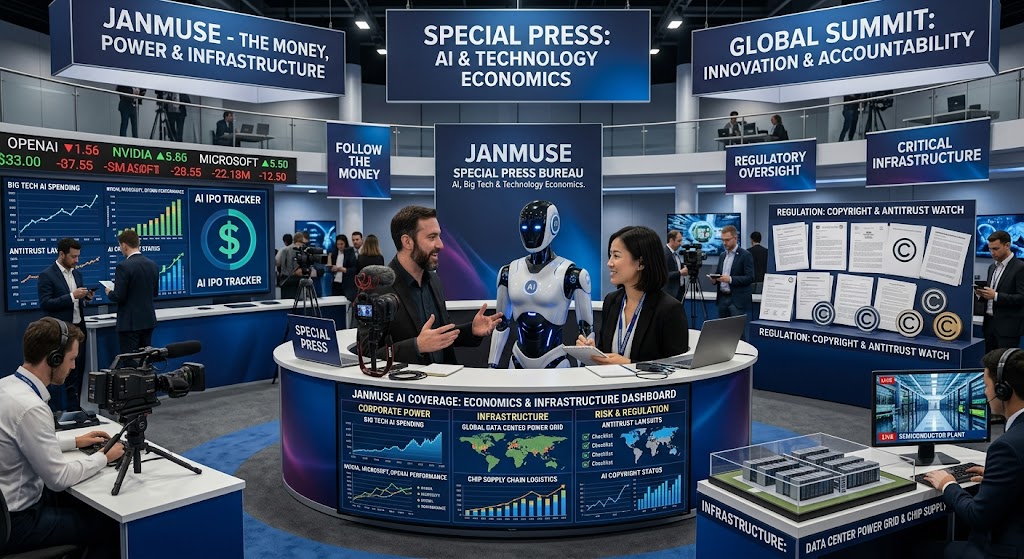
High-speed Fiber Optics and Cloud-based Intelligence Are Not Ethereal
Beneath the hum of the modern digital economy lies an increasingly desperate physical reality. High-speed fiber optics and cloud-based intelligence are not ethereal; they require massive, windowless fortresses of computing power that glow in the night like industrial beacons. These data centers are the lungs of the AI revolution, yet they are beginning to choke on their own success. As demand for generative artificial intelligence skyrockets, the infrastructure meant to sustain it—our aging, brittle electrical grid—is struggling to keep pace. We are witnessing a systemic bottleneck where the sheer voltage required to train large language models is exceeding the capacity of traditional utility nodes.
What was once a question of building near population centers or fiber trunks has transformed into a high-stakes scavenger hunt for raw electricity. The physical manifestation of this strain is visible in the construction sites spreading across the American landscape, where hyperscalers are no longer just building facilities; they are scrambling to occupy any patch of land that sits within reach of high-voltage transmission lines. This desperate expansion is now pushing developers toward the fringes of industrial history, turning our attention to the forgotten, tainted landscapes of the past. The defining constraint of 2026 is no longer just software efficiency or semiconductor supply chains; it is the race for power.
According to recent market analysis from Tema ETFs, the data center boom has fundamentally rewritten the rules of commercial real estate. Every AI hyperscaler is engaged in a frantic sprint to secure ‘power-adjacent’ land, creating a scenario where grid access has become the single most valuable currency in the corporate world. As existing grids reach their peak threshold, the luxury of building on greenfield sites—pristine land that is easy to develop and free from hidden baggage—is vanishing. Developers are hitting a wall of capacity, finding that the locations best served by high-capacity substations are already spoken for or physically impossible to expand.
This power-first mandate is forcing a shift in strategy. When the power is trapped in a region with limited available acreage, developers are being pushed into a corner, forced to consider real estate that nobody else wanted: sites defined by historical contamination, industrial runoff, and decades of environmental neglect. The race for AI dominance is effectively turning the industry’s eyes toward the shadows of the American industrial past. This brings us to the rise of the brownfield.
Were Viewed by Developers as Dead Ends
Historically, brownfields—properties where redevelopment is complicated by the presence of hazardous substances, pollutants, or contaminants—were viewed by developers as dead ends. They were sites of liability, requiring multi-year remediation efforts that sucked the profit out of projects and terrified investors. However, as the AI gold rush intensifies, the narrative is shifting. For hyperscalers under immense pressure to bring online massive clusters of server capacity, a brownfield is no longer a liability; it is an opportunity masquerading as a headache.
These sites often come with a hidden advantage that far outweighs the cost of a cleanup: they are already zoned for heavy industrial use and, more importantly, they are usually pre-wired into the regional power grid. Because these sites were once factories, refineries, or military installations, they are already plugged into the high-voltage infrastructure that is currently the rarest resource on the planet. By absorbing the costs of environmental remediation, developers are essentially buying a fast track to the grid, prioritizing the speed of deployment over the traditional caution that once kept these sites empty for generations.
When you look at the geography of the American power grid overlaid with available industrial real estate, the tension becomes painfully clear. Our high-voltage transmission lines—the massive arteries of our energy sector—are not located in the middle of nowhere. They follow the historical paths of industrial development, snaking through older urban cores and former manufacturing belts. Maps of available land show a stark contrast: the open fields in the exurbs are often miles away from the substations capable of handling the enormous, consistent loads of a data center.
Conversely, the land sitting directly adjacent to these power hubs is almost universally comprised of legacy industrial plots, many of which have been sitting stagnant for decades due to soil contamination or complex subsurface pollution. Developers are using this data to identify the lowest-hanging fruit. By selecting sites that sit at the intersection of decaying infrastructure and high-voltage transmission, they are effectively choosing to pay a premium in remediation rather than waiting years for new utility lines to be permitted and constructed across pristine territory. The map of the future of AI is being drawn directly over the industrial wreckage of the past.
The reality of this trend is perfectly captured by recent reports from Hunterbrook, which highlighted the striking case of a data center development occurring on a former Army munitions dump. This is the new frontier in a nutshell: a site once used for the storage and disposal of volatile military waste is now being repurposed to host the core of the digital economy. These military-grade legacies come with an extensive history of environmental risk, ranging from heavy metals to persistent chemical contaminants buried in the soil.
For an AI Hyperscaler, the Property’s History Is Secondary to Its Utility
Yet, for an AI hyperscaler, the property’s history is secondary to its utility. By selecting a location that was originally built to serve the government’s needs, the developer inherits a massive power footprint. The conversion process is a radical exercise in urban renewal that tests the limits of environmental law. It is no longer just about cleaning up a plot of land for a park or a retail center; it is about burying the remnants of 20th-century warfare beneath millions of square feet of concrete and cooling systems, all to feed the insatiable demand of 21st-century intelligence.
If you look at the archival footage of such a site, you see a world defined by bunker doors, restricted zones, and the remnants of heavy military logistics. Now, place that imagery alongside the present-day reality of the construction site: massive concrete foundations being poured into the earth, deep pilings driving through layers of soil that have been disturbed but not fully healed. The transition is surreal. Heavy machinery digs into the ground where munitions once sat, clearing away the chemical legacy of a previous era to make room for rows of server racks that will process data at speeds unfathomable to the soldiers who once patrolled these fields.
This is the visual shorthand of our current moment. The site is being ‘capped,’ a remediation technique where the toxic material is left in place but buried under a permanent, impermeable barrier. The server farm becomes the ultimate seal, keeping the past buried and the power flowing. It is an engineering marvel, but one that raises uncomfortable questions about what happens when this concrete shell begins to age, and who will be left holding the liability for the earth trapped beneath. To keep up with the breakneck speed of the AI industry, the traditional, cautious processes of urban planning are being pushed to the side.
We are seeing the emergence of fast-track permitting processes designed to clear the runway for these ‘AI gold rush’ projects. In many municipalities, the standard environmental impact assessments—which are designed to identify, quantify, and mitigate risks—are being expedited, streamlined, or, in some cases, effectively bypassed. The justification is almost always economic: the promise of tax revenue, the prestige of becoming a regional AI hub, and the perceived urgency of the technological arms race. When a hyperscaler offers to invest billions into a local community, the appetite for slow, granular environmental scrutiny tends to vanish. This shift represents a fundamental change in the relationship between public oversight and private development.
The regulatory mechanisms meant to act as a buffer between industrial activity and public health are increasingly being treated as speed bumps to be cleared, rather than essential safeguards in the development of critical digital infrastructure.
Behind Closed Doors, the Pressure on Local City Planners Is Mounting
Behind closed doors, the pressure on local city planners is mounting. Interviews with those on the front lines of municipal zoning reveal a quiet, mounting anxiety. They are caught between a rock and a hard place: the obligation to uphold long-term environmental protections and the intense, relentless pressure to bring in the massive electricity-hungry projects that define the modern, high-tech economy. Planners speak of the ‘AI mandate,’ a pervasive pressure to greenlight projects on contaminated land with minimal pushback, all while knowing that the true environmental cost of these sites might not be understood for decades.
They are tasked with weighing the immediate, tangible economic boost against the abstract, long-term risks of groundwater contamination, soil degradation, and potential future liability. As the pace of permitting continues to accelerate, these officials are often the only ones standing between a fast-moving developer and the long-term safety of the community. Yet, in a world where data center capacity is seen as the ultimate engine of regional growth, the voice of the planner is becoming increasingly faint, drowned out by the roar of the AI revolution and the overwhelming demand for a place to plug in.
When the initial soil surveys are completed, the financial burden of remediation often reveals itself as a moving target. Developers betting on these brownfield sites frequently underestimate the depth of the chemical plume, assuming that containment is a simple matter of capping and monitoring. However, as the construction excavation begins, the legal reality sets in. Who carries the long-term liability for toxic leaching that may emerge years after the cooling systems are powered on? The financial architecture is complex, relying on intricate insurance wrappers and environmental indemnification clauses that insulate the parent hyperscaler from the site-level special purpose entities.
In many cases, these corporations have carved out liability protections that leave the municipality or future landowners holding the bag should the contamination spread beyond the surveyed boundaries. The balance sheet of a data center project is predicated on decades of uptime, yet the historical legacy of the land is a volatile variable. When remediation costs spike, these corporate entities often look toward taxpayer-backed brownfield cleanup funds, turning a private development enterprise into an unexpected public expense. The risk of capital loss is mitigated through clever corporate layering, shifting the burden away from the tech giants and onto the very communities they claimed to be revitalizing with high-tech investment.
Visualizing the Economic Trade-off Reveals a Staggering Disparity
Visualizing the economic trade-off reveals a staggering disparity. On one side of the infographic, we see the projected revenue generated by a massive hyperscale facility, a steady, exponential climb fueled by the insatiable demand for AI processing power. On the other, the costs of historical groundwater remediation—an unpredictable, jagged line that often trends upward with no clear ceiling. As developers peel back layers of pavement, they frequently find deep-seated contaminants like volatile organic compounds or heavy metals left over from decades of industrial use. The cost to pump, treat, and monitor groundwater for thirty years can easily consume the initial tax incentives offered by local governments.
When these remediation costs balloon due to unforeseen plumes or state-mandated cleanup expansions, the internal rate of return for the project begins to erode. Investors might view the data center as a goldmine, but beneath the concrete pads, these toxic legacies act as a fiscal anchor. The data shows that the perceived speed of development is often an illusion; for every month of construction time saved on a ‘ready-to-go’ brownfield site, years of expensive environmental management are added to the back end.
The revenue curves may look impressive in the pitch deck, but the long-term cleanup liability frequently threatens to erase those gains before the first server rack is even fully utilized. Underwriting these properties is an act of high-stakes gambling for insurers. When a developer approaches an underwriter with a site that served as an Army munitions dump or a chemical processing plant, the complexity of assessing risk becomes nearly insurmountable. The difficulty lies in the invisible nature of the threat; chemical plumes move through geological strata in unpredictable ways, defying the static models used by traditional commercial insurance.
Because data centers represent such dense concentrations of physical capital, the loss exposure is absolute. If a monitoring well detects a significant spike in groundwater toxicity, the entire facility might face a stop-work order, or worse, a long-term shutdown for emergency remediation. Insurers are now demanding exhaustive environmental audits that go far beyond standard Phase I and Phase II reports. They are looking for the ‘unknown unknowns’—the buried barrels, the forgotten chemical vats, and the deep-soil contamination that only reveals itself when the earth is broken. Many underwriters are simply refusing to touch these brownfield data projects at standard rates, forcing developers into predatory high-risk insurance markets.
This adds a hidden layer of operating cost, as the premiums paid to hedge against potential environmental litigation become a significant line item in the annual maintenance budget for the hyperscaler, fundamentally altering the economics of site selection.
For a Hyperscaler, the Nightmare Scenario Isn’t Just the Cost of Cleanup
Risk assessment models in the tech sector are evolving to treat environmental liability as a core business threat. For a hyperscaler, the nightmare scenario isn’t just the cost of cleanup; it’s the prospect of protracted litigation from surrounding neighborhoods or state environmental agencies. Advanced modeling now simulates a variety of scenarios: from small-scale contamination leaks to full-scale aquifer breaches that trigger massive class-action lawsuits. These models weigh the likelihood of these events against the strategic necessity of being in a specific, power-adjacent location. The legal department and the engineering team are often in conflict, with legal pushing for massive mitigation buffers and engineering prioritizing the proximity to high-voltage transmission lines.
The result is a hybrid model that accepts the ‘calculated risk’ of toxic exposure, banking on the legal might of the corporation to shield them from the worst consequences of an environmental disaster. As the race for capacity accelerates, the logic of the model often forces a gamble; the firm decides that the immense value of grid connectivity outweighs the potential cost of settling a future multi-million dollar environmental lawsuit. It is a cynical, quantified approach to corporate responsibility where the damage to the environment is simply factored into the project’s contingency budget, treating clean earth as a commodity to be purchased or polluted.
The calculus of the energy transition forces a harsh comparison between the environmental risks of brownfield development and the staggering resource cost of building new infrastructure. Every greenfield data center built in an undeveloped rural zone requires massive, inefficient new transmission lines, causing ecological destruction and land-use battles that can stall projects for years. In contrast, brownfield sites—often former heavy industrial nodes—are already located near existing substations, offering a ‘turnkey’ power solution. This creates an environmental trap: is it more damaging to disturb a pristine ecosystem for power delivery, or to risk the reactivation of a dormant, toxic chemical site?
Developers frequently frame their brownfield projects as an act of ‘environmental restoration,’ claiming that their presence forces the cleanup of long-abandoned hazards. Yet, this framing glosses over the fundamental reality that the site is being disturbed specifically for the power grid connection, not for the sake of the environment. The focus remains on energy efficiency as a metric of sustainability, completely ignoring the long-term toxicity of the site itself. We are trading one form of environmental harm for another, with data center developers effectively using the urgency of the energy transition as a shield to bypass more rigorous, long-term environmental scrutiny of their chosen industrial sites.
Look closely at the maps of modern hyperscale expansion and you will see a clear, undeniable pattern: the proximity to regional grid nodes is the primary driver of location, with safety considerations relegated to an afterthought. Where developers once looked for stability, geology, and long-term security, they now look for ‘megawatt availability.
These Maps Expose the Hierarchy of Modern Tech Requirements
‘ Our visual analysis shows clusters of planned data centers sitting directly atop historical industrial zones, all within a few miles of high-capacity transmission substations. These maps expose the hierarchy of modern tech requirements, where the speed of grid integration supersedes the environmental safety of the land. It doesn’t matter if the soil is contaminated with arsenic, lead, or volatile chemicals; if the location offers 500 megawatts of power, the developer moves in. These map overlays, juxtaposing current project footprints with EPA superfund and brownfield registry sites, provide a chilling look at the future of infrastructure.
It illustrates how the digital hunger for power is dictating the geographic reality of our landscapes. By prioritizing the grid over the integrity of the soil, these firms are essentially creating a future geography defined by clusters of tech power, built upon the toxic, unstable foundations of an industrial past that the industry is all too eager to ignore. For the residents living adjacent to these developments, the arrival of the bulldozers brings a mix of hope and profound existential fear. There is a palpable tension in the air as heavy machinery disturbs the soil, and rumors circulate about what might be unearthed once the foundation is stripped.
Many of these families have lived in the shadow of abandoned industrial zones for generations, and they have long memories of the sickness and contamination that plagued their community in the past. Now, they watch as a new, massive, and largely opaque industry moves in, promising growth but often acting with little transparency regarding the environmental hazards of the site.
They speak of the vibration from the constant traffic, the concern over the dust stirred up from the excavation, and the lingering, unanswered questions about whether the ground beneath their homes is actually being made safer or if the pollution is simply being covered up to facilitate the rapid construction of server halls. There is a sense of being treated as disposable, a community whose long-term health is being gambled on the premise that the march of the digital age is inevitable, regardless of the toxicity that remains buried in their own backyards. The local town hall meeting serves as the final, and often futile, arena for community resistance.
Under the flickering fluorescent lights of the community center, residents stand before representatives of the development firm, holding printed maps and historical reports detailing the site’s toxic legacy.
They Challenge the Safety Claims
They challenge the safety claims, demanding accountability for the groundwater, the air quality, and the long-term impact on their home values. The developers, backed by high-paid consultants, speak in the cold, clinical language of risk mitigation, promising that ‘best practices’ and ‘mitigation strategies’ will contain any historical hazards. But the community isn’t buying it; they see the disparity between the glossy renderings of the completed data center and the reality of their neighborhood’s history. When a resident asks who will be responsible if the pollution leaks after the company moves on, the answers are evasive, filled with legal jargon about liability waivers and corporate structure.
The meeting highlights the fundamental disconnect: a global tech industry moving at the speed of light, crashing into the slow, grounded concerns of a community that has to live with the consequences of these decisions long after the developers have moved to the next plot of land. It is a confrontation between the abstract, powerful demands of the AI revolution and the concrete, daily reality of environmental stewardship. Regulatory agencies now find themselves in an impossible crossfire, balancing the urgent national mandate for AI infrastructure against the long-standing environmental protection guidelines established by the EPA.
On one side, economic development boards are pushing for lightning-fast zoning approvals, treating the data center boom as the industrial equivalent of a gold rush. They offer tax abatements and streamlined permitting, viewing contaminated brownfields not as toxic liabilities, but as strategic real estate assets positioned near crucial high-voltage grid connections. On the other side, environmental regulators are tasked with overseeing the remediation of these sites, where legacy pollutants like heavy metals, industrial solvents, and volatile organic compounds sit buried. The tension is palpable; as officials look to facilitate unprecedented tech investment, they face pressure to interpret safety guidelines through a flexible, risk-tolerant lens.
The result is a regulatory environment where the rigorous standards intended to protect public health are increasingly being subjected to the pressures of rapid industrial expansion, leaving the long-term oversight of these massive subterranean cleanups to agencies stretched thin by competing political and economic priorities. Along the perimeter of a decommissioned munitions dump—now the site of a high-tech server facility—the visual evidence of this uneasy marriage is stark. EPA monitoring equipment hums with a steady, clinical intensity, its sensors probing the air and soil for remnants of chemical runoff that have plagued the ground for decades.
These towers and sampling stations serve as a daily reminder that this facility was built not on pristine land, but on a scar of industrial history. While the digital infrastructure inside the walls operates with surgical, binary precision, the environment outside is a messy, lingering reminder of past negligence.
Technicians in Reflective Vests Pace the Site
Technicians in reflective vests pace the site, checking data logs that track parts-per-billion concentrations of contaminants. They are the frontline observers in an experiment that seeks to determine if, and how, we can effectively seal off toxic legacies beneath layers of concrete, steel, and high-frequency cabling. Every data packet traveling through these servers is underpinned by the silent, ongoing maintenance of this environmental barrier, a quiet, expensive war against the persistent nature of chemical residue. As this race for digital dominance accelerates, the industry’s reliance on brownfield development reveals a high-stakes gamble. Developers are essentially trading immediate grid proximity and zoning speed for a future defined by perpetual environmental liability.
By repurposing sites previously deemed too hazardous for residential or commercial use, they are betting that modern engineering can indefinitely contain the ghosts of our industrial past. It is a calculation of convenience; it is faster to navigate the remediation of a known brownfield than to fight the slow, bureaucratic battles required to secure new power lines across protected rural or suburban greenbelts. Yet, in this rush, the underwriting risks are becoming increasingly opaque. Investors are pouring billions into these projects, often downplaying the long-term costs of potential containment failures or shifting legal responsibilities.
The data center industry is betting its entire future on the belief that it can compartmentalize its physical impact, assuming that the technical solutions of today will hold indefinitely against the slow, unpredictable decay of the hazardous materials lying just beneath the foundation of the digital revolution. Ultimately, we are left to confront a defining philosophical crisis of our time: will the AI era be remembered for the brilliance of its virtual output, or for the massive, physical toxic footprint it left in its wake?
We are transforming our landscape to accommodate the insatiable power demands of artificial intelligence, often disregarding the long-term ecological toll for the sake of quarterly growth and cloud-based dominance. As these massive, anonymous boxes rise from the dirt of forgotten industrial sites, they serve as monuments to a civilization that prioritizes instantaneous, ethereal progress over the slow, foundational health of the earth. The irony is profound; the most advanced technology in human history is being powered by the literal burial of our past environmental sins. As we push further into this digital frontier, we must decide if the pursuit of virtual ubiquity justifies the permanent degradation of our physical soil.
The servers will eventually be recycled and the software will be replaced, but the legacy of these sites will remain, buried under layers of progress, forcing us to ask whether we are building a sustainable future or simply creating a new generation of environmental debt that our descendants will be forced to settle long after the power has been switched off.