The Neon Hum of the Financial Markets Has Shifted
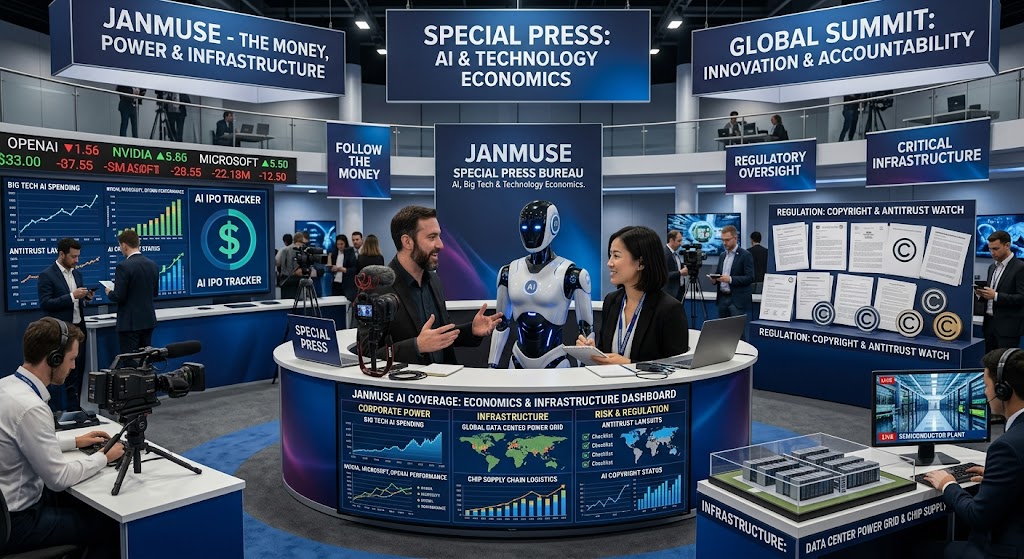
The neon hum of the financial markets has shifted. Across the terminals of Wall Street and the private dashboards of Silicon Valley, a singular, frantic rhythm has taken hold. It is a world of flashing red and green tickers, where headlines cycle with a velocity that mirrors the underlying volatility of the artificial intelligence sector. We are witnessing a moment of unprecedented intensity, where the narrative of transformative technology collides with the cold, hard mechanics of capital distribution. The screen pulses with the weight of billions—figures that seem to defy gravity, moving from venture coffers into the hungry maw of GPU clusters and proprietary research.
This is not merely an investment cycle; it is a high-stakes endurance test played out in the glare of a global stage. The frantic tone is no accident; it is the heartbeat of a race to define the next epoch of human industry, where the margin for error has effectively vanished. Beneath the surface of these soaring valuations lies a phenomenon now recognized by market insiders as the ‘Capital Squeeze. ‘ It is a fiscal paradox: as the capabilities of foundational AI models scale exponentially, the burn rates required to sustain them have broken the traditional bounds of venture financing.
Labs that once operated on the grace of early-stage capital are now facing a reality where traditional funding routes are insufficient to meet the demands of massive, compute-heavy infrastructure. The squeeze is the narrowing corridor between the necessity of massive cash reserves and the cooling patience of institutional capital. It creates a vacuum that demands ever-larger funding rounds, pushing labs into a cycle where they must constantly mobilize capital just to maintain their position on the frontier. The squeeze isn’t just about money; it’s about the sheer survival of a business model that is fundamentally disconnected from the standard metrics of corporate profitability.
Nowhere is this dynamic more visible than in the recent actions of OpenAI. As Reuters and other financial outlets have signaled, the lab is currently sprinting toward an ambitious $30 billion funding milestone. This is not a casual expansion; it is an accelerated mobilization, a strategic pivot designed to secure dominance before the public markets can dictate the terms of their future.
By Attempting to Consolidate Such a Massive War Chest in a Pre-IPO Window
By attempting to consolidate such a massive war chest in a pre-IPO window, OpenAI is effectively rewriting the rules of pre-public capitalization. The timeline for this move is compressed, reflecting an urgency that suggests leadership is acutely aware of the shifting landscape. They are not merely asking for capital; they are demanding a valuation fortress, ensuring that when the public bell finally rings, they hold the power of an industry titan rather than the vulnerability of a dependent startup. Why target $30 billion? The answer lies in the grim, inescapable arithmetic of modern AI development.
The operational costs—the astronomical expense of training runs, the procurement of tens of thousands of specialized chips, and the war for elite research talent—have transformed into a persistent, cavernous hole in the balance sheet. A $30 billion raise is not an act of excess; it is a logical, if desperate, necessity to fund the next generation of model architecture. Without this capital, the cycle of innovation halts; with it, the lab risks dilution and the scrutiny of investors who are becoming increasingly cautious about the long-term path to actual profit.
Each dollar raised carries the weight of future expectations, and for OpenAI, the cost of maintenance is currently outpacing the velocity of revenue generation, making this massive injection the only bridge to a sustainable, independent future. The race is no longer a solo act; it is a high-stakes duel between OpenAI and Anthropic. If you visualize the trajectory of these two giants, you see two lines racing toward a shared finish: the public market entry. This is a collision course of resources, strategy, and timing. For investors, the pressure is mounting as the window for entry begins to close.
The race to achieve technical milestones—while simultaneously balancing a complex cap table—has turned into a game of chicken played at warp speed. Anthropic’s own progression has become a catalyst, forcing OpenAI to expedite its fundraising to avoid being outpaced in terms of market perception and brand dominance. Every announcement from one lab forces a counter-maneuver from the other, turning the development of foundation models into a relentless competition where speed is the only currency that matters. Anthropic’s impending public market entry acts as a ticking clock for OpenAI’s fundraising team.
Investors Are Not Looking at These Entities in Isolation
Investors are not looking at these entities in isolation; they are comparing the two as proxy measures for the health of the entire industry. If Anthropic manages to signal a clear path to market or secures a valuation that resets investor expectations, it creates a new baseline that OpenAI must exceed. This makes Anthropic’s IPO a strategic pressure point, a deadline that looms over every term sheet and board meeting in San Francisco. OpenAI cannot afford to be behind when the public market evaluates the sector, as a lower relative valuation could paralyze their ability to raise further funds at scale.
Consequently, every strategic move Anthropic makes serves as a constraint on OpenAI’s flexibility, shortening the runway for their own internal and external financial maneuvering. However, the aura of invincibility surrounding these labs is beginning to fracture. Yahoo Finance and other market observers have recently highlighted a cooling in sentiment specifically directed toward Anthropic. Investors, who once viewed every foundation lab as an inevitable multi-trillion-dollar entity, are now showing signs of hesitation. The optimism that fueled previous funding rounds is being tempered by the reality of a market that is starting to demand more than just technical promises.
As valuation expectations soften, the conversation shifts from pure ‘AI potential’ to ‘AI performance. ‘ This cooling sentiment is a significant indicator that the initial hype cycle is reaching a state of maturity, and the pressure is now squarely on these labs to prove that their business models can withstand the scrutiny of the public eye. The disconnect between high-growth expectations and the reality of Q3 revenue deceleration is becoming the defining tension of this period. For all the talk of trillion-dollar TAMs and world-changing capabilities, the labs are finding that translating innovation into consistent, high-margin revenue is a formidable challenge.
As the revenue growth rate shows signs of slowing, the narrative of the ‘inevitable winner’ begins to fade, replaced by a more sober analysis of operational costs versus realized earnings. This is the collision between vision and valuation—a reality check that threatens to disrupt the pre-IPO plans of the industry leaders. The market is effectively telling the labs that the era of blind, unchecked funding is coming to an end, and only those who can demonstrate a credible, sustainable path to profitability will retain their leverage in the months to come. Behind the gleaming projections of the future lies a stark liquidity event that speaks volumes about internal confidence.
BigGo Finance Reports Document a Staggering Exit for OpenAI Personnel
BigGo Finance reports document a staggering exit for OpenAI personnel, with 600 employees cashing out a total of $6. 6 billion. This is not merely a payout; it is a signal. While the outside world fixates on the next breakthrough in reasoning models, the internal stakeholders are quietly liquefying significant portions of their equity. This massive injection of capital into private hands happens at a time when the company is aggressively courting an additional $30 billion in fresh funding.
The math is as compelling as it is concerning: by allowing a multi-billion dollar secondary market exit while simultaneously pushing for a record-breaking raise, OpenAI is navigating a complex balancing act between keeping its top talent financially incentivized and maintaining an iron grip on its cap table. This move, executed in the lead-up to the broader market shift, suggests a deliberate effort to clean up the equity structure before the public gaze intensifies.
It raises a foundational question about the nature of the current AI boom—is this the final maturation of a startup into a pillar of global enterprise, or is it an orchestrated liquidity event designed to maximize value while the window for extreme, growth-based valuations remains wide open? To understand the sheer magnitude of this moment, consider the trajectory: a 70% valuation jump in a single year is, by any traditional financial metric, an anomaly of extreme proportions. In the history of Silicon Valley, such parabolic growth is usually reserved for the most disruptive platforms at the peak of their product-market fit.
Yet here, that growth is fueled by an insatiable appetite for compute and the strategic necessity of maintaining a moat that is measured in billions of dollars of expenditure. This valuation surge is the heartbeat of the current AI bubble dynamics, reflecting an investor sentiment that prizes potential over immediate cash flow. But there is a hidden tension in this number. When valuations climb at this velocity, the pressure to meet the corresponding revenue expectations scales exponentially. Investors aren’t just betting on the technology anymore; they are betting on the labs’ ability to convert that 70% growth into a defensible, recurring revenue stream before the capital markets lose patience.
The Valuation Itself Has Become a Self-fulfilling Prophecy
The valuation itself has become a self-fulfilling prophecy, demanding ever-larger rounds of funding just to maintain the current trajectory, creating a cycle of reliance on external capital that defines the precarious nature of the current race. The power dynamic within the boardroom is undergoing a subtle but profound realignment. Historically, institutional investors held the reins, dictating the pace of growth through the leverage of capital. Today, however, the AI lab founders command an unprecedented level of authority, driven by their exclusive access to the ‘God-tier’ compute and human capital required to run these foundational models.
As OpenAI and Anthropic race to secure their respective war chests, the traditional relationship between VC firms and founders has been inverted. Investors are now the supplicants, scrambling for limited slots in funding rounds that are governed as much by the founders’ desire for control as by their need for cash. This shift is not without its risks. When founders hold too much leverage, it can insulate them from the very discipline that markets usually impose on private companies before they go public.
The result is a high-stakes negotiation where capital is not just about survival, but about maintaining the independence to steer the development of Artificial General Intelligence without the standard oversight that a more traditional equity structure would mandate. In the world of foundational AI, hardware costs are the gravity that pulls every high-flying vision back to earth. This is a non-negotiable expense—a persistent, massive, and ever-growing burn rate that separates the real contenders from the merely theoretical ones. For these labs, being over-leveraged isn’t a strategic choice; it is a structural necessity.
You cannot train the next frontier model with less compute, and you cannot secure the compute without massive capital commitments. This reliance creates a vulnerability: if the cost of hardware increases or the availability of specialized chips hits a supply-chain bottleneck, the entire business model faces a liquidity crisis. We are seeing a shift where operational burn is no longer a metric to be optimized, but a hurdle to be vaulted at any cost. This hyper-leveraged state leaves these companies with zero room for error.
If the revenue milestones miss their targets, or if the market sentiment shifts against the long-term potential of LLMs, the cost of servicing that debt or satisfying the dilution of those capital rounds becomes catastrophic.
The Labs Are Walking a Tightrope
The labs are walking a tightrope, knowing that they must spend faster than anyone else to stay ahead, yet knowing that every dollar spent increases the fragility of their balance sheets. Speculation surrounding a $1. 5 trillion valuation, as discussed in recent financial reports, represents a fundamental test of the market’s appetite for long-term growth stories in the face of cooling revenue metrics. When an institution reaches toward a trillion-dollar valuation, it ceases to be a startup and begins to operate in the realm of sovereign-level influence. However, these reports come at a time when the initial, euphoric adoption phase is being tested by the realities of enterprise implementation.
The $1. 5 trillion figure acts as a North Star for the current fundraising sprint, helping to justify the massive dilution that new investors are accepting. Yet, beneath the headlines, the conversation among analysts is shifting. They are looking at the delta between the promised trillion-dollar TAM and the actual, recurring revenue coming in from corporate partners. Is this valuation a legitimate reflection of future cash flows, or is it a psychological ceiling that the market has set to prevent a broader collapse of tech sector sentiment?
As these labs push for these astronomical valuations, they are effectively betting that their dominance will be absolute and that the barrier to entry for competitors will remain insurmountable for decades to come. Are we witnessing a fundamental recalibration of what AI growth looks like? For years, the metric for success was simple: user growth and model performance benchmarks. Today, that has been replaced by a much harder standard: unit economics and the path to real profitability. The market is beginning to distinguish between ‘hype-driven growth’—which is easily stalled by technical or regulatory hurdles—and ‘utility-driven growth,’ which remains resilient even when the initial wave of excitement dies down.
We are seeing this reality play out in real-time as Anthropic’s growth numbers face scrutiny, prompting a broader debate about whether the AI sector is maturing or merely entering a correction phase. If growth is no longer guaranteed, the entire investment thesis for the foundational labs changes. Instead of valuing these companies based on their potential to replace human labor, investors are starting to look at their ability to manage margins, control infrastructure costs, and extract value from a crowded, increasingly competitive field.
This is not just a dip in the cycle; it is a move toward a more sober, disciplined era of AI economics where ‘growth’ must be verified by the bottom line.
When Major Institutional Capital Chooses to Park $30 Billion in a Single Entity
The funding environment for artificial intelligence is increasingly appearing as a zero-sum game, where the massive liquidity flowing into OpenAI’s coffers creates a shadow of scarcity for its peers, most notably Anthropic. When major institutional capital chooses to park $30 billion in a single entity, that is capital that is no longer available to support the development of alternative infrastructures or competing models. This consolidation of funding creates a ‘winner-takes-all’ dynamic that is essentially dictated by the primary mover. By aggressively front-running their funding rounds, OpenAI is effectively forcing their competitors to defend their valuations in a tighter, more skeptical capital market.
Every dollar that goes into the OpenAI machine is a potential dollar diverted from Anthropic’s ability to scale their own research. This isn’t just about market share in the software space; it’s about the total available capital in the global market. As the funding sprint intensifies, the sheer gravity of these multi-billion dollar rounds starts to suck the air out of the room for anyone else, potentially leaving the market with one massive incumbent and a series of under-capitalized followers struggling to keep up with the pace of compute.
The ripple effects of this capital squeeze are felt most acutely in the secondary markets, where AI employees and early stakeholders are trying to navigate the value of their shares. For years, the secondary market was a place of easy liquidity and soaring paper profits. Now, as the labs grapple with slower growth and higher capital requirements, the liquidity outlook is shifting. The employees who expected a clear path to an IPO exit are now watching as their companies pivot toward massive, perpetual private funding rounds. This change alters the incentives for talent across the entire ecosystem.
If the IPO, the traditional goal for early stakeholders, is delayed indefinitely to accommodate private capital, the value of those equity packages becomes increasingly speculative. We are seeing a transition period where the promise of a public market exit is being replaced by the reality of long-term private ownership, fundamentally changing how early employees view their tenure at these labs.
As the Competition for Capital Intensifies
As the competition for capital intensifies, the leverage that employees once held is being slowly eroded, leaving them at the mercy of decisions made in high-stakes boardroom negotiations far removed from the day-to-day work of model training. Is the path toward an IPO an exit strategy, or has it become a desperate grab for public liquidity in a market that has grown wary of runaway burn rates? For years, the narrative of artificial intelligence was defined by infinite scaling and the promise of a public market coronation.
But the current sprint—evidenced by OpenAI’s frantic effort to secure thirty billion dollars before Anthropic hits its own milestones—suggests a different, more complex reality. Companies are no longer racing toward the Nasdaq as a natural stage of growth; they are racing toward it as a survival mechanism. Public liquidity pools are deep, but they come with transparency requirements that private, venture-backed rounds simply do not demand. As OpenAI attempts to stay ahead of its rivals, the distinction between a strategic move and a defensive liquidity maneuver is blurring.
Investors are beginning to ask whether these massive funding rounds are designed to fuel actual innovation or merely to provide an exit hatch for employees and early backers who have spent years locked into speculative equity. This shift transforms the IPO from a celebration of maturity into a high-stakes auction where the founders’ primary challenge is maintaining control while satisfying an increasingly skeptical public market. Once these companies enter the public arena, the scrutiny will be unforgiving. For now, private backers are content to swallow multibillion-dollar operating losses, viewing them as the necessary cost of building a fundamental intelligence layer for the global economy.
But public shareholders do not operate on the same timeline. They require fiscal discipline, predictable top-line revenue growth, and a clear path to profitability that current AI models simply cannot guarantee. Recent data suggests that the luster of the ‘frontier model’ is already beginning to cool, with investors weighing lower valuations as growth targets become harder to hit. When OpenAI or Anthropic eventually open their books to the public, the sheer scale of the capital burn—the cost of inference, the cost of talent, and the cost of the hardware arms race—will be exposed to a valuation model that cares more about EBITDA than speculative potential.
The Scrutiny Will Force a Reckoning
The scrutiny will force a reckoning; if the revenue gaps between these labs remain stagnant while the capital requirements continue to balloon, the valuation expectations that current employees and early investors are banking on may find themselves slashed upon contact with the harsh reality of market pricing. Looking at the current landscape, one must question the long-term sustainability of the ‘Frontier Model’ business model itself. The cycle has become a feedback loop of massive capital injection followed by even more massive operational expenditure. We are seeing a race that prioritizes size and scale above all else, often at the expense of profitability.
Yet, even as the funding amounts reach historic proportions, the slowing growth rates for key players indicate that the market for these models may be reaching a temporary saturation point. Is this an industry that can exist in a sustainable equilibrium, or is it destined to be a utility that requires continuous, massive subsidization? The current pre-IPO squeeze is symptomatic of an industry that has grown faster than its actual utility in the enterprise sector. As long as investors are willing to bridge the gap between revenue and burn, the charade continues.
However, the reliance on private capital to mask a lack of fundamental unit economics is a fragile foundation upon which to build the future of global AI, and it raises the uncomfortable possibility that the bubble may be closer to deflating than the venture capitalists would care to admit. What happens when the public markets finally digest these numbers? We are approaching the next phase of the AI capital war, one defined by a shift from ‘growth at any cost’ to ‘value at all costs. ‘ Once the reality of these operating expenses hits the public tape, the next phase will likely involve a brutal consolidation.
Only the companies that can prove they are not just capital-intensive research projects, but scalable businesses with defensible moats, will survive the transition. We should expect to see the end of the current ‘sprint’ mentality as the focus turns toward securing a monopoly on specialized compute and proprietary data. The era of the speculative, multi-trillion-dollar valuation is on a collision course with the reality of actual market revenue.
In the aftermath, we will likely see a bifurcated market: those few entities that successfully transitioned into profitable, public-facing powerhouses, and the others—the ‘frontier’ companies that overextended their burn, underestimated their competition, and ultimately found themselves absorbed by the very tech giants they once sought to challenge. The capital war is not ending; it is simply entering its most professional, and most ruthless, chapter yet.