When a residential pavement surface begins showing widespread cracking, fading, or minor wheel rutting, homeowners face a major financial and engineering decision. Evaluating the asphalt driveway overlay vs total replacement cost US property owners typically encounter requires looking beyond initial contractor estimates; it demands a realistic appraisal of underlying soil stability, drainage dynamics, and long-term maintenance cycles.
Choosing the wrong repair method can quickly prove expensive. Applying a fresh layer of hot-mix asphalt over an unstable foundation often leads to reflective cracking and structural failure within two to three years. Conversely, paying for complete excavation and base installation when the original aggregate foundation remains rock-solid wastes thousands of dollars on unnecessary labor, heavy machinery, and landfill dumping fees. This guide provides a detailed economic and technical framework to help you choose the right approach for your home.
Defining the Technical Differences: Overlay vs. Full Replacement
To evaluate paving bids effectively, you must understand the structural mechanics that separate a surface overlay from a complete reconstruction.
What Is an Asphalt Overlay (Resurfacing)?
An asphalt overlay—frequently marketed as driveway resurfacing—is a structural enhancement where a new layer of hot-mix asphalt (typically 1.5 to 2 inches thick after compaction) is laid directly over existing pavement. This method relies entirely on the structural load-bearing strength of the underlying asphalt and crushed aggregate base.
Prior to laying the new mix, a paving crew cleans the surface, patches localized depressions, mills keyways along concrete aprons, and applies an emulsified asphalt tack coat. The tack coat acts as a chemical binder, fusing the old and new asphalt courses into a semi-monolithic structure.
What Is a Total Replacement (Tear-Out and Repave)?
A total replacement involves complete demolition and removal of the old asphalt layer down to the bare subgrade soil or aggregate base. Heavy machinery breaks up the existing surface, hauls the rubble to an asphalt recycling plant, and fully exposes the subgrade foundation.
The paving contractor inspects the aggregate base for organic contamination, soft clay pockets, and improper thickness. After correcting base defects, adding fresh crushed stone, and re-establishing drainage pitch, the crew installs a multi-layer asphalt structure—typically a 2-inch heavy-aggregate binder course followed by a 1.5-inch fine-aggregate wearing course.
Direct Financial Comparison Matrix
While initial project estimates drive initial budgeting, analyzing the cost per year of service life reveals the true financial return of each paving method.
| Project Metric | Asphalt Overlay (Resurfacing) | Total Replacement (Tear-Out) |
|---|---|---|
| Typical Cost Range (per sq. ft.) | $3.00 – $6.00 | $8.00 – $15.00+ |
| Average Service Life | 8 – 15 years | 20 – 30 years |
| Sub-Base Reconstruction | Excluded (surface-level patching only) | Included (full excavation & re-compaction) |
| Drainage & Grade Control | Restricted by existing elevations | Complete re-engineering capability |
| Reflective Cracking Risk | Moderate to High (follows old cracks) | Low (built on brand-new foundation) |
| Typical Upfront Cost (600 sq. ft.) | $1,800 – $3,600 | $4,800 – $9,000+ |
When analyzing these options, an overlay saves 40% to 60% upfront compared to full reconstruction. However, those savings vanish if the base is structurally unsound. Installing a new surface over a failing sub-base usually forces a complete tear-out within five years, effectively doubling your total long-term spending.
Evaluating Driveway Resurfacing Cost per Square Foot
Asphalt pricing is directly linked to liquid asphalt binder costs (a crude oil byproduct), aggregate transportation expenses, regional labor rates, and equipment mobilization fees. Because hot-mix asphalt must be delivered to the job site between 275°F and 300°F, proximity to the asphalt batch plant strongly influences contractor quotes.
Cost Breakdown for an Asphalt Overlay
Nationally, residential overlay projects range from $3.00 to $6.00 per square foot. For a standard 600-square-foot suburban driveway (20 feet wide by 30 feet long), expect total bids between $1,800 and $3,600. Common line items include:
- Perimeter Keyway Milling: $250 – $600 fixed cost to mill 1.5 to 2 inches of depth along concrete garage floors, sidewalks, and street curbs.
- Localized Deep Patching: $3.00 – $7.00 per square foot for excavating isolated soft spots or severe potholes prior to resurfacing.
- Tack Coat Binding Layer: Standard inclusion, providing an emulsified asphalt bond between old and new layers.
- Petromat / Geotextile Fabric Interlayer: $0.75 – $1.50 per square foot for a synthetic fabric installed over cracks to slow reflective cracking.
Cost Breakdown for Total Replacement
A full tear-out and repave project averages $8.00 to $15.00+ per square foot. For the same 600-square-foot driveway, overall investment ranges from $4,800 to $9,000+, depending on local tipping fees, subgrade soil corrections, and site access. Key cost drivers include:
- Demolition and Disposal: $1.75 – $3.75 per square foot to break apart existing asphalt, load heavy dump trucks, and pay landfill or recycling tipping fees.
- Sub-Base Excavation & Grading: $2.00 – $4.50 per square foot to add new crushed aggregate stone, establish proper drainage pitch, and compact with heavy vibratory rollers.
- Two-Pass Asphalt Paving: $4.25 – $7.50 per square foot to place a heavy structural binder course followed by a dense surface course.
The Structural Sub-Base: How to Test What Lies Beneath
The single most important technical factor when deciding between an overlay and total replacement is the structural integrity of the crushed stone base and subgrade soil. Asphalt is a flexible pavement; its ability to carry vehicle weight without cracking depends almost entirely on the stability of the foundation beneath it.
The Heavy Equipment Proof-Roll Test
Professional paving contractors assess base conditions using a technique called proof-rolling. The contractor drives a loaded tri-axle dump truck or heavy roller slowly across the driveway while observing pavement deflection. Key indicators of sub-base failure include:
- Pavement Deflection (“Pumping”): The surface visibly dips under tire weight and springs back up, or grey water and clay pump out through cracks. This indicates saturated, unstable subsoil.
- Deep Rutting: Permanent wheel grooves remaining in the pavement after weight is removed indicate insufficient aggregate thickness or uncompacted subgrade soil.
- Base Contamination: Silty soil or clay working its way up into the aggregate stone layer destroys the inter-locking aggregate strength.
Self-Assessment Checklist for Homeowners
Homeowners can perform a preliminary physical check using simple tools and careful observation:
- Analyze Crack Patterns: Single, straight cracks along seams are generally non-structural. Interlocking, web-like cracks that resemble alligator hide signal sub-base failure.
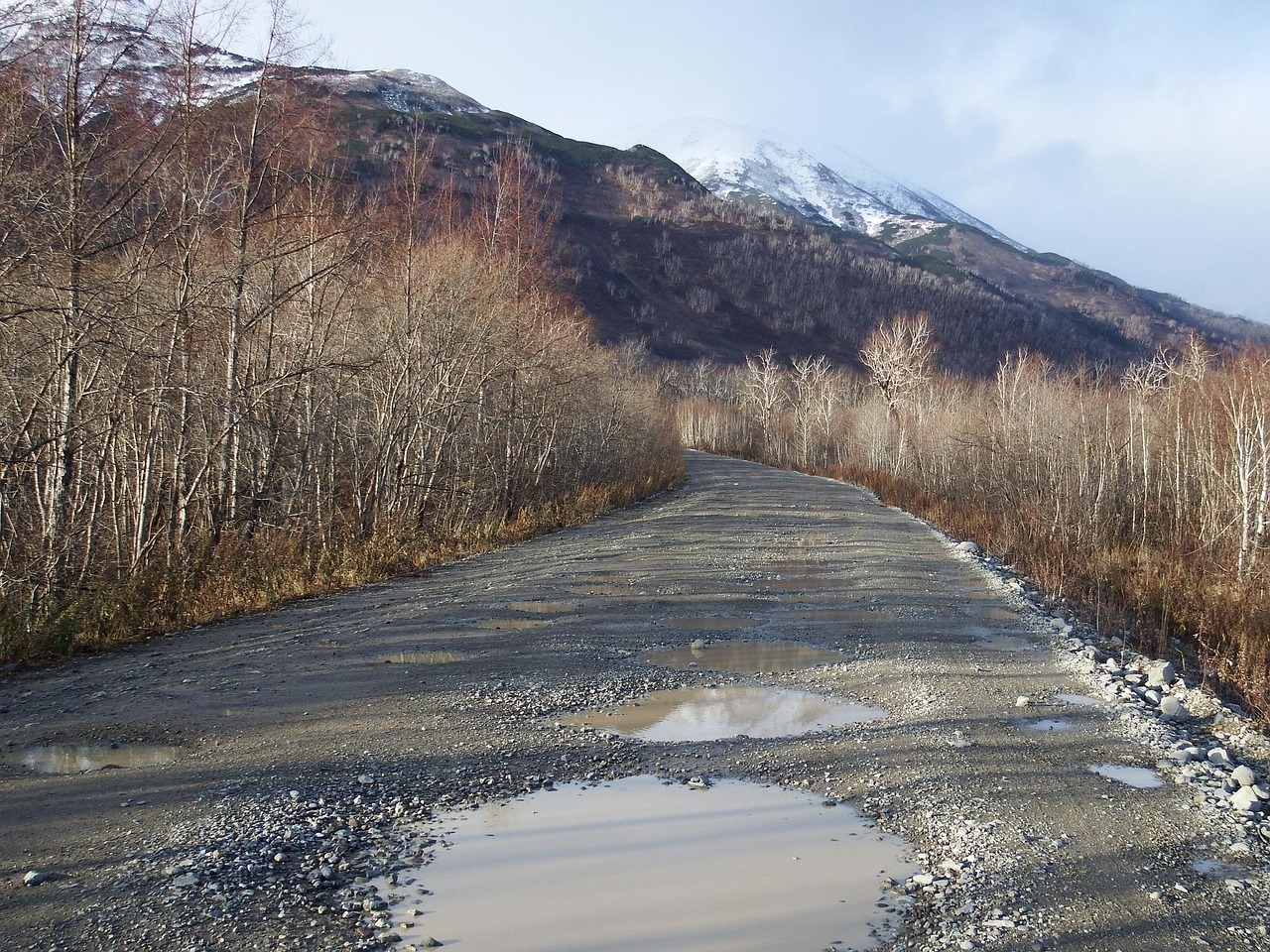
- Monitor Water Clearance: Puddles standing deeper than 1/4 inch for more than 24 hours after rain indicate foundation settlement.
- Probe Soft Zones: Insert a heavy screwdriver into open cracks. If it pushes easily into wet soil beneath the asphalt, the stone base is missing, thin, or saturated.
When to Repave Asphalt Driveway vs. Resurface: Structural Rules
Knowing whether your driveway qualifies for resurfacing depends on clear physical rules. Following these guidelines helps you avoid investing in temporary surface repairs over an unstable base.
Rule 1: The 25% Damage Threshold
If structural damage—such as alligator cracking, severe rutting, or deep depressions—covers more than 25% to 30% of your total driveway area, an overlay is economically unsound. The extensive patching required before resurfacing pushes total costs close to a full replacement while providing a much shorter service life.
Rule 2: Age and Oxidation of Existing Asphalt
Asphalt contains light oils that give it flexibility. Over time, exposure to sunlight, oxygen, and rain oxidizes these oils, turning the pavement gray and brittle. Once asphalt reaches 20 to 25 years of age, it loses its structural flexibility throughout its depth. Placing a warm overlay over brittle asphalt causes rapid reflective cracking within two to three seasons.
Rule 3: Elevation and Clearance Constraints
An overlay adds 1.5 to 2 inches of elevation. Pavements can generally receive only one overlay in their service lifespan. If your driveway has already been resurfaced once, adding a second layer creates dangerous lip hazards at garage entrances, blocks drainage channels, and forces water toward foundation walls. If your current driveway sits flush with adjacent concrete borders, a total replacement is required to maintain proper grade.
Crack Pattern Diagnostic Matrix
Understanding what different crack patterns mean helps you accurately evaluate contractor recommendations:
| Crack Type | Visual Characteristics | Root Cause | Corrective Action Required |
|---|---|---|---|
| Alligator / Fatigue | Interlocking web pattern resembling reptile skin | Base failure under heavy wheel loads | Full depth repair or total replacement |
| Longitudinal | Straight cracks parallel to driveway edge | Paving joint failure or frost expansion | Rubberized joint sealant; overlay acceptable |
| Transverse | Cracks perpendicular to direction of travel | Thermal shrinkage from winter freeze | Clean, seal with hot rubber, apply overlay |
| Edge Cracking | Fraying cracks within 1 foot of outer edge | Lack of side support; soil erosion | Re-establish gravel shoulder support; patch |
| Block Cracking | Large rectangular grids (4ft x 4ft or larger) | Asphalt binder oxidation and dry mix | Overlay suitable if base remains stable |
Surface Preparation: The Make-or-Break Steps for an Overlay
If your driveway meets the technical criteria for an overlay, its long-term performance depends heavily on surface preparation. Low-cost bids that omit critical prep work lead to premature peeling, cracking, and surface failure.
1. Keyway Edge Milling
Contractors must use a cold-milling machine or diamond saw to cut 1.5 to 2-inch deep tapered channels along all concrete garage lips, sidewalks, and public road aprons. This keyway allows the fresh asphalt to lay flush with existing concrete. Simply tapering asphalt down to a thin edge creates a fragile border that breaks apart under traffic and snowplows.
2. Crack Cleaning and Rubberized Joint Sealing
All surface cracks wider than 1/4 inch must be cleaned with a high-pressure air lance, cleared of organic debris, and filled with a hot-pour rubberized sealant. Placing hot asphalt directly over dirty, unsealed cracks traps moisture, creating steam pockets during compaction that cause instant blistering and delamination.
3. Emulsified Tack Coat Application
A tack coat acts as the glue holding old and new pavement layers together. Contractors spray an emulsified asphalt binder (such as SS-1h) across the clean, dry driveway surface. The tack coat must be allowed to “break”—shifting from a brown liquid to a sticky black coating—before laying hot asphalt. Skipping tack coat application leads to slippage cracks, where the top layer slides off under vehicle braking.
Total Replacement Process: Step-by-Step Construction
Understanding the steps involved in a full tear-out clarifies why it carries a higher price tag and helps you verify contractor work quality on-site.
Step 1: Excavation and Waste Hauling
Paving crews use heavy skid steers and mini-excavators to break apart old asphalt layers. The removed materials are loaded into dump trucks and transported to an asphalt recycling facility. The crew then inspects the exposed subgrade soil for soft clay, organic matter, or excess moisture.
Step 2: Base Reconstruction and Geotextile Stabilization
Fresh crushed aggregate stone (dense-graded aggregate or crushed bank run) is added to establish a minimum base depth of 6 inches for standard cars, or 8 to 10 inches for heavy trucks and RVs. On soft clay subgrades, installing a woven geotextile stabilization fabric under the gravel prevents stone from sinking into the clay under heavy loads.
Step 3: Grade Engineering and Drainage Pitch
The crew grades the aggregate base to ensure positive drainage away from home structures. Driveways should maintain a minimum slope of 1% (a 1-inch drop per 8 feet of run), with 2% preferred. Proper grading prevents water accumulation around garage doors, walkways, and foundation walls.
Step 4: Two-Pass Hot-Mix Installation
A high-quality replacement uses two separate asphalt applications:
- Binder Course: A 2-inch compacted layer composed of coarse aggregate (3/4-inch stone) mixed with heavy asphalt binder. This base course provides load-bearing structural support.
- Surface / Wearing Course: A 1.5-inch compacted layer of fine aggregate (3/8-inch stone) laid over the binder. This top course forms a smooth, dense, water-resistant surface finish.
Climate and Environmental Stress Factors Across US Regions
Geographic climate conditions strongly influence driveway performance. Homeowners must account for regional weather patterns when selecting paving solutions.
Northern Freeze-Thaw Zones (Midwest, Northeast, Mountain States)
In cold northern climates, water penetrates micro-cracks, freezes, expands by roughly 9%, and lifts the pavement structure. As frozen ground thaws in spring, voids form under the driveway, leading to surface cave-ins. An overlay applied over water-saturated or frost-damaged bases will show reflective cracks after the very first winter. Complete tear-outs featuring thick crushed aggregate bases allow proper water drainage, preventing frost heave damage.
Sunbelt Heat and UV Exposure (South, Southwest)
In warm southern states, intense ultraviolet light breaks down liquid asphalt bitumen, turning dark surfaces gray, dry, and brittle. Extreme summer pavement temperatures (often exceeding 140°F) soften asphalt, making fresh overlays vulnerable to tire power-steering marks from stationary vehicles. While overlays perform well structurally on warm dry bases, routine sealcoating every 3 to 5 years is necessary to prevent severe UV breakdown.
Expansive Clay Soil Regions (Texas, Plains States)
Expansive clay soils swell significantly when wet and shrink when dry. This seasonal soil movement creates severe stress on rigid asphalt surfaces. Overlaying a driveway built on expansive clay often fails quickly unless deep foundation stabilization, soil conditioning, or thick stone base layers are installed during a full replacement.
Long-Term 30-Year Lifecycle Cost Modeling
To evaluate true financial performance, compare the total maintenance and replacement costs of both choices over a 30-year period for a 600-square-foot driveway.
Scenario A: The Overlay Route (Assuming Sound Base)
- Year 0: Initial surface overlay ($2,400)
- Years 3, 7, 11: Sealcoating & rubberized crack sealing ($350 each = $1,050)
- Year 15: Total replacement required (double layer height prevents further overlays = $6,500)
- Years 18, 22, 26: Routine sealcoating ($350 each = $1,050)
- Total 30-Year Expenditure: $11,000
Scenario B: Full Replacement Upfront
- Year 0: Complete tear-out, base reconstruction & two-pass paving ($6,000)
- Years 3, 8, 13, 18, 23, 28: Scheduled sealcoating & crack filling ($350 each = $2,100)
- Year 30: Base remains solid; surface is ready for routine overlay.
- Total 30-Year Expenditure: $8,100
This comparison highlights an important financial rule: if an existing driveway base is near the end of its service life, opting for a cheaper overlay delays full replacement by only a decade while increasing total long-term costs. However, if your driveway is 10 to 12 years old with an intact foundation, an overlay successfully extends overall service life at minimal expense.
Contractor Red Flags and Bidding Safeguards
Because residential paving requires heavy machinery and quick delivery of hot materials, vetting contractors carefully protects you from low-quality workmanship.
1. The “Leftover Highway Asphalt” Solicitations
Be cautious of door-to-door solicitations offering discounts on “leftover asphalt from a nearby highway job.” Hot-mix asphalt must be laid and compacted at high temperatures. Using cooling, leftover material leads to poor compaction, weak surface bonding, and rapid structural crumbling.
2. Unspecified Thickness (Loose Depth vs. Compacted Depth)
Always check whether contract measurements specify loose depth or finished compacted depth. Asphalt compresses by 20% to 25% under heavy vibratory rollers. A contractor quoting a “2-inch overlay” without specifying compacted depth may only leave you with 1.5 inches of finished asphalt. Ensure all written contracts specify total compacted depth.
3. Vague Base Preparation Specifications
For total replacement projects, contracts must specify the exact type and depth of imported aggregate stone (e.g., “6 inches of compacted dense-graded crushed limestone”). Vague terms like “prep base as needed” leave room for unprincipled contractors to pave over weak soil without adding required stone depth.
Frequently Asked Questions
How long must I wait to drive on a new asphalt overlay versus a full replacement?
For both overlays and total replacements, keep vehicular traffic off the fresh surface for at least 48 to 72 hours. During hot summer weather, wait up to 4 to 5 days before parking heavy passenger vehicles on new asphalt. Foot traffic is safe after 24 hours.
Can you overlay a driveway that has already been resurfaced in the past?
Generally, no. Applying a second overlay over an existing overlay creates an unstable three-layer sandwich that is prone to slippage, cracking, and severe elevation problems at garage entrances and street aprons. When a previously resurfaced driveway fails, a total tear-out is necessary.
Will an asphalt overlay fix drainage standing water problems?
An overlay can fix shallow surface depressions (under 1/2 inch), but it cannot correct major drainage problems caused by subgrade settlement. Pitch corrections require reshaping or rebuilding the aggregate base through a full replacement.
When is the best time of year to complete an asphalt paving project?
Asphalt paving requires ambient temperatures of 50°F and rising, with dry ground conditions. Late spring, summer, and early autumn offer ideal conditions for proper asphalt compaction and surface curing.
How soon should I sealcoat a new overlay or complete driveway replacement?
Wait 6 to 12 months before applying asphalt sealcoat to a new surface. Fresh asphalt needs time to off-gas light oils and fully cure. Applying sealcoat too early traps light oils, keeping the surface soft and vulnerable to tire scuffing.
Final Decision Checklist
Use this quick decision reference to choose the right repair option for your property before requesting contractor quotes:
Choose an Asphalt Overlay If:
- Less than 20% to 25% of the total driveway surface shows cracking.
- No wide alligator cracking, deep rutting, or soft clay pumping is present.
- The current surface sits 1.5 to 2 inches below garage floor lips and adjacent concrete borders.
- The driveway has never received a previous overlay.
- Water drains cleanly off the driveway without standing pools.
Choose a Total Replacement If:
- More than 30% of the surface shows severe cracking, sagging, or deep depressions.
- Alligator cracking is widespread across main tire travel paths.
- The underlying aggregate base moves or pumps mud during spring thaws.
- The driveway has already received a previous overlay layer.
- The current surface sits flush with garage thresholds, meaning an overlay would cause water intrusion into your home.
- You want to expand, reshape, or re-grade the driveway layout.
Taking the time to evaluate base conditions, damage patterns, and long-term costs ensures your paving investment delivers excellent curb appeal and decades of dependable service.