
If you are a suburban homeowner, opening your mid-summer utility statement can feel like a minor financial shock. While you expect your water bill to climb during dry months as you keep your lawn green and flower beds hydrated, seeing a massive parallel spike on the sewer portion of the bill often catches people off guard. Knowing how to dispute sewer utility bill charges that stem entirely from outdoor water use can save you hundreds of dollars each summer.
Municipal utility departments typically bill sewer services based on the assumption that every gallon of water coming through your main meter eventually goes down your indoor drains, toilets, and washing machines to the local wastewater treatment plant. However, when you run sprinklers, wash the car, or fill a swimming pool, that water soaks into the earth or evaporates. It never touches the municipal sewer system. Despite this, many utilities automatically bill you for sewer treatment on every single drop unless you actively take steps to correct the formula.
Understanding this systemic quirk in municipal utility accounting is the first step toward reclaiming your hard-earned money. Most water and sewer districts operate as monopolies or government-regulated utilities, meaning customers rarely have alternative providers to choose from if billing practices seem unfair. Consequently, you must work within the established bureaucratic framework to secure adjustments. This requires a methodical approach: gathering historical data, understanding local rate structures, identifying applicable credits, and presenting a well-documented case to customer service representatives or administrative boards who review utility billing disputes every day.
Furthermore, many homeowners overlook the compounding effect of tiered pricing structures during high-consumption months. When your total water usage surges past baseline household limits, not only does your water supply tier increase in cost, but your volumetric sewer charges often scale upward as well. This double penalty makes it vital to audit your accounts thoroughly and understand every line item on your bill. Navigating this bureaucratic maze requires patience, precise records, and a firm grasp of local municipal utility codes.
Understanding Municipal Sewer Billing Formulas
To successfully challenge an inflated utility statement, you first need to understand how your local municipal or private water district calculates sewer fees. Most utilities rely on one of two primary methods: flat-rate monthly tracking or the winter consumption average method.
Under the direct-consumption method, you pay a sewer fee proportional to your total water meter reading every single month. If your water use triples in July, your sewer bill triples right along with it. This method penalizes homeowners heavily for outdoor water use, completely ignoring the reality that exterior water use does not load the municipal sewer mains or require biological and chemical treatment at the wastewater plant.
Conversely, many forward-thinking municipalities use a winter-average method. Under this system, the utility looks at your water consumption during non-irrigation months—typically November through February or December through March. Because you are not watering a lawn during winter, this baseline represents your true indoor wastewater generation. The utility then caps your monthly summer sewer billing at that winter average, protecting you from paying sewer fees on outdoor irrigation. If your municipality uses the direct-consumption method by default, you often have to request adjustments, install specific equipment, or apply for seasonal credits manually.
It is also essential to recognize how fixed charges and volumetric charges interact. Many utilities divide your sewer bill into a base service fee—a flat monthly charge just for being connected to the sewer main—and a volumetric fee based on water usage per hundred cubic feet (CCF) or thousand gallons. While base fees generally remain static regardless of season, volumetric sewer charges account for the massive summer spikes that hurt household budgets. When reviewing your municipal code or utility rate schedule, pay close attention to how volumetric tiers are calculated, as some districts implement tiered pricing where higher water consumption triggers more expensive per-unit sewer rates.
Additionally, some sewer authorities apply surcharges based on estimated biochemical oxygen demand (BOD) or total suspended solids (TSS) for commercial entities, but residential customers are generally billed strictly on volumetric flow. Understanding whether your district bills by gallons, cubic feet, or hundred cubic feet is crucial when converting raw numbers into an audit-ready format. A single unit conversion error can undermine an otherwise solid billing dispute, so always double-check the measurement unit specified at the top of your monthly statement.
Auditing Your Utility Statement for Discrepancies
Before contacting your local utility board, you need to pull together a clear audit trail. Gather at least twelve to twenty-four months of past utility statements so you can compare seasonal usage patterns side by side.
Look specifically at your hundred-cubic-feet (CCF) or thousand-gallon usage numbers for January and February, then compare them against July and August. Calculate the difference between your winter baseline water consumption and your summer peaks. If your winter indoor baseline is 4,000 gallons per month, but your summer usage jumps to 14,000 gallons, you are paying sewer treatment fees on 10,000 gallons of water that never entered the sanitary sewer system.
Check your municipal utility’s official tariff sheets or customer service guidelines online. Look for specific terminology regarding “irrigation deductions,” “summer sewer caps,” or “consumptive use adjustments.” Many municipal codes contain provisions for billing adjustments, but utilities rarely advertise them proactively. Finding the exact section number of the municipal code provides immense leverage when you file your dispute.
As part of your audit, create a simple spreadsheet tracking your monthly water consumption, total water charges, water usage charges, and sewer charges over a full calendar year. Visualizing this data in a line graph often highlights anomalies instantly—such as a billing cycle where sewer charges mysteriously exceed water supply charges due to asymmetric rate adjustments or tiered pricing structures. Documenting these patterns transforms your inquiry from a vague complaint into a precise, mathematically sound audit that utility supervisors must take seriously.
When compiling your audit, also check for sudden anomalies that might indicate an underground plumbing leak rather than intentional lawn watering. A continuous, slow leak in an irrigation line or a stuck toilet flapper can artificially inflate your winter baseline or summer peaks alike, complicating your average calculations. Distinguishing between normal irrigation spikes and accidental leaks ensures that you target the correct administrative remedy.
Requesting Summer Irrigation Credits and Exemptions
Once you have identified a discrepancy, contact your utility provider to ask about available administrative remedies. Different jurisdictions handle outdoor watering relief in distinct ways, ranging from temporary seasonal credits to permanent physical infrastructure changes.
Some water districts offer an automatic or application-based summer sewer credit. Under this program, the utility applies a percentage reduction to sewer charges during designated summer months for all residential customers with lawns. Other districts require you to submit a formal rebate application at the end of the irrigation season, attaching proof of your water usage patterns.
If your municipality does not offer broad seasonal credits, ask about filling out an administrative adjustment form for exceptional circumstances. Filling swimming pools, establishing newly sodded lawns, or repairing underground plumbing leaks can sometimes qualify you for a one-time sewer charge adjustment. Be prepared to provide receipts from landscaping contractors or detailed dates when you filled a large residential pool.
When speaking with utility representatives about these credits, always ask for the specific policy name, form number, or municipal code reference governing the relief program. Take detailed notes during your phone calls, including the date, time, representative name, and badge or employee ID number. If you are instructed to submit an application via email, request a read receipt or follow up with a phone call to confirm that your paperwork arrived in the correct department and is actively pending review.
Keep in mind that some municipalities have narrow filing windows for seasonal credits, often requiring applications to be submitted within 30 to 60 days of the billing period ending. Missing these strict administrative deadlines can forfeit your right to retroactive credits for that calendar year. Being proactive and initiating contact at the very beginning of the irrigation season prevents missed deadlines and sets the stage for a smooth adjustment process.
Installing a Dedicated Irrigation Submeter
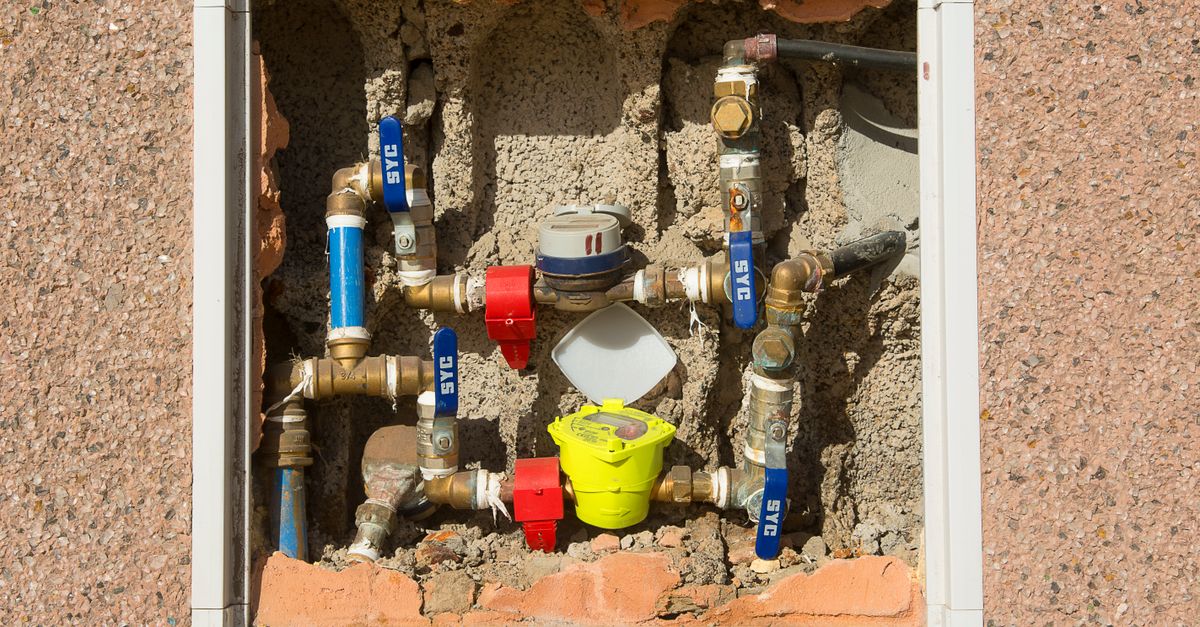
If your utility does not offer seasonal averages or credits, the most permanent solution to inflated summer bills is installing a dedicated irrigation submeter. A submeter is a secondary water meter installed on your outdoor spigot line after the main service line splits.
Water passing through the main meter measures total property usage, while the submeter tracks only what goes to your outdoor taps and irrigation system. When your utility reads both meters, they subtract the submeter volume from the main meter volume, ensuring you only pay sewer charges on the water that goes into your home’s drains.
Installing a submeter typically requires hiring a licensed plumber to reconfigure your exterior plumbing, pulling a municipal permit, and paying an inspection fee. While there is an upfront capital cost for the hardware and labor, the long-term savings during dry summer months usually pay for the installation within two to three seasons.
Before purchasing hardware or hiring a contractor, consult your local water authority’s engineering standards. Many municipalities have strict requirements regarding approved meter brands, remote read capabilities, backflow prevention assemblies, and specific installation placements. If you install an unapproved meter or fail to have it inspected by a municipal plumbing inspector, the utility will likely refuse to read it or credit your account, rendering your investment useless. Always secure pre-approval from the utility’s metering department before moving forward with physical plumbing modifications.
Additionally, inquire about how the utility handles submeter reading fees. Some districts charge a nominal monthly administrative fee to read and maintain records for secondary meters. Factor these ongoing fees into your cost-benefit analysis to ensure that installing a submeter remains a financially sound decision for your household.

Step-by-Step Guide to Filing a Formal Utility Dispute
If informal customer service inquiries hit a brick wall, you need to escalate your request into a formal billing dispute. Follow a structured, paper-trail-driven process to ensure your grievance receives proper administrative review.
- Submit a written notice: Do not rely solely on phone calls. Send a certified letter or secure email to the utility’s billing supervisor detailing your account number, property address, and the specific billing cycles in question.
- Attach supporting data: Include clear charts or copies of your utility bills highlighting the abnormal summer spikes compared to your stable winter usage baselines.
- Cite local ordinances: Reference any specific municipal codes, utility board regulations, or customer rights charters that support your right to an adjusted sewer rate.
- Request an administrative hearing: If the billing department denies your initial request, ask for your file to be reviewed by a utility board hearing officer or customer advocacy board.
- Maintain payment currentness: Always pay the undisputed portion of your utility bill while a dispute is under review. Refusing to pay the entire bill can lead to water shutoff notices and late fees that complicate your administrative case.
During a formal dispute, maintain a professional and objective tone in all communications. Avoid emotional language or accusations of bad faith against the utility workers. Stick strictly to the mathematical discrepancies, your historical usage comparisons, and the text of the municipal code. Regulatory boards and utility directors respond much more favorably to well-reasoned, evidence-backed petitions than to frustrated emotional tirades.
It is also helpful to keep copies of every piece of correspondence, including delivery confirmations for certified mail and email read receipts. If the dispute remains unresolved after exhausting local administrative levels, check if your state or province has a public utility commission (PUC) or consumer protection division that oversees municipal utility practices, though municipal districts often maintain broad autonomy compared to investor-owned investor utilities.
Common Mistakes to Avoid During a Utility Dispute
Navigating municipal bureaucracy can be frustrating, but certain missteps can derail your chances of securing a billing adjustment.
Avoid calling customer service without preparation. Vague complaints like “my bill is too high” give representatives an easy reason to dismiss your claim. Always frame your argument around specific consumption metrics and code provisions.
Do not wait months after the billing cycle to lodge your dispute. Many municipal utilities enforce strict statutes of limitations—sometimes as short as thirty to sixty days from the billing date—within which customers must contest a charge. Once that window closes, the utility has legal backing to refuse any retroactive credits.
Finally, never attempt DIY plumbing modifications when trying to install a submeter or bypass standard lines. Municipalities maintain strict cross-connection control rules to protect public drinking water supplies. Unpermitted plumbing work can result in heavy fines and immediate service disconnection, completely overshadowing any potential savings on your sewer bill.
Additionally, be cautious about assuming that neighbor agreements or verbal assurances from municipal field workers hold official administrative weight. A field technician watering your street or a customer service agent offering casual advice over the counter cannot override formal billing ordinances. Always demand written confirmation for any promised adjustments, policy interpretations, or billing credits.
Conclusion
Dealing with inflated summer utility bills does not mean you have to accept paying sewer treatment fees for water used exclusively on your lawn. By analyzing your winter consumption averages, researching your municipal utility code, exploring dedicated irrigation submeters, and following a formal dispute procedure, you can successfully reclaim overpaid funds and lower your future household utility expenses.