
When you subscribe to a popular food delivery or meal kit service, the monthly fee often feels negligible—usually ranging from ten to fifteen dollars. Across a single year, however, these recurring charges compound quietly alongside a web of service fees, delivery tips, and inflated menu pricing. For many households, meal delivery app subscription fees represent one of the most stealthy drains on the monthly grocery and dining budget. Understanding how these platforms structure their membership costs, where hidden markups originate, and how direct merchant billing compares to third-party app ecosystems can save you hundreds of dollars annually.
The convenience of tapping a screen to summon dinner or a week’s worth of groceries is undeniable. Yet, the financial architecture supporting these apps relies heavily on consumer inertia. Many people sign up for a free trial or a discounted promotional tier, forget to set a reminder, and transition into paying full monthly recurring charges for services they use infrequently. Beyond the membership fee itself, hidden costs lurk within the checkout screen. Item prices inside aggregator apps are frequently marked up compared to the restaurant’s in-house menu or a direct grocery store shelf, effectively doubling the cost of your “free” delivery membership.
Understanding Meal Delivery App Subscription Fees
To audit your household subscriptions effectively, you first need to understand what you are actually paying for. Modern food delivery ecosystems generally rely on monthly or annual subscription models that waive standard delivery fees on orders above a specific dollar threshold. They also frequently reduce service fee percentages. However, these memberships do not cover all transactional friction. Tipping drivers, state and local taxes, regulatory recovery fees, and small-order surcharges still apply.
When examining your credit card statements, you will likely notice that these charges originate from two distinct environments: third-party aggregators (such as Uber Eats, DoorDash, or Instacart) and direct merchant platforms (such as a local pizzeria’s proprietary app or a specialized meal kit delivery service like HelloFresh or Blue Apron). The billing mechanics between these two models differ significantly, particularly regarding how payments are processed and where your money goes.
Third-party aggregators operate as digital marketplaces. When you pay a subscription fee through them, you are buying access to a centralized network of disparate merchants. The primary financial trade-off is breadth of choice versus structural cost. Because these aggregators take a substantial commission from the underlying restaurants or grocery stores—often ranging from fifteen to thirty percent—merchants frequently offset these losses by raising menu prices exclusively within the app. Consequently, even with an active membership eliminating your delivery fee, you may still pay an invisible tax on every single item ordered.
Furthermore, the evolution of these subscription models has seen platforms introduce tiered pricing structures. Basic tiers might eliminate delivery fees on restaurant orders above $15, while premium tiers bundle restaurant delivery, grocery delivery, and priority dispatching for a higher monthly rate. As consumers stack multiple ecosystem memberships to cover different needs, the cumulative monthly overhead can easily rival traditional utility bills. Recognizing this creeping expense is the first step toward reclaiming control over your household discretionary spending.
App Store Billing Versus Direct Merchant Web Billing
One of the most overlooked aspects of managing subscription fees is *how* the subscription is billed. If you download a food or grocery delivery app on an iPhone or Android device and subscribe directly through the app interface, your payment is processed by Apple or Google rather than the delivery company itself.
This distinction matters for several reasons. First, app store billing ties your subscription directly to your Apple ID or Google Play account. While this centralizes your digital subscriptions, it also introduces a layer of opacity. If you need to dispute a charge, request a refund, or modify your billing cycle, you often have to navigate the rigid customer service policies of a tech giant rather than dealing directly with the merchant. Furthermore, companies often pass along the friction of app store payment processing fees to consumers or restrict promotional pricing to their own direct web channels.
When payments are processed via third-party app stores, merchants lose a portion of the recurring subscription revenue to platform commissions. To counteract this margin compression, platforms and merchants alike may limit loyalty rewards, introductory discounts, or flexible billing frequencies for users who subscribe via mobile app stores compared to those who use a standard web browser.
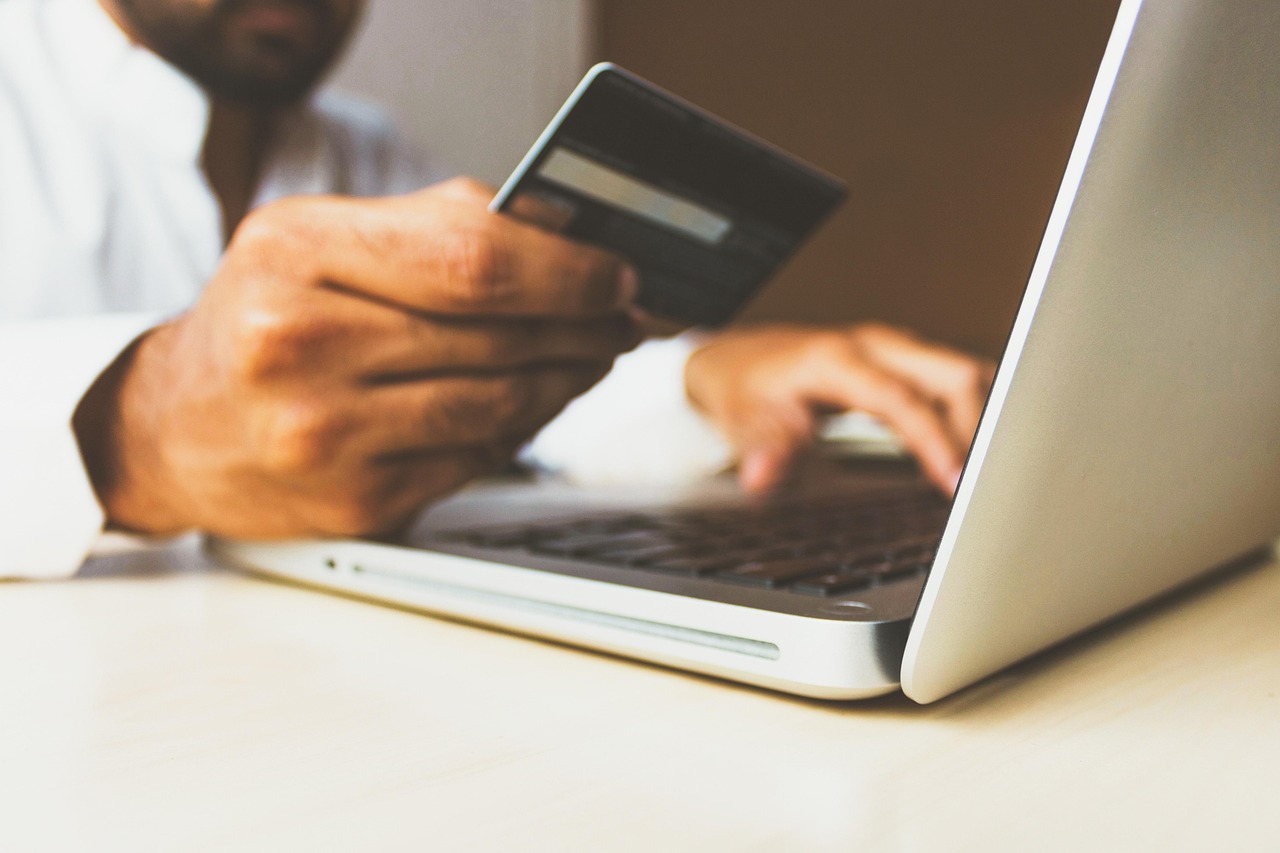
Direct merchant web billing, by contrast, happens when you sign up through a company’s standalone website using a standard credit card or digital wallet. While it requires entering your payment details manually rather than using a biometric one-tap checkout, direct web billing often unlocks better introductory promotions, clearer billing histories, and fewer hurdles when it comes time to cancel. Merchants prefer direct web billing because they avoid paying Apple or Google a percentage of every recurring transaction, which is why you will frequently see exclusive discounts advertised on brand websites that are entirely absent from mobile app stores.
Additionally, bank statement clarity is vastly improved with direct merchant web billing. When a charge appears on your statement, the merchant’s name is usually clearly displayed alongside contact information for customer support. Conversely, app store billing often consolidates dozens of disparate micro-transactions and monthly subscriptions under a single vague line item like “Apple.com/Bill” or “Google Play Services,” making unauthorized or forgotten renewals exceptionally difficult to spot during a casual financial review.
The Hidden Markup Trap Inside Food Delivery Memberships
Evaluating the true value of a food delivery membership requires looking past the waived delivery fee. The most pervasive financial trap in the delivery app economy is the hidden app store markup. Independent consumer research consistently shows that food items listed on major third-party delivery apps are marked up by 15% to 30% compared to ordering directly from the restaurant or buying items in a physical store.
Consider a practical scenario: You order takeout from a local Thai restaurant. The restaurant’s physical menu lists a pad thai dish at $14.00. On the delivery app, the exact same dish is priced at $17.25. If you order dinner for a family of four, that single-item markup adds $13.00 to your order total before any service fees, taxes, or tips are calculated. Even if your monthly membership waives a $3.99 delivery fee, the item-level markup has already erased your savings on the very first order.
This markup exists because restaurants cannot absorb the steep commission fees charged by delivery apps without losing money on every transaction. To survive, they pass those costs onto app users. Subscription holders are often the most frequent users of these apps, meaning they pay this invisible markup more often than occasional users. When auditing your monthly recurring charges, calculate not just how much you save on delivery fees, but how much extra you are spending on the underlying goods due to platform inflation.
To expose this markup in your own habits, run a side-by-side comparison. Open your preferred delivery app and a restaurant’s official online ordering site for the exact same meal. Note the subtotal differences before any promotional codes, taxes, or tips are applied. In many instances, the cumulative price discrepancy over a single month of ordering will eclipse the cost of the subscription fee itself, proving that the membership is actually subsidizing an inflated pricing model rather than generating genuine net savings for your household budget.
Evaluating Food Delivery Membership Value
Determining whether a food delivery membership is worth keeping requires a cold look at your actual usage habits versus your idealized intentions. Many households maintain multiple concurrent delivery subscriptions—perhaps one for restaurant delivery, one for grocery aggregation, and another for specialty meal kits—under the assumption that convenience always justifies the cost.
To evaluate food delivery membership value objectively, track your orders for a consecutive 60-day period. Calculate the total cost of the monthly subscription fees combined. Then, look at the delivery fees and service fees saved during that same period. If your total subscription cost exceeds your total fee savings, the membership is losing you money. Next, factor in the estimated item-level markups. If the inflated product prices outweigh your net fee savings, canceling the membership is an immediate financial win.
Break-even analysis is essential here. For instance, if a membership costs $10 per month and standard delivery fees average $4 per order, you must place at least three orders every single month just to break even on the delivery fee alone. If life gets busy and you only order twice in a given month, you have effectively paid a $5 premium per delivery for the privilege of having a subscription.
Furthermore, consider seasonal fluctuations in your ordering patterns. Many consumers maintain active memberships through winter months when weather discourages going out, but fail to cancel them during summer months when dining out or picking up food in person becomes routine. Setting recurring calendar reminders to evaluate these subscriptions seasonally ensures you are only paying for platform access during periods of high verified utility.
Direct Merchant Sites: The Alternative to Platform Apps
An effective strategy for cutting subscription bloat and avoiding hidden markups is shifting your ordering habits back to direct merchant channels. Many local restaurants, bakeries, and specialty food shops have invested in user-friendly online ordering systems that connect directly to their point-of-sale software, bypassing third-party aggregators entirely.
Ordering directly from a merchant web page usually ensures you receive standard in-store or in-house menu pricing. While you may still encounter a delivery fee if your order falls below a certain threshold, you are paying the restaurant directly, supporting local businesses more effectively, and avoiding the complex algorithmic pricing structures of major tech platforms. Furthermore, many restaurants employ their own delivery drivers or partner with local couriers on transparent terms, reducing the likelihood of mishandled orders and frustrating customer service disputes.
When adopting this approach, bookmark the direct online ordering links for your favorite local spots rather than searching for them inside a third-party aggregator app. This small habit shift breaks the convenience loop that encourages impulse ordering and keeps your money aligned with transparent merchant pricing. Over time, cultivating direct relationships with your neighborhood establishments not only saves money on hidden item markups but often unlocks loyalty perks, direct customer service access, and a more sustainable local dining ecosystem.
Navigating Grocery Delivery Subscriptions and Recurring Charges
Beyond restaurant meals, the market for recurring grocery delivery and meal kit services has expanded rapidly. Canceling grocery delivery subscriptions and managing meal kit renewals requires a distinct set of auditing steps because these services involve larger dollar amounts and recurrent weekly or monthly shipments.

Grocery delivery memberships often promise free delivery on orders over $35. However, hidden costs frequently appear in the form of variable item pricing, heavy-order surcharges, and tip expectations. Furthermore, personal shoppers selecting produce or meat items may substitute missing items with more expensive alternatives unless you carefully configure your preference settings ahead of time. These substitutions can quietly inflate your grocery bill by ten to fifteen percent on any given order, neutralizing the perceived savings of a waived delivery fee.
Meal kit services present a different structural challenge: automatic weekly renewals. If you travel, have a busy week, or simply want to cook from scratch, forgetting to skip an upcoming weekly delivery box can result in an unwanted $70 to $100 charge hitting your credit card. Auditing these services means setting strict calendar alerts to review your delivery schedule days before the weekly cutoff deadline, rather than waiting for the charge to appear on your statement. If you find yourself consistently skipping multiple weeks in a row, it is a clear signal that the subscription no longer serves your household routine and should be cancelled immediately.
How to Audit Your Monthly Recurring Subscriptions
A thorough subscription audit should be performed at least twice a year. Left unchecked, small recurring charges slip past your notice, especially when spread across multiple credit cards, debit accounts, and digital wallets.
Follow this step-by-step process to audit your food and delivery app subscriptions:
- Pull 90 days of bank and credit card statements: Do not rely on your memory. Look at the last three months of transaction history to catch quarterly or annual renewals alongside monthly fees.
- Identify all food, grocery, and meal kit charges: Highlight every line item associated with delivery apps, app store billing (Apple/Google), and direct merchant food memberships.
- Calculate utilization frequency: Count how many times you actually used each service over the past 90 days. Divide the total subscription cost by the number of orders placed to find your true per-use membership cost.
- Check for duplicate coverage: Assess whether you are paying for multiple competing grocery or restaurant delivery apps that offer overlapping benefits.
- Audit active payment methods: Review your Apple ID, Google Play account, and PayPal subscriptions to catch forgotten recurring app billing.
By compiling this data into a simple spreadsheet or checklist, you create an objective baseline for decision-making. Emotional attachment to the idea of convenience is replaced by hard arithmetic, making it much easier to drop underperforming services without hesitation.
Simplifying Cancellations and Avoiding Dark Patterns
Once you identify subscriptions to cancel, you may encounter deliberate friction designed by companies to retain paying customers—often referred to as dark patterns. These include multi-step cancellation funnels, misleading prompts offering temporary discounts, confusing button layouts, and buried cancellation links.
To navigate these hurdles efficiently, bypass the mobile app entirely when canceling major subscriptions. Log into the desktop version of the merchant’s website or manage the subscription directly through your smartphone’s system settings (Settings > [Your Name] > Subscriptions on iOS, or Google Play > Subscriptions on Android). These system-level cancellation menus are legally required to be more straightforward and transparent than the in-app cancellation flows designed by the developers.
If a company refuses to make cancellation simple or continues to bill your account after you have completed the cancellation process, contact your credit card issuer immediately to report unauthorized recurring charges and request a merchant block. Documenting your cancellation confirmation screens with screenshots or saved emails provides essential evidence should a dispute become necessary.
Calculating the True Cost of Convenience
Convenience has a legitimate price tag, and paying for delivery services is entirely reasonable if it aligns with your household budget and time constraints. The financial danger arises not from the expense itself, but from passive consumption—paying for memberships you do not use and absorbing hidden markups you never calculated.
By auditing your delivery app subscriptions, shifting high-frequency orders to direct merchant web billing, and eliminating redundant platform fees, you reclaim control over your household spending. A streamlined budget does not mean cutting out convenience entirely; it means ensuring that every dollar spent on food delivery delivers genuine value rather than padding corporate profit margins through forgotten recurring fees.