PEX A expansion vs PEX B crimp fittings cost durability US is the central question in this guide. Here’s how to evaluate the options, avoid common mistakes, and make a practical decision.
Replacing the water supply plumbing throughout a home is one of the most substantial capital investments a homeowner can make. Whether you are replacing failing galvanized steel, pinholed copper, or degraded polybutylene, flexible cross-linked polyethylene (PEX) pipe has become the default standard across the United States. However, when reviewing contractor bids, you will quickly find that plumbers tend to fall into two distinct operational camps: those who install PEX-A with expansion rings, and those who install PEX-B using copper crimp or stainless steel clamp rings. Evaluating a project requires a deep dive into PEX A expansion vs PEX B crimp fittings cost durability US plumbing standards, structural performance, and overall installation dynamics.
Understanding the balance between installation expenses and long-term material behavior requires looking beyond simple marketing claims. While both systems meet national building codes and deliver safe drinking water, their molecular structures, mechanical connection methods, internal flow dynamics, and resistance to sub-zero freezing differ considerably. Choosing the right system for your budget and house layout can mean the difference between maintaining optimal shower pressure or facing costly water damage repairs after an unexpected arctic freeze.
Understanding the Manufacturing Differences: PEX-A vs. PEX-B
To understand why these two piping options connect differently, it helps to examine how the pipe material is manufactured. The letters A, B, and C do not represent grade levels or quality ratings; instead, they designate the specific chemical process used during production to cross-link the polyethylene molecules into a resilient matrix.
PEX-A (The Engel Method)
PEX-A is manufactured using the peroxide method, historically known as the Engel method. Cross-linking takes place during the initial melting process before the raw resin is extruded into pipe form. Peroxide radicals form strong cross-links between carbon atoms while the polymer is still in a liquid state. This creates a dense, uniform three-dimensional molecular grid throughout the polymer chain, achieving cross-linking density usually above 85 percent.
The defining physical characteristic of PEX-A is exceptional flexibility combined with extraordinary thermal shape memory. If a PEX-A pipe is bent too tightly or accidentally kinked during installation, applying controlled heat from an industrial heat gun allows the cross-linked polymer matrix to relax and return to its original, smooth round shape without sacrificing structural integrity or burst strength.
PEX-B (The Silane Method)
PEX-B is produced using the silane method, also referred to as the moisture-cure method. In this process, organosilane compounds are grafted onto the high-density polyethylene chains during extrusion. Cross-linking is subsequently activated after extrusion by passing the formed pipe through a hot water bath, steam room, or saunalike chamber. This process yields a cross-linking density around 65 to 70 percent.
This cross-linking structure results in a pipe that is stiffer, holds its molded coil shape more firmly, and possesses higher baseline tensile strength. It also exhibits high chemical resistance to harsh municipal water additives like chlorine and chloramines. However, PEX-B completely lacks thermal shape memory. If a installer accidentally kinks a piece of PEX-B pipe during installation, that damaged section cannot be restored with heat; it must be cut out and spliced using a brass or polymer coupling fitting secured with crimp rings.

Mechanical Connection Mechanics: Expansion Rings vs. Crimp Fittings
The primary practical distinction between these two systems lies in how fittings are joined to the pipe. This fundamentally changes both the structural security of every joint and the water pressure delivered to your faucets.
PEX-A Cold Expansion Connections (ASTM F1960)
PEX-A relies on cold-expansion technology governed by the ASTM F1960 specification. To make a connection, an installer slides an elastic ring made of PEX-A material over the outer end of the pipe. An expansion tool—either a hand-operated mechanical expander or a battery-powered rotary tool—is inserted into the pipe opening and expanded several times to briefly widen the pipe mouth and ring.
A full-port brass or engineered polymer fitting is immediately inserted into the enlarged opening. Because PEX-A possesses shape memory, the expanded pipe and outer sleeve immediately shrink back toward their original diameter. Within minutes, the pipe forcefully squeezes inward against the full-port fitting. The outer ring provides continuous external compression. The resulting joint relies on the structural memory of the pipe itself rather than a metal ring squeezing inward from the outside.
PEX-B Crimp and Clamp Connections (ASTM F1807 / ASTM F2098)
PEX-B uses rigid insert fittings governed by ASTM F1807 (copper crimp rings) or ASTM F2098 (stainless steel cinch clamps). The fitting features ribbed barbs designed to sit entirely inside the inner core of the pipe. The installer slides a copper crimp ring or a stainless steel pinch clamp over the outer surface of the pipe, inserts the fitting, and uses a specialized heavy crimping tool to crush the metal ring down over the exterior of the pipe.
In this system, connection strength comes entirely from the mechanical force of the crushed metal ring compressing the outer wall of the stiff PEX-B pipe into the ridges of the insert fitting. If the ring is not crimped evenly or if the crimping tool loses calibration, the joint can leak or fail under high stress.
Flow Dynamics and Water Pressure Performance
One critical technical difference during a whole-house repipe is how fittings affect household water pressure and volume. When multiple appliances run simultaneously, connection geometry directly alters flow performance throughout the dwelling.
The Flow Bottleneck of PEX-B Insert Fittings
Because PEX-B insert fittings must fit inside the pipe before a ring is squeezed around the outside, the internal diameter of every PEX-B fitting is smaller than the inner diameter of the pipe itself. A standard 1/2-inch PEX-B insert fitting reduces the inner pathway by roughly 25 to 30 percent. Across a long plumbing line with multiple tees, elbows, and supply drops, these localized restrictions act like friction bottlenecks, reducing overall volume during high-demand usage.
Full-Port Flow in PEX-A Expansion Systems
By contrast, PEX-A expansion fittings feature a wider bore because the pipe is expanded outward before insertion. The internal diameter of an ASTM F1960 expansion fitting closely matches the internal diameter of the surrounding PEX pipe. As a result, PEX-A systems maintain steady water volume and lower friction losses throughout the system. Plumbers can often design PEX-A systems using smaller overall pipe sizes while achieving equivalent flow performance to a larger PEX-B run.
| Feature / Metric | PEX-A Expansion (ASTM F1960) | PEX-B Crimp (ASTM F1807 / F2098) |
|---|---|---|
| Manufacturing Method | Peroxide Method (Engel) | Silane Method |
| Pipe Flexibility | High; tight bend radius without kinking | Moderate; stiffer, prone to kinking if bent tightly |
| Kink Repairability | Yes; can be repaired with a heat gun | No; damaged section must be cut out |
| Internal Fitting Restriction | Minimal; full-port matching inner pipe diameter | Moderate to High; 25-30% inner diameter reduction |
| Freeze Resilience | Excellent; expands with ice and contracts back | Fair to Good; pipe expands, but fittings may split |
| Tooling Investment | High ($400 – $1,500+ for battery tools) | Low ($40 – $150 for manual crimpers) |
| Material Cost | Higher (20-40% premium on pipe & fittings) | Lower (Widely available commodity pricing) |
Freeze Resistance and Cold-Weather Durability
For homeowners living in US regions subject to harsh winters, sudden freezing weather poses a serious hazard to residential water lines. Water expands by roughly 9 percent when it freezes into ice, generating immense hydraulic pressure inside rigid and semi-rigid pipes.
PEX-A offers superior performance during extreme cold. Because of its high elasticity and thermal memory, PEX-A pipe expands outward alongside frozen water, stretching to accommodate ice dams inside the line. Once the climate warms and the ice thaws, the material contracts back to its original dimensions without losing wall thickness or structural resilience. Furthermore, because PEX-A expansion rings constantly apply inward compression on the fitting, the expanding ice rarely breaks the connection seal.
PEX-B pipe also tolerates mild freeze-thaw cycles better than rigid copper or CPVC lines. However, because PEX-B pipe is stiffer, repeated severe freezes can cause stress fractures along the pipe wall. More critically, the metallic crimp rings used on PEX-B do not expand and contract at the same rate as the polyethylene pipe. Ice expansion can deform copper or steel rings outward, weakening their mechanical grip. When the pipe thaws, the deformed ring may no longer exert enough compression on the internal fitting barbs, leading to sudden leaks.
Material Costs, Tooling, and Labor Dynamics
When evaluating bids for a whole-house repipe, understanding material and equipment pricing helps clarify why contractor estimates vary so widely across regions.
Material Price Breakdown
PEX-B remains the lower-cost material option across American big-box home improvement stores and commercial supply houses. The pipe itself is widely produced by multiple manufacturers, which keeps prices low. Copper crimp rings and stainless cinch clamps are inexpensive, often costing only a few cents each, while standard PEX-B insert fittings are simple to manufacture.
PEX-A tubing and cold-expansion fittings carry a 20 to 40 percent premium over standard PEX-B components. Expansion sleeves, engineered poly-alloy (EP) expansion fittings, and specialty brass fittings require precise manufacturing tolerances, which raises the base material cost of an expansion project.
Tooling Costs and Installation Efficiency
The financial barrier to installing PEX-A lies primarily in tool costs rather than the raw piping material. A high-quality auto-rotating cordless expansion tool ranges from $400 to over $1,500. Manual expanders exist for quick repairs, but relying on manual tools for an entire house repipe is slow and physically demanding. Consequently, professional plumbing contractors who specialize in high-volume residential work are the main buyers of motorized expansion equipment.
By contrast, manual PEX-B crimping tools cost between $40 and $150, making PEX-B popular among general contractors, handymen, and DIY homeowners. However, executing hundreds of manual crimps across an entire home requires significant physical effort, especially in tight crawlspaces or overhead joists.
Impact on Overall Labor Costs
Even though PEX-A materials cost more upfront, professional installers often work faster with automated expansion tools than with manual crimp equipment. A plumber using a cordless expansion tool can complete connections quickly in tight wall cavities without needing lever clearance for long manual crimp handles. In many whole-house repiping projects, the faster installation time of PEX-A balances out its higher material cost, keeping total project labor quotes close to those for PEX-B.
System Design Layouts: Trunk-and-Branch vs. Home-Run Manifolds
The choice between PEX-A and PEX-B often influences the overall layout design of your home’s water distribution network. Repiping typically follows one of two plumbing architectures.
1. Conventional Trunk-and-Branch Systems
In a traditional trunk-and-branch layout, main water lines (typically 3/4-inch or 1-inch) run through the center of the basement or crawlspace. Smaller 1/2-inch branch lines split off from tees to feed individual fixtures like sinks, toilets, and showers.
- PEX-A Suitability: Excellent. Because expansion fittings do not constrict flow, running multiple branches off a single main trunk delivers steady, predictable water pressure across distant fixtures.
- PEX-B Suitability: Moderate. The accumulated friction loss from multiple PEX-B insert tees can noticeably reduce water volume at the furthest branch when several fixtures run at once.
2. Home-Run Manifold Systems
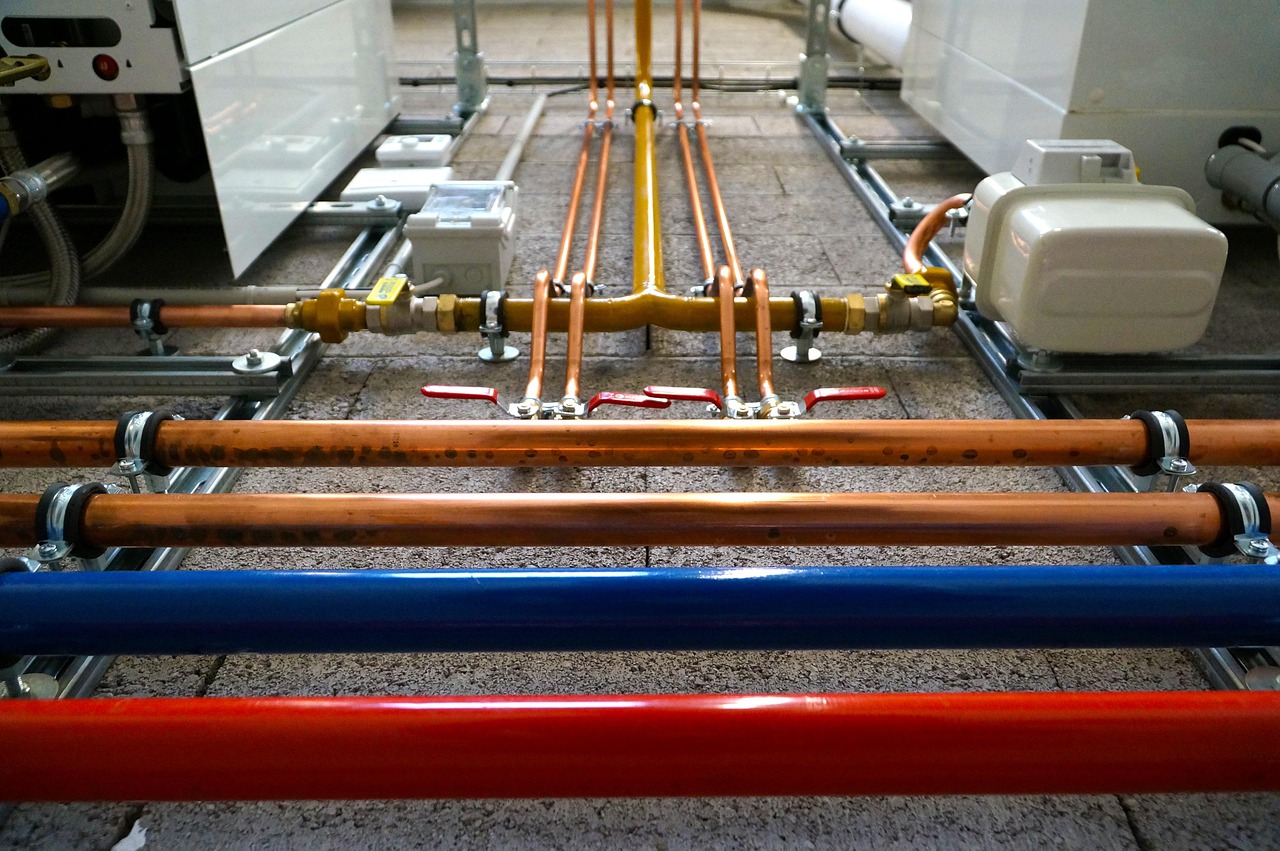
A home-run manifold system uses a central distribution hub—often located near the main water heater or service entrance—from which individual, continuous 3/8-inch or 1/2-inch PEX lines run directly to each fixture without intermediate hidden fittings inside walls.
- PEX-B Advantage: Home-run manifold configurations work exceptionally well with PEX-B piping. Because there are few or no fittings hidden inside wall cavities between the manifold and the fixture, the flow restriction of insert fittings is minimized. This layout also isolates connections to visible areas like the basement wall or beneath sinks, making inspections simple.
- PEX-A Advantage: While PEX-A can also be installed using a central manifold, its flexibility makes pulling long, continuous runs through structural framing easier than using stiffer PEX-B pipe.
Long-Term Durability, Failure Modes, and Chemical Exposure
Both PEX-A and PEX-B are exceptionally durable materials rated for decades of reliable service when installed according to manufacturer specifications. However, each material exhibits specific vulnerabilities when exposed to unusual environmental conditions.
Chlorine and Oxidative Degradation
Municipal water suppliers use chlorine or chloramines to disinfect public drinking water. Over time, these oxidizing agents can attack the interior polyolefin structure of plastic piping. PEX-B generally demonstrates slightly higher inherent resistance to oxidative attack than standard PEX-A due to its higher density and cross-linking chemistry. However, top-tier manufacturers of both PEX-A and PEX-B add antioxidants to their formulations, ensuring both materials pass rigid ASTM F2023 standards for continuous hot-water chlorine resistance.
Ultraviolet Light Sensitivity
Neither PEX-A nor PEX-B should ever be permanently exposed to direct sunlight. Ultraviolet (UV) rays rapidly degrade cross-linked polyethylene, causing brittleness, discoloration, and premature wall failure. Most PEX pipes carry continuous exposure limits ranging from 30 to 60 days during construction. Unused coils must be stored in shaded locations, and outdoor runs must be shielded within opaque conduit.
Common Fitting Failures: Corrosion vs. Mechanical Stress
The failure modes of a PEX installation usually stem from fitting components or execution errors rather than pipe breakdown:
- Dezincification of Cheap Brass: Standard yellow brass fittings installed in areas with aggressive or low-pH water can suffer dezincification—a process where zinc leaches out of the alloy, leaving a porous, fragile copper shell that eventually leaks. Homeowners should specify high-quality DZR (Dezincification Resistant) brass or non-metallic engineered polymer (EP/PPSU) fittings regardless of whether PEX-A or PEX-B is selected.
- Incorrect Crimp Gauge Execution: A primary failure mode in PEX-B systems is improper crimp ring placement or tool uncalibration. If a copper ring is crimped too far from the fitting shoulder, or if the crimping jaws wear out over time, the fitting can blow off under high municipal water pressure. Plumbers must verify every PEX-B connection using a go/no-go gauge tool.
- Cold-Temperature Expansion Missteps: When installing PEX-A in sub-freezing ambient temperatures, the pipe contracts back over the expansion fitting much more slowly. If an installer turns water pressure back on before the expanded memory sleeve fully relaxes around the fitting, the joint can push outward and leak. Experienced plumbers apply mild heat or allow extended set times in cold climates.
Decision Framework: How Homeowners Should Choose
When reviewing quotes from plumbing contractors for a residential repipe, use this practical framework to determine which system best fits your project goals:
- Evaluate Regional Climate Risks: If your home is located in a Northern region subject to freezing winter storms or uninsulated crawlspaces, PEX-A provides unmatched freeze resilience and peace of mind against burst pipes.
- Assess Fixture Count and Pressure Requirements: For multi-story homes with luxury master showers, multiple body sprayers, or several bathrooms on a trunk-and-branch layout, PEX-A maintains continuous volume and high water pressure without friction loss from restricted fittings.
- Review Plumber Expertise and Tooling: Choose contractor experience over material preference alone. An expert plumber who installs PEX-B with calibrated tools, proper support spacing, and high-grade DZR brass fittings will produce a far more reliable system than an inexperienced installer rushing through a PEX-A job.
- Consider Future Modifications: If you plan to handle minor plumbing updates yourself—such as adding a hose bib, installing a utility sink, or replacing a water heater valve—PEX-B is much more accessible. Manual PEX-B crimpers and cinch tools are inexpensive and widely available at local hardware stores, whereas buying high-end expansion tools for small household repairs is rarely economical.
Practical Repiping Scenarios and Cost Trade-Offs
To put these technical differences into financial perspective, consider three typical home repiping scenarios across the United States:
Scenario A: Single-Story Suburban Home on Slab (2 Baths)
In a slab-on-grade home, piping must often be routed up through an attic space and down inside framed interior walls. Because attic spaces experience extreme temperature swings—baking in summer heat and freezing during sudden winter polar vortexes—PEX-A is widely favored here. Its high flexibility makes pulling lines through dark attic joists easier, and its freeze tolerance adds an indispensable layer of protection if attic insulation shifts over time. While material costs for PEX-A may add $300 to $500 to the total estimate, the reduction in labor time and increased peace of mind frequently justify the premium.
Scenario B: Multi-Story Urban Rowhouse with Full Basement (3.5 Baths)
In a taller, multi-bathroom dwelling, water pressure loss across upper floors is a primary performance concern. A traditional trunk-and-branch layout using PEX-B insert fittings may lead to noticeable flow drops when a washing machine fills while an upstairs shower is running. Selecting PEX-A with full-port F1960 fittings keeps the internal cross-sectional area consistent throughout vertical risers, protecting pressure across all fixture branches.
Scenario C: Budget-Conscious Suburban Basement Renovation (1.5 Baths)
For a compact ranch-style home with an open, accessible basement and a modest fixture count, a home-run manifold PEX-B installation offers an exceptional balance of price and performance. Because individual, continuous lines run directly from a central manifold to each faucet, internal fitting restrictions are minimized. Utilizing lower-cost PEX-B materials allows the homeowner to allocate more budget toward premium fixtures, water filtration, or updated shutoff valves.
Frequently Asked Questions
Can PEX-A and PEX-B pipe be mixed in the same house?
Yes. Both materials conform to standard Outside Diameter (CTS-OD) sizing. You can transition from a PEX-A main line to a PEX-B branch using appropriate adapter fittings. However, remember that you can only use F1960 cold-expansion rings on PEX-A pipe; PEX-B pipe cannot be expanded, as it will split or fail to shrink back tightly.
Are engineered polymer (plastic) fittings better than brass fittings?
Engineered polymer (EP or PPSU) fittings are completely immune to corrosion and dezincification, making them an ideal choice in regions with acidic water or aggressive municipal supply lines. High-grade brass fittings are extremely durable mechanically but must be verified as Dezincification Resistant (DZR) to prevent long-term degradation.
How long do PEX plumbing systems last?
When installed indoors away from direct UV sunlight and operating within temperature and pressure limits (typically 160°F at 100 psi or 73°F at 160 psi), both PEX-A and PEX-B systems carry expected service lives exceeding 50 years. Most major manufacturers offer limited 25-year warranties on their integrated pipe and fitting systems.
Final Verdict for Your Whole-House Repipe
Evaluating PEX A expansion vs PEX B crimp fittings cost durability US standards confirms that both systems represent major durability upgrades over legacy galvanized steel, thin-wall copper, or failing polybutylene. Neither material is inherently defective; rather, each serves distinct installation priorities, mechanical layouts, and budget constraints.
PEX-A expansion systems stand out as the premium technical choice for high-demand residential water supply networks, cold winter climates, and complex trunk-and-branch configurations where maintaining maximum flow rate is essential. On the other hand, PEX-B crimp systems deliver a highly reliable, code-compliant, and cost-effective solution when paired with a central home-run manifold or installed by experienced mechanics who verify every ring with precision gauges.
When evaluating bids, ask prospective plumbers which connection system they recommend for your layout, what material grade fittings they install, and what calibration process they follow. Prioritizing contractor craftsmanship and quality fittings ensures your whole-house repipe delivers safe, leak-free performance for decades to come.