When wastewater backs up into household plumbing fixtures or surfacing sewage creates wet, odorous patches in the lawn, rural and suburban homeowners face an urgent diagnostic and financial challenge. Evaluating a septic tank drain field lateral pipe collapse vs ATU conversion cost US homeowners face requires a clear understanding of site topography, soil health, and long-term utility overhead. In traditional residential septic systems, primary solid settling occurs inside a subterranean concrete, polyethylene, or fiberglass tank. The partially treated liquid effluent then flows by gravity or effluent pump into a subterranean drain field—also called a leach field or absorption field—comprising a network of perforated lateral pipes bedded in clean gravel aggregate or gravelless synthetic chamber modules. Over decades of service, heavy vehicle traffic, invasive tree root systems, ground shifting, or deep biological clogging can crush these lateral lines or seal off the receiving soil. When determining the proper remedy, property owners must carefully weigh traditional trench reconstruction against upgrading to an advanced Aerobic Treatment Unit (ATU).
Re-establishing a reliable, long-term wastewater absorption system generally follows one of two distinct engineering paths: excavating the ruined ground to construct a brand-new traditional drain field trench network, or converting the property to an Aerobic Treatment Unit (ATU). Choosing between these methods is rarely a matter of personal preference alone. Local environmental health regulations, official soil percolation test results, depth to high seasonal water tables, lot boundary setbacks, and available uncompacted yard space strictly dictate which technical path is legally permissible and financially sound over a ten- to thirty-year homeownership horizon.
Understanding the Root Causes of Drain Field Lateral Pipe Collapse
A conventional gravity-fed leach field relies on continuous, unobstructed flow through perforated drainage pipes to evenly distribute anaerobic effluent across an engineered soil absorption surface. When lateral pipes fail structurally, the entire system loses its capacity to process daily household hydraulic loads. Understanding why pipes collapse helps homeowners prevent repeat failures on the exact same plot of land.
Structural pipe damage frequently stems from excessive surface weight. Standard smooth-wall PVC, corrugated flexible polyethylene tubing, or legacy bituminous fiber pipes (such as Orangeburg pipe) are designed to withstand normal soil overburden, not heavy vehicular traffic. Parking heavy equipment, driving passenger vehicles, or operating commercial riding mowers over wet ground can deform, shear, or completely crush subsurface lateral lines. Once a pipe deforms, effluent movement halts at the crush point, flooding the immediate soil pocket while starving the remaining trench line down-gradient.
Tree and shrub roots represent another primary physical cause of pipe failure. Plant roots naturally seek out moisture and nutrient-rich nitrogen compounds weeping from lateral perforations. Fine root hair systems penetrate tiny pipe openings, expand rapidly inside the pipe core, and eventually split the pipe walls open or form impenetrable biological dams. As surrounding soil particles sift into the broken pipe through root ruptures, the surrounding earth sags, leading to complete localized pipe structural collapse.
Soil settling, frost heave, and seismic ground shifts also compromise pipe slope and integrity. Standard leach lines are laid at precise, shallow pitch angles—typically an inch or two of drop per fifty feet—to ensure liquid moves slowly enough to soak into ground beds without ponding at the far end. If uneven settling occurs beneath the trench aggregate bed, low spots accumulate standing water and heavy suspended solids, accelerating pipe deterioration and structural failure.
The Biological Failure Mechanism: Pipe Collapse vs. Biomat Clogging
Physical pipe destruction is often confused with biological clogging, though the two issues frequently occur simultaneously in older systems. Distinguishing structural collapse from biomat formation is crucial because an ATU retrofit can sometimes remediate biological clogging over time, but it cannot repair a physically crushed pipe buried under several feet of compacted earth.
In a standard anaerobic septic system, organic matter, fats, oils, grease, and suspended solids leave the septic tank and flow into the lateral field. Microorganisms living in the soil feed on these organic nutrients, creating a continuous dark, jelly-like layer along the trench bottom known as the biomat zone. A healthy biomat slows water penetration just enough to allow aerobic soil microbes living below the trench to digest pathogens before water reaches underground water tables. However, if excess solids carry over from an unpumped tank, or if excessive daily water usage drowns the system, the biomat grows too thick and turns completely anaerobic, sealing off natural soil pores.
When a licensed inspector exposes lateral trenches during a site diagnostic, they determine whether structural collapse or biomat failure dominates the failure mode:
- Physical Structural Collapse: Crushed, snapped, or displaced lateral lines physically block effluent from traveling down the length of the trench. Standing water backs up into the distribution box while distant pipe sections remain bone dry. Replacing crushed pipe segments or digging a replacement field is physically mandatory.
- Biomat Hydrologic Clogging: The lateral pipes remain physically round and structurally sound, but the surrounding soil interface is completely coated in black, impermeable slime. Effluent fills the entire pipe network and surfaces above ground because the soil can no longer accept liquid.
If lateral lines are physically crushed, no chemical treatment, high-pressure jetting, or advanced tank aeration will reopen the blocked pathways beneath the earth. Physical excavation or structural conversion becomes mandatory.
Reconstructing a Traditional Drain Field: Site Requirements and Trench Logistics
When homeowners choose to repair a crushed leach field by digging a new traditional system, they must replace or bypass the damaged lateral network. Under modern environmental health codes across most US jurisdictions, contractors rarely dig up an old trench line and lay new pipe in the exact same channel. Soil beneath a failed trench is saturated with biomat residue and lacks the immediate biological activity required to process fresh wastewater safely.
Instead, local regulations usually require relocating the replacement trenches into an adjacent, uncompacted plot of land designated as the site’s reserve drain field area. Digging a traditional replacement drain field involves extensive earthmoving operations:
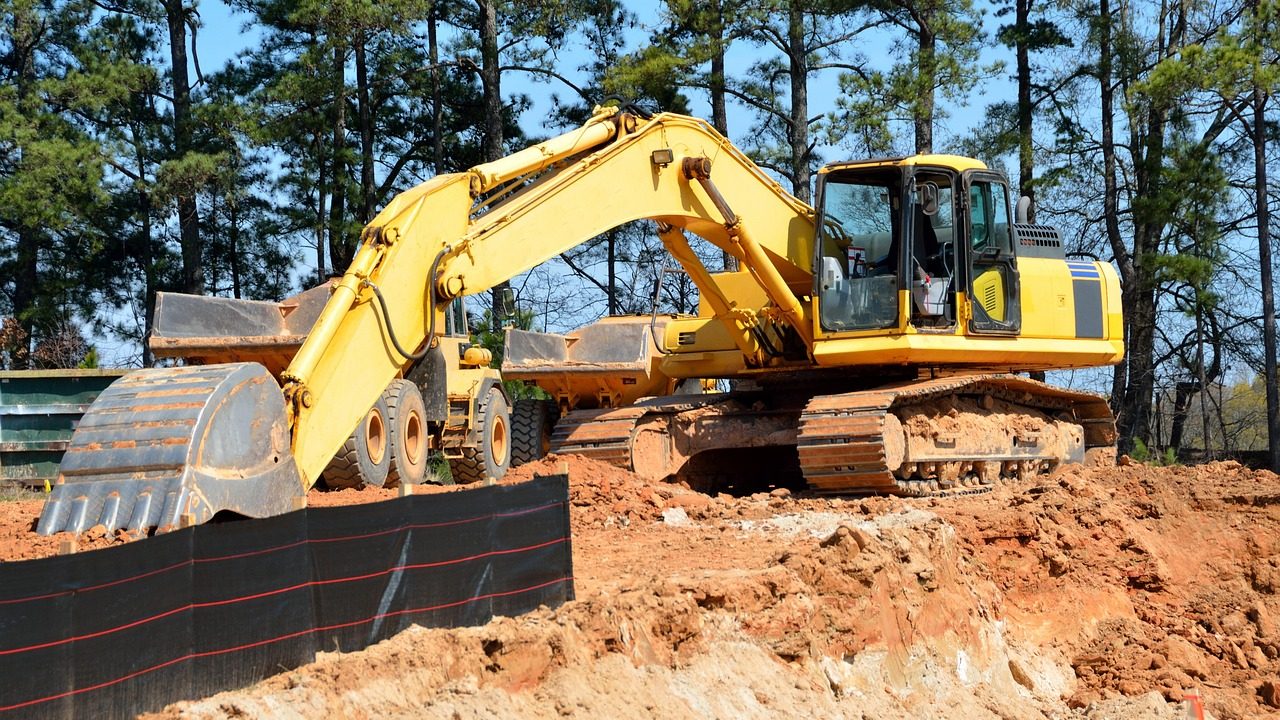
- Heavy Equipment Mobilization: Excavators, track loaders, and dump trucks must access the back or side yard, which often involves temporary removal of fencing, trees, structures, or landscaping.
- Trench Excavation: Multiple parallel trenches are excavated two to four feet wide and two to four feet deep, depending on local soil profile depths and hydraulic loading requirements.
- Aggregate and Pipe Placement: Contractors lay down a bed of clean washed gravel, place rigid perforated PVC pipe along precise slopes, cover it with additional aggregate, lay filter fabric over the top to keep fine silt out, and backfill with topsoil. Alternatively, gravelless chamber modules are pinned into place before backfilling.
- Distribution Box Integration: A new distribution box (D-box) is set in concrete or heavy plastic to split incoming flow evenly across all new lateral runs, requiring new solid pipe leads from the primary septic tank exit baffle.
This traditional approach works reliably where lot sizes are generous, deep well-draining soil is available, and clear reserve space exists. However, high water tables, shallow bedrock, tight property boundaries, or heavy clay soils can make installing a conventional trench field legally impossible without expensive engineer-designed mounded modifications.
The Aerobic Treatment Unit Alternative: Technical Principles
An Aerobic Treatment Unit (ATU) acts as a scaled-down municipal wastewater treatment plant designed for a single family dwelling. Traditional septic tanks process waste anaerobically (without oxygen), which yields slow organic breakdown and leaves high concentrations of biological oxygen demand (BOD) and total suspended solids (TSS) in the outgoing fluid. An ATU introduces air directly into the wastewater stream to foster oxygen-loving aerobic bacteria.
Aerobic bacteria digest organic waste much faster and more completely than anaerobic microbes. The resulting effluent leaving an ATU is remarkably clear, odor-free, and significantly lower in pathogens, BOD, and suspended solids. A typical residential ATU system operates through three primary integrated stages:
- Pretreatment / Trash Tank Chamber: Raw sewage enters a primary compartment where heavy solids settle to the bottom and floating scum rises to the surface, mimicking a mini primary septic tank.
- Aeration Compartment: Clarified liquid spills into an aeration chamber equipped with an electric air compressor, submerged diffusers, or a mechanical agitator. Continuous bubbling supplies oxygen to suspension biomass or fixed media matrix plates, allowing aerobic microbes to consume dissolved pollutants.
- Settling / Clarification Chamber: Wastewater flows into a quiet chamber where excess bacterial slime drops out of suspension and settles back into the aeration compartment via continuous sludge return pumps. The resulting super-clear liquid moves to final disposal.
Because the liquid leaving an ATU is already purified to an advanced standard, the strain placed on the receiving soil is reduced drastically. This clear effluent can often be discharged into smaller absorption footprint trenches, shallow drip-irrigation networks, or surface spray dispersal systems (where permitted by state authorities), avoiding the huge land requirements of traditional gravel trenches.
Direct Comparison Matrix: Drain Field Reconstruction vs. ATU Conversion
Choosing between reconstructing standard lateral trenches and retrofitting an advanced ATU requires weighing physical space, initial capital outlay, site geography, and long-term operating demands. When analyzing a septic tank drain field lateral pipe collapse vs ATU conversion cost US homeowners must balance immediate excavation expenses against ongoing maintenance contracts. The matrix below breaks down critical operational criteria for home decision-making.
| Evaluation Factor | Traditional Drain Field Replacement | Aerobic Treatment Unit (ATU) Conversion |
|---|---|---|
| Primary Direct Application | Unrestricted lots with good percolation rates, deep soil, and open reserve space. | Restricted lots, high water tables, shallow bedrock, tight boundaries, or clay soils. |
| Site & Lawn Disturbance | High. Extensive trenching across large lawn surface area using heavy excavators. | Moderate to Low. Compact tank footprint with reduced-size disposal fields or drip tubing. |
| Power Requirements | Zero. Typically operates entirely on passive gravity flow (unless pump dosing is required). | Continuous electric power needed for mechanical air blowers, pumps, and control panels. |
| Effluent Output Quality | Primary anaerobic effluent; high BOD and suspended solids; relies on soil for purification. | Highly treated, clear aerobic effluent; low BOD and low suspended solids before entering ground. |
| Ongoing Maintenance Burden | Low. Pumping the primary tank every 3 to 5 years; occasional filter cleaning. | High. Mandatory semi-annual inspections, air filter service, mechanical pump maintenance. |
| Regulatory Oversight | Standard basic local health department permit and initial installation inspection. | Strict oversight; many states mandate continuous ongoing maintenance service contracts. |
Cost Drivers for Traditional Lateral Field Replacement
Budgeting for a traditional lateral pipe replacement requires looking past simple pipe costs. Total financial outlays stem from labor, bulk aggregate materials, access logistics, and civil permitting demands.
First, permit and engineering fees vary substantially depending on regional regulations. Most counties require a licensed soil scientist or environmental health technician to perform a fresh percolation test or deep pit profile assessment to verify seasonal high groundwater levels. If soil conditions are borderline, an engineer must draw stamped system plans before permits are issued.
Second, excavation and material transportation drive up installation costs. Traditional drain fields consume tons of washed gravel aggregate, hundreds of feet of heavy-duty perforated PVC or interlocking synthetic vault chambers, geotextile fabric rolls, and multiple concrete distribution boxes. Trucking heavy aggregate and hauling away spoil dirt from rural sites adds significant freight charges.
Finally, yard restoration represents an often overlooked line item. Replacing three to four deep trenches spanning 100 feet each leaves a large footprint of bare dirt, compacted ground, and disturbed grade lines. Homeowners must budget separately to re-grade slopes, import clean topsoil, re-establish lawn turf, and repair damaged irrigation lines, asphalt driveways, or boundary fences broken by heavy equipment ingress.
Cost Drivers for ATU Upgrades and Retrofits
Converting a property to an Aerobic Treatment Unit swaps heavy excavation expenses for sophisticated electro-mechanical equipment and advanced processing technology. Understanding the components that drive ATU conversion budgets prevents unexpected financial surprises down the line.
Equipment acquisition represents the primary upfront hardware cost. An ATU setup requires a multi-chamber fiberglass or concrete tank housing internal aerators, sludge pumps, alarm floats, biological media cartridges, and a weatherproof exterior control box with visual/audible failure indicators. If local health codes require final disinfection before surface discharge or drip application, secondary components like ultraviolet (UV) disinfection chambers or automatic chlorination distribution tubes must be wired in.
Electrical hookups and site wiring demand professional installation. Unlike passive septic systems, ATUs require dedicated electrical circuits run directly from the home’s main panel to the exterior control unit. In rural locations where the septic tank sits far from the house, trenching electrical conduit adds material and electrician labor costs.
On the land disposal side, an ATU often slashes soil absorption costs. Because the discharged water is already clean, state health codes frequently permit significantly reduced drain field lateral footprints, or allow the use of shallow subsurface drip irrigation tubing laid with a small trenching tool rather than a full-size excavator. This small footprint minimizes yard destruction and preserves mature trees.
Long-Term Operational and Maintenance Costs Compared
Comparing these two options on initial construction costs alone is a financial mistake. Over a 15-year operational lifecycle, the ongoing ownership costs of a traditional gravity system and an ATU diverge significantly. Anyone analyzing a septic tank drain field lateral pipe collapse vs ATU conversion cost US framework must project energy usage, service contracts, and mechanical wear over time.
Traditional Drain Field Lifecycle Costs
A properly sized and well-maintained conventional gravity drain field is exceptionally economical over its operating lifespan. Key ongoing expenses include:
- Tank Pumping: Excavating septic tank lids and pumping out primary sludge accumulation every 3 to 5 years.
- Effluent Filter Rinsing: Removing and spraying clean the plastic outlet baffle filter twice per year (a simple DIY task).
- Electrical Costs: $0 per year for passive gravity systems; minimal power costs if a basic effluent lift pump is installed.
Aerobic Treatment Unit Lifecycle Costs
An ATU is an active mechanical utility continuously consuming power and wearing out components. Key recurring costs include:
- Continuous Electrical Consumption: Air compressors and aerators run continuously or on cycling timers 24 hours a day. Operating an aerobic blower adds recurring monthly costs to the household utility bill.
- Mandatory Service Contracts: Most state and county health departments mandate that ATU owners maintain continuous service contracts with certified maintenance providers. Technicians inspect mechanical components, test effluent clarity, measure aeration levels, clean air filters, and replenish chlorine tablets two to four times per year.
- Component Replacement Lifespans: Aerobic blowers and discharge pumps operate under harsh environmental conditions. Compressors and diaphragm pumps typically require rebuilds or full replacements every 3 to 7 years. UV disinfection lamps require annual replacement.
- Primary Solids Pumping: The primary trash chamber and secondary aeration tank still require professional solids pumping every 2 to 4 years to remove non-biodegradable sludge buildup.
Permitting, Zoning, and Regional Regulations
Local environmental rules frequently dictate whether an ATU or traditional field replacement is allowable on a given parcel of land. Environmental health codes vary across US states and counties, particularly regarding high water tables, coastal zones, and watershed protection areas.
Many jurisdictions enforce strict setbacks requiring lateral fields to remain at least 50 to 100 feet away from drinking water wells, property lines, natural ponds, and streams. On small or irregularly shaped lots where a lateral pipe collapse invalidates the original footprint, meeting these setback boundaries with a new 300-foot traditional field may be legally impossible. In these scenarios, local authorities often grant variances for an ATU because its clean effluent allows for shortened clearance distances.
Conversely, some rural counties limit surface-dispersal ATUs due to public health concerns surrounding standing effluent contact. Where surface spray or shallow drip irrigation is permitted, local ordinances often require automatic disinfection mechanisms—such as integrated UV lights or tablet chlorinators—along with telemetry control panels that alert health agencies directly if the aerator motor fails. Homeowners must check with their county health department before signing system design contracts.
Soil, Topography, and Property Space Constraints
Site conditions dictate what options are physically viable for long-term wastewater treatment. Performing a thorough site evaluation avoids installing a system doomed to early failure.
Soil structure is the most fundamental limiting factor. Sandy, gravelly, or loamy soils percolate water efficiently and host thriving populations of natural aerobic soil bacteria, making them ideal for traditional pipe and gravel drain fields. Conversely, high-clay soils, unweathered hardpan, or compacted silt possess low percolation rates. When traditional lateral pipes collapse in clay soils, effluent pools in the trench and cannot sink inward, making an ATU or engineered mound conversion the only functional solution.
Topography and bedrock depth similarly limit traditional options. Steeply sloping yards make laying standard horizontal gravity pipes difficult without risking effluent surfacing on lower slopes. Similarly, shallow soil layers resting on granite bedrock or restrictive karst limestone formations prevent deep traditional trench digging. An ATU processes wastewater before ground contact, allowing safe discharge through shallow subsurface drip lines buried just 6 to 10 inches below the surface grass root layer.
Step-by-Step Decision Framework for Homeowners
Faced with surfaced wastewater, wet spots in the yard, or backing-up plumbing fixtures, homeowners can follow this methodical framework to choose between conventional field reconstruction and an ATU upgrade.
Step 1: Perform a Comprehensive System Diagnostic
Hire a licensed septic inspector to perform a camera scope inspection through the distribution box and lateral lines. Confirm whether the failure stems from a localized pipe collapse, heavy root intrusion, structural soil shifting, or widespread biomat clogging. If the main tank is structurally compromised or cracked, it must be factored into total replacement calculations.
Step 2: Assess Available Unused Yard Space and Reserve Areas
Measure the open area on the property outside established well-head setbacks, driveways, structures, and property lines. Check original property deed records or county permit files to see if a dedicated reserve field area was designated when the house was built. If adequate clear land exists, traditional trenching remains a strong option.
Step 3: Order Soil Testing and Site Evaluation
Hire a certified soil scientist to dig test pits and evaluate soil horizons, perc rates, and seasonal high water table levels. If soil testing reveals poor drainage rates, clay layers, or high groundwater, traditional direct-drop trenches are ruled out under health regulations.
Step 4: Request Comparative Contractor Bids
Obtain itemized, turn-key bids from licensed septic installers for both a traditional field replacement and an ATU retrofit system. Ensure quotes include all scope items: engineering designs, county permit fees, excavation, electrical hookups, site backfilling, and immediate post-installation turf grading.
Step 5: Calculate Long-Term Lifecycle Overhead
Add expected ongoing operating costs to each baseline construction bid over a 10-year span. Factor in continuous electricity consumption, mandatory quarterly maintenance service contracts, component replacement reserves for blowers/pumps, and routine primary tank pumping intervals. This reveals the true long-term financial reality of a septic tank drain field lateral pipe collapse vs ATU conversion cost US comparison.
Common Mistakes to Avoid During Septic Repairs
Property owners dealing with septic system emergencies often make rushed decisions that lead to premature failures or regulatory fines. Avoiding these common traps protects both property value and personal finances:
- Installing Unpermitted Quick Fixes: Contracting an unlicensed excavator to dig a single trench or dump crushed gravel over broken pipe without county soil tests or permits is illegal in most US jurisdictions. Unpermitted repairs can prevent property sales, trigger heavy municipal fines, and cause severe groundwater contamination.
- Misdiagnosing Structural vs. Biological Failures: Attempting to pour chemical restorative additives, acids, or biological enzymes down drains to dissolve broken or crushed PVC pipe is useless. Chemical additives cannot un-crush a collapsed pipe and can damage natural soil bacterial ecosystems.
- Ignoring Power Outage Vulnerabilities on ATUs: Homeowners converting to ATUs often forget that the system relies entirely on electricity. During extended grid power outages, aerobic blowers stop working, turning the unit into a basic anaerobic tank. Prolonged wastewater use during power outages can foul treatment chambers or trigger overflow alarms. Installing backup generator circuits or low-flow water management practices during winter storms is essential.
- Neglecting Site Drainage and Stormwater Management: Repairing subsurface lateral lines without diverting roof gutters, curtain drains, and surface runoff away from the drain field guarantees early system drowning. Surface water must be channeled away from all absorption beds and ATU tank installations.
Making the Final Decision
Deciding between traditional drain field pipe replacement and an ATU conversion comes down to site realities and maintenance preferences. If your lot offers deep, well-draining soil, generous open square footage, clear setback clearances, and suitable percolation rates, reconstructing a standard passive lateral drain field usually delivers lower long-term costs, zero electrical bills, and dependable service with minimal mechanical hassle.
However, if your property faces severe space limitations, clay-heavy soils, shallow bedrock, a high seasonal water table, or stringent local watershed restrictions, an Aerobic Treatment Unit retrofit provides a proven, highly engineered solution. While an ATU demands higher ongoing operational costs, continuous power consumption, and routine service contract oversight, it turns difficult, un-buildable parcels into functional, environmentally compliant residential home sites for decades to come.