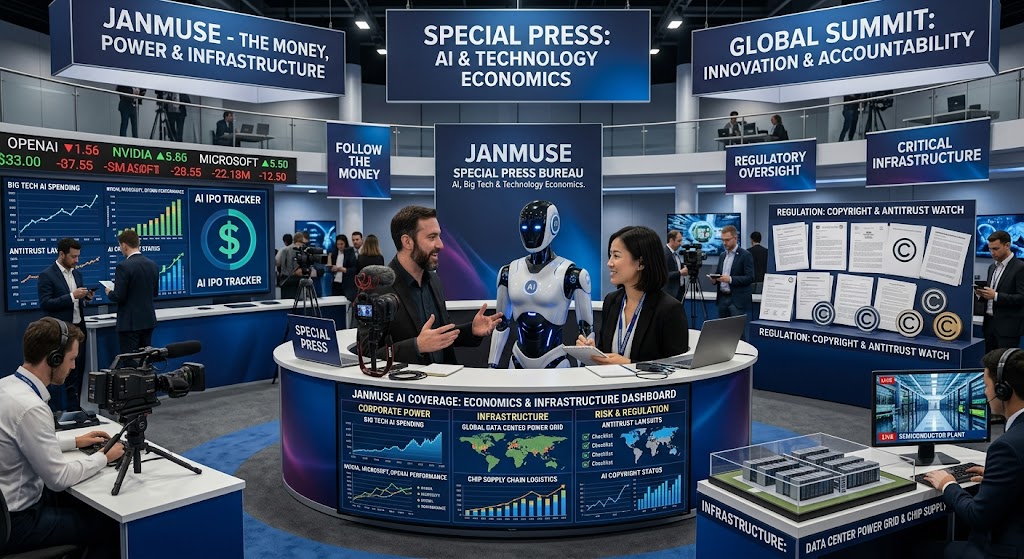
The Neon-lit Hallways of Silicon Valley Once Echoed with the Quiet
The neon-lit hallways of Silicon Valley once echoed with the quiet, persistent promise of an infinite intelligence revolution. Generative AI tools became the new standard of productivity, transforming from academic curiosities into the engines of global enterprise. But as the hype cycles begin to settle, a different kind of reality is taking hold. On sleek tablets and backlit monitors, the high-octane growth metrics of the past two years are being met with the sober, cold scrutiny of the Financial Times.
It is a visual juxtaposition that captures the current mood: on one side, a kaleidoscopic explosion of synthetic imagery and automated code, and on the other, a jagged, red-tinted graph signaling that the promises of hyper-growth are hitting a significant friction point. The venture capital engine, which fueled a generation of unicorns, is now looking closer at the bottom line.
As we peel back the layers of this technical boom, we find that the speed of innovation is being outpaced by the sheer, crushing weight of operational costs, leaving industry leaders to confront a landscape that is far less certain than the marketing brochures suggested just a few short months ago. At the very heart of this friction is OpenAI, the titan that effectively catalyzed this entire movement. For years, the valuation narrative centered around a seventy-billion-dollar price tag, a figure predicated on the assumption of rapid, exponential revenue expansion. But the math, as it turns out, is proving stubborn.
Recent reporting has shattered the illusion, revealing that the company is missing its revenue targets by a staggering twenty billion dollars. This is not merely a rounding error; it is a fundamental challenge to the foundational premise of the current AI bubble. If the flagship company of the movement cannot bridge a twenty-billion-dollar gap, then the entire logic of multi-billion dollar valuations for secondary players comes under immediate, intense scrutiny. We are seeing a shift in the corporate zeitgeist—moving from a blind faith in future scale to an urgent, frantic search for present-day profitability.
The seventy-billion-dollar valuation was a promise of what could be, but the fifty-billion-dollar reality is the baseline of what actually is, creating a tension that is rippling through boardrooms and investor circles across the globe. When we plot the data onto a timeline leading toward 2026, the divergence becomes painfully visible.
A Path of Vertical Growth
Imagine a steep, ascending blue line representing the initial projections that captivated investors—a path of vertical growth. Superimposed against it is a red line, showing the actual performance, a trajectory that flattens out, far beneath the soaring expectations of the previous fiscal quarters. The gap between these two lines represents more than just missing revenue; it represents a deficit of confidence. As the projection curve fails to meet the intercept points expected by venture partners, the pressure on OpenAI to monetize its foundational models has intensified. Every query, every API call, and every enterprise subscription must now account for the massive underlying infrastructure costs required to sustain high-parameter models.
The visualization is a stark warning: the era of growth at all costs is struggling to transition into an era of sustainable margins. Investors tracking this trajectory are no longer looking for the next breakthrough in natural language processing; they are looking for the point of intersection where the massive capital expenditures in GPU clusters and server energy eventually yield a stable, recurring revenue stream. Why does this gap exist, and why is it so difficult to close?
Industry analysts point to a paradox in the operating model of these AI giants: the more successful they are at scaling their services, the more their overheads climb, often outpacing the growth in subscription-based income. The sustainability of OpenAI’s model relies on a precarious balance between the declining cost of inference and the market’s willingness to pay a premium for intelligence. However, as the market matures, price competition is creeping in, eroding the margins that companies hoped would fund their research and development.
Experts argue that the revenue gap is a symptom of the ‘pilot project trap,’ where many enterprises have integrated generative AI on a trial basis but have yet to commit to full-scale, deep-integration deployments that generate reliable, long-term cash flow. Without that shift from experimentation to utility, the business model remains speculative. This is the central concern for stakeholders: can a company built on the massive, upfront cost of compute ever generate the kind of margins that justify the staggering private valuations of the past three years, or is the architecture of the industry fundamentally misaligned with the traditional expectations of fiscal profitability?
The tremors from these valuation shifts are not contained within the walls of OpenAI; they are vibrating through the broader ecosystem, most notably in the cooling appetite of the public markets.
A Definitive Case Study in This New Reality Is the Recent
A definitive case study in this new reality is the recent, quiet withdrawal of Firmus’ long-awaited IPO. For months, the company was touted as the next great beneficiary of the infrastructure boom, backed by the prestige of NVIDIA’s influence and the hype surrounding high-performance AI hardware. But as the market climate shifted from optimism to caution, Firmus faced a reckoning. Their decision to pull back from the public markets signals a profound change in the wind. The capital markets, once eager to drink from the firehose of AI innovation, are now demanding fiscal discipline and audited evidence of long-term viability.
Firmus is not an outlier; they are a canary in the coal mine. Their retreat serves as a sobering reminder that even companies with the backing of industry giants are susceptible to the gravity of market economics when the fundamentals of their business do not match the exuberance of their pre-IPO projections. The link between these macro-market conditions and the strategic decision-making at the top of the food chain is absolute.
When an IPO fails to gain traction, it sends a signal throughout the industry: the market is no longer pricing companies based on the total addressable market of the AI frontier, but on the concrete, verifiable ability to generate profit. Major AI players are observing this shift with significant alarm. Strategic decisions that were previously geared toward massive, rapid scale are now being recalibrated toward lean operation and strategic partnerships. The era of ‘blitzscaling’ is being replaced by the era of ‘strategic hedging.
‘ Companies are slowing down their burn rates, consolidating their research efforts, and looking for more stable, long-term capital sources rather than relying on the whims of an IPO market that has turned cold. This transition is forcing a change in corporate philosophy: if you cannot prove your worth to the public markets today, you must pivot your strategy to survive the cooling period. The result is a more cautious industry, where the race to the top is being replaced by a race to sustain the bottom line. At the center of this web sits NVIDIA, a firm whose influence over the AI ecosystem is nearly absolute.
To understand the valuation of firms like Firmus, one must first map the flow of NVIDIA’s capital and hardware. NVIDIA is not just a supplier; they are a central architect, providing the physical substrate upon which the entire AI revolution is built. Their investment strategy is a key indicator of market confidence. By staking capital in emerging firms, NVIDIA effectively grants a ‘stamp of approval’ that signals to the rest of the venture community that a company is part of the inner circle of development.
A Graphic Breakdown Reveals That This Influence Is Multi-dimensional
A graphic breakdown reveals that this influence is multi-dimensional. It starts with the supply of H100 and Blackwell chips, flows through strategic joint ventures, and ends in equity stakes that link the success of the AI startup directly to the ecosystem NVIDIA controls. This creates a dense, interconnected network where NVIDIA’s growth is inextricably linked to the success of its partners. When the market cools, the weight of this influence becomes a double-edged sword: it keeps firms afloat, but it also ties their fate to the broader fluctuations of NVIDIA’s own massive, compute-driven valuation.
This leads us to the ultimate question: does NVIDIA’s capital support act as a safety net or a distortion field? On one hand, NVIDIA’s willingness to back speculative firms provides the fuel necessary to sustain R&D that would otherwise wither under traditional venture scrutiny. This capital allows firms to continue training ever-larger models, pushing the boundaries of what is possible. On the other hand, it inflates the perceived value of these companies, making their public valuations dependent on hardware access rather than purely market-driven revenue. When a firm is backed by NVIDIA, it often commands a valuation that reflects its access to future compute rather than its current profit status.
This creates a disconnect. As investors grapple with the reality of OpenAI’s revenue gap and Firmus’ IPO withdrawal, they are beginning to question how much of these firms’ worth is built on genuine demand and how much is built on the subsidized access to hardware. Moving forward, the industry must disentangle these threads, shifting from a market defined by hardware-fueled speculation to one defined by the genuine utility and profitability of the AI tools themselves. To understand the sheer scale of the challenge facing OpenAI, we must look at the physical architecture of growth.
Training a frontier model is no longer a localized research project; it is an industrial-scale manufacturing process. Each iteration of these LLM architectures requires an exponential leap in compute power, cooling capacity, and energy infrastructure. As the models grow, the cost of training them doesn’t merely climb; it vaults upward in a logarithmic curve that defies traditional software economics.
This Is the Capital-intensive Reality of the Arms Race
We are looking at a paradigm where every new parameter added to the neural network demands an exponentially higher budget for high-end H100 GPU clusters and the specialized networking to link them. This is the capital-intensive reality of the arms race. As architectural complexity increases, the financial entry price to stay competitive becomes so steep that only a handful of players on the planet can sustain the cost of the next epoch of training.
This creates a perpetual cycle: the larger the model, the better the performance, but the higher the threshold for future survival, forcing developers to gamble billions on the hope that their next model will be the one that truly dominates the market. This leads us to the fundamental burn rate that defines the modern AI enterprise. Behind the glossy product reveals and the promise of AGI lies a brutal reality of high-frequency capital consumption. Keeping pace with the AI arms race is not just about keeping the lights on; it is about keeping thousands of silicon hearts beating in unison across massive data centers around the clock.
The burn rate is driven by two primary forces: the cost of procuring scarce GPU hardware and the staggering electricity usage required to power those racks. While venture capital has historically treated these costs as temporary investments in future growth, the duration of this burn is extending far longer than many analysts originally projected. As OpenAI continues to funnel massive liquidity into compute, the internal struggle becomes clear: they are effectively paying a heavy tax for every millisecond of inference and training.
This operational pressure mandates that these firms must constantly seek new rounds of funding just to maintain their current technical footprint, creating a feedback loop where the need for capital grows in lockstep with the capability of the machines they build. When we transition from training to inference—the moment an end-user actually asks a question—we encounter the core problem of AI unit economics. The cost of running an LLM at scale is remarkably high compared to the revenue currently generated per user. Every interaction involves thousands of complex calculations across a massive, energy-hungry model.
Currently, the inference cost often outweighs the subscription fees collected from the average user, creating a situation where the more popular a service becomes, the more the underlying costs threaten the bottom line. This is a complete inversion of traditional software business models, where incremental users typically cost pennies to serve. In the AI domain, scaling a user base creates a linear increase in overhead that is difficult to offset with current pricing structures.
Where Growth Companies Investors Compute Changes the Picture
The gap between the cost of compute and the willingness of a user to pay for a response creates an operational bottleneck. To close this, the industry is searching for ways to distill models and improve efficiency, but for now, the sheer complexity of answering a single prompt remains a deep drain on the company’s financial resources. This margin compression is forcing a strategic rethink at the highest levels of OpenAI and its peers. The current ‘all-you-can-eat’ pricing model is no longer sustainable as the cost of compute continues to hover at premium levels.
We are seeing a shift where firms must reconsider their product tiers, moving away from mass-market accessibility and toward high-value, enterprise-grade deployments that can absorb the costs of the compute. These thin margins act as a warning signal; they suggest that the current pricing strategy is built on an assumption of cheap hardware that has not yet materialized at scale. To fix the profitability equation, these companies must balance the need for user growth with the economic reality that their products are essentially loss-leaders until proven otherwise. The pressure to reach a sustainable margin is now driving a transition from experimental, open-ended innovation toward a more disciplined, value-based pricing structure.
It is a pivot away from the ‘growth at all costs’ philosophy that defined the early days, signaling that the era of inexpensive, ubiquitous AI access may soon be facing a severe financial reality check. Public markets are notoriously impatient, and we are witnessing a significant cooling in the appetite for ‘AI story stocks’ that lack a concrete path to profitability. For years, investors were willing to look past losses if a company promised exponential growth in AI capability. Today, that narrative is fracturing. Investors are now distinguishing sharply between companies that can demonstrate consistent revenue growth and those that are simply burning cash to chase an AI buzz.
The speculative bubble that lifted many tech firms on the wings of AI optimism is being replaced by a more grounded, analytical approach. The market is increasingly demanding to see tangible evidence that these AI tools are driving efficiency for clients or generating high-margin revenue. The era of blind faith is over, replaced by a demand for fiscal discipline and clear, repeatable earnings. As companies attempt to justify their valuations, they are finding that public investors are no longer satisfied by the mere promise of better models; they want to see the bottom line reflect the brilliance of the underlying code, rather than just the intensity of the hardware burn.
The recent withdrawal of the NVIDIA-backed firm Firmus from its planned IPO is the clearest indicator of this shifting sentiment.
Firmus Was Heralded as a Cornerstone of the AI Hardware Ecosystem
Firmus was heralded as a cornerstone of the AI hardware ecosystem, yet its inability to proceed with a public offering speaks volumes about the current liquidity crisis facing venture-backed companies. When a company with such high-profile backing cannot find a stable window to go public, it suggests a profound misalignment between private valuations and public market reality. This is not just a story about one company; it is an indictment of the broader venture landscape where capital was abundant, but real-world market liquidity is now evaporating.
The lack of an exit path for these late-stage AI companies creates a bottleneck, trapping capital in private markets and forcing founders to delay expansion plans. The Firmus withdrawal serves as a cautionary tale: having the best hardware partner is no longer a substitute for the fundamental financial health that public shareholders require. It highlights a moment where the promise of the AI revolution is colliding with the hard, uncompromising wall of market skepticism. Institutional investors have changed their tune. They are no longer content with just viewing demos; they are performing deep forensic audits on AI performance metrics.
This shift represents a move toward institutional rigor, where the ‘magic’ of the output is secondary to the reliability and economic efficiency of the system. Investors are asking: what is the cost per token? What is the model’s error rate? What is the specific return on investment for a client using this software? These questions are designed to pierce through the marketing hype and expose the underlying utility of the AI. As more institutional money pours into the space, the demand for transparency grows. Firms are being pressed to demonstrate that their models are not just impressive parlor tricks, but stable, scalable business assets.
This scrutiny is making it harder for firms to hide their operational inefficiencies. It forces a move toward professionalization, where technical capability is matched with commercial accountability, ensuring that the next generation of AI development is backed by evidence-based performance rather than just the size of the model’s parameter count. Ultimately, we are witnessing a global tension between scaling for growth and scaling for profit. The temptation to keep pouring money into larger, faster models is immense, driven by the desire to reach the next frontier of intelligence.
This Is the Central Struggle for OpenAI and Its Contemporaries
Yet, the pressure to demonstrate profit creates an opposing force that encourages operational slimming and price optimization. This is the central struggle for OpenAI and its contemporaries. They are attempting to walk a tightrope between the massive R&D spending required to lead the field and the commercial discipline needed to satisfy the markets. Can they scale into profitability before the capital well runs dry? Or will the costs of maintaining these advanced architectures prove too high for the current economic model to sustain? The answer will define the next decade of technology.
It is a competition where the winners will not necessarily be those with the largest models, but those who can successfully navigate the transition from building for the sake of scaling to building for the sake of sustainable, long-term economic value. The future of AI rests not just on code, but on the math of the balance sheet. Behind the curtain of OpenAI’s meteoric rise lies a labyrinthine corporate structure that defies traditional Silicon Valley governance. At its core, the entity remains tethered to a non-profit board, a configuration originally designed to prioritize safety and existential alignment over pure quarterly earnings.
Yet, as the capital requirements for training the next generation of massive models balloon into the billions, this structure faces an unprecedented stress test. Strategic direction is no longer merely a function of research breakthroughs; it is dictated by a precarious dependency on a handful of massive, deep-pocketed corporate donors. This tension between the non-profit mission of universal benefit and the fiduciary pressures exerted by investors creates a unique bottleneck in decision-making. As the organization attempts to scale, the board must reconcile the altruistic goals of its charter with the rigid financial realities of its backers, who require a clear, defensible path toward returns.
This structural friction forces us to ask: who truly holds the steering wheel when the mission and the money diverge? The power dynamics are shifting, moving from a collaborative, academic-leaning model toward a traditional high-stakes boardroom standoff. Venture partners and strategic donors now demand a level of visibility and control that was arguably absent during the initial explosive growth phase. With revenue targets falling short—reports suggest figures closer to fifty billion than the projected seventy billion—the leverage once held by research scientists is being eclipsed by the cold calculus of the capital providers.
The non-profit board, once the final arbiter of OpenAI’s trajectory, now operates in a environment where every strategic pivot is scrutinized through the lens of market viability.
Each Venture Firm and Major Corporate Donor Acts as a Pressure Valve
This is a delicate game of chess between those who hold the compute power and those who hold the proprietary weight of the research. Each venture firm and major corporate donor acts as a pressure valve, ensuring that the organization’s trajectory remains aligned with the need for revenue generation. The question remains whether this governance model can sustain the required autonomy, or if it will inevitably collapse into a standard corporate structure driven entirely by investor dividends. We are now witnessing the definitive end of the ‘hype’ phase in artificial intelligence, a period characterized by unbridled optimism and seemingly limitless funding.
The market is pivoting, often painfully, toward the ‘utility’ phase. In this new era, the narrative of infinite growth is being replaced by the hard requirements of tangible, repeatable revenue. The withdrawal of an IPO for an NVIDIA-backed company like Firmus serves as a canary in the coal mine, signaling that the public markets are no longer willing to underwrite AI development based solely on future promises of AGI. Investors are shifting their gaze away from parameter counts and toward unit economics.
They are asking how much it costs to generate a single query and whether that query produces enough value to justify the enormous silicon footprint required to serve it. This transition is critical. It marks the shift from a speculative gold rush to a disciplined industrial expansion where competitive advantage is no longer measured in raw intelligence, but in operational efficiency and the ability to convert data into durable, profitable services. As we close this chapter on the current state of the AI economy, the imperative for operational discipline could not be clearer.
The gap between revenue expectations and actual market performance at giants like OpenAI highlights a systemic vulnerability: the risk of a severe market correction if cost structures remain detached from reality. Avoiding this fate requires more than just better algorithms; it requires a ruthless commitment to the economics of inference. The era of ‘growth at any cost’ is fading, replaced by a requirement for sustainable innovation that respects the boundaries of capital. If the leaders in this space can tighten their margins and optimize their infrastructure, they may avoid the boom-and-bust cycles that have defined previous technological bubbles.
However, if they continue to prioritize scale over sustainability, the inevitable market adjustment will be harsh. The future of AI will not be determined by the sheer power of the hardware, but by the discipline of the accountants and the foresight of the operators who ensure the technology pays for itself long before the venture capital dries up.