Where Valuation Global Openai Intelligence Changes the Picture
The hum of modern civilization is no longer found in the traditional roar of industrial machinery, but in the silent, cooling fans of hyper-scale data centers. From the glimmering, glass-clad financial districts of New York and London to the sprawling, nondescript warehouses in the Nevada desert, a new tectonic shift in global capital is underway. These server farms, vast cathedrals of silicon and fiber optics, represent the physical manifestation of a digital gold rush that has transcended the boundaries of Silicon Valley.
We are witnessing the birth of a new economic epoch where the currency of progress is compute power, and the vault holding that currency is no longer a bank, but a specialized architecture designed to train the next generation of artificial intelligence. As these hubs of processing power consume electricity at a rate that rivals small nations, the financial world watches with a mixture of awe and trepidation. The intersection of global finance and artificial intelligence has created an unprecedented feedback loop, one that demands levels of capital previously reserved for sovereign states and national infrastructure projects, fundamentally altering how we perceive investment in the 21st century.
At the epicenter of this transformation sits OpenAI, a company that has moved from a research-focused organization to a colossus capable of rewriting the rules of corporate valuation. Recent reports from The Business Times indicate that OpenAI is currently exploring a funding round that would catapult its valuation to an staggering $1. 2 trillion. This figure, while astronomical, is not merely a number plucked from a spreadsheet; it is an audacious signal to the global market that the company is preparing for a historic public debut. Such a valuation would firmly place OpenAI in the most exclusive tier of enterprises ever to exist, rivaling the largest incumbent technology giants.
By seeking to cement this valuation ahead of an Initial Public Offering, the organization is effectively resetting investor expectations for what a software-driven entity can achieve. This pursuit of a trillion-dollar status reflects a broader industry belief that foundational AI models will be the bedrock upon which the next century of economic productivity is built.
The Scale of This Ambition Is Difficult to Overstate
The scale of this ambition is difficult to overstate, serving as both a magnet for institutional capital and a litmus test for the sustainability of the current AI boom as the company pivots toward a market-facing reality. To fuel this unprecedented growth, OpenAI has leaned into complex debt structures that mirror the scale of its ambitions. According to reporting from The Economic Times, the company has secured an upsized $11. 9 billion loan facility, a move that provides the necessary liquidity to keep its aggressive development roadmap on track.
This is not a standard venture capital infusion; rather, it is a sophisticated, debt-heavy financing strategy that acknowledges the immense cost of training Large Language Models. These models require thousands of specialized GPUs, constant power, and a massive ecosystem of support that makes early-stage startup funding look quaint by comparison. By tapping into credit markets for nearly twelve billion dollars, OpenAI is insulating its internal operations from the volatility of private equity markets while signaling confidence in its future revenue streams. This loan facility functions as a bridge, ensuring that the heavy machinery of AI development does not slow down for even a moment.
It serves as a vital injection of capital that keeps the engineers coding and the clusters running, illustrating that in the world of high-stakes AI, the ability to secure debt at this scale is just as important as the code itself. Behind this significant financial maneuver lies the strategic weight of SoftBank, whose influence in the AI sector continues to reshape portfolio management. SoftBank’s involvement in facilitating such large-scale capital deployments is part of a deliberate, aggressive thesis centered on the belief that artificial intelligence will be the primary engine of global economic growth for the next several decades.
By orchestrating these loans, the firm is doing more than just providing money; it is actively shaping the landscape of AI infrastructure. Their strategy reflects a departure from traditional, long-term patient capital, opting instead for massive, high-velocity commitments that prioritize dominance in the foundational model space. In the case of OpenAI, SoftBank’s participation as a key financier signals to other institutional players that the risk-adjusted returns in the AI sector, while massive, are worth the significant exposure. This is a high-stakes game of corporate chess, where every billion deployed is a move toward controlling the technological future.
When We Look Back at the Historical Milestones of the Technology Industry
SoftBank’s willingness to underpin these enormous capital requirements showcases a pivot in the way venture-backed companies approach the capital stack, proving that being AI-heavy means being debt-heavy, as the pursuit of artificial superintelligence requires a nearly limitless financial runway. When we look back at the historical milestones of the technology industry, the current trajectory of OpenAI feels like an outlier of historic proportions. If we compare the projected $1. 2 trillion IPO to the market debuts of previous tech giants, we see a dramatic shift in how value is front-loaded into modern corporations.
Historically, even the most successful companies spent decades building revenue, refining operations, and establishing market dominance before reaching such valuations. OpenAI, by contrast, is attempting to condense that timeline into a few short years of explosive, compute-intensive growth. This is a departure from the classic Silicon Valley playbook, where scaling is a gradual process of product-market fit. Today, the scale of capital required to build a foundational model is so large that it forces the company to hit trillion-dollar thresholds almost before the technology has reached mass-market maturity.
The comparison to historical IPOs is not just about the final number, but about the speed and intensity at which that value is captured and projected. The sheer scale of OpenAI’s ambitions makes it less like a traditional software company and more like a utility provider, setting a new, daunting standard for any firm hoping to disrupt the global economy through artificial intelligence. The urgency behind this rapid push toward an IPO can be attributed to the insatiable liquidity needs of a company that is simultaneously building and operating the most sophisticated models on earth.
Traditional startup cycles simply cannot accommodate the multi-billion dollar monthly expenditures required for GPU procurement and energy consumption. As the private markets become increasingly saturated with AI-focused investment, the need to tap into public liquidity becomes not just a strategic choice, but a functional necessity. An IPO provides the permanent capital base required to sustain these massive operations without the constant cycle of private funding rounds that can dilute long-term focus. Furthermore, it offers early investors and employees an exit path, which is critical in an ecosystem where the capital intensity is so high that only a few entities can play the game.
By accelerating the timeline toward public markets, OpenAI is effectively seeking to institutionalize its financial stability. This process is about securing a permanent seat at the table of global capital, ensuring that the company can continue to push the frontiers of what is computationally possible, unfettered by the constraints of a standard private equity lifecycle. To understand why OpenAI operates in the way it does, one must look at the mechanics of sovereign-scale debt structures.
In This Arena, Capital Is No Longer Allocated Based on Simple Growth Metrics
In this arena, capital is no longer allocated based on simple growth metrics; it is deployed as part of an infrastructure-grade financing strategy that resembles the way nations fund building projects like energy grids or transcontinental railroads. These structures rely on long-term commitments from institutional banks, sovereign wealth funds, and private credit firms that view AI models as essential public infrastructure. By treating the financing of large language models like national debt, these stakeholders create a framework where the capital is locked in, protected by complex covenants, and earmarked for specific, long-term technological development.
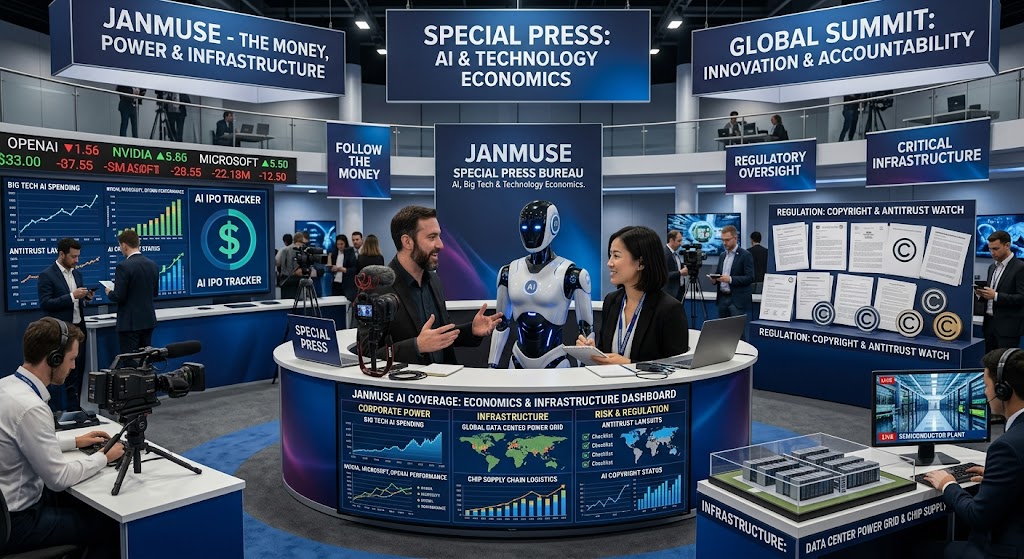
This approach mitigates the inherent risks of such a massive project by spreading the burden across a consortium of high-level financial institutions. It transforms AI from a speculative gamble into a foundational asset class, where the underlying debt reflects the belief that the value of the intelligence being developed is too high to fail, and the infrastructure supporting it is too critical to be left to standard market fluctuations. The final picture is a striking visualization of capital flow. We can trace the movement of billions of dollars from the accounts of global institutional investors, through the complex web of syndicated loans, and directly into the hardware supply chain.
It is a river of capital that ends in the fabrication plants and assembly lines where the next generation of high-performance silicon is forged. This money buys the tens of thousands of specialized chips, the cooling systems, and the immense power capacity that form the backbone of the intelligence era. It is a feedback loop: the debt secures the hardware, the hardware runs the models, and the models generate the perceived value that supports the next round of financing. This flow is the heartbeat of the modern AI ecosystem, a massive, orchestrated movement of liquidity that sustains the quest for ever-greater computational capability.
As the money moves from the boardrooms of Wall Street to the high-tech server halls, it cements the reality that artificial intelligence is now the most capital-intensive sector in human history, fueled by a relentless desire to turn raw electrical power into the intelligence that will define the coming decades. Behind the staggering $1.
It Is a Fundamental Friction Between the Insatiable Hunger for Research-heavy
2 trillion valuation under consideration for OpenAI lies a relentless tension that defines the current era of AI development. It is a fundamental friction between the insatiable hunger for research-heavy, capital-intensive exploration and the immediate, crushing requirement for consistent revenue growth. To build models of this scale is to commit to a burn rate that would bankrupt a traditional software firm in weeks. The capital is not merely flowing into salaries; it is being incinerated in the pursuit of frontier intelligence. This creates a high-wire act where the company must demonstrate massive revenue potential to satisfy stakeholders while simultaneously pushing the boundaries of what is technologically possible.
It is a paradox where the more successful the research, the higher the operational cost, and the more aggressive the fiscal planning must become. This financial strain is not a sign of weakness, but a defining feature of an organization attempting to commercialize a new species of utility that requires the industrial output of nations to function effectively. The prospect of an historic IPO is not merely a strategy for growth; it is a vital mechanism to clear a private liquidity bottleneck that has become an existential constraint. As OpenAI moves to this unprecedented valuation, the company finds itself constrained by the limits of private equity cycles.
Early backers and internal employees require a path to realize value, and the existing capital structure has become too heavy for traditional private markets to support indefinitely. By targeting the public markets, OpenAI aims to transition from a venture-backed laboratory to a sovereign-scale entity capable of tapping into public liquidity. This shift is essential for sustaining the long-term investment horizon required for AGI development. Without the public markets, the sheer volume of capital required—reaching into the hundreds of billions—risks stalling against the finite patience of private investors.
The IPO is the pressure relief valve, allowing the company to sustain its momentum and transition into a permanent fixture of the global financial architecture. Financial analysts are observing a profound shift in corporate balance sheets as AI expenditure transforms from a discretionary line item into a fundamental, non-negotiable capital cost. We are witnessing the birth of the ‘AI-first’ balance sheet, where assets are increasingly defined by the ownership of compute and model weights rather than physical inventory or traditional software licensing.
As Firms Like OpenAI Lead This Transition
As firms like OpenAI lead this transition, they set a new precedent for corporate valuation that forces even the most conservative institutions to rethink their risk models. The cost of maintaining AI infrastructure is now so substantial that it is reshaping how corporations manage debt and equity. It is no longer enough to have a good product; the enterprise must now maintain a robust enough financial structure to support the ongoing, escalating costs of model training and inference. This represents a structural evolution in the modern economy, where the physical hardware required to host artificial intelligence dictates the financial health of the companies pioneering the field.
Yet, this meteoric rise in valuation brings with it the specter of severe market risk. Critics and wary investors argue that the AI sector is inflating a bubble of expectation, where the promised returns may lag behind the reality of current operating costs. The $1. 2 trillion price tag carries an implicit assumption of future dominance that must materialize in direct, tangible revenue. Should the rapid pace of innovation stagnate, or should market demand fail to scale alongside the infrastructure costs, the consequences for these high-value entities could be catastrophic.
History is littered with capital-intensive industries that over-leveraged against future potential, only to be humbled by the harsh realities of market cycles. In this environment, every dollar of debt is a bet on a trajectory that has never been fully tested. The risk is not merely financial; it is systemic, as the valuation of these companies has become so large that a correction would ripple through the entire global tech landscape, challenging the premise that AI utility will grow linearly alongside the price of entry. The institutional backers currently coalescing around OpenAI represent the most powerful financial entities on the planet.
These are not merely venture capitalists; they are sovereign wealth funds, multinational conglomerates, and massive asset managers whose risk profiles have shifted to accommodate the scale of the AI revolution. Figures like SoftBank, whose recent efforts include an upsized $11. 9 billion loan, underscore the sheer size of the bets being placed on this technology. These investors are playing a long game, betting that the eventual infrastructure of the AI economy will be dominated by the firms that can secure the most compute capacity today. They are providing the fuel for a race that requires consistent, massive capital injection to keep the engines running.
By pooling resources, these institutional giants are essentially underwriting the creation of a new, global industrial base. Their involvement marks a transition from speculative investment to foundational construction, turning the quest for artificial intelligence into the most significant collaborative infrastructure project in modern commercial history.
This Movement Signifies a Broader
This movement signifies a broader, fundamental shift in the risk tolerance among the world’s most significant capital allocators. Traditionally, these institutions preferred the relative predictability of stable dividends and established growth patterns. Today, they are embracing high-stakes, multi-year cycles where the payoff is undefined but potentially transformative. The willingness to commit billions to complex, syndicated loans specifically earmarked for AI expansion demonstrates a move toward a ‘high-risk, high-reward’ reality that is becoming the new gold standard for institutional investing. These allocators are no longer waiting for profitable business models to mature in isolation; they are financing the development of the ecosystem itself.
It is a bet on the inevitability of the technology, a belief that the intelligence being built will eventually justify any price paid today. This shift reflects a cold, calculated reality: in the age of AI, the cost of being left behind is perceived as far greater than the cost of funding a temporary period of financial volatility. To understand the valuation of these companies, one must break down the raw, staggering cost of the physical world required to sustain AI growth. It is not just lines of code; it is an energy and chip supply chain that is currently strained to its limits.
Maintaining these growth rates requires thousands of cutting-edge GPUs, vast new data centers, and an electrical capacity that can rival that of small industrial nations. The cost to run this hardware is escalating, with power consumption serving as the ultimate bottleneck for further expansion. Every new model generation requires an exponential increase in both computational throughput and the electricity needed to drive it. This creates a relentless demand for silicon and, by extension, the fabrication plants and energy grids that support them.
We are watching the real-time conversion of global resource wealth into digital intelligence, a process that is increasingly limited by the availability of electricity and high-performance semiconductor components, forcing a new level of vertical integration. Ultimately, the reason why only companies at the scale of OpenAI can navigate this landscape is simple: the barrier to entry is now measured in gigawatts and billions of dollars in recurring capital expenditure.
Smaller Players Are Effectively Priced Out of the Hardware Race
It is an industrial competition that requires the financial backing of entire nations or global conglomerates to even remain viable. Smaller players are effectively priced out of the hardware race, leaving the development of frontier models to the few giants capable of securing the necessary chips and energy at scale. The capital intensity is the filter; it acts as a gatekeeper, ensuring that the development of this technology remains a concentrated endeavor among the few who possess the credit, the partnerships, and the liquidity to sustain such an operation.
As the sector matures, the ability to finance these immense operating costs will define who captures the future of the intelligence era, cementing a new oligarchy of capital-intensive, high-intelligence firms that dictate the terms of modern digital reality. Transitioning from a nimble research lab to a publicly traded titan requires a profound metamorphosis in operational architecture. OpenAI, once defined by its rapid-fire iterative cycles and experimental ethos, now faces the rigid demands of public transparency and fiscal discipline. This pivot is not merely administrative; it is a structural redesign of how power, intellectual property, and financial accountability are governed.
As the company moves toward the public markets, it must translate its obscure research breakthroughs into predictable, bankable metrics that Wall Street demands. This shift forces a reconciliation between the company’s non-profit origins and its current role as the centerpiece of global economic focus. The infrastructure of the business is undergoing a hardening process, building the reporting, compliance, and regulatory scaffolding necessary to support a trillion-dollar valuation.
Every line of code, every partnership, and every compute contract is being scrutinized through the lens of long-term shareholder value, marking the end of the startup’s freewheeling agility and the beginning of a new era of enterprise-grade, institutionalized AI production that must endure the unforgiving glare of public markets. The timing of this historic IPO window is no accident; it is a masterstroke of economic orchestration aimed at capturing peak market sentiment. In an era where interest rate volatility continues to reshape asset valuations, OpenAI’s march toward the public exchange represents a monumental bet on the persistence of the AI-driven growth cycle.
By initiating this transition now, the firm leverages a global hunger for tangible artificial intelligence assets, effectively creating a ‘sovereign-grade’ liquidity event that few firms in history could dream of orchestrating.
This Move Isn’t Just About Accessing Capital Markets
This move isn’t just about accessing capital markets; it’s about solidifying a leadership position before the next wave of capital saturation occurs. The IPO serves as a critical strategic lever, providing the firm with the financial runway to outpace sovereign-scale competitors. By entering the market with a valuation targeting the trillion-dollar mark, OpenAI is effectively rewriting the rules of corporate capitalization, signaling to the global economy that the era of private AI incubation has concluded and the era of public, massive-scale industrial implementation has officially arrived. The prospect of a $1.
2 trillion valuation for OpenAI is not just a high-water mark for the technology sector; it is a fundamental recalibration of what constitutes value in a digital economy. This figure represents an unprecedented synthesis of proprietary intellectual property, massive infrastructure control, and the anticipation of universal AI deployment. Such a valuation suggests that investors no longer view OpenAI as a mere software provider, but as a core utility—a foundational layer of the global industrial base, comparable to energy, communications, or transportation sectors. By positioning for this valuation, the firm is effectively declaring that its model weight and compute access represent a new category of national security-critical infrastructure.
The scale of this investment is reflective of the sheer, raw power required to operate at the frontier. It demonstrates that the market is willing to pay a premium for those who own the bottleneck of intelligence, creating a feedback loop where the largest capital raises lead directly to the development of more capable models, which in turn justify even larger valuations in the future. As we look toward the horizon of global AI dominance, the trajectories set by OpenAI and its financial partners like SoftBank—who are pushing forward with upsized loan packages nearing $12 billion—paint a picture of a world increasingly bifurcated by capital intensity.
We are witnessing the solidification of an intelligence oligarchy, where the ability to secure multi-billion dollar debt lines is as critical as the ability to code superior algorithms. The future will not be defined solely by the quality of the silicon or the elegance of the neural architecture, but by the financial endurance of the organizations that field them. This race for supremacy has evolved beyond traditional tech market conventions into a high-stakes competition of fiscal engineering, where the largest pools of capital effectively control the rate of societal transformation.
The coming decade will determine whether this concentration of resources accelerates a golden age of productivity or cements a long-term hegemony over the digital tools of human cognition. In this landscape, the march toward a trillion-dollar status is the ultimate indicator of who will hold the reins of the world’s automated future.