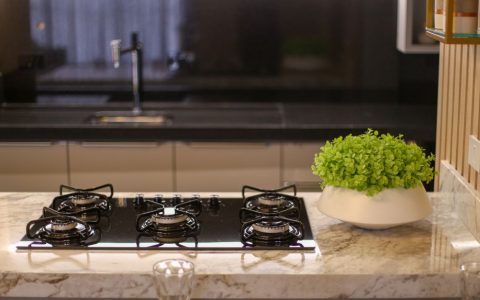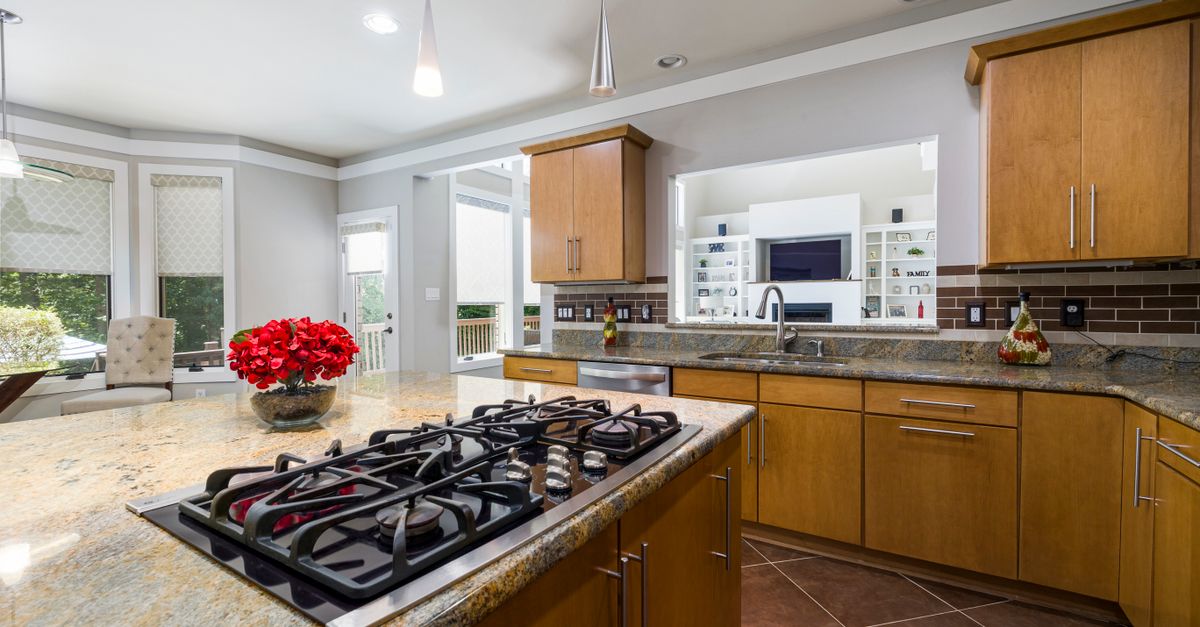
When planning a kitchen remodel that features a cooktop on an island or peninsula, one of the most critical design decisions you will face is how to clear smoke, grease, and cooking odors out of your living space. For decades, the standard choice has been a towering overhead range hood. However, minimalist interior design trends have driven many homeowners to consider a flush, rising downdraft ventilation system instead. Evaluating a downdraft cooktop vs overhead hood requires looking past glossy showroom aesthetics and examining the underlying physics of airflow, capture efficiency, and installation realities.
At its core, kitchen ventilation is an engineered system designed to capture airborne grease droplets, moisture, combustion byproducts, and smoke before they settle on your cabinetry, walls, and ceilings. How a ventilation system achieves this capture is where the two options diverge completely. Understanding these mechanical differences will help you determine which setup best aligns with your culinary habits and architectural constraints.
The Physics of Cooking Vapors: Up vs. Down
To understand why performance differs so drastically between these two appliance categories, you have to look at thermodynamics. When you heat food on a burner, whether gas or electric, the air directly above the pan becomes hot. Heated air expands, becomes less dense, and naturally rises. This upward thermal current carries steam, aerosolized oil droplets, carbon monoxide, and aromatic compounds straight up into the air.
An overhead hood is positioned directly in the path of this natural thermal plume. Because heat and smoke naturally travel upward, the hood simply needs to project a sufficient capture area and pull the air through its filters. Even a modest amount of suction can guide rising vapors into the exhaust duct because the physics of the room are working in the hood’s favor.
A downdraft system faces the exact opposite challenge. It must pull hot, buoyant air and grease-laden steam downward, away from its natural direction of travel. To force rising smoke and steam to reverse course and dive into a narrow intake slot located flush with or just behind the cooktop, a downdraft vent requires significantly higher static pressure and velocity. In essence, a downdraft system is fighting against basic thermodynamics.
Furthermore, air behaves fluidly around obstacles. When a pot sits on a burner, it acts as a physical barrier. Steam rising from the front edge of a skillet must travel outward and upward before any horizontal or downward draft can pull it backward toward a rear-mounted intake slot. If cross breezes from open windows or an HVAC register enter the room, they easily push these vapors off course, compounding the operational difficulty for downdraft units. Aerosolized grease particles, which range in size from sub-micron to visible droplets, possess momentum when they break free from popping oil in a frying pan. Overcoming that upward momentum requires an immense amount of localized suction power.
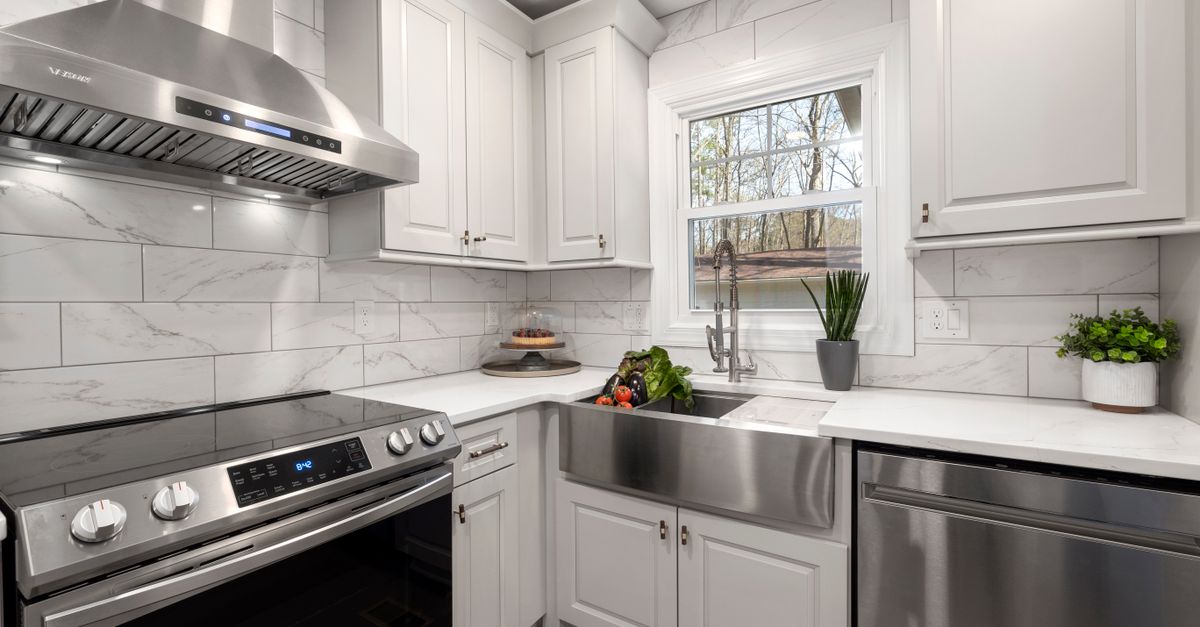
Evaluating Overhead Range Hood Performance
Overhead range hoods remain the undisputed champion of kitchen ventilation efficiency. Because they are mounted above the cooking surface, they catch pollutants at the peak of their upward journey. A well-designed overhead canopy acts like an inverted funnel, trapping stray wisps of smoke and steam even when burners on the front of the stove are utilized.
Capture efficiency is further enhanced by the canopy design itself. Canopies hold a reservoir of air, known as the capture volume, which temporarily traps steam that rises faster than the blower can evacuate it. This prevents billowing smoke from spilling out into the kitchen before the fan can draw it into the ductwork.
When matched with adequate CFM (cubic feet per minute) ratings and proper duct sizing, overhead hoods manage heavy-duty searing, deep frying, and high-heat wok cooking with minimal odor migration. They also offer flexible installation options, including wall-mounted, under-cabinet, and ceiling-suspended island configurations, making them adaptable to almost any room layout. Industry experts generally recommend that an island hood extend at least three inches past the cooktop perimeter on all sides to account for thermal plume expansion and ambient room drafts.
Another major advantage of overhead configurations is the ability to use baffle filters instead of mesh screens. Baffle filters trap grease by forcing air to change direction rapidly, separating heavy oil droplets out of the airstream and depositing them into collection troughs. These stainless steel baffles are exceptionally durable, dishwasher safe, and maintain consistent airflow even as grease accumulates during a long cooking session.
Understanding Downdraft Exhaust Limitations
Downdraft ventilation systems are undeniably sleek. When not in use, the intake tower retracts flush into the countertop or the back of the cooktop, leaving an unobstructed view across an open-concept kitchen. For homeowners who prioritize an uninterrupted sightline from the kitchen to the living room, this visual cleanliness is a major selling point.
However, performance trade-offs are inevitable. Because the intake vent sits at the level of the cookware, it is closest to the rear burners. Front burners present a major challenge; steam and smoke rising from front pans frequently billows past the low intake slot before the horizontal suction can pull them in. Consequently, users often find that downdraft systems struggle significantly when all four burners are active, particularly when searing meat on high heat.
To compensate for the lack of thermal assistance, downdraft blowers often require much higher CFM ratings and faster fan speeds. This increased velocity frequently translates to higher operating noise levels, making it difficult to converse or listen to music while cooking.
Additionally, the physical height of the rising intake tower—usually around 8 to 10 inches—provides some help, but it still falls well short of intercepting the full thermal plume generated by tall stockpots or large roasting pans. When steam billows up from a boiling pot on a front burner, it easily clears the top of the intake barrier, escaping directly into the room and settling onto surrounding surfaces.
Ducting Installation and Architectural Realities
No matter which ventilation method you choose, the exhaust must go somewhere. How that air exits your home introduces another major layer of comparison, particularly regarding installation complexity and cost.
Overhead island hoods typically require ductwork running straight up through the ceiling and out the roof. While this requires framing adjustments and roof penetrations, vertical duct runs are highly efficient. Gravity helps pull air upward, and smooth, straight duct runs maximize blower performance.
Downdraft systems require ductwork to run downward, underneath the cabinetry, and out through the floor or exterior wall rim joist. This geometry introduces several engineering hurdles:
- Subfloor Routing: Running large-diameter ducts (typically 6 to 8 inches round or equivalent rectangular ducting) beneath floor joists requires careful framing planning during new construction or major remodeling. If floor joists run perpendicular to the desired exhaust path, contractors must box out headers or route ducts through webbed floor trusses.
- Bends and Elbows: Every 90-degree turn in a duct run drastically reduces the effective CFM of your blower due to increased static pressure. Downdraft installations often require multiple bends to clear floor joists, plumbing lines, and electrical conduits.
- Space Consumption: The bulky blower motor for a downdraft system must be housed inside the cabinet directly beneath the cooktop, eating up valuable storage space for pots, pans, and pull-out waste bins.
Contractors must also verify that duct runs comply with local building codes regarding maximum total equivalent length, makeup air requirements for high-CFM blowers, and proper fire-damper installations where ducts penetrate structural assemblies.
The Critical Role of Makeup Air Systems
When selecting a high-performance kitchen ventilation system—whether an industrial-grade overhead hood or a high-CFM downdraft unit—homeowners must also consider the concept of makeup air. Modern US building codes, including the International Residential Code (IRC), increasingly mandate makeup air systems for any exhaust fan rated above 400 CFM.
When a powerful blower expels hundreds of cubic feet of air per minute from your home, it creates negative pressure inside the living space. If the house is tightly sealed with modern insulation and energy-efficient windows, this negative pressure can pull dangerous combustion gases backward down natural-draft appliance flues, such as water heaters, furnaces, or fireplaces. Furthermore, negative pressure makes exterior doors difficult to open and reduces the overall efficiency of your home’s HVAC system.
To balance indoor air pressure, a makeup air kit synchronizes with your cooktop ventilation, opening an outside air damper whenever the exhaust fan turns on. Installing a makeup air system adds significant complexity and expense to a kitchen renovation, requiring dedicated electrical interlocks and specialized ductwork that tempers incoming outside air before it enters the living space. Because downdraft systems often require higher CFM ratings to overcome adverse physics, they frequently trigger these mandatory makeup air requirements more often than modest overhead hoods.
Maintenance, Cleaning, and Long-Term Care
All kitchen ventilation systems accumulate grease over time, but the maintenance routine differs between overhead and downdraft units.
Overhead hood filters sit horizontally or at a slight angle overhead. While reaching up to remove mesh or baffle filters requires a step stool for some users, gravity ensures that captured grease drips down into collection trays or stays within the filter baffles rather than pooling in the mechanical housing.
Downdraft filters sit vertically inside a narrow slot. Spills, boil-overs, and heavy grease particles can easily find their way down into the internal mechanical tracks and blower housing if the filters are not cleaned religiously. Furthermore, the motorized pop-up mechanism introduces moving parts that can wear out, jam, or collect debris over years of daily kitchen use.
Routine upkeep for a downdraft unit also involves wiping down the interior guide tracks where food particles and moisture naturally settle during cooking. Ignoring this cleaning schedule can lead to sticky buildup that inhibits the motorized elevation system, requiring professional service calls to repair or replace drive gears and electronic limit switches.
Cost Comparison: Equipment, Labor, and Ductwork
Budget is often the deciding factor in kitchen remodels, and ventilation costs extend far beyond the sticker price of the appliance itself.
Overhead hoods range widely in price depending on whether you choose a simple under-cabinet model or a custom stainless steel island canopy with external blowers. However, installation labor is usually straightforward for experienced contractors, provided vertical ducting paths are clear of obstructions.
Downdraft systems carry distinct financial considerations. You must purchase both the cooktop (or a dedicated downdraft unit paired with a drop-in cooktop) and the high-powered blower motor kit, which are often sold separately. Furthermore, specialized subfloor ductwork, transition boxes, and cabinet modifications can substantially increase labor costs during installation.
When calculating total project cost, homeowners must also factor in potential electrical modifications. High-CFM downdraft systems and remote blower setups often require dedicated electrical circuits, and integrating makeup air systems adds hundreds or even thousands of dollars to the total mechanical budget.
Comparing Noise Levels and Blower Placement
A loud kitchen fan can turn meal preparation into an exhausting chore. Noise is measured in sones, where one sone is roughly equivalent to the quiet hum of a refrigerator.
Traditional overhead hoods place the blower motor directly above your head, which can create significant noise at high speeds. However, many high-end overhead systems allow for remote or exterior blowers—placing the motor on the roof or an outside wall—which dramatically quiets the kitchen.
Downdraft blowers, by contrast, are typically housed directly inside the kitchen cabinet right beneath the cooktop or in a remote crawlspace. Because the intake slot is mere inches from your ears when you stand at the stove, high-speed operation can feel loud and intrusive, even with insulated housing options.
Acoustic performance directly affects how often homeowners actually use their ventilation. If a hood or downdraft fan is uncomfortably loud at its highest setting, cooks tend to avoid turning it on, leading to lingering cooking odors and grease accumulation on surrounding surfaces regardless of the system’s theoretical CFM rating.
Frequently Asked Questions About Kitchen Ventilation
Homeowners evaluating ventilation choices often encounter specific technical questions regarding real-world application. Here are answers to common queries:
- Can I use a downdraft system with a gas cooktop? Yes, but with caveats. Gas burners generate more intense heat plumes and broader flame patterns than induction or electric elements, making it even harder for a downdraft vent to capture combustion byproducts, particularly on front burners.
- What CFM rating do I really need? For overhead hoods, a general rule of thumb is 100 CFM for every 10,000 BTUs of gas burner output (or roughly 300 to 600 CFM for standard kitchen setups). Downdraft systems often require 500 to 600 CFM minimums just to compensate for the horizontal pull geometry.
- Are recirculating downdrafts effective? If exterior ducting is completely impossible, some downdraft and overhead systems can be converted to recirculating mode using charcoal filters. However, recirculating systems only filter odors and grease; they do not remove moisture, heat, or combustion gases like carbon monoxide from the room.
Key Decision Criteria for Your Remodel
To determine whether an overhead hood or a downdraft system belongs in your kitchen, weigh these practical factors against your lifestyle:
- Cooking Style: If you frequently fry foods, sear steaks, use cast-iron skillets, or cook with all burners simultaneously, an overhead hood provides the necessary capture volume. If your cooking is primarily light boiling, simmering, and baking, a downdraft may suffice.
- Kitchen Layout: If your cooktop sits against a wall, an overhead or under-cabinet hood is almost always the superior and more economical choice. If you have an uncompromising island layout and strict architectural guidelines prohibiting ceiling ducts, a downdraft offers a viable alternative.
- Aesthetic Preferences: If you value an open, airy kitchen view with no visual obstructions between rooms, a retractable downdraft preserves that sightline.
- Ceiling vs. Floor Constraints: Evaluate your home’s framing. If running overhead ductwork through finished second-floor living space is impossible, subfloor downdraft ducting may be your only practical path to exterior venting.
- Maintenance Tolerance: Consider how often you are willing to clean filters and motorized components in tight spaces.
Conclusion
There is no universal winner in the debate between a downdraft cooktop and an overhead hood; the right choice depends entirely on your cooking habits, layout, and aesthetic priorities. If maximum smoke and grease capture is your top priority, a traditional overhead range hood remains the gold standard of kitchen ventilation physics. If open-concept sightlines and minimalist design trump heavy-duty cooking performance, a properly specified downdraft system can deliver the clean look you want, provided you account for its installation and operational trade-offs.
Before finalizing your kitchen layout, consult with an experienced general contractor and an HVAC professional to evaluate your home’s ducting paths and makeup air requirements. Making an informed choice early in the design phase ensures your kitchen remains comfortable, clean, and functional for years to come.