When a trusted ceiling fan starts making a rhythmic humming noise, wobbling violently on high speed, or refusing to turn on altogether, homeowners face a classic household dilemma. You stare up at the fixture wondering if you should attempt a ceiling fan motor repair vs replacement. At first glance, a ceiling fan seems simple enough—just a motor, a capacitor, a switch, and a few wooden or plastic blades. Yet, deciding whether to invest time and money into fixing an aging appliance or simply unhooking it for a modern upgrade requires a careful look at safety, repair costs, and long-term energy efficiency.
Understanding the internal mechanics of your fan helps clarify this choice. While swapping out a cheap pull chain or a burnt-out capacitor is a straightforward Saturday afternoon DIY project, dealing with internal motor winding damage or worn-out bearings crosses into territory where replacement usually makes more financial sense. This guide breaks down the true costs, labor requirements, and efficiency gains of fixing versus replacing your ceiling fan so you can make the smartest decision for your home.
The Anatomy of a Ceiling Fan Failure
Before jumping into a repair strategy, it helps to isolate exactly what is failing. Ceiling fans generally fail in one of three ways: electrical failure, mechanical bearing wear, or structural imbalance. Each issue carries a different level of repair complexity and cost.
Electrical failures usually manifest as a fan that hums loudly but refuses to spin, or one that only operates on a single speed. In many cases, the culprit is the capacitor—a small, inexpensive electronic component that gives the motor the electrical kick it needs to start. If the capacitor fails, replacing it costs under twenty dollars and takes about thirty minutes. However, if the motor windings themselves have overheated and fused together, you are looking at complete motor failure. Rewinding a fractional horsepower ceiling fan motor is practically unheard of for residential homeowners; it costs more in specialized labor and materials than purchasing an entirely brand-new fixture.
Mechanical failures center on the bearings. Sealed ball bearings inside the motor housing reduce friction as the rotor spins. Over years of continuous operation, the factory lubrication dries out, dust infiltrates the races, and the bearings begin to grind, squeak, or clatter. While bearings can technically be pressed out and replaced with exact-match replacements, the process requires specialized pullers, patience, and a high tolerance for frustration. For most homeowners, bearing noise is the canary in the coal mine signaling the end of the fan’s useful life.
Furthermore, internal wiring harnesses within the motor housing can become brittle over time. When residential fans operate continuously through hot summer months, the continuous thermal cycling causes copper wire insulation to micro-crack. If you attempt a mechanical repair and disturb these aging wires, you risk creating internal short circuits that render the unit unsafe. Understanding these structural boundaries prevents you from wasting valuable hours on a component that has structurally degraded beyond safe functional service limits.
Evaluating Repair Costs vs. Replacement Pricing
When calculating the financial viability of a repair, you must weigh the cost of parts against the price of a brand-new unit, factoring in your time or the hourly rate of a licensed electrician.
Minor repairs—such as replacing a speed control switch, swapping a capacitor, or tightening a loose electrical junction box—are almost always worth doing. These parts are inexpensive, widely available, and restore full functionality without requiring you to remove the heavy motor housing from the ceiling. If you can do the work yourself, your only investment is a screwdriver and a little bit of time. However, if you must hire an electrician for a service call just to diagnose a minor issue, the labor fee can quickly exceed the retail cost of an entry-level replacement fan.
Major repairs, such as replacing internal bearings or fixing a seized motor, tilt the scale toward replacement. Replacement ceiling fans span a wide price range, from basic builder-grade models to high-end architectural fixtures. Even factoring in the cost of a new unit, buying a replacement often eliminates the risk of hidden damage. When an older motor has overheated to the point of failure, the insulation on the internal copper wiring may have degraded, creating a latent fire hazard that a simple part swap will not fix. When balancing financial outlay against safety, purchasing a new appliance with a full manufacturer warranty is nearly always the more rational economic choice.
Consider also the ancillary components, such as remote control receivers, integrated LED light panels, and wall-control modules. On older fans, these parts may be proprietary, obsolete, or difficult to source. If a discontinued control board fails, retrofitting an aftermarket universal remote can be frustrating and unreliable. Buying a new fan ensures all electronic systems, handheld controls, and wall transceivers are matched, integrated, and fully supported by current parts availability.
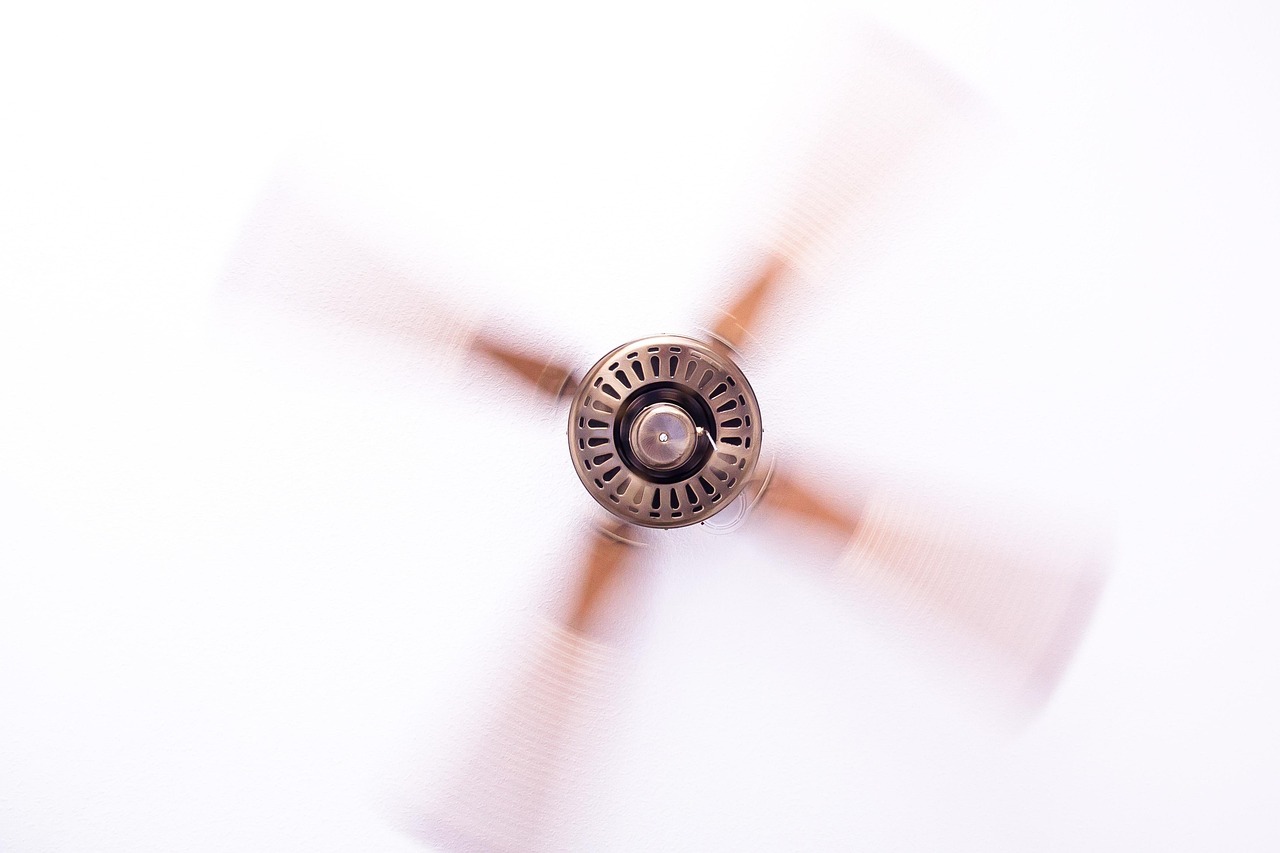
The Hidden Advantage: Energy Efficiency and Modern DC Motors
One of the most compelling arguments for replacing an aging ceiling fan rather than repairing it involves the dramatic evolution of motor technology. Older ceiling fans almost exclusively rely on AC (alternating current) induction motors. While reliable, these traditional motors draw considerable electrical current—often between 70 to 100 watts on high speed—and generate significant waste heat.
Modern ceiling fans, by contrast, increasingly feature DC (direct current) motors. A DC motor uses internal magnets and electronic controllers to achieve astonishing energy efficiency. Many high-performing DC fans consume as little as 20 to 30 watts of electricity while moving just as much, if not more, air than their older AC counterparts.
If your ceiling fan runs for many hours a day—such as in a master bedroom or a heavily used family room—the drop in your monthly electricity bill can offset a portion of the replacement cost over a few cooling seasons. Furthermore, DC motors run virtually silent, eliminating the low-frequency hum common in aging AC motors, and they typically offer six or more precise speed settings instead of the traditional three.
When evaluating energy consumption, it helps to calculate the cumulative kilowatt-hours (kWh) consumed over an annual cooling season. An older 90-watt AC fan running 12 hours a day for four summer months uses significantly more electricity than a modern 25-watt DC model under the exact same schedule. Over a multi-year period, the cumulative electricity savings of a DC motor can cover a substantial percentage of the purchase price of the new unit, transforming the replacement from a pure expense into an efficiency investment.
Diagnosing Common Issues: Should I Repair or Replace Ceiling Fan?
To help you decide whether your specific situation warrants a toolbox or a trip to the home center, consider the following common scenarios:
- Scenario A: The fan hums and won’t spin, but the blades spin freely by hand. This is the classic symptom of a failed capacitor. It is an inexpensive, easy repair that favors fixing the unit.
- Scenario B: The fan makes a grinding or squealing noise that persists even after lubrication. This indicates worn-out motor bearings. While repairable, it requires extensive disassembly and is usually a strong indicator for replacement, especially if the fan is over ten years old.
- Scenario C: The fan wobbles violently despite blade balancing kits and tightening. If the wobble originates from a bent motor shaft or a warped internal housing rather than unbalanced blades, structural integrity is compromised. Replacement is the safest path.
- Scenario D: The fan works, but the light kit is outdated, incompatible with modern LED bulbs, or flickering. Integrated lighting failures can sometimes be bypassed with external fixtures, but upgrading to a modern unit with built-in, dimmable LED modules provides better illumination and lower energy consumption.
Systematic troubleshooting prevents guesswork. By narrowing down the symptom to its precise mechanical or electrical origin, you avoid purchasing unnecessary replacement parts or wasting hours wrestling with a motor housing that has reached the end of its useful engineering lifecycle.
Ceiling Fan Lifespan Limits and Wear Factors
Appliances do not last forever, and ceiling fans are no exception. Understanding typical ceiling fan lifespan limits helps prevent you from sinking money into a sinking ship. A standard residential ceiling fan installed in a climate-controlled room typically lasts between 10 and 15 years. Fans installed on covered outdoor porches or in humid environments like bathrooms often experience accelerated corrosion and electrical wear, shortening their lifespan to 5 to 8 years.
As insulation on internal wiring ages, it becomes brittle due to constant thermal expansion and contraction from motor heat. When you attempt to repair a 15-year-old fan by moving wires around to replace a switch or capacitor, you run a high risk of cracking old wire insulation, creating short circuits or electrical hazards. If your fan has crossed the decade mark and has developed internal motor issues, treating it to a graceful retirement is generally the safest engineering choice.
Environmental factors play a massive role in premature wear. Coastal homes exposed to salt air suffer from galvanic corrosion on aluminum housings and steel fasteners. Similarly, industrial or agricultural environments with airborne particulates can foul bearings faster than standard suburban dust. Keeping these operational realities in mind ensures your repair versus replacement calculus accounts for the specific environmental stress your ceiling fan experiences daily.

Safety Considerations and Installation Overhead
Before unboxing a replacement or taking apart an existing fixture, safety must take center stage. Working overhead while balancing on a ladder requires careful attention to electrical safety. Always shut off power at the main circuit breaker panel, and verify that the circuit is dead using a reliable non-contact voltage tester before touching any wires.
Weight and ceiling box compatibility represent another major factor in the repair-versus-replacement equation. Modern building codes require ceiling fans to be supported by heavy-duty electrical boxes securely braced to ceiling joists. If you are replacing an older fan with a much heavier modern unit featuring integrated smart controls and solid wood blades, you may need to upgrade the electrical box in the ceiling. Conversely, if you are simply repairing an existing fan in its current location, you bypass the overhead of inspecting and upgrading electrical mounting hardware.
Labor time is also worth calculating. Repairing internal motor components requires taking the entire heavy assembly down, disassembling the housing on a workbench, sourcing specialized parts, and reinstalling it. Replacing the fan with a new unit takes a similar amount of physical labor, but guarantees you a fresh manufacturer warranty, spotless aesthetic condition, and zero guesswork regarding hidden internal wear. Always evaluate whether you have the proper tools, physical endurance, and electrical confidence before tackling overhead fixture repairs.
Common Mistakes Homeowners Make
When tackling ceiling fan maintenance, homeowners often fall into a few predictable traps:
- Ignoring the blade balance. Many people assume a noisy or vibrating fan is failing mechanically when the blades are simply out of track or dusty. Always check blade alignment and cleaning before assuming the motor is bad.
- Over-lubricating sealed bearings. Putting standard multi-purpose oil into bearings that are not designed for user lubrication can attract dust and hair, causing them to gum up and fail prematurely.
- Buying cheap replacement parts of dubious origin. If you do opt to replace a capacitor or speed switch, use exact electrical specifications (voltage and microfarad ratings) to prevent motor overheating.
- Underestimating DIY installation risks. Ceiling fans are heavy. Attempting to hold a heavy motor housing with one hand while wiring with the other without a hook or helper is a recipe for dropped equipment and damaged drywall.
Avoiding these common pitfalls saves time, prevents accidental property damage, and ensures that whatever action you take—whether a minor component replacement or a full fixture upgrade—is executed safely and correctly the first time.
Making Your Final Decision
The choice between repairing or replacing your ceiling fan ultimately hinges on three pillars: the cost of the fix relative to a new unit, the age of the appliance, and the efficiency gains of modern technology. If your fan is less than five years old and simply needs a three-dollar capacitor or a new pull chain, repairing it is a quick win. If your fan is over a decade old, makes persistent grinding noises from the motor core, or lacks the energy efficiency of modern DC designs, unhooking it and installing a fresh, warrantied replacement is the smartest investment for your home’s comfort and your utility budget.
By applying a structured economic framework to your assessment, you remove emotion and guesswork from home maintenance. Keep safety paramount, respect appliance lifespan limits, and enjoy the cooling comfort and efficiency of a well-maintained or brand-new ceiling fan.