If your daily workflow involves transcribing physical invoices or medical charts, following a desktop document holder setup guide can save your neck from chronic strain. Most remote professionals make the critical mistake of laying paperwork flat on the desk surface beside their keyboard or propping it haphazardly against a coffee mug. Every time you shift your gaze from the glowing monitor to the flat desktop, your cervical spine must flex downward and rotate laterally. Multiply that motion by several hundred data entry cycles a day, and you invite chronic muscular fatigue, tension headaches, and long-term repetitive strain injuries.
Implementing an effective copyholder system transforms how you handle paper-to-screen tasks. By elevating physical copy to the exact plane of your primary display, you eliminate the vertical drop that forces your neck muscles to work overtime. This guide explores the mechanical principles, physical positioning rules, and equipment choices required to build a strain-free workstation tailored for intensive administrative tasks.
Understanding the Mechanics of Paper-to-Screen Strain
To appreciate why a dedicated copyholder matters, consider the physics of human posture. The adult human head weighs roughly ten to twelve pounds when balanced neutrally over the spine. As you tilt your chin downward to read a document lying flat on your desk, the effective weight load on your cervical vertebrae increases exponentially due to leverage. Over an eight-hour shift, holding your head at a forty-five-degree downward angle requires continuous isometric contraction from your trapezius and suboccipital muscles.
Furthermore, your eyes experience frequent focal adjustments. Shifting between a vertical computer screen positioned twenty inches away and a horizontal piece of paper positioned twelve inches away forces the ciliary muscles inside your eyes to constantly flex and relax. This relentless micro-adjustment leads directly to digital eye strain, blurred vision, and mental fatigue. A proper copyholder brings the source material into the same focal plane and viewing distance as your monitor, drastically reducing both visual and musculoskeletal stress.
When this awkward posture compounds day after day, the muscle fibers in the upper back and neck adapt by shortening or tightening. This protective spasm can cause trigger points to form, radiating pain up into the skull and down into the shoulder blades. Many administrative professionals mistake this occupational fatigue for normal work stress, failing to realize that their physical desk topology is the root cause. By altering the angle of incidence between your eyes and your reference material, you disrupt this cycle of physical degradation.
Evaluating Hardware: Weighted Bases vs. Clamp-On Arms
Before positioning your new hardware, you must select the right physical platform for your desk layout. Document holders generally fall into three structural categories, each offering distinct advantages and limitations for remote work environments.
Weighted Desk Stands
Weighted desktop stands feature a heavy metal base and an easel-style backplate. They sit freely on your desktop without requiring permanent installation, making them ideal for renters or people who frequently rearrange their office layouts. A good weighted stand should feature a non-skid rubber bottom to prevent sliding when you turn pages or apply pressure with a pen.
The primary advantage of a weighted base is mobility. If you need to clear your desk entirely to write by hand or assemble physical packets, you can lift the entire unit and set it aside in seconds. However, their footprint is larger than clamp-on alternatives, and extremely bulky binders can occasionally cause a lightweight weighted stand to tip forward if the center of gravity is mismanaged.
Articulated Clamp-On Arms
Clamp-on copyholders mount directly to the edge of your desk or share a pole mount with your primary monitor arm. These units excel at saving precious desktop real estate. By suspending the document platform in mid-air, they allow you to pull the paperwork forward, push it back, or rotate it with minimal effort. However, they require a sturdy desk surface and adequate edge clearance for the C-clamp or grommet base.
Articulated arms shine in environments where desk space is at an absolute premium. They let you float your paperwork right over the base of your keyboard or tuck it tightly against the side of your monitor bezel. The trade-off is mechanical complexity; joints can loosen over time, requiring periodic hex-key adjustments to maintain arm tension.
Desktop Easels and Slanted Boards
Slanted writing boards double as document holders and writing surfaces. They provide a gentle slope, usually between fifteen and twenty-five degrees, which supports both reading and light note-taking. While excellent for hand-written edits, they do not hold documents vertically, meaning your head angle will still drop lower than if you used an elevated vertical stand.
When choosing among these options, consider the weight and format of your typical paperwork. Single-sheet invoices require minimal clamping force, whereas thick legal pads or heavy ring binders demand rigid backplates and reinforced lip supports that can withstand heavy page-turning pressure.
Strategic Placement: Left, Right, or Center
Once you acquire your hardware, placement is the single most important factor in preventing repetitive strain. Where you mount the holder determines how much your neck rotates throughout the day.
The Primary Monitor Alignment Rule
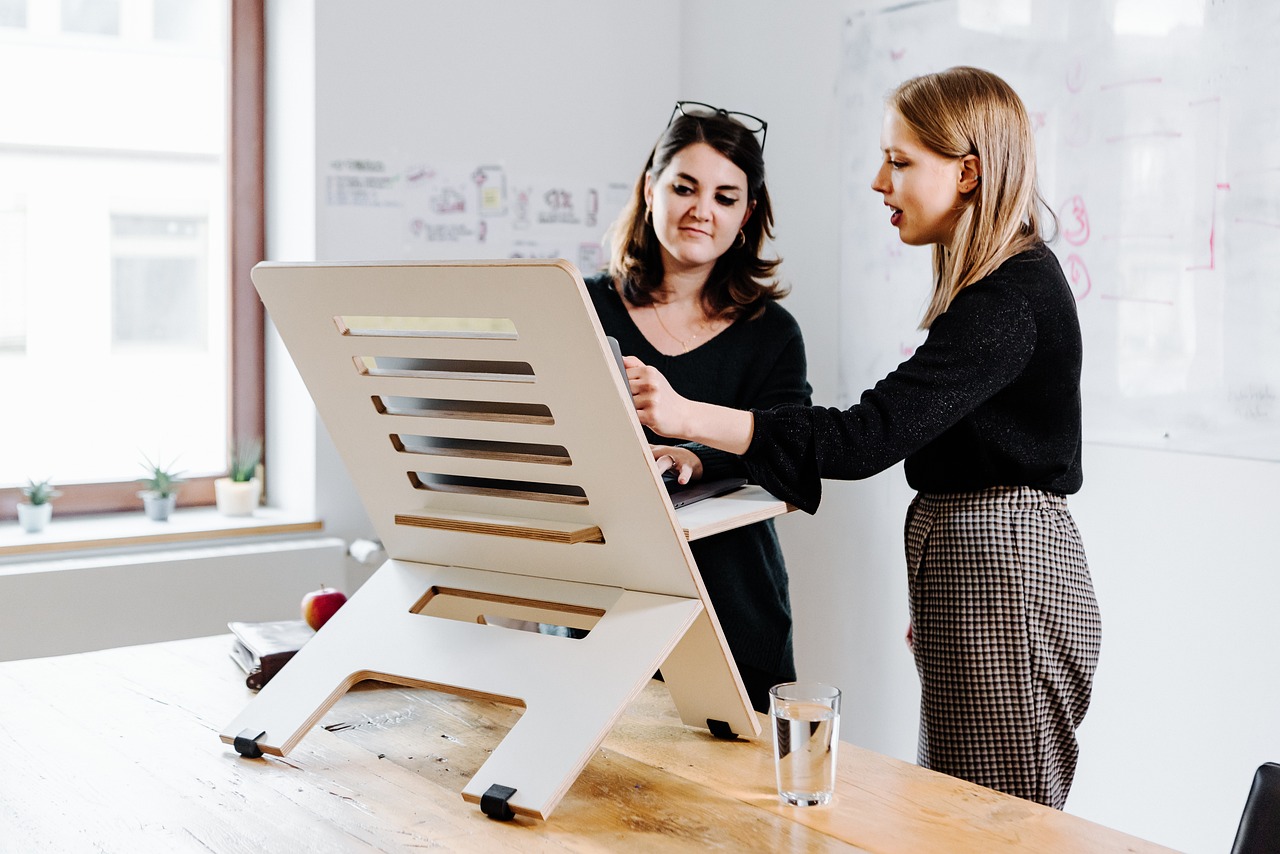
Your document holder should sit immediately adjacent to your primary monitor, touching or nearly touching the bezel. If you place your monitor directly in front of you but position your document holder on the far left edge of the desk, your neck will remain in a state of constant rotation. This asymmetrical posture fatigues one side of your neck while overstretching the other.
Matching Screen Height and Depth
The top edge of your document holder should align roughly with the top edge of your monitor, and the center of the document should sit at the same viewing depth. Placing the paper at the same height as the screen ensures that your horizontal gaze remains level. When you glance from left to right between screen and paper, your eyes move laterally rather than diagonally up and down, preserving cervical neutrality.
Left-Hand vs. Right-Hand Placement
If you are right-handed and primarily mouse-driven, placing the document holder on the right side of your monitor can crowd your mouse hand, forcing your arm into an awkward, abducted posture. For most data entry specialists, placing the document holder on the left side of the primary monitor works best, leaving the right hand free for mouse navigation or numeric keypad entry. Conversely, left-handed workers may prefer the right side, provided desk space permits.
Furthermore, evaluating your dominant eye can influence placement. Most individuals have a dominant eye that naturally processes visual details faster. Aligning your primary reference documents with your dominant side can streamline reading speed and decrease cognitive load during intense transcription tasks.
Adjusting Tilt, Angle, and Viewing Distance
Physical positioning is only half the battle; the geometry of the copyholder itself dictates how hard your eyes and neck must work.
Most quality holders allow you to adjust both the tilt angle and the height of the backplate. Set the tilt angle so that the face of the document is perpendicular to your line of sight. If the document tilts backward toward the desk, the top lines will be farther away than the bottom lines, forcing your eyes to constantly refocus. Aim for a tilt angle that matches the tilt of your computer monitor, usually between ten and twenty degrees back from vertical.
Keep the viewing distance consistent. The distance from your eyes to the physical document should match the distance from your eyes to your computer screen. If your monitor is twenty-four inches away, your document holder should be roughly twenty-four inches away. This parity prevents your eyes from fatiguing as you scan back and forth.
Pay attention to ambient lighting interactions when adjusting these angles. A slight tilt modification can prevent overhead fluorescent lights or desk lamp bulbs from creating a harsh glare directly off the paper surface into your retinas. Always test your final angle by reading a full page of typical text under your normal working illumination conditions.
Managing Multi-Page Documents and Clips
A wobbly clip or a flimsy backplate will frustrate even the most disciplined remote worker. When evaluating or setting up your holder, pay close attention to the paper retention mechanism.
- Top-Edge Spring Clips: Ensure the top clamp exerts enough pressure to hold a thick stack of paper without tearing the top margins, but not so much pressure that you cannot easily slip single sheets in and out.
- Adjustable Line Guides: A transparent magnetic or sliding line guide helps you track your place during intensive data entry. Position the guide immediately below the line you are currently transcribing.
- Weighted Lip Support: A bottom ledge or lip is essential for supporting heavy binders, opened folders, or thick catalogs without sliding off the tray.
For extensive multi-page documents, consider incorporating page-holding side clips or flexible elastic bands that prevent loose sheets from flapping in drafts from HVAC vents or desktop fans. Small details like these prevent micro-interruptions in your workflow, keeping your focus anchored on accuracy and speed.
Integrating Document Holders into Dual-Monitor and Ultra-Wide Workstations
As multi-screen setups become the standard for modern administrative environments, finding space for physical paperwork grows increasingly complex. If you utilize a dual-monitor array or a sprawling ultra-wide curved screen, your desk topology demands a more strategic approach to copyholder integration.
In a dual-monitor setup where screens are arranged side-by-side, placing an external document holder next to the outer bezel of either monitor can push your gaze too far to the periphery. Instead, many ergonomic specialists recommend placing a low-profile inline document holder directly *between* the keyboard and the bottom of the monitors if you use a stacked monitor configuration, or utilizing a specialized clamp-on arm that hovers your paperwork right in the gap between dual vertical screens.
When working with an ultra-wide monitor, your screen real estate often eliminates the need for a second physical display, freeing up valuable lateral desk space. In this scenario, placing your weighted or clamp-on document holder immediately to the side of the curved display creates a seamless visual triangle. Your eyes can pivot effortlessly from the software data entry field on the curved screen to the physical invoice on the adjacent copyholder without requiring excessive neck twisting.
Mitigating Environmental Factors: Lighting, Glare, and Contrast
Physical positioning alone cannot guarantee comfort if environmental factors sabotage your visual ergonomics. Paper documents reflect ambient light very differently than backlit LED computer monitors, creating unique challenges for contrast and eye comfort.
Glossy paper stocks—such as those found in corporate annual reports, glossy catalogs, or coated invoices—act like miniature mirrors. If your desktop lamp or a nearby window casts light directly onto the document holder, that light reflects straight into your eyes, forcing you to squint and unconsciously crane your neck forward to find a shadow-free viewing angle. To resolve this, position your task lighting so that illumination approaches your desk from the side rather than from directly behind or in front of the copyholder.
Furthermore, ensure that the contrast ratio between your physical workspace and your digital screen remains balanced. If your physical documents sit in total shadow while your computer monitor blazes at maximum brightness, your eyes must constantly adapt to disparate luminance levels, triggering fatigue and headaches by midday.
Step-by-Step Installation and Calibration Checklist
Use this practical workflow to set up your document holder from scratch:
- Clear a twelve-inch zone immediately to the left (or right) of your primary monitor base.
- Unbox your weighted stand or secure your clamp-on arm to the desk edge, ensuring zero wobble.
- Adjust the height of the copyholder so its vertical center matches the vertical center of your monitor screen.
- Set the tilt angle so the face of the document is perpendicular to your natural line of sight.
- Attach your reference material using the top clip and adjust the bottom ledge to support the weight.
- Slide the line guide into position below your starting line.
- Sit in your chair with your feet flat on the floor, back against the lumbar support, and test a five-minute transcription session. Check for any tension in your shoulders or neck.

Common Setup Mistakes to Avoid
Even with the best equipment, simple configuration errors can undermine your ergonomic efforts. Watch out for these frequent missteps:
- Placing Documents Flat: Never revert to leaving papers flat on the desk between your keyboard and monitor. This forces immediate cervical flexion.
- Creating Visual Clutter: Do not stack multiple open folders on top of one holder. Swap out reference materials cleanly to maintain a clear line of sight.
- Ignoring Lighting Glare: Position your desk lighting or window blinds so that glare does not reflect off glossy paper surfaces or plastic document protectors into your eyes.
- Over-Tightening Articulated Joints: If you use an arm, adjust the tension bolts so it stays in place without requiring brute force to reposition.
- Neglecting Focal Distance Parity: Placing your paperwork significantly closer or farther than your display forces continuous lens accommodation inside the eye, accelerating visual exhaustion.
Ergonomic Stretching and Micro-Breaks for Heavy Data Entry
Hardware optimization provides the structural foundation for pain-free data entry, but sedentary office work inherently demands active physical maintenance. Even with a perfectly calibrated document holder, holding any static posture for hours at a time restricts blood flow to your muscles and joints.
Integrate targeted micro-breaks into your hourly workflow. Every sixty minutes, pause your transcription work for sixty seconds. Perform gentle cervical retractions—often called chin tucks—to realign the cervical vertebrae over your shoulders. Roll your shoulders backward in slow, controlled circles to release tension accumulated in the trapezius muscles from reaching for your mouse and keyboard.
Additionally, practice the twenty-twenty-twenty rule for your eyes: every twenty minutes, look at an object at least twenty feet away for at least twenty seconds. While your document holder successfully keeps your screen and paper on a similar near-focal plane, gazing into the distance resets your ciliary eye muscles and prevents long-term digital eye strain.
Frequently Asked Questions About Desktop Document Holders
Can I use a document holder if I wear progressive lenses or bifocals?
Yes, but placement requires extra care. Progressive lens wearers often tilt their heads backward to read through the lower reading segment of their glasses. If your document holder is positioned too high, it can force an uncomfortable hyperextension of the neck. Lower the top edge of the copyholder slightly below eye level so you can view the text through the intermediate or reading zones of your lenses without tilting your chin up.
Are inline document holders that sit between the keyboard and monitor effective?
Inline writing boards and low-profile slope boards work exceptionally well for users who perform heavy handwriting alongside keyboard entry. However, for digital data entry from multi-page vertical reports, a side-mounted vertical holder is generally superior because it preserves optimal keyboard proximity while matching monitor height.
How do I clean and maintain my copyholder?
Depending on whether your unit is constructed from steel, aluminum, or acrylic, wipe down the backplate and clip mechanisms periodically with a microfiber cloth and mild surface cleaner. Avoid abrasive chemical sprays that can scratch transparent acrylic line guides or degrade non-skid rubber base pads.
Maintaining Ergonomic Habits Over Time
Hardware alone cannot completely eliminate strain if your daily habits undermine your posture. Even with a perfect setup, static muscle loading occurs when you sit in the exact same position for hours on end. Make a habit of stepping away from your workstation every hour to stretch your neck, shoulders, and wrists.
Periodically check your posture during heavy transcription tasks. If you notice your chin creeping forward toward the monitor or your shoulders elevating toward your ears, pause, reset your lumbar posture, and adjust your workspace components. By combining intentional hardware placement with mindful body mechanics, you can protect your cervical spine and maintain high productivity throughout your remote work career.