refurbished commercial food dehydrator warranty risk US is the central question in this guide. Here’s how to evaluate the options, avoid common mistakes, and make a practical decision.
When late-summer harvests hit their peak, standard plastic countertop dehydrators quickly become severe bottlenecks for home growers. For homesteaders, small orchard owners, and serious food preservationists, purchasing a high-capacity stainless steel machine feels like a game-changing upgrade. These heavy-duty appliances offer massive cabinet volume, high-wattage heating elements, and forced-air circulation systems capable of processing dozens of pounds of produce or jerky in a single batch. However, brand-new commercial dehydrators frequently carry price tags ranging from $1,500 to over $5,000. This steep cost pushes many buyers toward restaurant liquidators, commercial auctions, and online reconditioned equipment outlets. Navigating the refurbished commercial food dehydrator warranty risk US consumers encounter requires looking past low sticker prices to evaluate mechanical fatigue, electrical safety hazards, and restrictive fine print.
While buying secondhand machinery can save substantial money upfront, commercial food dehydrators operate under continuous thermal, mechanical, and environmental stress. Unlike residential kitchen appliances that run for a few hours once a month, commercial units are routinely pushed through multi-day drying cycles in humid, demanding environments. Purchasing secondhand gear means taking on potential heating element oxidation, worn motor bearings, degraded thermal safety cutoffs, and often misleading seller claims. Before investing in a refurbished commercial unit, you must understand how secondary-market coverage functions, how to spot hidden component failure, and how to protect both your safety and your financial investment.
The Reality of Commercial Equipment Warranties on the Secondary Market
The single most widespread misconception among home buyers purchasing commercial kitchen gear is assuming that a manufacturer warranty automatically transfers to a new owner. In the commercial food service sector, original equipment manufacturer (OEM) warranties are almost universally non-transferable. The moment an enterprise machine leaves its original commercial buyer—whether through a liquidation sale, bankruptcy auction, or private trade-in—the factory coverage terminates immediately. Even if a machine is less than six months old and saw minimal use at a short-lived catering business, the original manufacturer will rarely honor parts or labor guarantees for a secondary home or homestead owner.
This structural reality forces buyers to rely entirely on seller-provided protection plans. On the secondary market, guarantees generally fall into three distinct categories, each offering vastly different levels of protection and risk:
1. Factory-Refurbished (Direct from Manufacturer)
When you purchase a reconditioned unit directly from the original equipment manufacturer or their officially authorized refurbishing partner, you receive the strongest protection available on the secondhand market. These units typically originate from customer satisfaction returns, minor cosmetic shipping damage, or trade-show demonstration stock. Certified technicians inspect the internal wiring, replace worn heating coils or fan assemblies with fresh OEM parts, update firmware on digital controllers, and perform calibrated thermal testing.
Factory-refurbished dehydrators usually come with a limited seller warranty lasting between 90 days and one full year. While shorter than the standard 1- to 3-year commercial original warranty, this coverage is supported by an established service infrastructure and readily available parts inventory. If a component fails within the specified warranty period, the manufacturer will typically supply replacement modules or arrange for depot service.
2. Dealer-Refurbished (Specialty Restaurant Supply Vendors)
Established commercial kitchen dealers buy used gear, run it through an in-house service department, and resell it with a short, store-backed guarantee. The technical competence of these dealers varies widely across the industry. Top-tier equipment dealers employ certified appliance technicians who load-test electrical circuits, replace drifting thermostats, clean interior air ducting, and measure airflow velocity. Lower-tier vendors may do little more than clean the stainless steel exterior with chemical spray and turn the power switch on for five minutes to confirm the panel lights up.
Dealer warranties usually span 30 to 90 days and are frequently limited to “parts-only” or “bench service” terms. Under a bench-service agreement, the buyer is entirely responsible for freight shipping costs required to send an 80-to-120-pound commercial stainless steel machine back to the dealer’s facility—an expense that can easily exceed $150 to $250 each way, completely wiping out the initial discount.
3. As-Is Liquidator and Auction Sales
Commercial equipment liquidators, surplus resellers, and online auction houses offer the lowest purchase prices, but they provide absolutely zero warranty coverage. In the liquidator space, terms like “refurbished” or “reconditioned” are often used as generic marketing buzzwords to describe basic surface cleaning. Liquidators rarely employ certified service technicians, do not perform electrical resistance checks on high-wattage components, and do not carry replacement parts inventory. Once the transaction completes, any hidden short circuit, worn motor, or missing safety sensor becomes entirely your financial problem.
| Warranty Source | Typical Duration | Coverage Scope | Freight Shipping Responsibility | Overall Risk Level |
|---|---|---|---|---|
| Factory Refurbished | 90 Days – 1 Year | Parts & Labor (Depot Service) | Varies (Occasionally Covered) | Low |
| Specialty Dealer | 30 – 90 Days | Parts Only / Bench Service | Buyer Pays Both Ways | Moderate |
| Liquidator / Auction | None (As-Is) | No Coverage Provided | Buyer Assumes All Costs | High |
Deciphering Common Warranty Exclusions and Fine Print
Even when a third-party seller or dealer offers a written warranty on a commercial food dehydrator, the underlying fine print often contains clauses that restrict coverage for home or homestead buyers. Carefully analyzing the terms before making a payment is vital to avoiding unexpected repair costs.
The Commercial-Use-Only Clause
Many commercial equipment warranties explicitly state that coverage is void if the appliance is installed or operated within a residential building, non-commercial farm structure, or residential garage. Manufacturers draft these restrictions because commercial units are designed to run on dedicated electrical circuits, within strictly controlled ambient temperature ranges, and under commercial ventilation hoods. If a technician determines that a reported failure occurred while operating the unit in an unconditioned barn or home pantry, the warranty claim will almost certainly be denied.
Exclusion of Wear-and-Tear Components
Warranty policies routinely exclude components subject to ongoing mechanical or thermal stress. On a commercial food dehydrator, excluded items commonly include silicone door gaskets, mechanical timer knobs, indicator lights, mesh tray liners, and heating elements subjected to oxidation. If a heating coil fails three weeks after delivery, the seller may classify the coil as a consumable item rather than a warrantable defect.
Exclusion of Freight and On-Site Service Labor
In the commercial food equipment industry, dispatching a mobile service technician is costly. Standard commercial service call-out rates often range from $120 to $200 per hour, plus travel surcharges. Unless a warranty policy specifically explicitly guarantees coverage for on-site labor or return shipping, buyers should assume they are responsible for transporting heavy stainless steel machinery to an authorized repair facility at their own expense.
Heating Element Risks and Thermal Degradation
The heating assembly is the core functional system of any commercial dehydrator. Commercial units rely on heavy-gauge metal sheath heaters (calrod elements) or open-wire Nichrome coil grids pulling anywhere from 1,200 to over 4,000 watts. Although these industrial components are built for longevity, thousands of heating cycles naturally lead to physical and electrical degradation over time.
Sheath Oxidation and Micro-Cracking
In sheath-style heating elements, a Nichrome resistance wire runs through the center of a tubular metal casing filled with compacted magnesium oxide powder, which functions as both an electrical insulator and heat conductor. Over thousands of operational hours at high drying temperatures (130°F to 165°F), moisture, acidic food vapors, and repeated expansion and contraction break down the outer metal tubing.
On used commercial machines, microscopic cracks can develop along the heating element sheath. When humid air, fruit sugars, or meat juices penetrate these hairline cracks during operation, the internal magnesium oxide insulation absorbs moisture. This lowers its electrical insulation resistance, causing current leaks to the metal ground chassis, tripping ground-fault circuit interrupters (GFCIs), or causing destructive short circuits that ruin internal control boards.
Thermal Sag and Localized Hot Spots
Open Nichrome wire coils supported by ceramic insulators frequently suffer from structural sagging after prolonged use. As the metal alloy repeatedly softens under intense heat, gravity pulls the wire loops downward. If adjacent loops sag far enough to touch one another, the overall electrical resistance of the circuit drops sharply. This causes rapid localized overheating—a phenomenon known as thermal hot-spotting.
Hot spots create uneven internal cabinet temperatures, spoiling sensitive food products by creating cold zones elsewhere in the airflow path. More critically, sagging elements pose a serious fire risk if dry produce fragments, jerky grease, or parchment paper fall directly onto glowing, red-hot wire segments.
Fan Motor Exhaustion and Airflow Degradation
Proper air velocity is just as critical as consistent thermal output when drying food at scale. Without uniform, high-volume airflow, elevated heat simply cooks produce in its own trapped moisture rather than evaporating it. Commercial dehydrators rely on heavy-duty shaded-pole or permanent split capacitor (PSC) motors driving axial fan blades or centrifugal blowers.
Bearing Fatigue and Lubricant Breakdown
Dehydrator fan motors operate continuously within hot, humid exhaust channels. Over time, high operating temperatures evaporate internal bearing grease. As sleeve or ball bearings dry out, mechanical friction increases exponentially. This wear manifests as loud motor hum, high-pitched squealing, or severe vibration transmitted through the stainless steel cabinet.
A worn blower motor operates at significantly reduced revolutions per minute (RPM). In a multi-tray commercial dehydrator, even a 10% to 15% reduction in fan speed disrupts laminar airflow across the tray stack. Reduced airflow causes moisture to linger over center trays, dramatically extending drying times, causing fruit leather to sour, and creating conditions where mold or bacteria can develop before food reaches safe water activity levels.
Imbalanced Blower Wheels and Air Short-Circuiting
In pre-owned commercial equipment, fan blades and centrifugal blower wheels often accumulate thick layers of aerosolized grease, sugar residue, and dust. This sticky buildup alters the dynamic balance of the spinning assembly, accelerating bearing breakdown and causing severe shaft wobble. Additionally, if internal air distribution baffles or duct plates were bent or left out by a previous operator during cleaning, air will short-circuit—looping directly from the heating coils to the exhaust duct without circulating through the food trays.
Thermal Fuses, Safety Cutoffs, and Fire Hazards
To comply with safety standards, commercial dehydrators include multi-stage thermal protection systems designed to cut power before cabinet temperatures reach dangerous levels. Recognizing how these safety devices operate is vital when examining a secondhand machine.
Primary Thermostats vs. High-Limit Cutoff Switches
Commercial dehydrators utilize a primary operating thermostat (either a capillary tube bulb sensor or an electronic thermistor) to regulate internal temperatures. A secondary high-limit snap-disc thermostat provides crucial backup safety. If the primary thermostat fails in a closed circuit position—continually energizing the heating elements—the high-limit switch is designed to automatically open and cut power when internal temperatures cross safety limits (typically 180°F to 200°F).
One-Time Thermal Fuses (Thermal Cutoffs)
In addition to auto-resetting high-limit switches, commercial dehydrators contain non-resettable thermal fuses wired in series with the main heating element circuit. These thermal cutoffs (TCOs) contain a temperature-sensitive organic pellet or low-melting-point alloy spring that melts and permanently opens the circuit if temperatures reach critical extremes (usually 220°F to 240°F).
A hazardous condition occurs when a worn fan motor stops spinning while the high-wattage heating element continues drawing full power. Without airflow to remove thermal energy, temperatures in the heating chamber rise within seconds. If the high-limit switch fails to react, the thermal fuse melts to prevent a structural fire.
Unqualified repair shops or irresponsible sellers sometimes bypass a blown thermal fuse by installing a jumper wire rather than replacing the fuse and fixing the failed motor. Operating a commercial dehydrator with a bypassed thermal safety switch introduces severe fire hazards into residential kitchens, workshops, or farm outbuildings.

Step-by-Step Electrical and Mechanical Inspection Guide
When purchasing a refurbished commercial dehydrator or testing a unit during a seller’s return window, complete a detailed diagnostic inspection before processing food. Follow this step-by-step protocol to identify mechanical or electrical defects:
1. Unplugged Visual and Mechanical Verification
- Inspect Power Cord and Electrical Plug: High-capacity commercial dehydrators drawing over 1,500 watts frequently use NEMA 5-20P (20-amp, 120V) or NEMA 6-20P (220V) heavy-duty grounded plugs. Check for discolored prongs, cracked rubber jackets, or signs that a previous owner cut off the grounding pin to fit a standard 15-amp household outlet.
- Check Cabinet Geometry and Door Gaskets: Confirm that the cabinet chassis is square and doors shut tightly. Hardened, brittle, or torn door gaskets allow heat to leak, forcing heating elements to work continuously and raising energy costs.
- Examine Heating Elements and Ducting: Direct a bright flashlight into the heating chamber. Look for surface blistering, flaking metal, sagging coils, or severe carbon deposits. Verify that protective wire mesh screens are intact to prevent food items from contacting live heating elements.
- Rotate Fan Assemblies Manually: With the power cord disconnected, reach into the fan housing and spin the fan blade or blower wheel by hand. It should spin freely, smoothly, and silently, with no scraping, resistance, or shaft wobble.
2. Multimeter Electrical Resistance Testing
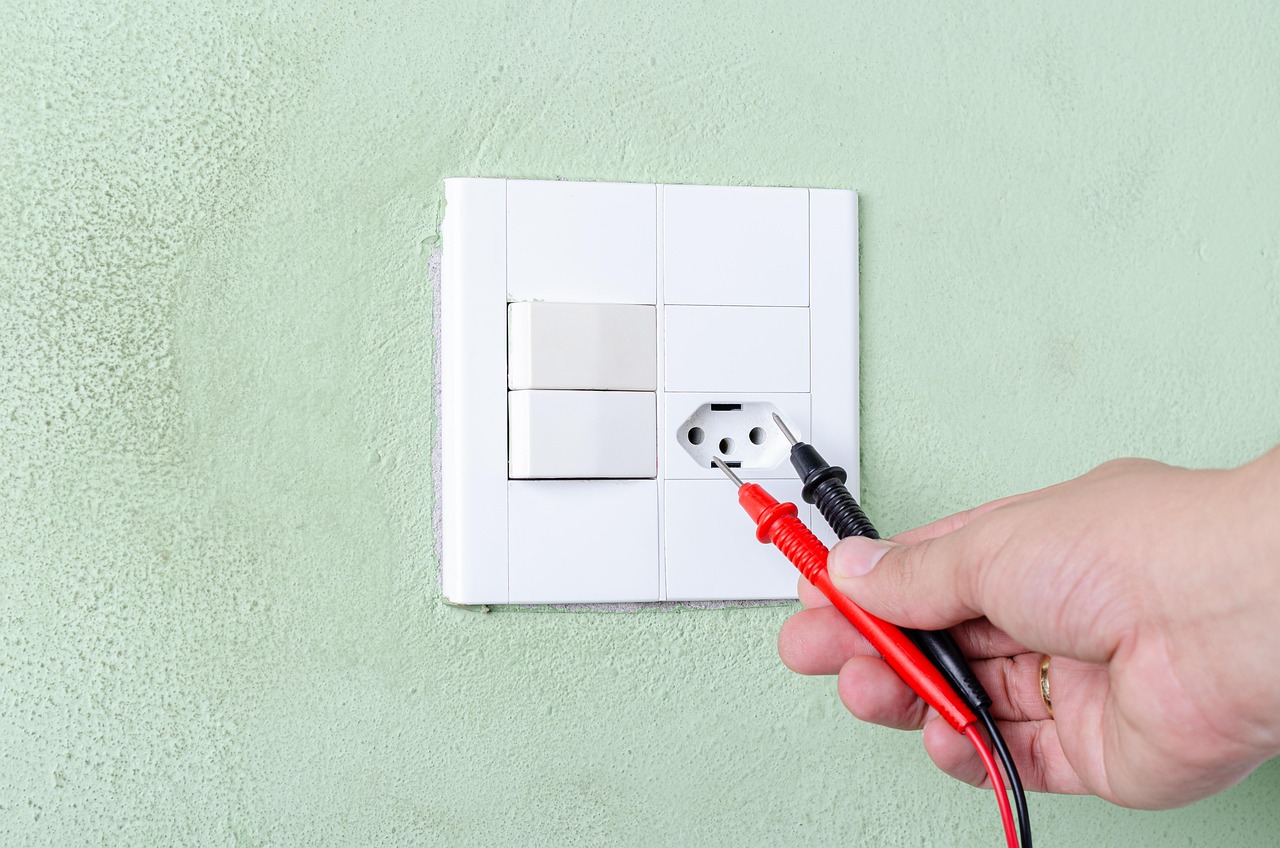
If you possess a digital multimeter set to ohms (Ω), you can check the integrity of internal electrical components before connecting the machine to live power:
- Measure Heating Element Resistance: Touch multimeter probes across the terminals of each heating element. Use Ohm’s Law ($R = V^2 / P$) to verify expected resistance. For instance, a 1,200-watt element running on 120 volts should read approximately 12 ohms. A reading of infinite resistance indicates a broken, non-functional heating wire, while a reading near zero indicates an internal short circuit.
- Check Insulation Resistance to Ground: Connect one multimeter probe to a heating element terminal and the other to an unpainted section of the grounded stainless steel cabinet chassis. The meter should display an open circuit (infinite resistance, OL). Any measurable resistance reading indicates compromised internal insulation and a potential electrical shock hazard.
- Verify Thermal Cutoff Continuity: Place probes across each thermal fuse and high-limit switch. When cold, these safety components should show complete continuity (near zero ohms). High resistance or an open circuit reading means the device has tripped, blown, or failed open.
3. Operational Thermal and Airflow Testing
After completing unplugged physical and electrical checks, connect the dehydrator to a properly rated electrical circuit in a well-ventilated space for operational testing:
- Monitor Fan Motor Noise: Turn on the fan circuit without activating the heating elements for 10 minutes. Listen closely for bearing noise, high-pitched squeaks, or cabinet vibration. Excessive vibration points to bent fan blades, accumulated debris, or worn motor bearings.
- Verify Uniform Air Distribution: Turn on the heating system and set the thermostat to 145°F. Hold a lightweight strip of paper or use a digital anemometer across various tray levels in the cabinet. Air movement should feel strong and consistent across all positions. Weak airflow zones indicate missing internal duct baffles or blocked air paths.
- Test Temperature Stability with External Probes: Place independent thermocouple sensors or digital probe thermometers on the top, middle, and bottom tray levels. Run the machine for 45 minutes, monitoring how closely actual internal cabinet temperatures match the set point on the control panel. Temperature variances greater than ±8°F point to a drifting thermostat sensor or failing relay switches.
Commercial Liquidator vs. Manufacturer Refurbished: Sourcing Comparison
To help guide your purchasing strategy, the structural trade-offs between buying through a factory-backed refurbishment program, a commercial dealer, or a liquidator are outlined below:
Manufacturer-Refurbished Sourcing
- Pros: Inspected by trained technicians; genuine OEM components installed; clear 90-day to 1-year warranty; guaranteed functional safety interlocks.
- Cons: Higher purchase price; limited inventory during peak harvest periods; buyer may cover shipping for depot service.
- Best Suited For: Buyers seeking commercial capacity without technical electrical expertise or diagnostic tools.
Specialty Commercial Dealer Sourcing
- Pros: Cheaper than factory-direct options; functional testing completed prior to sale; short local warranty terms often included.
- Cons: Inconsistent testing procedures between vendors; warranties frequently cover parts while excluding labor; return shipping costs are the buyer’s responsibility.
- Best Suited For: Practical homesteaders comfortable handling basic repairs, replacing fan motors, or swapping switches.
Liquidator, Surplus, and Auction Sourcing
- Pros: Lowest potential purchase price, often 60% to 80% below original retail prices.
- Cons: Sold strictly as-is with no returns; high risk of worn bearings, oxidized heating coils, or bypassed safety switches; zero technical support.
- Best Suited For: Experienced DIY builders, electricians, or mechanics capable of completely inspecting and rewiring commercial appliances safely.
Practical Maintenance Protocols for Extended Service Life
Once you purchase and inspect a secondhand commercial dehydrator, establishing a routine maintenance schedule will protect your investment, extend component life, and maintain safe operation for years to come.
1. Deep Chamber and Plenum Cleaning
Accumulated food oils, spice powders, and sugars inside the heating plenum insulate heating elements and create fire hazards. Every 50 to 100 hours of operation, unplug the machine, remove internal baffle plates, and clean interior surfaces using a HEPA-filtered vacuum. Wipe stainless steel walls with food-safe degreasers, avoiding direct moisture contact with heating element terminals or exposed wiring.
2. Lubricating and Servicing Blower Assemblies
Determine whether your machine’s fan motor includes dedicated oil ports. Motors equipped with oil tubes require two to three drops of non-detergent 20-weight electric motor oil annually. If the motor utilizes sealed ball bearings that make grinding or squealing noises, do not attempt external lubrication—replace the sealed motor assembly immediately to maintain proper airflow.
3. Inspecting Door Seals and Latching Hardware
Keep door gaskets clean and flexible by wiping them with warm, soapy water after heavy processing cycles. Avoid harsh solvent cleaners that cause silicone or rubber compounds to harden and crack. Inspect door latches periodically, tightening mounting screws to maintain even gasket compression around the cabinet frame.
Common Pitfalls and Frequently Asked Questions
Can I run a commercial dehydrator on a standard household electrical circuit?
It depends strictly on the machine’s total wattage draw. Many smaller commercial units pulling under 1,500 watts run on standard 120V, 15-amp residential circuits. However, larger commercial models drawing 1,800 to 4,000 watts require dedicated 120V/20-amp (NEMA 5-20R) or 240V (NEMA 6-20R) outlets. Operating a high-wattage appliance on an overloaded circuit or using thin extension cords can melt outlets, trip breakers, and create fire risks.
What should I do if a refurbished dehydrator trips my GFCI outlet?
If a commercial dehydrator trips a Ground Fault Circuit Interrupter (GFCI) outlet upon being plugged in or turned on, do not bypass the GFCI. A tripped GFCI indicates that electrical current is leaking from a live internal conductor—often an oxidized heating element or damaged wire—to the grounded metal cabinet. Perform resistance testing with a multimeter to locate and replace the shorted component before continuing use.
Are spare parts easily available for older commercial dehydrators?
Parts availability depends on the manufacturer. Major commercial brands maintain extensive spare parts inventories for decades, making it simple to order replacement fan motors, high-limit switches, and heating elements online. Off-brand or imported commercial units may lack spare parts support, forcing buyers to source generic components or custom-adapt heating elements when repairs are required.
Final Decision Framework: Protecting Your Investment
Upgrading to a commercial food dehydrator provides exceptional processing capacity for home growers and homesteaders, but purchasing on the secondary market requires careful evaluation. Never allow an attractive purchase price to overshadow safety checks or missing warranty protections.
When shopping for reconditioned equipment, prioritize factory-refurbished models or verified listings from reputable dealers who offer clear written coverage on electrical components and heating systems. Avoid as-is liquidator sales unless you possess the diagnostic tools, electrical knowledge, and willingness to inspect and repair the unit yourself. By conducting thorough visual checks, multimeter resistance testing, and airflow evaluations, you can secure reliable, high-capacity drying power while keeping your workshop or kitchen completely safe.