The Vulnerable Grid
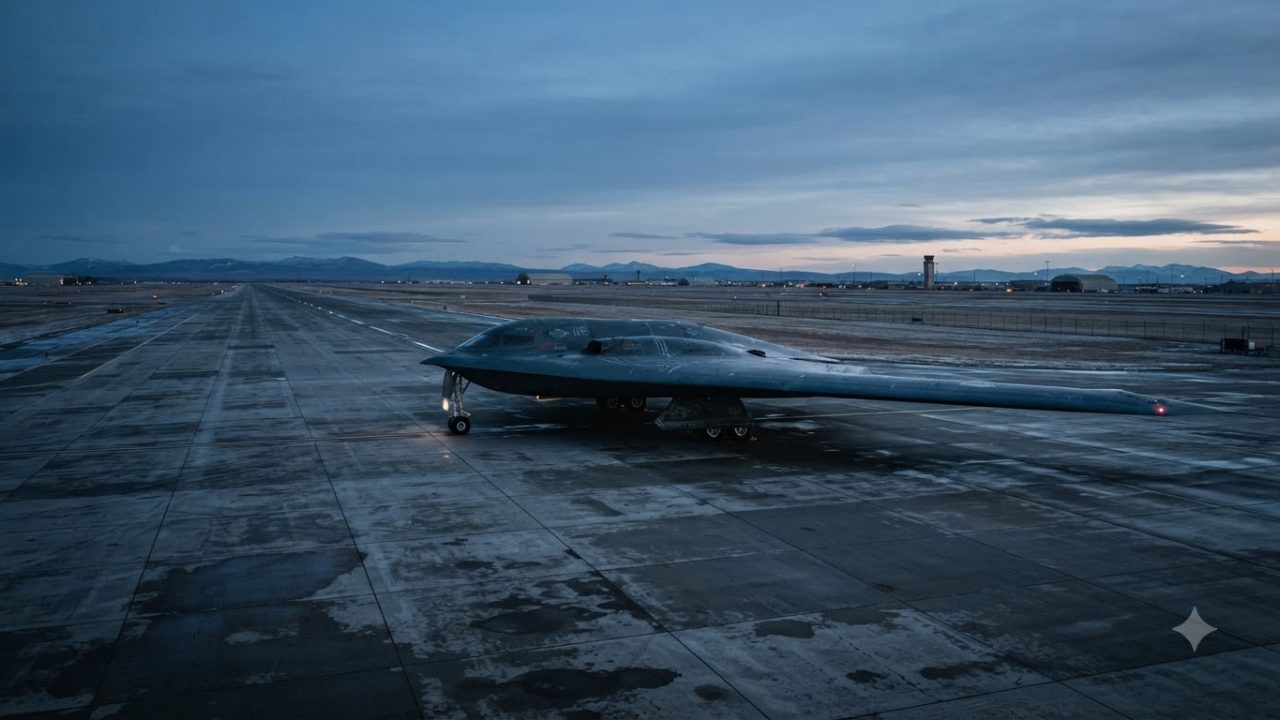
The modern American military is a machine of unprecedented reach, yet it rests upon a foundation of surprising fragility. From the early warning radar systems that peer over the horizon for incoming threats to the command-and-control nodes that synchronize global logistics, the United States military operates as a digital, hyper-connected enterprise. But there is a silent vulnerability at the core of this vast infrastructure: the local commercial electrical grid. These installations, designed for strategic dominance, are tethered to aging municipal grids, leaving them susceptible to cascading failures caused by cyberattacks, sophisticated physical sabotage, or the increasingly violent extremes of a changing climate.
A prolonged blackstart scenario—a catastrophic, total loss of power—could paralyze operations, effectively blinding the nation’s defense apparatus at the precise moment it is needed most. It is an existential risk that Pentagon strategists have quietly wrestled with for years, recognizing that the ability to project power abroad is meaningless if the power at home can be switched off by an adversary or a storm.
The Janus Program Mobilization
Now, in a bold move to secure this critical link, the U. S. Army is mobilizing a $2. 2 billion initiative known as the Janus Program. This project marks a decisive pivot in energy doctrine, aiming to deploy more than 20 commercial microreactors across five key military installations, effectively building a self-sustaining, islanded power capability that operates independently of the civilian grid. This $2. 2 billion commitment signifies far more than a simple infrastructure upgrade; it represents a fundamental shift in how the Department of Defense conceptualizes and secures its energy footprint.
By finalizing agreements with private industry partners to build, operate, and maintain these sophisticated power plants, the Army is moving away from the traditional, state-managed nuclear projects of the mid-20th century. Instead, the Janus Program leans into the agility and technical innovation of the commercial sector. This isn’t merely about keeping the lights on during an emergency; it is about guaranteeing absolute mission continuity. The logic driving this initiative is clear: by decentralizing energy production and placing it under the direct control of the base, the military can insulate itself from the growing instability of public energy markets and the strategic hazards of centralized utility dependence.
It is a historic realignment, fueled by a federal mandate to aggressively decarbonize energy portfolios while concurrently hardening the military’s most vital assets against the realities of a volatile global security environment. However, to understand the weight of this new mandate, one must look back at the rocky history of the Army’s early experiments with the atom. In the mid-20th century, the U.
From PM-3A to Project Dilithium: The Nuclear Army Heritage
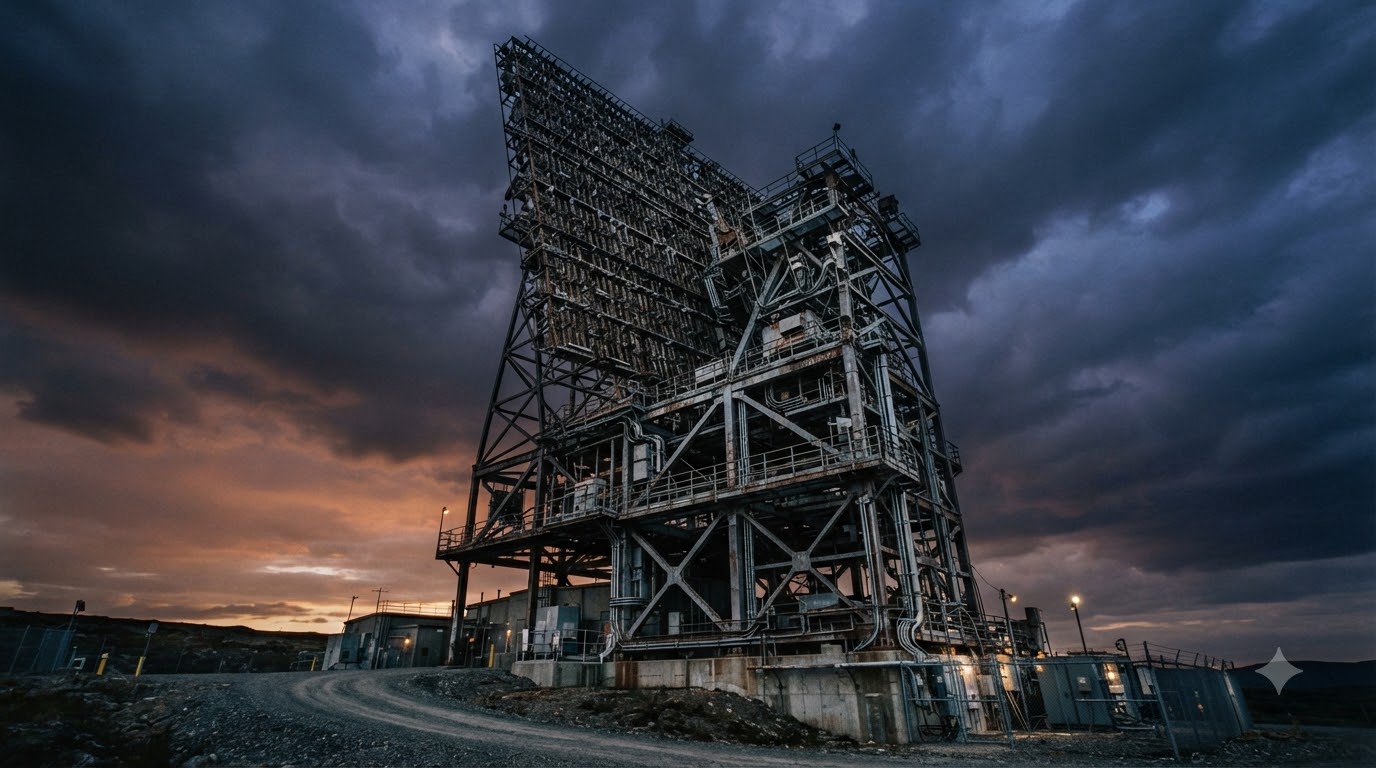
S. Army Nuclear Power Program was an ambitious, albeit troubled, endeavor. Engineers successfully deployed several small-scale reactors in some of the most isolated corners of the globe, including the famous PM-3A reactor at McMurdo Station in Antarctica. Designed to provide steady power to remote research outposts, these early units were marvels of engineering for their time. Yet, they were also precursors to a more difficult reality. These first-generation plants were plagued by exorbitant maintenance costs, frequent mechanical failures, and the daunting complexities of managing radiological waste in hostile, austere environments.
By the late 1970s, the financial and logistical burden—compounded by public anxiety and changing safety standards—led to the decommissioning of the program. For the next several decades, the Army opted for the path of least resistance, tethering its bases to civilian municipal grids and relying on fleets of diesel generators for backup power. This long freeze on military nuclear deployment left an entire generation of infrastructure dependent on the very systems that today pose the greatest risk to national security. But the technology of 2026 bears little resemblance to the reactors of the mid-1970s.
The current leap toward microreactors is predicated on a radical departure from the gigawatt-scale, water-cooled behemoths that defined the last century of commercial nuclear energy. A microreactor is a streamlined, compact system typically designed to produce under 20 megawatts of thermal energy. What truly sets these systems apart is their reliance on intrinsic, passive safety features. Unlike older reactors that required active cooling loops, external power sources, and constant human intervention to prevent a meltdown, modern microreactors are engineered to handle off-normal conditions through the laws of physics.
They utilize advanced cooling mechanisms like natural convection and heat pipes, meaning that even if the system loses all power, it essentially puts itself to sleep, safely dissipating heat without a single operator input.
How Microreactors Work: High-Tech, Passive Safety
Furthermore, these systems are increasingly designed to run on High-Assay Low-Enriched Uranium (HALEU) or specialized TRISO fuel particles. These ceramic-coated fuel kernels are structurally robust and heat-resistant, designed to contain radioactive material even under the most extreme, unexpected temperature spikes. This inherent safety architecture is what has finally cleared the path for the Army to consider bringing nuclear energy back inside the fence line of its most critical installations.
As the integration of these systems moves from theoretical frameworks into actual planning and procurement, the focus now turns toward the logistical and strategic implications of hosting these assets on home soil, specifically regarding the five bases currently tapped for this pioneering program. The Janus Program has crystallized around the selection of five primary military installations. While the precise identities of these bases are determined by a matrix of climate risk and energy-dependence metrics, the selection logic is clear: the Army is prioritizing locations where grid failure would result in total operational paralysis.
By partnering with private industry, the Department of Defense is shifting the burden of engineering and capital construction away from federal bureaucracy. These private contractors are not merely equipment suppliers; they are operating under long-term agreements to manage, fuel, and maintain these reactors, effectively turning these installations into sovereign, self-contained energy islands. This transition away from reliance on municipal power grids is not merely an upgrade; it is a fundamental shift in the definition of a base’s perimeter, as the energy source is no longer something to be imported through vulnerable overhead transmission lines, but something that is generated from within.
The strategic benefits of this shift radiate outward from the base commander’s office to the national defense architecture as a whole.
The Five Bases and the Industrial Partners
Command centers, early warning radar arrays, and critical drone operations now gain a level of resiliency that was previously unattainable. When a hurricane or a targeted cyber-attack brings down the civilian grid in the surrounding region, the military base will remain humming, its power supply insulated from the collapse of the surrounding infrastructure. This creates a secondary benefit for local communities; by severing their dependence on the regional grid during periods of peak stress, these military bases no longer compete with civilians for limited megawatts during blackouts or heatwaves.
The commercial nuclear industry, meanwhile, finds in the Army a high-budget, high-stakes customer that can finally demonstrate the operational viability of microreactors. This partnership provides the essential real-world performance data that private companies need to convince wary public utilities and data center operators that these small-scale systems are ready for the private market. Yet, this shift introduces a new topography of risk that commanders must navigate with extreme caution. The very nature of a nuclear reactor makes it a high-value target, creating a requirement for hardened physical security that dwarfs that of any traditional power installation.
Beyond the threat of direct physical or cyber sabotage by foreign adversaries, the program faces the harsh reality of the current fuel supply chain. High-Assay Low-Enriched Uranium, or HALEU, is the fuel of choice for these next-generation reactors, yet the global production capacity is currently bottlenecked. A reliance on these reactors assumes a robust, secure, and domestic supply chain that is still very much in its infancy. Furthermore, there is the persistent hurdle of public perception. Placing nuclear material, however safely contained, on active military bases in proximity to populated areas invites complex challenges regarding radioactive waste management and the inevitable NIMBYism of surrounding communities.
Military bases may have the security protocols to handle these materials, but public confidence remains a fragile variable that could stall the program before the first foundation is poured.
Strategic Beneficiaries: Command and Control Resiliency
These risks dictate the operational realities on the ground, where the logistical footprint of the Janus Program differs radically from the fuel-intensive nature of traditional base power. Currently, most remote or critical military outposts rely on a constant, vulnerable convoy of diesel trucks to keep their generators running—a tactical weakness that adversaries are well-equipped to exploit. The transition to nuclear microreactors eliminates the need for this umbilical cord of fossil fuel delivery, replacing it with a fuel source that may require reloading only once every few years. However, this gain in tactical self-sufficiency is offset by the complexity of onsite maintenance.
Managing these reactors requires a new breed of personnel: specialized technical teams capable of ensuring the security of nuclear fuel and the adherence to rigid safety protocols inside the wire. As the Army moves toward these logistical configurations, it must also grapple with the downstream consequences of this shift, including the decommissioning and long-term storage of spent fuel rods that, by current policy, remain the ultimate responsibility of the installation, forcing us to look closer at the industrial and regulatory friction that defines this high-stakes deployment.
This pivot toward onsite, long-term power generation fundamentally alters the military’s relationship with the civilian grid, yet it also exposes the fragility of current infrastructure-sharing agreements. By attempting to decouple, the Army is essentially signaling that the regional power grids—once considered robust backbones of national utility—are now viewed as systemic liabilities. This shift, however, is not without its internal friction.
The Risks: Target Hardening and Fuel Supply Bottlenecks
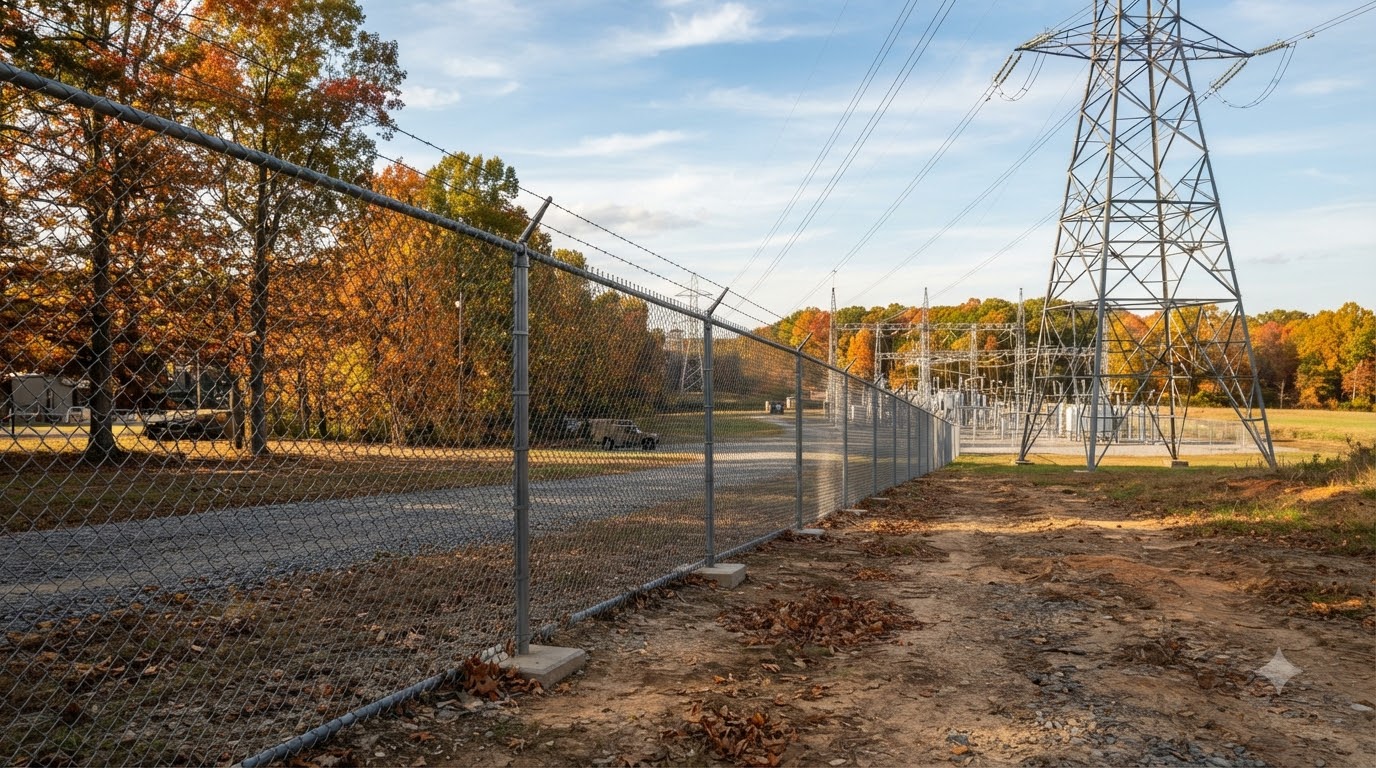
When a military base detaches itself from the municipal grid, it triggers a cascade of regional economic and regulatory consequences. Local utility providers, who often rely on the predictable, massive baseload demand provided by large military installations, may find their own operational revenue models destabilized. Furthermore, the decoupling process itself requires massive electrical engineering upgrades. Transforming an installation from a grid-dependent consumer into an islanded microgrid operator necessitates the installation of sophisticated switchgear, harmonic filters, and power-management systems capable of balancing reactor output against fluctuating base demand in real-time.
This is not merely a plug-and-play installation; it involves re-engineering the very core of how a base distributes power to its sensors, command bunkers, and barracks. The failure of even a single component in this bespoke microgrid could lead to an instantaneous, localized blackout, which is precisely why the Janus Program is placing such a heavy emphasis on redundancy. Each site will likely employ multiple reactors, ensuring that if one unit requires a maintenance shutdown—or encounters an unforeseen technical hiccup—the remaining capacity can sustain the mission-critical systems. This redundancy, while necessary for military readiness, drastically complicates the logistics of reactor oversight.
The Army’s administrative apparatus must now evolve to include specialized nuclear oversight committees, echoing the rigorous safety cultures found in the Navy’s submarine fleet, albeit adapted for static, land-based operations. Such an adaptation requires a total overhaul of base staffing requirements. Security personnel must be retrained to mitigate sophisticated threats, such as potential cyber-incursions targeting reactor control software, which could theoretically allow an adversary to manipulate power output or override passive safety overrides. Moreover, the environmental monitoring required for these sites exceeds traditional base environmental compliance.
Groundwater monitoring, atmospheric sampling, and the construction of shielded, high-security bunkers for fuel storage introduce layers of complexity that were previously nonexistent in standard base operations.
Operational Realities: Logistics and Fueling on Site
The physical security footprint, therefore, expands significantly; what was once a fence line guarding personnel and assets now becomes an exclusion zone surrounding a high-value nuclear asset. This transition to internal power production forces a re-evaluation of how the Army views its own real estate. Every acre of land dedicated to reactor safety buffers, fuel handling, or cooling systems is an acre of land reclaimed from training or administrative use. The trade-offs are significant: the loss of land utility and the immense capital commitment of the reactor infrastructure must be weighed against the strategic advantage of being immune to a grid-wide collapse.
As these installations move from the drawing board toward site-specific ground-breaking, the Army is also navigating a minefield of potential environmental litigation. The fear of cooling water discharge, localized thermal pollution, or the mere presence of nuclear fuel is enough to trigger protracted legal battles with local environmental advocacy groups, which could delay the rollout for months or even years. These hurdles represent a secondary front in the Janus Program—one where the weapons are not cyber-warfare or energy-weaponry, but zoning ordinances, environmental impact statements, and public relations campaigns.
Even with federal exemptions, the political cost of navigating this opposition is a variable that the military’s risk management teams are finding increasingly difficult to quantify. Furthermore, the technical maturity of the reactors themselves remains a point of intense scrutiny. While the passive cooling designs—relying on the immutable laws of physics rather than active pumps—are theoretically foolproof, the jump from computer modeling to physical deployment is fraught with risks of mechanical wear-and-tear that have not yet been fully stress-tested in long-term, continuous-duty military cycles.
The $2.2 Billion Economy: Incentivizing a New Industrial Sector
The heat exchangers, the pressure vessels, and the control rods must function under a variety of harsh climate conditions, from high-desert heat to arctic cold, without the frequent, heavy-handed maintenance schedule of a commercial power plant. These are prototypes operating in the field, and the lessons learned during their initial five-year operational cycles will either confirm the promise of the Janus Program or serve as a cautionary tale of the difficulties inherent in decentralizing national power.
As we examine the logistical realities of these installations, we must acknowledge the sheer scale of the shift—this is an effort to re-industrialize the military installation, moving it away from its twentieth-century reliance on external supply chains and toward a twenty-first-century paradigm of localized, resilient, and atomic-powered autonomy, a change that inevitably brings us back to the question of financial and industrial sustainability. The $2. 2 billion allocated to the Janus Program acts as more than just a procurement budget; it serves as a powerful macroeconomic catalyst for the nascent advanced nuclear sector.
By committing these funds to private industry partners, the Department of Defense is effectively lowering the barrier to entry for firms that have struggled to move their designs from laboratory prototypes to commercially viable, grid-scale systems. This federal injection of capital is designed to stabilize the supply chain for high-assay low-enriched uranium, or HALEU, which has historically suffered from a lack of reliable, scalable production facilities.
Who Governs the Atom? NRC vs. DoD Oversight
When a military entity of the Army’s stature guarantees a long-term, high-budget demand for microreactors, venture capital follows suit, accelerating the maturation of specialized manufacturing techniques like modular assembly and factory-based fabrication. These efficiencies, once realized, promise to drive down the per-unit cost of reactors through standard economies of scale that are simply impossible to achieve in a fragmented civilian market. Beyond the military fence line, this economic momentum is expected to spill over into the private sector, creating a blueprint for the deployment of similar units in remote mining, industrial water desalination, and energy-hungry data center complexes.
The commercial marketplace is watching the Janus rollout closely, viewing it as a high-stakes, real-world proof of concept that will determine if micro-nuclear technology can transition from a niche solution to a fundamental component of the global energy architecture. However, the path to widespread deployment is obstructed by a significant jurisdictional thicket. The regulatory oversight of nuclear power in the United States is historically bifurcated, with the Nuclear Regulatory Commission, or NRC, serving as the civilian watchdog for commercial power generation, while the Department of Defense has traditionally retained sovereign authority over its internal nuclear operations. The Janus Program sits squarely in the center of this friction.
Because the program utilizes commercial microreactors rather than experimental military reactors, it forces a collision between civilian transparency standards and military operational necessity. Navigating this landscape requires balancing the rigorous safety and public reporting requirements of the NRC with the urgent, often classified, security mandates of the Army.
The Next Horizon: Tactical Nuclear Power on the Frontlines
Historically, the licensing process for novel reactor designs has been the primary graveyard of advanced nuclear ambitions, often characterized by agonizingly slow bureaucratic reviews that inflate costs and stifle innovation. For Janus to succeed, the federal government must establish a streamlined regulatory pathway that effectively bridges these two distinct cultures, ensuring that military bases can integrate these power sources without waiting years for site-specific approvals. If this regulatory bottleneck remains unresolved, the program risks significant cost overruns and delays, potentially turning what was intended to be a flexible, modular deployment into a static, bogged-down construction project.
The success of the initiative hinges on a delicate administrative compromise—one that satisfies the public’s requirement for safety and oversight while providing the flexibility required for agile, modern warfare. Looking toward the next horizon, the implications of successful base deployment extend far beyond domestic energy security. If the Janus Program demonstrates that these reactors can operate safely and reliably in a fixed military environment, it will provide the operational data needed to refine the next generation of truly mobile, containerized systems.
Future combat operations are increasingly characterized by high-energy-demand assets, from massed fleets of electric tactical vehicles to sophisticated directed-energy weapons and persistent radar shields that must remain operational in the face of electronic warfare. Diesel-powered generators are fundamentally ill-suited for the heat and noise signatures of these future systems, not to mention the immense logistical burden of fuel logistics. The shift to portable, nuclear-powered micro-grids would revolutionize the concept of forward-deployed bases, allowing units to establish near-permanent energy independence in austere environments. Such a capability would fundamentally decouple frontline forces from their most vulnerable logistical umbilical cord—the fuel convoy.
The development of a tactical, battle-hardened nuclear module, capable of being air-lifted to remote theaters of operations, would represent a generational leap in military endurance.
A Resilient Empire: The Atomic Base of Tomorrow
This project is, in effect, the global testbed for a future in which energy scarcity no longer dictates the limits of tactical ambition or strategic projection. Ultimately, the Janus Program serves as the definitive test of whether the military can successfully pivot toward the atom as the cornerstone of its twentieth-first-century infrastructure. It represents a rare and essential convergence: the national security imperative for resilience, the clean energy requirement for decarbonized power, and the commercial necessity for a viable industrial base. By choosing to fundamentally sever the reliance on vulnerable civilian grids, the Army is acknowledging that the traditional energy paradigm is incompatible with the evolving reality of global competition.
The transition to nuclear, however, is not merely a technical swap of generators; it is a calculated gamble that the complexities of nuclear maintenance, regulatory compliance, and public perception can be successfully managed within the constraints of military operations. The success or failure of these five initial installations will not be measured solely in kilowatts produced or dollars saved. Instead, the legacy of this initiative will be determined by its influence on the trajectory of advanced nuclear energy over the next fifty years. If these microreactors perform as designed, they will cement the role of atomic power as the backbone of an hardened, resilient military empire.
If they fail, they will provide a stark, expensive lesson on the limits of applying complex civilian technologies in the volatile theater of national defense, fundamentally altering the way the government approaches the integration of private industry into the heart of its most sensitive and critical operations.