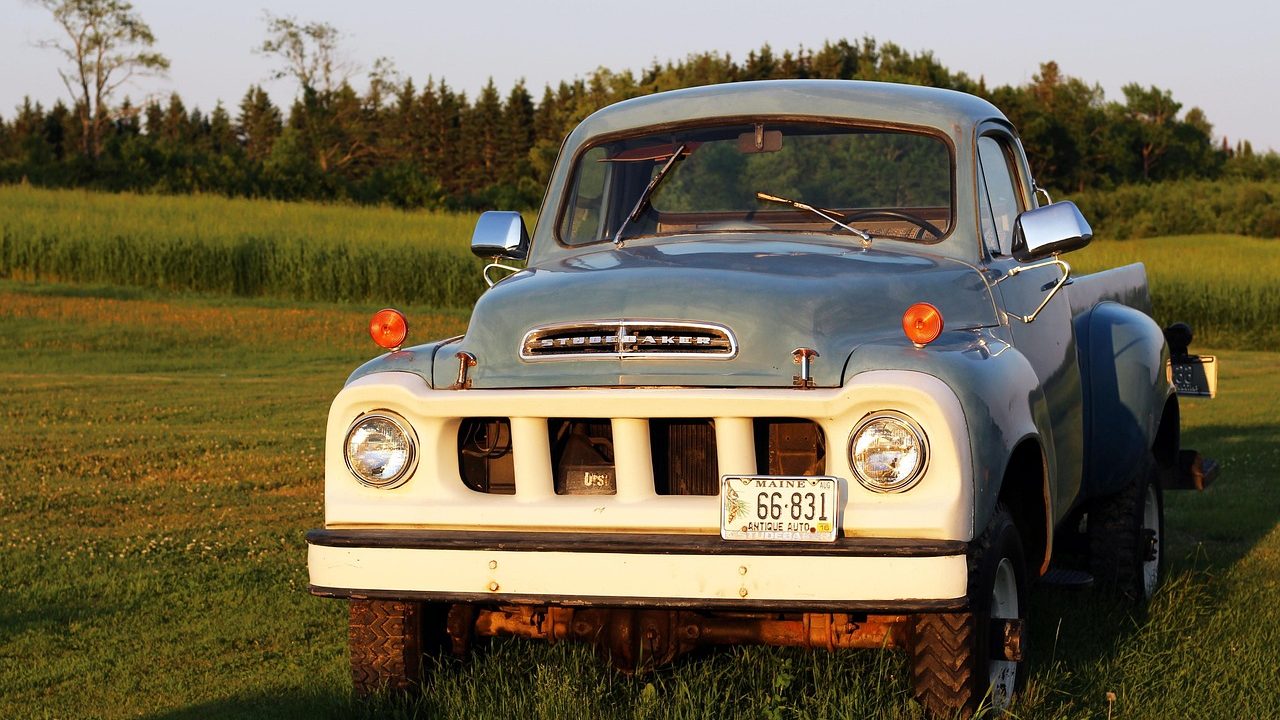
When suburban households shop for a versatile utility vehicle, the decision often narrows down to two distinct body styles: a crossover midsize SUV or a used compact pickup truck. Both platforms promise enough capability to handle school drop-offs, grocery hauls, and weekend trips to the home improvement center. However, their underlying mechanical architectures, insurance classifications, and cargo configurations create vastly different long-term financial outcomes. Choosing the right option requires evaluating how you actually use your vehicle, rather than planning for idealized weekend scenarios that happen only once a year.
The debate over a used compact pickup vs midsize SUV centers on the trade-off between enclosed interior volume and open-air cargo versatility. While a midsize crossover relies on unibody construction shared with passenger sedans, older compact pickups often utilize body-on-frame designs or rugged unibody frames built explicitly for payload capacity. Understanding these structural differences helps buyers anticipate future maintenance bills, fuel economy variations, and how depreciation impacts their household budget over a five-to-seven-year ownership window.
Initial Purchase Price and Depreciation Realities
For budget-conscious buyers shopping the pre-owned market, initial acquisition cost sets the baseline for overall financial utility. Pre-owned midsize SUVs enjoy massive popularity, keeping secondary market prices relatively buoyant due to high consumer demand for family-friendly crossovers. Conversely, compact trucks have experienced a resurgence in desirability, but older models often occupy a specialized niche where buyers prioritize utility over plush cabin amenities.
Depreciation curves also diverge between these two segments. Midsize SUVs tend to depreciate steadily as newer tech features and safety bundles roll out in fresh model years. Used compact trucks, particularly models with four-door crew cabs and four-wheel drive, often demonstrate surprising residual value. Because work-capable vehicles maintain steady utility demand among tradespeople and outdoor enthusiasts, a well-maintained compact pickup may hold its percentage value slightly better than a high-mileage crossover family hauler.
When calculating upfront costs, buyers must look beyond the sticker price to account for sales tax, title fees, and immediate pre-owned maintenance requirements. A used truck with 80,000 miles might need suspension bushings or brake service sooner than a similarly priced crossover driven primarily on smooth suburban asphalt. Factoring in a cash reserve for day-one reconditioning ensures your initial bargain purchase does not instantly trigger financial strain.
Furthermore, evaluating the pedigree of a pre-owned vehicle involves scrutinizing its service records. A fleet-leased midsize SUV that spent its life shuttling rental car customers might exhibit different interior wear than a privately owned vehicle. Similarly, a compact truck that spent its early years towing heavy commercial equipment will demand a closer inspection of its transmission and rear differential. Setting aside funds for an independent pre-purchase inspection (PPI) is a non-negotiable step that protects your initial investment, regardless of whether you ultimately select a crossover or a utility bed.
Fuel Economy and Daily Commuting Costs
Fuel expenditure represents one of the most consistent ongoing costs for suburban households commuting to work or driving children to extracurricular activities. Fuel economy ratings between midsize SUVs and compact trucks have narrowed significantly in recent years, but mechanical design still dictates real-world efficiency.
Midsize crossovers typically feature aerodynamic shapes and efficient four-cylinder turbocharged engines or naturally aspirated V6s optimized for highway cruising. Their unibody construction keeps curb weight lower than traditional body-on-frame trucks, translating to respectable fuel economy during daily stop-and-go suburban commutes.
Compact pickup trucks, while smaller than full-size half-tons, still face aerodynamic drag from their open beds and rolling resistance from taller, stiffer all-season tires. When empty, a modern compact truck matches many midsize SUVs on the highway. However, once you load the bed with landscaping materials or hitch a small utility trailer, fuel efficiency drops noticeably due to increased rolling weight and altered wind resistance.
To evaluate fuel costs accurately, track your weekly mileage and calculate annual expenditures based on regional gas prices. If 80 percent of your driving consists of light commuting without heavy payloads, a crossover SUV often yields a slight efficiency advantage. If your weekly routine involves frequent short trips carrying messy gear where fuel economy matters slightly less than cargo separation, the penalty of a compact truck is usually modest and manageable.
Consider also the nuances of fuel grades and engine tuning. Many modern midsize SUVs utilize high-compression turbocharged engines that perform best on premium fuel, especially under load or during hot summer months. Older compact trucks often run happily on regular unleaded fuel, which can offset a minor penalty in miles per gallon when calculating your monthly fuel budget. Always check manufacturer specifications before assuming a smaller engine automatically translates to lower operating costs at the pump.
Insurance Rates and Risk Classifications
Insurance premiums can quietly erode the financial advantages of any pre-owned vehicle. Insurance underwriters evaluate vehicles not just by their safety crash-test scores, but by repair costs, theft rates, and how frequently a particular model style gets involved in accidents.
Midsize SUVs are typically driven by families, commuters, and suburban motorists, resulting in a predictable risk pool. Safety assist technologies, side-curtain airbags, and sturdy unibody crumple zones often push crossover insurance rates into reasonable brackets. However, because modern SUVs are packed with expensive sensors embedded in bumpers, even minor parking lot bumps can lead to costly front-end repairs that insurers factor into rate tables.
Compact pickup trucks inhabit an interesting space in insurance databases. They are often classified as light commercial vehicles or utility trucks, which can sometimes carry slightly higher commercial-use scrutiny if registered under business names. Yet, for personal suburban use, private-passenger pickup policies are generally straightforward. Because older compact trucks lack complex digital dashboards and expensive bumper-mounted radar arrays, body repairs after minor fender-benders can occasionally be cheaper than fixing a tech-heavy crossover.
Before purchasing either vehicle, secure a VIN-specific insurance quote. Rates vary wildly based on your zip code, garage security, driver history, and credit-based insurance scores, making generic assumptions unreliable.
It is also worth noting how aftermarket modifications affect insurance payouts and rates. If you purchase a used compact pickup that previous owners equipped with heavy-duty lift kits, oversized off-road tires, or aftermarket winch bumpers, your insurer may classify these as custom parts. Insuring these additions often requires specialized endorsements, or worse, the insurer may refuse coverage for the non-factory components entirely. Midsize SUVs are less prone to aggressive aftermarket modifications in suburban markets, making their insurance underwriting process straightforward and predictable.
Cargo Utility, Cabin Space, and Everyday Practicality
The most dramatic difference between a midsize SUV and a compact pickup lies in how they manage cargo and passengers. This is where lifestyle alignment matters most; buying the wrong configuration for your daily tasks creates constant frustration.
A midsize SUV offers fully enclosed, weather-protected cargo space. Folding down the second-row seats creates a massive interior floor capable of hauling large boxes, camping gear, or suitcases protected from rain and snow. The cabin climate control keeps everything comfortable, making crossovers ideal for transporting pets, groceries that cannot freeze or overheat, and passengers who require legroom.
A compact pickup truck trades internal cabin volume for an open exterior bed. This design feature is a game-changer for messy, dirty, or oversized items. Hauling bags of mulch, wet soil, construction lumber, bicycles caked in mud, or furniture with awkward dimensions becomes effortless when you can simply slide them into the bed and wash it out with a garden hose later. You never have to worry about staining interior carpeting or puncturing leather door panels.
However, the trade-off is passenger comfort. Compact crew-cab trucks often feature tighter rear-seat legroom than midsize crossovers, making long road trips with growing teenagers less comfortable. Extended-cab models with tiny rear jump seats are virtually unusable for daily human transport, serving instead as extra indoor storage.
Child safety seat installation is another critical consideration for growing families. Midsize SUVs typically provide expansive second-row door openings and multiple LATCH anchorage points, making the constant wrestling match of buckling toddlers into car seats significantly easier. Compact trucks, especially older extended-cab models or smaller modern unibody trucks, often feature cramped rear doors and limited forward-to-back room, meaning a rear-facing infant seat will push the front passenger seat uncomfortably far forward. Parents must test-fit their specific car seats during the shopping phase to avoid daily ergonomic headaches.
Maintenance Overhead and Long-Term Mechanical Durability
Long-term financial utility depends heavily on maintenance overhead. When evaluating a pre-owned vehicle, mechanical simplicity often correlates with lower lifetime repair bills.
Midsize SUVs feature complex independent rear suspensions, intricate all-wheel-drive torque-vectoring systems, and complex electronic climate control modules. While these systems deliver a smooth ride and excellent traction, repairing a failing AWD differential or replacing a failed electronic liftgate motor on an aging crossover can quickly run into thousands of dollars.
Compact pickup trucks, especially older or simpler models, often utilize straightforward part-time four-wheel-drive systems with physical transfer cases or simpler leaf-spring rear suspensions. While trucks work harder under loads—meaning suspension components, shocks, and wheel bearings may wear out slightly faster—their mechanical layouts are often easier for independent mechanics to service. Parts availability for popular truck platforms is robust, keeping component costs manageable.
Preventative maintenance makes the biggest difference. Changing transmission fluid, inspecting brake lines for rust, and monitoring cooling systems will keep either vehicle running past 150,000 miles. Buyers should prioritize purchasing a used vehicle with a documented service history over one with lower mileage but no proof of oil changes.
Furthermore, rust inspection is paramount when evaluating pre-owned trucks versus crossovers. Because pickup beds and frame rails are exposed to road salt, mud, and moisture accumulation, a thorough undercarriage inspection on a lift is mandatory. Crossovers, utilizing unibody construction, are also susceptible to rust in rocker panels and rear suspension subframes, but the heavy steel ladder frames underneath traditional trucks require careful examination for structural integrity. Catching surface rust early and applying professional undercoating can easily add five to ten years to the service life of a pre-owned compact truck.

Hidden Costs: Tires, Registration, and Towing Equipment
Beyond insurance and fuel, several hidden ownership expenses can tilt the financial balance between a used compact pickup and a midsize SUV.
Tire replacement represents a significant recurring expense. Compact trucks often ride on light-truck (LT) rated tires or robust passenger-truck all-terrain tires with stiffer sidewalls to support heavy payloads. These tires typically cost more per corner than standard passenger car or crossover tires. Furthermore, trucks driven primarily unloaded may experience uneven rear tire wear if tire rotation intervals are neglected.
Registration and local municipal fees can also vary by vehicle classification. In some states, pickup trucks are registered by gross vehicle weight rating (GVWR) rather than passenger vehicle status, occasionally resulting in slightly higher annual registration tags or mandatory commercial inspections.
Towing capability is another factor. Whether you plan on towing a small pop-up camping trailer, a pair of personal watercraft, or a utility trailer loaded with yard waste, hardware matters. Many midsize SUVs require expensive factory towing packages that are difficult to retrofit cleanly; adding aftermarket hitch receivers and wiring harnesses can compromise bumper integrity. A compact pickup equipped with a factory towing package and a proper hitch receiver often handles small utility trailers with greater stability due to its stiffer chassis, dedicated truck gearing, and higher tongue-weight capacity.
Bed liners and tonneau covers also represent upfront accessory investments unique to pickup ownership. While a midsize SUV comes fully enclosed from the factory, an open truck bed practically demands a weatherproof tonneau cover and a drop-in plastic bed liner or spray-in bed protection to prevent metal scratching and cargo sliding. Factoring these accessories into your initial purchase budget ensures your cargo remains secure and dry from day one.
Suburban Case Studies: Three Household Scenarios
To crystallize how these financial and utility variables play out in the real world, consider three common suburban household profiles and how they benefit from each platform:
Scenario A: The Weekend DIYer and Gardener. A household that spends every spring and autumn hauling bags of mulch, paving stones, 10-foot dimensional lumber, and pruning debris will quickly destroy the interior upholstery and cargo floor of a midsize crossover. Even with rubber floor mats, sliding rough landscaping materials into an SUV hatch invites torn headliners, scratched side panels, and lingering earthy odors. For this family, a used compact pickup truck provides superior financial utility by absorbing heavy, abrasive work without devaluing the passenger cabin.
Scenario B: The Multi-Child Commuter. A family juggling multiple school drop-offs, sports gear bags, and long highway road trips to visit grandparents needs maximum interior climate control and seating comfort. A midsize SUV shines in this environment. The enclosed cabin keeps sports equipment contained away from passenger legroom, rear passengers enjoy ample climate vents and charging ports, and the secure rear trunk protects luggage from highway rain during long road trips.
Scenario C: The Active Outdoor Enthusiast. An active couple or small family that regularly loads muddy mountain bikes, kayaks, wet wetsuits, and camping gear requires a vehicle that does not trap outdoor filth inside the cabin. While a roof rack on a midsize SUV can handle bikes and kayaks, lifting heavy items overhead strains backs and risks scratching the vehicle’s roof. Tossing muddy mountain bikes into the bed of a compact pickup truck takes seconds and keeps cabin air clean and dry.
A Decision Framework for Suburban Households
To determine whether a used compact pickup or a midsize SUV belongs in your driveway, run through this practical decision framework based on your household’s actual needs:
- Assess your cargo frequency: If you haul messy items, garden supplies, or construction materials more than ten times a year, the open bed of a compact truck saves interior cleaning headaches.
- Evaluate passenger comfort needs: If you frequently transport adults or tall teenagers in the back seat for long trips, a midsize SUV provides vastly superior rear passenger space.
- Calculate parking and maneuverability: Consider your garage dimensions and tight suburban parking structures. Many compact pickups feature shorter overall lengths and tighter turning radii than bulky three-row SUVs, making them easier to park.
- Weigh weather and climate realities: If you live in a region with heavy winter snowfall and lack a garage, an enclosed SUV keeps your cargo secure and dry without requiring aftermarket tonneau covers.
By mapping your weekly routine against these four pillars, the correct choice becomes evident. Resist the temptation to buy for the dream lifestyle and instead optimize for your actual day-to-day routine.
Frequently Asked Questions
Are older compact pickup trucks reliable enough for daily suburban commuting? Yes, provided they have a documented maintenance history. Models from reputable manufacturers often easily surpass 150,000 miles when oil changes and cooling system services are performed on schedule.
Is it harder to park a pickup truck than a midsize SUV? Not necessarily. Many compact pickup trucks have remarkably tight turning radiuses and shorter overall body lengths than sprawling midsize or three-row crossover SUVs, making garage parking straightforward.
Do trucks cost significantly more to insure than crossovers? Insurance costs depend heavily on your driving record and zip code rather than body style alone. However, commercial classifications or custom aftermarket modifications can occasionally raise truck premiums.
Conclusion: Maximizing Long-Term Value
Evaluating a used compact pickup against a midsize SUV ultimately comes down to matching vehicle architecture to your lifestyle realities. Neither option is universally superior; each serves distinct household functions. A midsize SUV delivers refined passenger comfort, secure weather-proof storage, and family-friendly driving dynamics for daily suburban commutes. A compact pickup offers rugged, utilitarian cargo management, easier cleanup after messy weekend projects, and robust towing stability without the massive footprint of a full-size half-ton truck.
By carefully vetting maintenance histories, understanding insurance realities, and calculating true fuel and tire expenses, suburban car buyers can secure a reliable vehicle that supports both household projects and long-term financial health.