
Bringing a new baby home is one of the most significant life transitions your household will experience. For families with a resident dog, this milestone requires just as much advance planning for the pet as it does for the nursery. Successfully preparing dog for baby is not about a single dramatic training session on the day you return from the hospital. Instead, it is a gradual, deliberate process of behavioral conditioning, environmental management, and routine adjustment that should begin months before your due date.
Many expecting parents worry about how their loyal companion will react to a crying infant, unpredictable schedules, and a sudden shift in attention. While every dog has a unique temperament, most domestic dogs adapt exceptionally well when their owners take a systematic approach. By breaking the preparation down into manageable phases, you can transform a potentially stressful homecoming into a smooth, positive transition for every member of the family.
Understanding canine psychology during major life disruptions is essential. Dogs do not possess abstract concepts of human family structures; rather, they perceive the world through scent, sound, routine, and direct physical environment. When a newborn enters the home, the familiar olfactory landscape changes overnight. Diaper pails introduce strange chemicals and organic scents, baby lotions alter the smell of the humans they love, and frantic, sleep-deprived human emotional states transmit subtle stress chemicals through the air. By introducing these variables incrementally, you strip away the shock value, allowing your dog’s nervous system to accept the new additions as normal parts of the home environment rather than alarming novelties.
The Proactive Timeline: When to Start Training
Timing is everything when it comes to animal behavior modification. If you wait until you bring the baby home to start changing rules, your dog may associate the new restrictions with the arrival of the infant, fostering resentment or anxiety. Ideally, you should begin preparing your dog four to six months before your estimated due date.
This extended runway gives your dog ample time to process changes without feeling rushed. It also allows you to address any existing behavioral quirks—such as jumping, resource guarding, or leash pulling—while you still have the mental and physical energy to invest in consistent training. Break your preparation down into monthly milestones: use the first month to tighten up obedience cues, the second to adjust household boundaries, the third to introduce new sensory stimuli, and the final weeks to practice real-world scenarios.
During these early weeks, evaluate your dog’s current stress levels and social comfort. If your dog is naturally reactive, fearful around sudden movements, or sensitive to handling, now is the time to consult a certified professional dog trainer (CPDT) or veterinary behaviorist. Professional guidance early on can prevent minor anxieties from escalating into serious behavioral issues once household stress increases during the postpartum period.
As you build this timeline, map out your calendar to ensure training sessions are short, positive, and integrated into your daily habits rather than felt as an onerous chore. Consistency matters far more than duration. Five minutes of focused practice twice a day will yield vastly superior results compared to a single exhausting thirty-minute session once a week. Keep records of your progress, noting specific triggers or environments where your dog struggles so you can target those areas before the nursery is fully occupied.
Adjusting Daily Routines and Predictability
Dogs thrive on routine. Their internal clocks dictate when they wake up, eat, walk, and play. Unfortunately, an infant’s schedule is the exact opposite of predictable. To prevent your dog from experiencing severe anxiety when your daily rhythm shifts, you need to deliberately disrupt their routine before the baby arrives.
Start by shifting feeding times, walk lengths, and play sessions by 15 to 30 minutes every few days. If your dog is accustomed to receiving undivided attention the exact moment you wake up, begin practicing independent time. Encourage your dog to settle on a designated mat or bed while you sit on the couch or move around the house. This teaches emotional regulation and ensures your pet does not panic when you are physically present but unable to interact with them.
Additionally, practice short periods of separation within the home. Close doors between rooms while you are still inside, or use baby gates to separate your workspace from your dog’s resting area. This helps desensitize your pet to closed doors, which will become a frequent reality when managing a sleeping infant or maintaining a sanitary nursery environment.
Consider also how your walking routine will change once you are pushing a stroller. Walking a strong, enthusiastic dog while managing a stroller requires entirely different mechanics than a standard leisurely walk. Practice walking your dog on the side of your body where the stroller will eventually sit, and teach a reliable loose-leash heel. If your dog tends to pull or lunge at wildlife, bicycles, or other dogs, invest time now in reactivity training or transition to a front-clip harness that gives you superior physical leverage.
Redefining Household Boundaries and Restricted Zones
As your baby grows, they will spend time crawling, playing on the floor, and exploring every corner of the house. For safety reasons, you must establish clear boundaries well in advance. Decide which rooms will remain off-limits to your dog—such as the nursery or the primary bedroom during sleep hours—and install baby gates or secure doors now.
Allowing your dog to investigate these spaces while they are empty helps satisfy their curiosity before the baby arrives. Once the boundaries are set, enforce them consistently. Use positive reinforcement to reward your dog for staying behind a baby gate rather than letting them cross the threshold and correcting them afterward. Clear, unchanging rules eliminate confusion and keep both your dog and your future child safe.
When selecting baby gates, choose sturdy, hardware-mounted models for high-traffic or top-of-stair locations rather than pressure-mounted gates, which can be knocked down by a large, enthusiastic dog. Pair the installation of these barriers with rewarding treats so your dog views the boundary not as a punishment, but as a neutral perimeter.
Establish these boundaries thoughtfully so your dog does not feel entirely banished from family life. If the nursery is upstairs and off-limits, ensure there is an equally comfortable, high-traffic resting spot nearby—such as a cozy dog bed in the main living room or hallway—where your dog can still observe family activities without being underfoot. Dogs derive deep comfort from simply being in the same general airspace as their human pack members, even if physical access is temporarily restricted.
Desensitizing Your Dog to Baby Sounds and Sights
Adult humans understand what a crying infant sounds like, but to a dog, high-pitched wails, mechanical rocking chairs, and automated swings can sound alarming or painful. Auditory desensitization is one of the most powerful tools in your preparation toolkit.
Search online or use a sound effects app to play recordings of baby cries, coos, and equipment noises at a very low volume while your dog is eating a high-value treat or playing with a favorite toy. Over the course of several weeks, gradually increase the volume. The goal is to create a positive emotional association where the sound of a crying baby predicts something wonderful, such as a tasty snack or a game of fetch.
Keep training sessions short—five to ten minutes at a time—and watch your dog closely for signs of stress, such as yawning, lip-licking, turning away, or panting. If your dog shows stress, lower the volume or pause the session. Pushing too fast can backfire, causing your dog to develop a genuine phobia of the recorded sounds.
In addition to vocalizations, introduce electronic sounds from modern baby gear: vibrating bouncers, white noise machines, mobile melodies, and digital baby monitors. If your monitor features a talk-back function, practice speaking softly through it from another room so your dog learns to process your disembodied voice without becoming startled or confused.
Acclimating Your Pet to New Gear
Strollers, car seats, bouncy chairs, and diaper genials bring unfamiliar sights, smells, and mechanical sounds into your home. Do not wait until the nursery is fully assembled to introduce these items.
Bring the stroller into the living room weeks before it is needed. Let your dog sniff it while it is stationary, and reward them for calm curiosity. Eventually, practice pushing the stroller around the house or neighborhood with a weighted object inside so your dog gets used to the motion, the clicking of the wheels, and the altered way you walk. Similarly, allow your dog to inspect baby lotions, powders, and wipes so these scents become familiar long before they are applied to an infant.
You should also introduce items like baby blankets and clothing featuring baby detergent scents. Let your dog investigate these items under calm, supervised conditions. By normalizing these sensory inputs over weeks, you strip away the novelty and potential scariness of baby equipment before the infant ever comes home.
When handling baby gear, remember to maintain calm, neutral energy. If you hover nervously or push the stroller directly toward your dog with tense body language, your dog will mirror your anxiety and view the stroller as a suspicious object. Keep treats handy, toss them near the base of the gear, and let your dog explore at their own pace entirely voluntarily.
Refining Obedience Cues for Real-World Safety
Basic obedience is no longer just a fun party trick; it is an essential safety net. When you are holding a fragile newborn in one arm, you need absolute reliability from your dog.
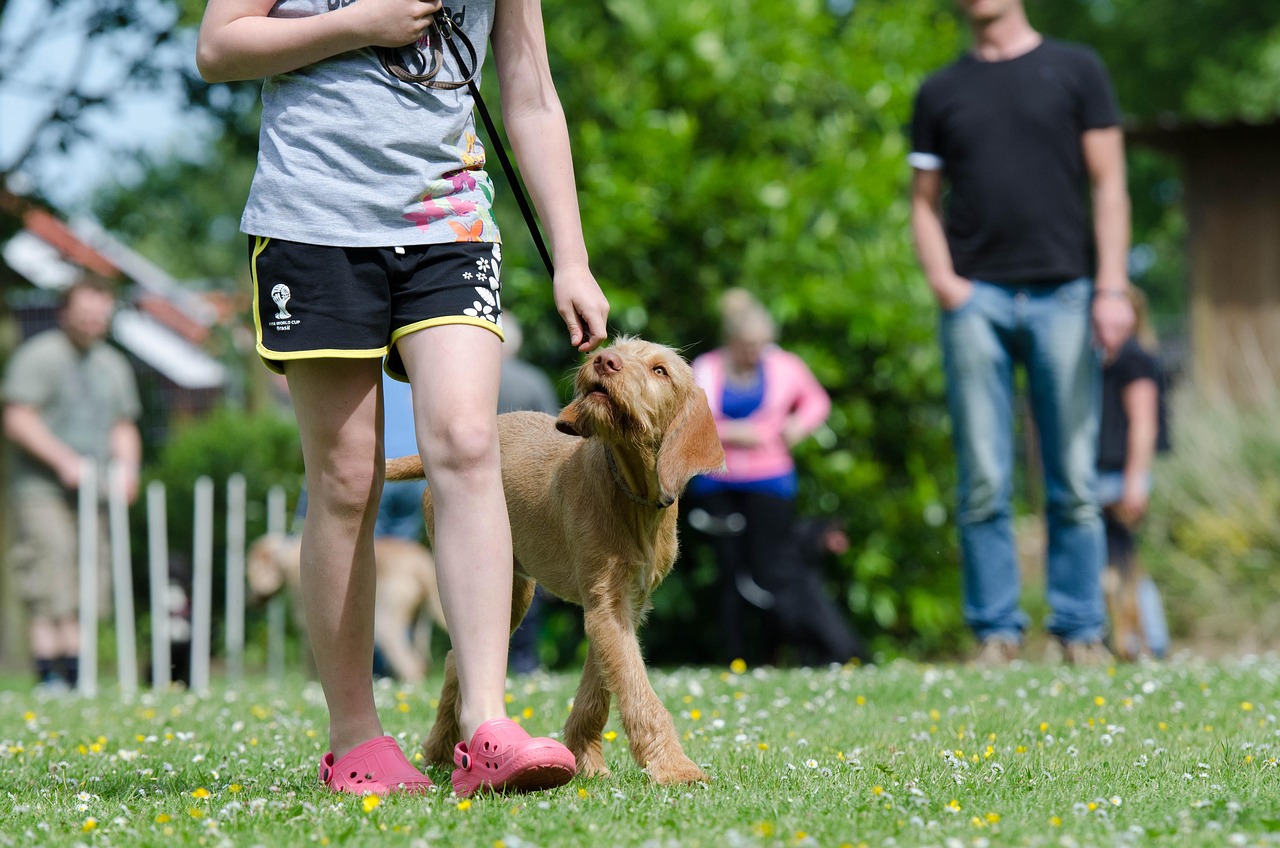
Focus heavily on cues that manage space and impulse control. A rock-solid “stay,” “leave it,” and “place” (go to your bed) can prevent accidental collisions, resource guarding, and unwanted contact. Practice these cues while holding a heavy bundle—such as a bagged sack of flour or a realistic baby doll—so your dog gets used to your altered posture and movement patterns.
- Leave It: Crucial for dropping forbidden items like dropped pacifiers, diapers, or baby toys.
- Place: Essential for keeping your dog out from underfoot during frantic feeding or changing moments.
- Come: Ensures your dog immediately disengages from a distraction and returns to you.
- Off: Vital for stopping a dog from jumping up when you are holding the baby.
Incorporate these cues into your daily routine. Ask your dog to “place” while you prepare meals or fold laundry. Practice “leave it” with everyday items around the house. The more automatic these responses become, the safer and calmer your household will run when divided attention becomes your daily norm.
To test the reliability of these cues, practice them under varying levels of distraction. Have a partner walk past your dog while you practice a “stay,” or drop safe items near them while practicing “leave it.” True reliability means your dog can execute the cue even when their environment is chaotic, noisy, or filled with competing temptations.
Recognizing Subtle Canine Stress Signals
One of the most critical responsibilities for expecting parents is learning to read canine body language accurately. Many owners mistakenly believe that if a dog is not growling, snapping, or barking, the animal is entirely comfortable and happy. In reality, dogs communicate discomfort and stress through nuanced, subtle signals long before they resort to aggressive displays.
Familiarize yourself with early stress indicators: frequent yawning when the dog is not tired, sudden lip-licking or tongue flicking, turning the head away to avoid eye contact, lifting a single paw, or showing the whites of the eyes (often called “whale eye”). Stiffening of the body, closed mouths, and low, slow tail wags can also indicate internal tension rather than friendliness.
If you notice these subtle cues, immediately remove your dog from the stressful situation or redirect their attention to a neutral activity. Never punish a dog for displaying stress signals like a low growl; a growl is a vital warning communication. If you punish or suppress a growl, you remove your dog’s warning system, which can result in an unpredictable, unannounced snap in the future. Instead, thank the dog for communicating, create safe distance, and consult a professional behaviorist to address the root cause.
Managing Resource Guarding and Anxiety
Resource guarding—the instinctual defense of food, toys, sleeping spaces, or even human attention—is a common behavior that requires careful management in a multi-species household. If your dog has any history of growling or stiffening when approached near their food bowl or favorite toy, address this behavior immediately with a certified professional positive-reinforcement trainer.
Even if your dog has never shown signs of guarding, take preventative measures. Feed your dog in a quiet, low-traffic area where they will never be disturbed by a crawling toddler. Pick up high-value toys when free play is over, rather than leaving them scattered across the floor where a child might later try to take them away.
Pay close attention to subtle warning signals of canine stress or discomfort. Many owners miss early indicators like whale eyes (showing the whites of the eyes), lip licking, freezing, or stiffening, waiting instead for a growl or snap. Recognizing these subtle signals allows you to intervene, remove the stressor, and prevent escalating tension.
When managing human attention guarding, ensure your dog learns that the arrival of the baby does not mean the complete cessation of affection. While you may have less time for long cuddle sessions, carve out micro-moments of calm connection when the baby is sleeping or being tended to by a co-parent. Reassure your dog with gentle, quiet praise so they view the baby’s presence as a neutral or positive event rather than a direct threat to their status within the human pack.

The Homecoming: Executing the First Introduction
After months of preparation, the big day arrives. When you return home from the hospital, your dog’s excitement will be at an all-time high. It is vital to manage this initial homecoming with calm deliberation.
Before you bring the baby inside, have a partner or family member enter the house first to greet the dog, burn off initial frantic energy, and ensure the environment is calm. When you walk through the door, do not immediately thrust the baby into the dog’s face. Instead, greet your dog calmly and neutrally, ignoring any excessive jumping until they settle down.
Step-by-Step Introduction Protocol
Once everyone is calm, you can orchestrate the first official sniff:
- Secure the dog: Have one adult hold the dog securely on a loose leash or behind a secure baby gate.
- Hold the baby: Another adult should hold the infant securely, seated comfortably or standing a few feet away.
- Allow controlled approach: Allow the dog to approach at their own pace. Keep the interaction brief—just a few seconds of sniffing.
- Reward calm behavior: Praise and treat the dog generously for calm, relaxed body language (soft eyes, relaxed posture, gentle sniffing).
- End on a positive note: Separate the dog and baby after a brief moment, preventing sensory overload for both the pet and the child.
Never force physical contact, and never scold your dog for showing nervousness or curiosity. If your dog exhibits hard staring, whale eyes, growling, or excessive trembling, calmly remove them to a quiet room to decompress.
Keep in mind that the first introduction is just the beginning. Maintain a calm, upbeat energy throughout the first few weeks, ensuring your dog still receives regular attention, exercise, and affection from family members, even as your schedule revolves around the new infant.
Daily Management and Long-Term Coexistence
Once the initial homecoming excitement fades, the daily reality of managing a dog and an infant begins. The golden rule of pet safety with young children is simple: active, direct supervision is mandatory at all times. Never leave a dog and a baby or toddler alone in a room together, even for a few seconds, no matter how trustworthy you believe your pet is.
As your baby grows into an energetic toddler, your dog will need continuous safe zones where they can escape to rest undisturbed. Teach your child early on that the dog’s crate, bed, and feeding area are off-limits. By pairing proactive behavioral preparation with strict management, you create a harmonious, safe home environment where both your dog and your growing child can thrive together.
Maintain consistent exercise routines for your dog throughout the postpartum months. A tired dog is far less likely to develop destructive behaviors or jump out of excitement. If necessary, enlist the help of a trusted dog walker or neighbor to ensure your pet’s physical and mental stimulation needs are met while you navigate the demanding early weeks of newborn care.
Frequently Asked Questions
When should I start preparing my dog for the new baby?
Ideally, you should begin preparation four to six months before your due date. This gives your dog adequate time to adjust to schedule changes, boundary adjustments, and sensory desensitization without feeling rushed or overwhelmed by sudden changes.
What should I do if my dog shows fear toward baby equipment?
Never force your dog to interact with strollers, car seats, or bouncers. Instead, place the items in common living areas, toss high-value treats near them, and let your dog inspect them voluntarily at their own pace until their curiosity overcomes their initial hesitation.
How should I handle my dog’s exercise needs during the newborn stage?
Exhaustion is common for new parents, but your dog’s need for physical and mental stimulation remains constant. Enlist family members, hire a professional dog walker, or utilize puzzle toys and indoor enrichment games to ensure your dog stays balanced and calm during the postpartum transition.