For many busy households, outsourcing the weekly trip to the supermarket feels like a modern necessity. Ordering online saves time, bypasses weekend parking lots, and allows you to build a cart while sitting on the couch. Yet, when you run a thorough grocery delivery markup comparison, the true cost of that convenience often shocks even seasoned budgeters. Between item-level price inflation, service fees, delivery charges, and driver tips, clicking ‘place order’ can easily add 25% to 40% to your grocery bill compared to walking the aisles yourself.
Understanding where these costs hide is the first step toward reclaiming control of your food budget. While time certainly has monetary value, paying an exorbitant premium for routine staples can quietly drain hundreds of dollars from your household accounts over the course of a year. This guide breaks down the true financial mechanics of delivery apps, evaluates curbside pickup as a viable middle ground, and offers a practical decision framework to help you choose the right shopping method for every trip.
The Anatomy of a Delivery App Bill
When you look at a final receipt from a major third-party grocery delivery platform, the bottom line is rarely just the cost of the food. To evaluate whether the service is worth your hard-earned money, you have to look at how platforms structure their charges. The total cost is typically a combination of four distinct layers:
- Item-level markups: Many platforms do not charge in-store prices. They apply an invisible markup of 10% to 20% on individual items to cover platform operating costs while advertising low delivery fees.
- Service fees: These percentage-based or flat fees are tacked on at checkout to handle customer support, app maintenance, and operational overhead.
- Delivery fees: Ranging from nominal amounts to significant surcharges during peak hours or for express windows, this fee pays for the physical transport of your goods.
- Driver tips: Unlike standard restaurant tipping, grocery delivery involves heavy lifting, vehicle expenses, and careful item selection, making a fair tip an essential part of the compensation equation.
When you compound all four factors, a $100 cart of groceries can quickly balloon to $130 or $140 before you even factor in taxes. Furthermore, many consumers fail to realize that these platforms operate on a dual-revenue model: they charge the consumer fees while simultaneously taking a cut from the grocery retailer. This complex web of financial incentives means that the platform must continually extract revenue from every transaction, making every single digital basket inherently more expensive than its physical counterpart.
To put this into sharper perspective, consider how a standard weekly family grocery list reacts to these layered charges. If your household routinely spends $150 per week on basic staples, produce, and pantry goods, a 25% cumulative inflation and fee structure adds roughly $37.50 to that single trip. Over four weeks, you are paying an extra $150 strictly for the privilege of having the items brought to your doorstep. Over the course of a full 52-week year, that convenience adds up to nearly $2,000 in additional outlays—money that could otherwise be allocated toward emergency savings, debt reduction, or other vital household goals. Recognizing this compounding effect is vital for anyone trying to maintain strict fiscal discipline without completely abandoning modern digital conveniences.
Item-Level Price Inflation Audits
The most deceptive aspect of third-party delivery apps is item-level inflation. Many shoppers assume that because an app partners directly with their favorite local supermarket, the digital shelf tags mirror the paper tags hanging in the actual store aisles. Unfortunately, that is rarely the case.
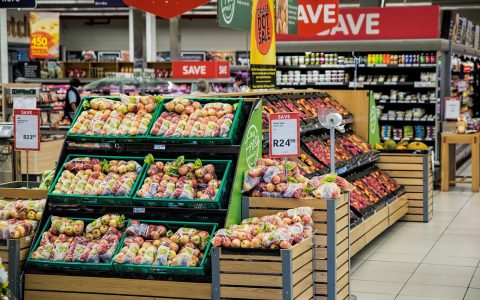
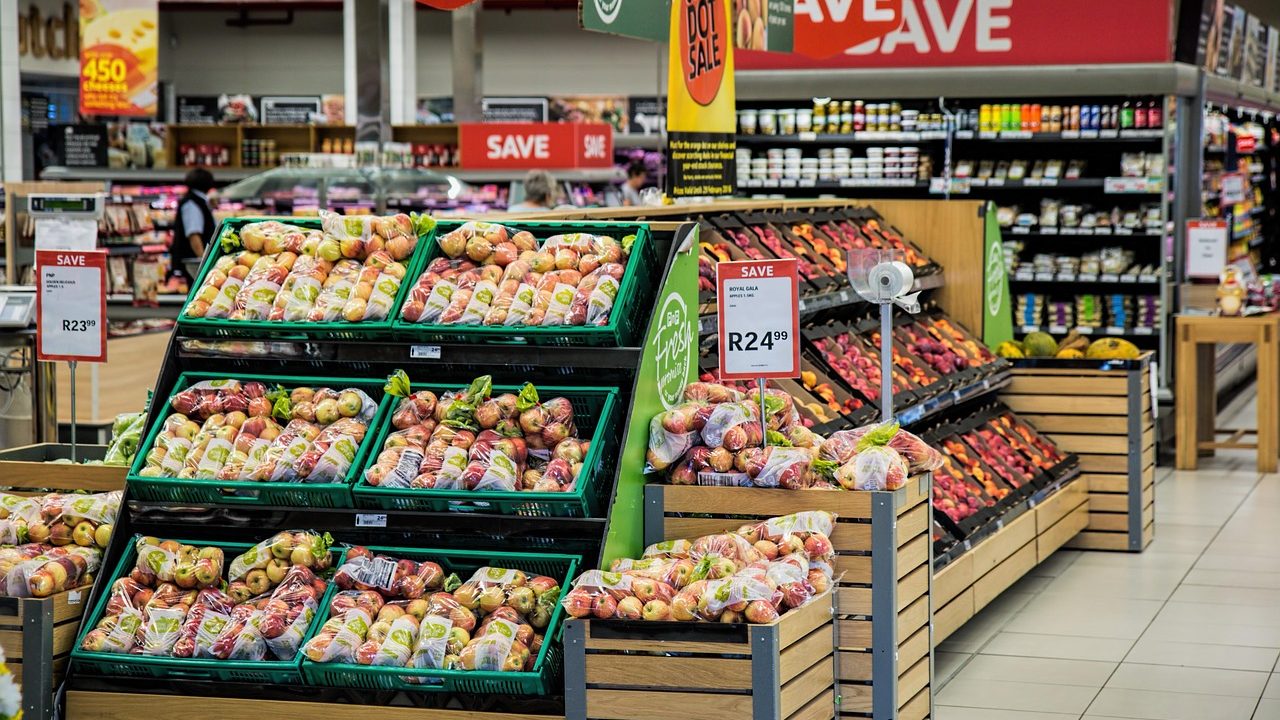
Supermarkets and delivery platforms often form partnerships where the app takes a cut of every sale. To protect their profit margins, platforms list items at a higher price online than you would see if you walked through the sliding doors. For example, a gallon of milk priced at $3.50 in-store might cost $4.15 on the app. A package of chicken breasts marked at $9.00 on the shelf might be listed at $10.80 digitally. Across a cart containing fifty individual items, these pennies and dollars compound rapidly.

Furthermore, promotional sales rarely translate cleanly to the digital storefront. Buy-one-get-one-free offers and store loyalty discounts are frequently excluded from delivery apps, meaning you miss out on weekly savings that would normally offset your total food expenditure. If you rely heavily on sales cycles to keep your grocery budget under control, delivery apps actively undermine that strategy. To test this phenomenon, try walking through your local store with the delivery app open on your phone; the discrepancy between physical and digital pricing across meat, produce, and packaged goods will quickly become apparent.
Savvy consumers can conduct their own mini-audit at home by comparing a recent digital receipt against the physical flyers or in-store prices of items they buy week in and week out. Often, non-perishable goods like canned tomatoes, pasta, and cleaning supplies carry some of the highest percentage markups because platforms know these items are routinely reordered without careful price scrutiny. When you audit your digital shopping cart line by line, you quickly realize that convenience apps target items with stable demand to maximize their hidden profit margins.
Curbside Pickup Fees vs. Store Prices
If you want to avoid the heavy markups of delivery without enduring the hassle of navigating crowded aisles, curbside pickup has emerged as a popular compromise. By ordering online and driving to the store to let an employee load your trunk, you alter the financial and temporal equation significantly.
At most major grocery chains, curbside pickup is either entirely free or carries a nominal flat fee (often waived if your order exceeds a certain dollar threshold, such as $35). Crucially, many traditional supermarkets honor in-store pricing for curbside pickup orders, meaning you do not pay the hidden item-level inflation found on third-party apps.
The trade-off shifts from financial cost to time cost. You still have to drive to the store, idle in a designated pickup bay, and wait for an associate to bring your bags out. However, you eliminate the temptation of impulse buys—those extra items you toss into your cart while wandering past end-caps—which can easily save you $20 to $30 per trip. For budget-conscious shoppers looking for a middle ground, curbside pickup delivers most of the time-saving benefits of delivery while preserving in-store pricing integrity.
It is also worth noting that curbside pickup protects you from out-of-stock surprises more effectively than many delivery workflows, because store employees fulfilling the orders are immersed in the physical inventory environment and can make immediate, intelligent replacements when communicated with through the retailer’s native app interface. By taking advantage of free curbside pickup programs offered directly by regional supermarket chains, households can capture the digital convenience of building a cart from home while completely bypassing the predatory item markups associated with third-party delivery aggregators.
The Psychology of Digital Grocery Ordering
Human psychology plays a massive role in how we spend money on grocery apps compared to physical stores. When walking down a physical aisle, sensory cues—the smell of bakery items, the bright colors of seasonal displays, and the tactile nature of picking up a product—trigger distinct shopping impulses. However, digital storefronts manipulate consumer behavior in entirely different ways.
First, online shopping removes the immediate friction of handing over physical money or seeing a rising total at the register. A digital cart is abstract; numbers on a screen do not feel as real as physical items piling up in a shopping cart. Second, grocery apps use sophisticated recommendation algorithms designed to upsell you at checkout. Prompts like ‘Frequently bought together’ or ‘Don’t forget your snacks’ encourage last-second additions that slip past your initial budgeting mental math.
Moreover, the convenience of saving payment information on file turns purchasing into a one-tap action. This lack of friction lowers your psychological defenses, making it far easier to justify convenience fees and premium items that you would normally bypass during a traditional shopping trip. Understanding these subtle digital triggers allows you to build stronger mental barriers. For instance, forcing yourself to clear suggested add-ons and manually reviewing your cart total before clicking confirmation can significantly reduce accidental overspending.
Additionally, online shopping eliminates the physical fatigue that naturally curtails impulse buying in a massive supercenter. When pushing a heavy physical cart for forty minutes while dodging other shoppers, your brain naturally seeks closure, leading you toward the checkout lanes. Conversely, browsing an app from the comfort of a sofa invites endless scrolling, comparison fatigue, and subsequent impulse additions. Recognizing that digital environments encourage lax spending habits helps you treat the app screen with the same financial caution you would bring to a high-end boutique.
Calculating Your Personal Time Value
To make an objective decision about how to shop for groceries, you must weigh financial costs against your personal time constraints. Economists and frugal living experts often suggest calculating your ‘hourly time value’ to determine whether outsourcing a chore makes sense.
Imagine a traditional grocery trip takes you a total of 90 minutes. This includes 20 minutes of driving round-trip, 50 minutes of shopping and checking out, and 20 minutes of unloading and putting away groceries. A curbside pickup trip might reduce that time to 50 minutes (driving and waiting). Ordering delivery might reduce your active involvement to 10 minutes of app browsing and 10 minutes of putting items away.
If the delivery markup costs you an extra $30, ask yourself whether saving 70 minutes of your weekend is worth $30 to you. For a high-income professional working sixty hours a week, that trade-off might be entirely rational. For a household working hard to stretch every dollar of a fixed income, saving that $30 is equivalent to earning $25 an hour tax-free for your own labor.
To calculate this accurately for your household, divide your net monthly household income by your total monthly working hours to find your baseline hourly rate, then compare that figure against the effective hourly cost of the grocery markup. If paying $30 to save an hour of your time costs more than your actual earnings per hour, the financial math favors doing the shopping yourself. Conversely, if your schedule is deeply compressed by critical caregiving duties or intense career demands, outsourcing routine labor can prevent burnout, protecting your mental health and overall productivity.
Hidden Pitfalls of Outsourced Grocery Shopping
Beyond the direct financial markups, outsourcing your grocery shopping introduces several operational risks that can cost you time and money in less obvious ways.
- Substitution headaches: When an item is out of stock, personal shoppers must select a replacement. Without clear instructions, you may end up with an expensive brand-name substitute or an unhelpful alternative that you cannot use.
- Quality control issues: Selecting bruised produce or short-dated meat is easy to avoid when you shop yourself, but trust-based delivery relies entirely on the discretion of a stranger who may be rushing to complete an order.
- Refund friction: Dealing with missing items, damaged goods, or incorrect substitutions requires submitting customer service claims, which can be time-consuming and frustrating to resolve.
- Subscription traps: Many delivery services push monthly or annual membership plans, promising free delivery in exchange for an upfront fee. If you do not use the service frequently enough, the subscription fee wipes out any perceived savings.
These friction points remind us that convenience is never entirely frictionless; it simply shifts the burden of labor and error management from the store to an intermediary.
Furthermore, dealing with customer support to resolve damaged goods or incorrect orders often requires submitting photographic proof and waiting hours or days for account credits rather than immediate cash refunds. This administrative overhead can erode the time-saving benefits that prompted you to use the app in the first place, leaving you frustrated and financially out of pocket until the resolution clears.
A Practical Decision Framework for Budget Shoppers
You do not have to adopt an all-or-nothing approach to grocery shopping. The most financially resilient households treat delivery, pickup, and in-store visits as tools in a tactical toolbox, deploying each based on specific weekly constraints.
Use this simple framework to decide how to handle your next food restock:
- Audit your schedule: Look at your upcoming week. If you are facing an unusually heavy work deadline or family obligation, the time saved by outsourcing is genuine and necessary.
- Check the pricing structure: Before finalizing an order on a third-party app, check if your local supermarket offers its own native delivery or curbside pickup app with lower or zero item markups.
- Consolidate heavy staples: If you need heavy, bulky items like bottled water, pet food, or large sacks of flour, ordering them via delivery or pickup saves physical wear and tear on your body, making the service fee easier to justify.
- Maintain the weekly anchor trip: Whenever possible, keep traditional in-store shopping as your baseline for fresh produce, meat, and dairy, where selecting your own items guarantees quality and prevents unwanted markups.
By intentionally matching your shopping method to your immediate time and budget realities, you can enjoy the best of modern convenience without letting hidden markups quietly erode your household financial goals.
To build a sustainable routine around this framework, try mapping your shopping choices a month in advance based on predictable calendar pressures. For instance, weeks with intense professional travel or school projects might warrant curbside pickup, while standard weeks benefit from a relaxing Saturday morning trip down the physical supermarket aisles. Diversifying your approach ensures that you never fall into an expensive autopilot loop where convenience becomes a costly default.
Frequently Asked Questions About Grocery Delivery Costs
To help you navigate your grocery options with maximum clarity, here are answers to common questions regarding delivery markups and shopping strategies.
Are native grocery store apps cheaper than third-party delivery apps?
Generally, yes. Supermarkets that operate their own delivery or curbside pickup services typically charge in-store prices or apply much lower, transparent fees compared to independent third-party platforms. Always check your local grocer’s proprietary app before using a national delivery aggregator.
How much should I tip grocery delivery drivers?
Unlike standard restaurant tips which are based strictly on a percentage of the food total, grocery delivery tipping should account for the physical labor involved. A good baseline is 10% to 15% of the order total, adjusted upward for heavy items, bad weather, or long travel distances, with a minimum floor of $5.
Can I still use store loyalty cards and digital coupons on delivery apps?
It depends on the platform. Some native store apps allow you to link your loyalty account to redeem weekly discounts and digital coupons. However, third-party apps frequently lock you out of these savings, treating digital orders as separate transactions ineligible for standard store promotions.
What is the absolute best way to minimize grocery spend if I must use delivery?
If delivery is non-negotiable due to mobility or schedule constraints, minimize costs by batching orders into larger, less frequent trips, avoiding high-markup convenience items, checking for free delivery subscription trials, and carefully opting out of expensive brand-name replacements when items go out of stock.