When dark streaks, stubborn lichen colonies, and dense moss mats begin spreading across your roof shingles, hiring a professional exterior washing company quickly moves from a cosmetic preference to a vital home maintenance priority. However, evaluating contractor estimates in the exterior cleaning industry is rarely straightforward. Quotes for the exact same single-family home can easily swing from $350 to well over $1,500, leaving property owners confused about what constitutes a fair market rate versus an overpriced package or an under-equipped fly-by-night operator. Using a dependable roof cleaning contractor cost estimator framework empowers you to decode complex pricing structures, analyze chemical tiers, evaluate equipment specifications, and protect your home from destructive high-pressure tactics.
Professional exterior maintenance is not a commoditized, one-size-fits-all trade. The final cost of an exterior wash project fluctuates based on actual working roof surface area, structural pitch, architectural complexity, local labor rates, material delicacy, and the biological severity of organic growth. Homeowners who simply select the lowest bidder often find themselves dealing with damaged asphalt granules, ruined landscaping, voided shingle warranties, or cracked tiles. To make an informed, cost-effective hiring decision, you must understand how professional estimators calculate their numbers, how soft washing mechanics function, what chemical formulations are safe, and which red flags indicate an unqualified contractor.
Understanding Square Footage Pricing Math
Most reputable exterior cleaning companies do not calculate bids based on your home’s finished interior square footage or ground-floor footprint. Because a sloped roof has significantly more surface area than the foundation beneath it, estimators apply geometric pitch multipliers to convert horizontal square footage into actual surface area. For example, a home with a flat footprint of 2,000 square feet will have substantially more actual roof area if it features a steep 9:12 or 12:12 A-frame roof compared to a gentle 4:12 ranch roof.
To calculate true working area, contractors measure the ground footprint (including overhangs, covered porches, and attached garages) and apply standard pitch multipliers:
- Low Pitch (3:12 to 4:12): Multiplier of 1.05 to 1.08. A 2,000 sq. ft. footprint yields approximately 2,100 to 2,160 sq. ft. of roof surface.
- Moderate Pitch (5:12 to 7:12): Multiplier of 1.10 to 1.20. A 2,000 sq. ft. footprint translates to roughly 2,200 to 2,400 sq. ft. of roof surface.
- Steep Pitch (8:12 to 10:12): Multiplier of 1.25 to 1.35. A 2,000 sq. ft. footprint expands to 2,500 to 2,700 sq. ft. of roof surface.
- Extreme Pitch (11:12 to 12:12 or greater): Multiplier of 1.40 to 1.60+. A 2,000 sq. ft. footprint can easily exceed 2,800 to 3,200 sq. ft. of reachable roof surface.
As a national baseline, professional soft washing services generally range from twenty to forty-five cents per square foot for standard asphalt shingle roofs. For a standard 2,000-square-foot footprint home with a moderate pitch yielding roughly 2,500 square feet of actual surface area, a baseline estimate at thirty cents per square foot lands around $750. However, this is only the foundational baseline before accounting for site-specific physical complexities.
Pitch and Access Factors
Roof slope directly dictates crew size, time on site, and required safety gear. Low-pitch roofs (4:12 or below) are considered walkable by OSHA standards in dry conditions, allowing technicians to maneuver freely with minimal harness tethering and rapid wand work. In contrast, steep roofs (7:12 and above) require continuous fall-arrest harness systems, roof anchors, specialized ridge hooks, and slow, deliberate pacing. These extra safety setups translate directly to higher labor charges.
Multi-Story Heights and Architectural Complexity
Two-story, three-story, or walkout basement properties introduce substantial elevation challenges. Pumping cleaning solutions forty feet vertically requires high-capacity commercial equipment or extensive ladder staging. Furthermore, architectural features like multiple dormers, deep valleys, Dutch hips, turrets, and intersecting gables demand constant repositioning and meticulous hand-spraying. Contractors often add a 15% to 35% surcharge on homes with complex architecture to account for the extended on-site labor hours required.
Regional Labor and Supply Disparities
Geographic location plays a substantial role in exterior service rates. In major metropolitan markets with elevated operational costs, commercial vehicle insurance, and prevailing wage rates, baseline prices often land between thirty-five and fifty-five cents per square foot. In rural and lower-cost-of-living regions, competitive bids frequently range between eighteen and twenty-eight cents per square foot. Always demand a detailed, itemized line-item breakdown so you can see precisely how your roof’s dimensions, pitch, and height translate into the quoted dollar amount, preventing padded square-footage figures.
Soft Washing Versus High-Pressure Washing
One of the most vital technical distinctions in the exterior building maintenance industry is the difference between true soft washing and traditional high-pressure washing. Leading asphalt roofing manufacturers—such as GAF, Owens Corning, and CertainTeed—explicitly state in their technical service bulletins and warranty manuals that high-pressure washing devices should never be used on asphalt shingles. Blasting composite shingles with high water pressure dislodges the ceramic-coated mineral granules embedded into the fiberglass mat.
These mineral granules serve two essential protective roles: they shield the asphalt substrate from deteriorating under ultraviolet (UV) solar radiation and provide the material’s class-rated fire resistance. Stripping away granules through mechanical pressure leaves the raw asphalt exposed to sun degradation, dramatically shortening the remaining operational lifespan of the roof by years. Furthermore, concentrated water jets can easily slice into aged shingle edges, break delicate adhesive seal strips, and drive pressurized water upward under the overlapping shingle tabs, saturating underlayment, rotting wooden roof decking, and causing attic mold growth.
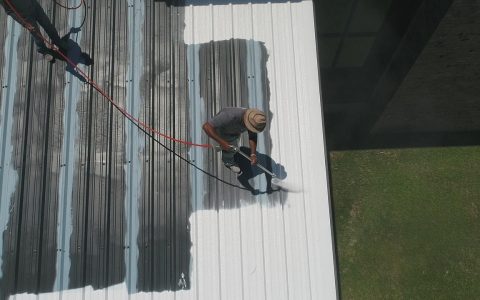
A certified, professional contractor employs a dedicated low-pressure soft-washing methodology. This approach utilizes specialized chemical delivery pumps that operate at very low pressures—typically between 60 and 300 pounds per square inch (PSI), which is roughly equivalent to standard residential tap pressure. Rather than relying on kinetic force to tear dirt and biological growth away, soft washing relies entirely on precisely measured chemical sanitization. The cleaning solution penetrates the microscopic roots of algae, moss, and lichen, killing the organisms at their cellular source so they can be rinsed away with minimal water force or left to weather off naturally.
When reviewing bids, look closely at the equipment line items. If a contractor proposes bringing a 3,500 or 4,000 PSI gas-powered washer onto your roof deck without a dedicated downstream low-pressure chemical applicator, decline the estimate immediately. Commercial high-pressure rigs belong strictly on unpainted flatwork, aggregate concrete pads, and unsealed masonry, never on residential asphalt shingles, delicate clay tiles, or cedar shakes.
Soft washing rigs are engineered specifically for chemical distribution. They use 12-volt, pneumatic, or gas-driven diaphragm pumps fitted with wide-aperture spray tips (such as 40-degree soap nozzles) that apply high volumes of liquid (typically 5 to 10 gallons per minute) at extremely low exit velocity. This gentle delivery coats the shingles evenly without disturbing a single granule, preserving both manufacturer warranties and roof integrity.

Chemical Solution Tiers and Formulations
The cleaning solutions utilized in professional soft washing are formulated compounds. To evaluate bids intelligently, you need to understand what chemicals will be sprayed over your home, how they react with roofing materials, and what safeguards are necessary. Exterior cleaning contractors generally work with three distinct chemical tiers:
Tier 1: Sodium Hypochlorite (SH) and Surfactant Blends
Sodium hypochlorite (commercial-grade bleach, typically diluted to a 2% to 4% active solution for roofs) is the primary industry standard recommended by the Asphalt Roofing Manufacturers Association (ARMA). SH acts as an aggressive biocide that oxidizes organic growth on contact. When combined with specialized foaming surfactants, the solution clings to sloped shingles rather than running off immediately, allowing the chemical to dissolve algae filaments, moss roots, and lichen disks. Black roof streaks caused by the cyanobacteria Gloeocapsa magma vanish within ten to twenty minutes. However, because SH is potent, it requires meticulous plant protection and metal neutralization.
Tier 2: Sodium Percarbonate and Oxygen-Based Formulations
Sodium percarbonate is an oxygen-releasing chemical compound that breaks down into hydrogen peroxide, water, and sodium carbonate upon contact with water. It offers an eco-conscious alternative for homeowners seeking zero chlorine exposure around sensitive gardens or koi ponds. While completely biodegradable and gentle on surrounding soil, oxygenated solutions act much more slowly, often demand moderate surface agitation with specialized soft-bristle brushes, and may require multiple passes to clear severe, entrenched moss build-ups. Consequently, labor costs for sodium percarbonate treatments are typically 20% to 40% higher due to increased time on site.
Tier 3: Quaternary Ammonium Compounds and Biocidal Detergents
Quaternary ammonium compounds (frequently branded as long-term residual biocides) are slow-acting sanitizers often applied to roofs as a preventative treatment or for delicate materials like natural cedar shake and historic slate. These solutions work gradually over a period of two to six months, killing biological growth while relying on natural rain cycles to wash away dead organic residue. They leave behind a light microscopic barrier that retards new spore growth for up to two years without stressing delicate timber or painted trims.
Always require contractors to identify their active ingredients and expected dwell times in their written proposal. High-quality contractors will specify their mixing ratios, surfactant grades, and gutter-neutralizing protocols to ensure your building materials are protected against chemical etching or premature corrosion.
Material-Specific Considerations: Shingle, Tile, Metal, and Shake
Different roofing substrates require distinctly customized cleaning protocols. A generic cleaning technique applied indiscriminately across all materials is a recipe for catastrophic damage and expensive homeowner insurance claims.
- Asphalt Architectural and 3-Tab Shingles: Require strict chemical-only soft washing at under 100 PSI. Never allow mechanical sweeping, stiff wire brushing, or high-pressure blasting, which permanently shears off ceramic granules and voids manufacturer defect warranties.
- Concrete and Spanish Clay Tiles: Tiles are brittle and prone to structural cracking under foot traffic. Professional cleaners often clean tile roofs entirely from ladders or aerial bucket lifts using low-pressure chemical flooding. If walking is required, technicians must step only on the reinforced overlapping lower thirds of the tiles using foam-cushioned footwear.
- Standing Seam and Corrugated Metal: Metal roofs demand specialized, non-acidic cleaners to protect factory fluoropolymer coatings (such as Kynar 500). High sodium hypochlorite mixtures can pit bare fasteners, corrode exposed aluminum components, and leave chalky oxidation streaks if allowed to dry on the surface without rapid, continuous freshwater rinsing.
- Cedar Shakes and Wood Shingles: Wood roofs should never be bleached with strong chlorine solutions, as bleach destroys the natural lignin that holds wood fibers together, leaving the shakes brittle, gray, and prone to splitting. Cedar requires oxygenated percarbonate cleaners or mild sodium hydroxide solutions followed by a neutralizing wood brightener (such as oxalic or citric acid) to restore natural pH balance.
Landscaping Protection and Chemical Runoff Rules
Because soft washing uses concentrated chemical solutions to kill moss and algae, controlling overspray and managing downspout runoff is a major operational responsibility. Unmitigated runoff containing concentrated sodium hypochlorite can scorch delicate turf, kill perennial flower beds, burn the foliage of mature ornamental trees, and alter soil chemistry for an entire growing season.
A dependable, licensed exterior cleaning crew follows a rigorous plant mitigation protocol before, during, and after application:
- Pre-Wetting: Before any chemical enters the pump lines, a designated ground technician uses fresh water to saturate all grass, ornamental shrubs, hedges, and flower beds surrounding the home’s perimeter. Saturated plant root cells are fully hydrated and incapable of absorbing drifting chemical overspray.
- Downspout Diversion and Capture: Contractors should attach heavy-duty lay-flat poly bags or plastic diversion tubing to the ends of all downspout leaders. This routes chemical runoff directly into holding barrels for proper disposal or directs it to safe gravel drainage zones, keeping concentrated bleach away from foundation planting beds.
- Continuous Misting and Rinsing: While the roof technician works on the roof deck, a dedicated ground worker continuously sprays fresh water over the exterior walls, windows, window screens, and landscaping to dilute any airborne drift immediately.
- Post-Application Neutralization: After the roof treatment is complete, the crew treats all nearby foliage with a specialized plant wash containing fertilizer buffers and sodium thiosulfate, which instantly neutralizes lingering chlorine molecules and restores healthy soil micronutrients.
Furthermore, contractors must abide by Clean Water Act guidelines and municipal stormwater regulations. It is strictly illegal in most jurisdictions to direct untreated, concentrated chemical runoff straight into municipal storm sewers that drain directly to natural waterways, lakes, and reservoirs. Inquire whether your prospective contractor carries specialized downspout containment tanks to remain compliant with local environmental runoff ordinances.
Spotting Red Flags in Professional Bids
The exterior home cleaning trade has a relatively low financial barrier to entry, meaning property owners routinely encounter inexperienced hobbyists and predatory operators posing as seasoned exterior cleaning specialists. Scrutinizing estimates for common warning signs will protect your home from severe damage and legal liabilities.
Watch out for these major red flags during the bidding phase:
- Undefined or Ambiguous Scope of Work: If a bid simply reads “Roof Cleaning – $450” without outlining the exact mechanical process, chemical formulations, downspout management, or plant protection steps, it offers zero contractual protection if damage occurs.
- Pressure Washer Mentioned for Shingles: If an estimate lists equipment like “surface cleaners,” “turbo nozzles,” or “4,000 PSI commercial washing” for an asphalt shingle or cedar roof, reject the proposal immediately.
- Demands for Total Upfront Payment: While a modest 10% to 25% deposit is standard for scheduling, any contractor requiring 100% upfront payment before unloading equipment is a severe financial risk. Standard payments should always be linked to satisfactory completion and final walkthrough inspection.
- Absence of Dedicated Workers’ Compensation Insurance: General liability insurance covers physical property damage (such as broken skylights or ruined plants), but it does not cover a technician who falls from your second-story roof. If an uninsured contractor is injured on your property, your personal homeowner insurance policy can be dragged into expensive medical liability litigation. Always demand a Certificate of Insurance (COI) issued directly from the insurer showing active workers’ compensation coverage.
- Unsolicited “Storm Chaser” Door Knockers: Be extremely skeptical of mobile, out-of-state contractors who canvas neighborhoods following heavy rains or hail events claiming your roof is infested with toxic moss that requires immediate, same-day cash treatment.
- Excessively Low Bids: A quote coming in 50% below the local market average usually indicates that the company cuts corners on commercial insurance, uses unskilled labor, skips necessary landscaping protection steps, or uses improperly diluted, ineffective chemicals.
Step-by-Step Vetting Checklist for Homeowners
Before executing any service agreement or handing over a security deposit, run every prospective exterior cleaning company through this systematic verification checklist:
- Verify Business Registration: Confirm that the contractor operates as an active, registered LLC or corporation with your state’s Secretary of State database. Avoid entities operating purely under unregistered personal names.
- Request Direct Insurance Proof: Require the contractor’s insurance broker to email a certificate showing at least $1,000,000 to $2,000,000 in General Liability coverage alongside active, statutory Workers’ Compensation insurance.
- Confirm Industry Training and Affiliations: Inquire if the crew holds technical certifications from respected exterior cleaning organizations, such as the Power Washers of North America (PWNA) or the SoftWash Systems network.
- Check Independent Local Reviews: Look up verified customer feedback across multiple platforms (Google Business, Better Business Bureau, Angi) rather than relying solely on cherry-picked testimonials posted on the contractor’s personal website.
- Demand a Written Landscaping Guarantee: Ensure the service contract explicitly holds the contractor financially accountable for replacing any shrubs, trees, turf, or flower beds scorched or killed by chemical overspray.
Comparing Quotes: Apples to Apples
When collecting three or four bids for your roof maintenance project, ensure you compare identical scopes of work. A low-priced bid might appear attractive initially, but it often omits crucial prep and safety tasks that a professional contractor includes as standard operating procedure.
| Bid Evaluation Criteria | Budget / Low-End Operator | Professional Soft-Wash Specialist |
|---|---|---|
| Application Method | High-pressure power washer or basic downstream injector | Dedicated low-pressure diaphragm pump (<100 PSI) |
| Chemical Formulations | Undiluted store bleach or harsh industrial degreasers | Calibrated sodium hypochlorite with specialized clinging surfactants |
| Landscape Protection | None, or only dry plastic sheeting | Pre-wetting, continuous misting, gutter diversion, and neutralizing agents |
| Insurance Coverage | Basic auto liability or no active policy | Comprehensive $2M General Liability + Statutory Workers’ Compensation |
| Warranty Included | None (“tail-light” warranty) | 1- to 3-year written moss and algae-free guarantee |
Examine whether the bid includes ancillary maintenance tasks such as clearing surface tree debris, flushing out gutter downspouts after washing, and doing a final freshwater rinse of all exterior windows to remove drying chemical spots. Factoring in these additional service details gives you an accurate comparison of overall value.
Warranties and Workmanship Guarantees
A reputable exterior cleaning business stands behind its services with a clear, written guarantee. Because chemical soft washing kills the deep-seated root structures of moss, lichens, and cyanobacteria, a thoroughly treated roof should remain visually clean and structurally free from significant organic recolonization for a substantial timeframe.
Most reputable soft-washing contractors provide a stain-free or moss-free warranty lasting between twelve and thirty-six months. When evaluating warranty language, check for specific inclusions and exclusions:
- Free Re-Treatment Clauses: If dark streaks or green algae return within the warranty period, the contractor should return and re-treat the affected sections at zero additional charge.
- Environmental Caveats: Warranties generally exclude localized staining caused by heavy, unmanaged tree canopy overhangs, excessive pine needle accumulation, or non-organic soot deposits from nearby chimneys or industrial exhaust.
- Voiding Actions: The warranty contract should clearly describe what actions void coverage, such as third-party high-pressure washing, unauthorized chemical treatments, or structural roof repairs performed after the cleaning date.
Ensure that the contractor’s methods align fully with your shingle manufacturer’s warranty standards. Using non-approved high-pressure techniques can void your shingle manufacturer’s 30-year or lifetime material defect warranty. Retain all contractor invoices, chemical spec sheets, and warranty certificates in your home records folder for future property disclosures if you decide to sell your home.
Frequently Asked Questions
How often does a residential roof actually need to be cleaned?
In most North American climates, a thorough professional soft-wash treatment lasts between three and five years. Homes situated in damp, heavily shaded wooded areas or humid coastal regions may require light preventative biocide treatments every two to three years, whereas homes in open, sunny regions may go five to seven years without needing biological remediation.
Can I clean my own roof with a rented power washer to save money?
DIY pressure washing is one of the leading causes of premature shingle failure and severe ladder fall injuries. Homeowners using rented pressure washers almost always use excessive mechanical force, shearing off vital asphalt granules and blowing water under the roof decking. Additionally, handling concentrated commercial biocides on a slippery, wet roof without professional fall-arrest harnesses presents severe safety hazards. Professional soft washing is far safer and more cost-effective over the long run.
Will chemical soft washing harm my outdoor pets or nearby wildlife?
When performed by a trained professional who adheres to strict downspout capture and post-rinsing neutralization protocols, soft washing poses minimal risk to domestic pets or wildlife. Reputable contractors require homeowners to keep pets indoors during active application and for two to four hours afterward until all hard surfaces and landscaping have dried completely.
How long does a professional roof soft-wash appointment take?
For an average single-family home (2,000 to 3,000 square feet of roof area), a professional two-person crew typically completes the entire project in two to four hours. This includes setup, thorough landscape pre-wetting, chemical dwell time, downspout flushing, perimeter rinsing, and final cleanup walkthroughs.
Conclusion
Using an objective roof cleaning contractor cost estimator approach protects both your home’s structural integrity and your family’s budget. Rather than simply pursuing the cheapest bid, base your contractor selection on transparent square-footage calculations, confirmed low-pressure soft-washing methodologies, verified workers’ compensation coverage, and thorough landscaping protection protocols. By taking the time to vet contractor credentials, analyze chemical formulations, and demand written guarantees, you can restore your home’s exterior appeal safely while adding years of reliable performance to your roofing investment.