When looking for ways to trim monthly utility expenses, homeowners often target major energy hogs like heating, cooling, and water heating. Yet, lighting remains a constant contributor to your household electricity bill, operating in hallways, kitchens, living rooms, and exterior fixtures for hours every single day. Achieving true led lighting energy savings payback relies on understanding the direct mechanical differences between legacy incandescent bulbs and modern light-emitting diodes. By analyzing wattage draw, lumen output, and operating lifespans, you can determine exactly how quickly an upfront investment in new bulbs pays for itself.
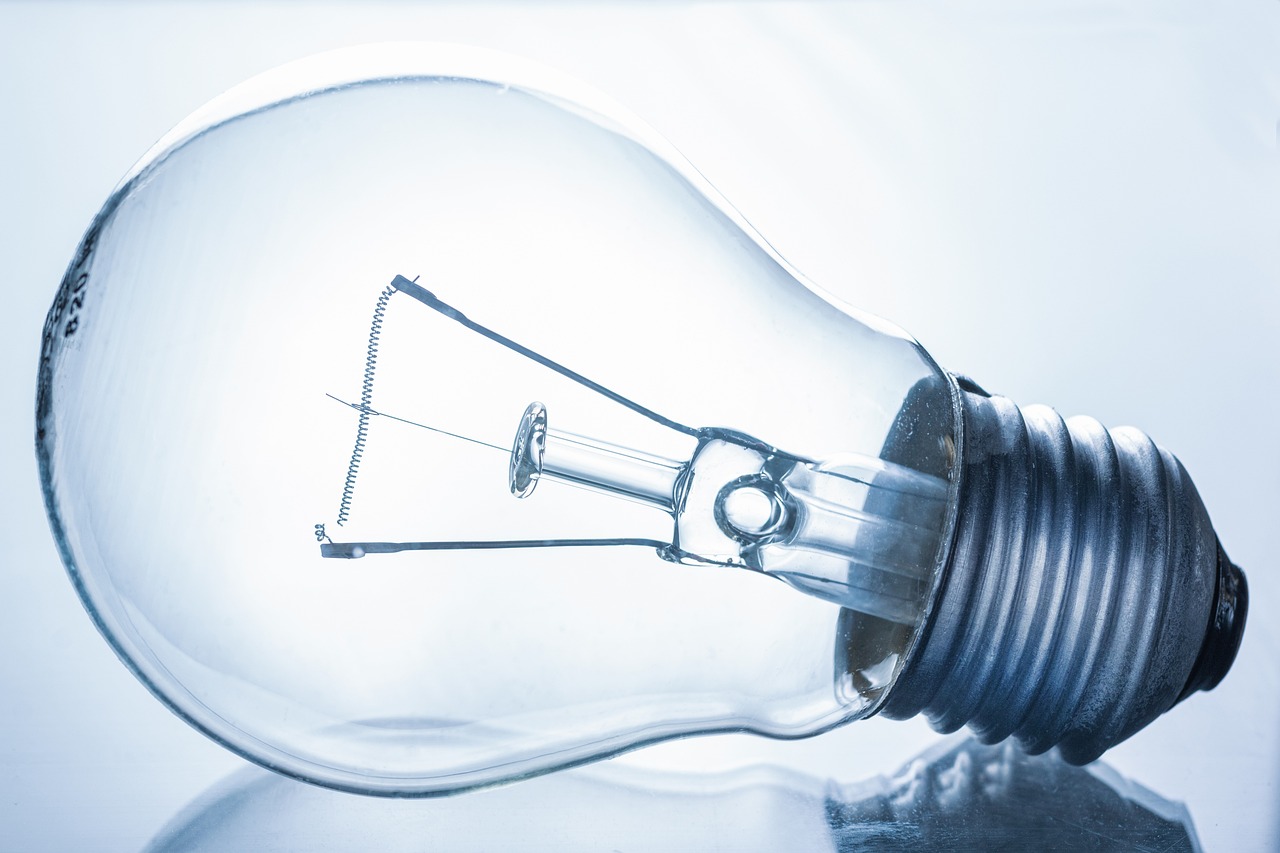
For decades, residential lighting was dominated by standard incandescent technology. These bulbs operate by passing electrical current through a thin tungsten filament until it heats up and glows. While cheap to manufacture and purchase initially, this process is remarkably inefficient. Roughly 90 percent of the energy consumed by an incandescent bulb is released as heat rather than visible light. Because electricity is billed by the kilowatt-hour (kWh), running dozens of hot, inefficient bulbs across a typical home adds up quickly on your monthly statement.
Solid-state lighting fundamentally changes that equation. LEDs pass electricity through a semiconductor material, exciting electrons and releasing photons directly as light with minimal thermal waste. This shift in physics allows a bulb drawing only 9 to 10 watts of electricity to produce the same visible brightness—measured in lumens—as a traditional 60-watt incandescent lamp. When you multiply that power reduction across twenty or thirty sockets in a standard American home, the cumulative drop in wattage draw creates substantial reductions in overall electricity costs.
Furthermore, understanding the macroeconomic factors of residential utility costs helps contextualize these savings. Utility rates across the United States have steadily trended upward over the last decade, influenced by grid modernization, fuel cost fluctuations, and regional infrastructure investments. Because lighting is an inescapable daily utility, reducing your baseline electrical load acts as a permanent hedge against rising utility tariffs. Even minor reductions in continuous wattage add up significantly over the course of a billing cycle, protecting your household budget from unexpected spikes during peak seasonal usage periods.
Decoding the Core Metrics: Lumens vs. Watts
To evaluate lighting efficiency accurately, modern consumers must abandon the old habit of shopping by wattage. In the era of incandescent bulbs, homeowners used wattage as a direct shorthand for brightness; a 60-watt bulb was brighter than a 40-watt bulb, and a 100-watt bulb lit up a large workspace. Because different lighting technologies require vastly different amounts of power to achieve the same visual output, wattage now measures power consumption, not brightness.
Brightness is measured in lumens. When reviewing packaging for replacement lamps, look for the lumen rating to ensure you are matching or exceeding the light output of your old fixtures. As a general benchmark for household spaces, a traditional 60-watt incandescent bulb generates approximately 800 lumens of light. A comparable LED bulb delivers that same 800-lumen output while consuming only 8 to 12 watts of electricity. Higher-output incandescent bulbs—such as 75-watt or 100-watt variants—are typically matched by LEDs consuming 11 to 15 watts and 16 to 20 watts, respectively.
Understanding this ratio is essential for calculating accurate lighting electricity cost projections. If you replace twenty 60-watt bulbs with 10-watt LEDs, you reduce your continuous lighting load from 1,200 watts to just 200 watts. Operating those bulbs for an average of three hours per day lowers your daily energy consumption for lighting from 3.6 kWh to 0.6 kWh, yielding immediate relief on your utility bill.
It is also helpful to understand how human perception of light interacts with these metrics. The human eye does not perceive light on a strictly linear scale. Doubling the lumen output does not make a room look twice as bright; rather, it produces a modest increase in perceived illumination. When retrofitting a home, many homeowners make the mistake of over-lighting spaces simply because LEDs are cheap to run. Maintaining appropriate lumen targets for specific room types—such as lower lumen levels for cozy bedrooms and higher levels for precision task areas—ensures optimal visual comfort while avoiding unnecessary energy waste.
Upfront Purchase Costs and Longevity
The primary hesitation many homeowners express when considering a whole-house lighting upgrade is the initial price tag. While a multi-pack of traditional incandescent or basic halogen bulbs once cost just a few dollars at the hardware store, individual residential LEDs carry a higher sticker price depending on specialty features, dimmability, and smart connectivity.
However, evaluating purchase price in isolation ignores the dramatic difference in operational lifespan. A standard incandescent bulb is designed to last roughly 750 to 1,000 hours of continuous operation. In a frequently used living space or kitchen fixture, an incandescent bulb often burns out within a year, requiring frequent replacements. In contrast, standard residential LEDs routinely achieve rated lifespans of 15,000 to 25,000 hours, with higher-tier commercial-grade products lasting even longer.
If a bulb operates for three hours daily, an incandescent must be replaced every year or so, whereas a quality LED can theoretically last for over a decade in the exact same socket. When you calculate the total cost of ownership over a five-to-ten-year window—factoring in how many replacement incandescent bulbs you would have purchased—the higher initial cost of LED technology is quickly offset by avoided replacement purchases.
Beyond direct purchase savings, longevity delivers secondary convenience benefits. Consider vaulted living room ceilings, exterior architectural fixtures, or stairwell sconces where changing a burnt-out bulb requires setting up a tall ladder or hiring professional assistance. Eliminating the recurring chore of frequent bulb replacement saves both personal time and potential physical risk associated with household maintenance tasks.
Calculating Your Household Energy Payback Period
The core concept behind led bulb ROI is straightforward: dividing the net upfront investment by the annual dollar savings yields the payback period in years. While utility rates vary significantly across different regions of the United States—ranging from under ten cents per kWh in parts of the Pacific Northwest and South to over twenty-five cents per kWh in the Northeast and California—the mathematical framework remains consistent.
To estimate your specific payback timeline, gather three variables for your high-use fixtures:
- Daily Operating Hours: Estimate how long the lights stay on in rooms like the kitchen, living room, and outdoor porch.
- Local Electricity Rate: Check a recent utility bill to find your exact cost per kilowatt-hour.
- Wattage Difference: Subtract the wattage of the replacement LED from the wattage of the bulb it replaces.
For example, suppose you operate ten 60-watt incandescent bulbs for an average of four hours per day in a high-traffic area. That consumes 2,400 watt-hours (2.4 kWh) daily, or roughly 72 kWh per month. At a national average rate of approximately fourteen cents per kWh, that lighting totals about $10.08 per month, or roughly $121 per year. Replacing those ten bulbs with 10-watt LEDs drops daily consumption to 0.4 kWh (12 kWh monthly), reducing your running cost to about $1.68 per month, or $20.16 annually. The net annual savings for those ten sockets alone exceeds $100.
If purchasing ten quality LED replacement bulbs requires an upfront investment of $30, dividing that cost by an annual savings of roughly $100 results in a payback period of less than four months. In high-use commercial spaces or residential kitchens where lights remain illuminated for six to eight hours daily, the payback period shrinks even further, often dropping below ninety days.
To perform a comprehensive household audit, map out your home room by room. Count every operational socket, note whether the bulb is currently incandescent, halogen, compact fluorescent (CFL), or LED, and estimate daily run times. Summing these totals provides an exact baseline of your current lighting energy footprint. From there, you can prioritize purchases, tracking your progress as old bulbs fail and are systematically replaced with high-efficiency solid-state alternatives.
Targeting High-Use Fixtures First
Because whole-house retrofits require an initial financial outlay, savvy homeowners prioritize upgrades based on fixture utilization. Not all lights in a home deserve equal priority when budgeting for efficiency upgrades.
Closet lights, guest bedroom lamps, and basement utility fixtures that operate for only a few minutes a week generate negligible electricity costs. Upgrading those low-use sockets yields a very slow return on investment because the bulbs spend the vast majority of their existence turned off. Conversely, fixtures that burn for hours every evening—such as kitchen recessed cans, dining room chandeliers, family room floor lamps, and exterior security lighting—should be swapped out immediately.
Focusing your initial budget on these high-use anchors maximizes your short-term savings, freeing up capital to gradually replace the remaining low-use bulbs over time. This phased approach keeps initial out-of-pocket costs manageable while capturing the vast majority of potential energy savings right away.
Strategic deployment also allows you to test different color temperatures and brand reliability before committing to a whole-house purchase. By upgrading your main living areas first, you can evaluate how specific lumens and kelvin ratings look in your actual living environment, ensuring you make fully informed choices when you eventually retrofit the rest of your home.
Common Pitfalls and Selection Mistakes
While transitioning to solid-state lighting is generally foolproof, certain technical oversights can lead to frustration, premature bulb failure, or suboptimal lighting quality in your living spaces.
One frequent misstep involves installing standard LED bulbs on older incandescent-era dimmer switches. Many legacy dimmers require a minimum electrical load to function correctly. When paired with low-wattage LEDs, older dimmers often cause flickering, buzzing, or failure to dim smoothly. To avoid this, verify that your replacement bulbs are explicitly labeled as dimmable, and consider upgrading older dimmer switches to modern LED-compatible models if performance issues arise.
Another common oversight is ignoring fixture ventilation. Enclosed ceiling fixtures, damp-rated outdoor sconces, and recessed cans trap heat around the base of the bulb where internal drivers are housed. While LEDs produce far less heat than incandescent lamps, excessive ambient heat can degrade electronic components prematurely. Always check packaging labels to ensure the chosen bulb is rated for enclosed fixtures if you are installing them in tight glass covers or recessed housings.
Finally, pay close attention to color temperature when purchasing replacement lamps. Early-generation residential LEDs gained a poor reputation for emitting an harsh, clinical blue-white light. Modern options are available in a wide spectrum of color temperatures measured in Kelvin (K). For warm, inviting living spaces and bedrooms, look for bulbs rated between 2700K and 3000K, which closely mimic traditional incandescent warmth. For task-oriented workspaces, home offices, or kitchens, a 4000K to 5000K daylight bulb provides clean, crisp illumination without feeling sterile.
Another technical nuance involves color rendering index (CRI). A bulb with a high CRI (90 or above) renders colors more accurately and naturally, closely resembling natural sunlight. Lower CRI bulbs can make interior spaces look washed out or distort skin tones and food presentation. Checking the CRI specification on product packaging ensures your upgraded rooms retain a rich, natural visual aesthetic.
Long-Term Benefits Beyond the Electric Bill
While financial payback and lower monthly utility statements provide the most tangible motivation for switching, solid-state lighting offers several secondary advantages that enhance daily home maintenance and safety.
Because LEDs operate at significantly lower surface temperatures than incandescent or halogen bulbs, they reduce the risk of accidental burns when adjusting fixtures or replacing desk lamps. This thermal reduction also lowers the cooling load on your home’s air conditioning system during hot summer months, generating hidden secondary energy savings that rarely appear directly on lighting calculations.
Additionally, the exceptional durability of solid-state lamps eliminates the hassle of climbing ladders to change hard-to-reach vaulted ceiling bulbs or outdoor architectural fixtures. Once installed, a quality LED functions reliably for years, sparing you both the recurring purchase expense and the physical inconvenience of frequent bulb maintenance.
Environmental impact is another meaningful consideration for many households. Because LEDs consume less electrical generation from fossil fuels and contain no hazardous mercury—unlike traditional compact fluorescent lamps—their widespread adoption contributes to lower municipal greenhouse gas emissions and simplified waste disposal when bulbs finally reach the end of their multi-year lifecycle.
Evaluating Specialty LED Bulbs and Smart Lighting
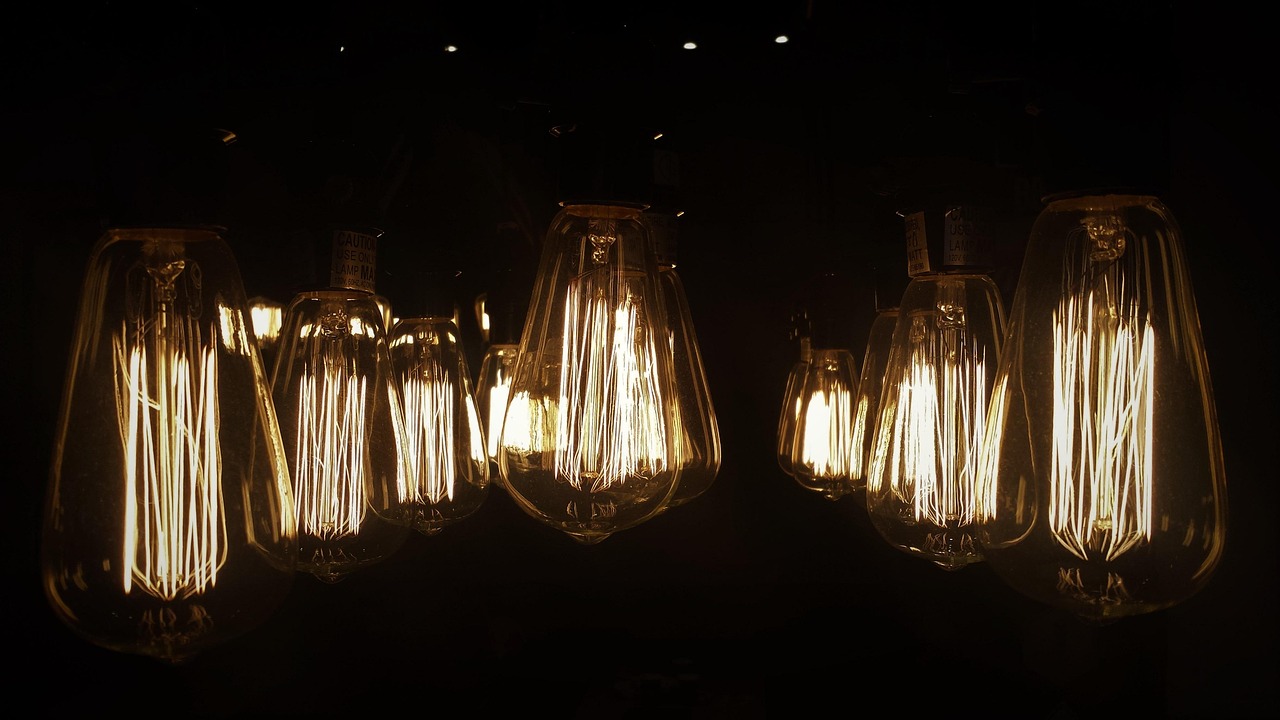
As the consumer lighting market continues to evolve, standard screw-in bulbs represent only a fraction of available options. Homeowners now encounter specialized LED formats, including integrated fixtures, color-tunable smart bulbs, and vintage-style Edison LEDs with exposed visible filaments.
Smart LEDs offer advanced programming capabilities, such as automated schedules, geofencing, and remote smartphone control. While smart bulbs carry a higher upfront purchase cost than basic non-smart LEDs, they can deliver additional energy savings by ensuring lights are never left burning in empty rooms. Motion-sensor integrated LEDs similarly optimize efficiency in hallways, pantries, and garages by activating only when movement is detected.
When assessing these specialty products, apply the same fundamental payback calculation. Weigh the additional cost of smart features or specialty housings against the specific convenience and operational savings they provide for your household routines.
Making the Smart Upgrade Decision
Evaluating whole-house lighting costs reveals a clear financial and operational advantage for modern residential LEDs. While the upfront investment requires minor capital, the combination of dramatically lower wattage draw, extended operating lifespans, and reduced replacement frequency ensures a rapid return on investment. By auditing your home’s high-use fixtures, selecting appropriate color temperatures, and verifying dimmer compatibility, you can permanently lower your household electricity consumption while enjoying brighter, more reliable illumination in every room.