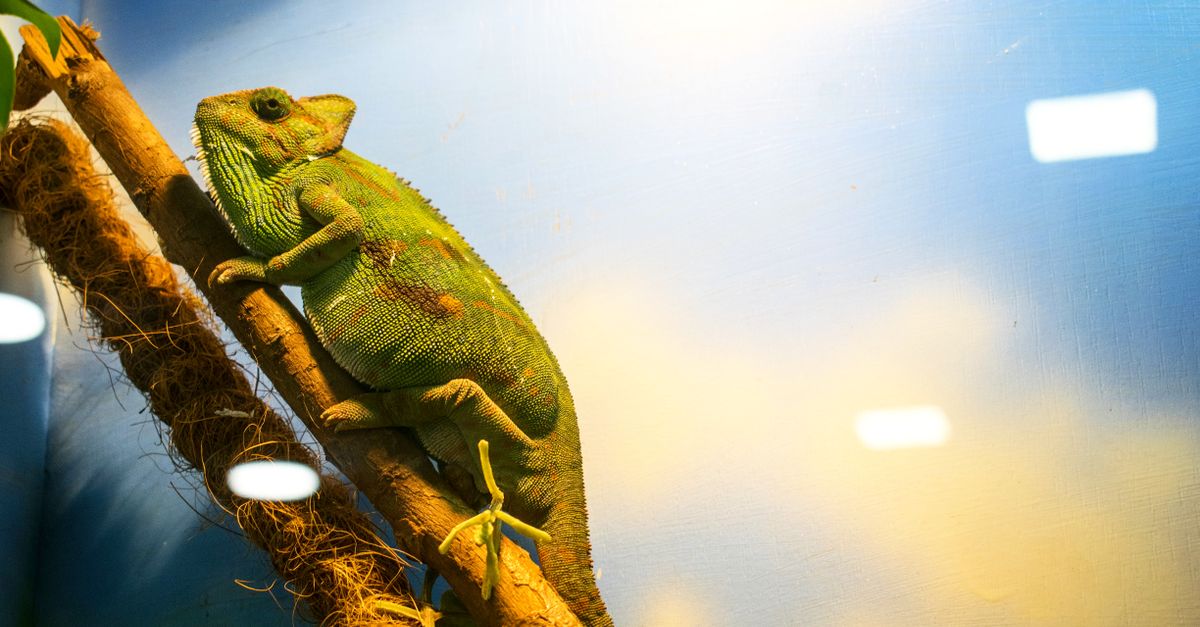
Creating a thriving indoor enclosure for an arboreal reptile requires precision, especially when tracking your pet chameleon temperature and habitat guide metrics. Unlike mammals that regulate their own body temperature internally, chameleons are ectothermic. They rely entirely on their surrounding environment to warm up, digest food, and maintain metabolic functions. In the wild, species like the veiled chameleon bask in sunlight to absorb solar radiation before moving into cooler, shaded foliage to cool off. Replicating this dynamic inside a captive terrarium is one of the most critical responsibilities a keeper faces.
Failing to establish a correct thermal gradient or mismanaging ultraviolet lighting can lead to severe health consequences, ranging from chronic respiratory infections to metabolic bone disease. Because captive enclosures are closed systems, minor miscalculations in bulb wattage or room air conditioning can cause dangerous spikes or drops in temperature. This guide breaks down the science and daily maintenance routines required to keep your pet’s thermal environment safe, stable, and biologically appropriate.
Understanding the Reptile Terrarium Thermal Gradient
A common mistake among beginner reptile owners is heating the entire enclosure to a single uniform temperature. In nature, a chameleon never experiences a uniform box of heat. Instead, they navigate a gradient ranging from a hot basking spot to a much cooler, shaded retreat near the bottom of the cage. Establishing this gradient is the cornerstone of responsible veiled chameleon habitat care.
Your enclosure should be tall rather than wide, reflecting the arboreal nature of these animals. The upper third of the cage houses the basking zone, while the lower third provides a cooler zone where the animal can escape the heat if its core body temperature rises too high. If the entire enclosure is too warm, the chameleon cannot cool down, leading rapidly to heat stress, dehydration, and organ failure. Conversely, if the overall ambient temperature is too low, the animal’s digestive system slows down, leading to impacted food and lethargy.
Mapping Your Enclosure’s Micro-Climates
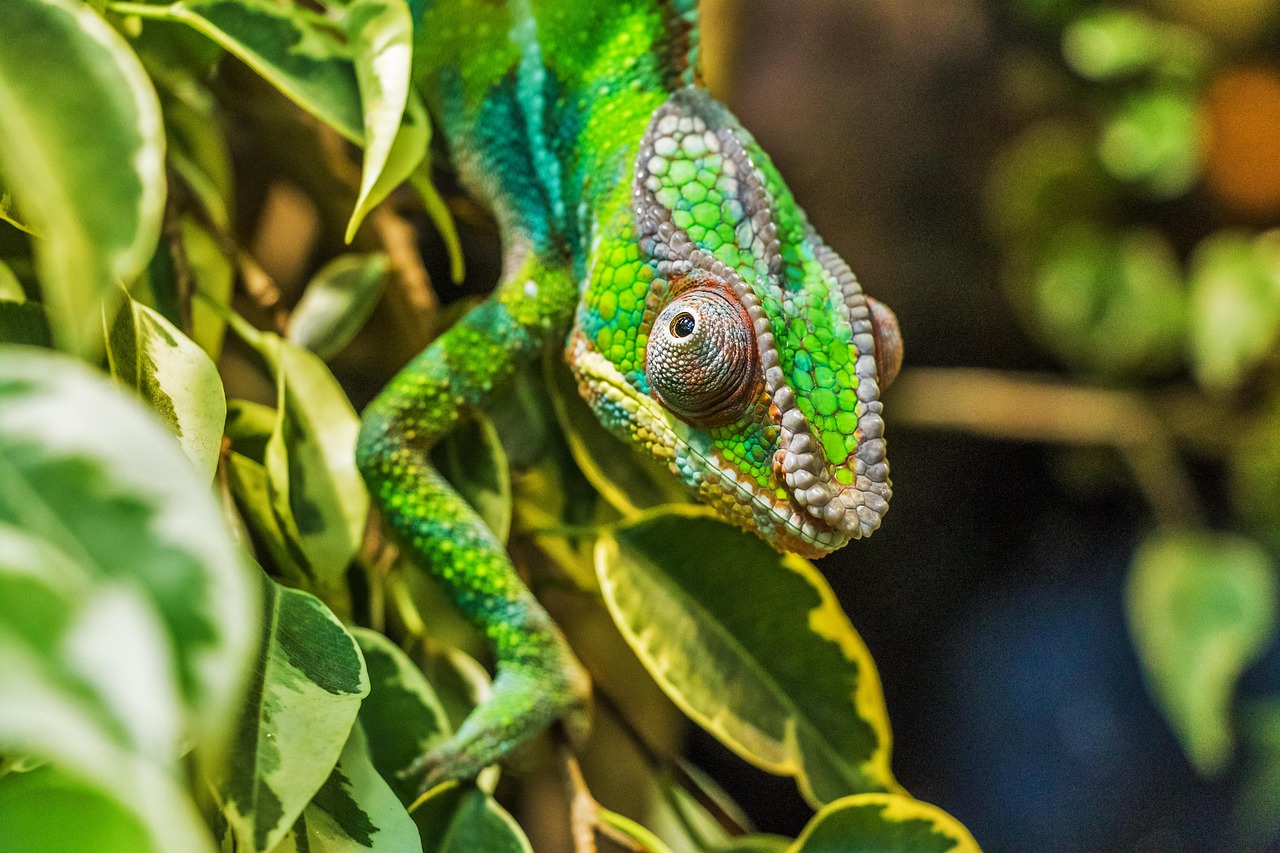
To establish a true arboreal gradient, look at your enclosure as a vertical matrix rather than a single living space. The topmost branches closest to the mesh ceiling receive the direct output of your heating and lighting elements. As you move downward through the vertical architecture—past intermediate branches and dense, leafy foliage—the ambient temperature naturally drops by several degrees. By arranging live plants like Ficus benjamina or Schefflera alongside sturdy horizontal vines, you give your chameleon absolute control over its thermoregulation. If it needs to digest a meal after a morning hunt, it moves upward into the primary basking zone. If it needs to conserve moisture or cool its core temperature during the afternoon peak, it descends into the lower, shaded understory.
Setting Up Basking Temperatures and Heating Elements
The basking spot is the engine of your chameleon’s daily metabolic routine. For popular captive species like veiled or panther chameleons, the basking surface should generally reach between 85 and 90 degrees Fahrenheit. However, the precise target depends heavily on the specific age, species, and individual health of your animal. Juveniles often require slightly different considerations than fully grown adults.
To achieve this, use a dedicated incandescent basking bulb housed in a ceramic-socket dome fixture. Avoid colored bulbs, nighttime heat emitters that emit visible light, or cheap spot bulbs that create dangerously intense, concentrated beams of heat. The bulb should be placed securely outside the screen top of the enclosure to prevent thermal burns. Chameleons have poor spatial awareness when it comes to heat sources and will often sit directly against interior mesh, failing to realize that a bulb can burn their sensitive skin or casque.
Avoiding Thermal Burns and Mesh Safety
Because captive chameleons lack the instinctual fear of artificial lamps found in home environments, they will readily climb upside down against the interior roof mesh directly beneath a high-wattage bulb. This proximity frequently causes severe, painful thermal burns on the top of the head, casque, or limbs. To eliminate this risk, always mount your heating elements externally, ensuring a physical barrier of at least three to six inches between the bulb and the mesh surface. Furthermore, choose lower-wattage flood bulbs that distribute heat over a wider surface area rather than high-intensity spot bulbs that concentrate extreme thermal energy into a tiny, hazardous pinprick.
The Crucial Role of UVB Lighting Schedules
Temperature management cannot be separated from lighting. To process calcium properly and prevent metabolic bone disease, your chameleon requires exposure to ultraviolet-B radiation. Without UVB, your pet cannot synthesize vitamin D3, rendering dietary calcium supplements useless.
You should always use a linear fluorescent UVB tube—such as a T5 HO fixture with a 5.0 or 6.0 rating—rather than coiled compact bulbs, which often provide unreliable or dangerously intense beams of radiation. The linear fixture should run along the top of the screen enclosure, covering roughly half to two-thirds of the cage length, parallel to the basking light. This ensures that whenever the chameleon chooses to bask, it receives both heat and UVB simultaneously.
Set your lighting on an automated household timer to mimic natural tropical day lengths. A consistent schedule of 12 hours on and 12 hours off helps regulate the animal’s hormonal cycles, feeding response, and natural sleeping patterns. Turn off all lights at night; chameleons require complete darkness and a natural temperature drop during sleeping hours to rest properly.
Understanding UV Index and Ferguson Zones
Chameleons belong to specific micro-habitats categorized by herpetologists into Ferguson Zones. Veiled chameleons originate from semi-arid to highland regions of Yemen and Saudi Arabia, typically classified within Zone 3, meaning they experience moderate to high levels of unfiltered sunlight in the wild. When recreating this indoors with a linear T5 HO fluorescent bulb, you must pay close attention to the distance between the fixture and the upper basking branch. A 5.0 or 6.0 tube should be mounted roughly 12 to 18 inches away from the primary basking perch, completely unobstructed by glass or plastic shielding, which blocks vital UVB wavelengths entirely. Over time, all fluorescent UVB bulbs degrade in their output even if they continue to emit visible light, necessitating replacement every 6 to 12 months.
Monitoring with Digital Thermometers and Hygrometers
You cannot manage what you do not accurately measure. Relying on adhesive strip thermometers stuck to the side of the glass or screen is a recipe for trouble, as these analog strips often read room temperature or glass temperature rather than the actual air and basking zones where the animal sits.
Invest in digital probe thermometers and a reliable hygrometer to track humidity levels. Place one temperature probe directly on the branch where the chameleon sits to bask, and place a second probe in the cool, lower zone of the terrarium. This gives you an instant reading of your thermal gradient. Check these numbers daily, especially during seasonal changes when household heating or air conditioning can shift baseline room temperatures unexpectedly.
Humidity is equally vital, particularly at night. While daytime humidity can drop to moderate levels (around 30 to 50 percent), nighttime humidity should naturally rise to 80 percent or higher as temperatures cool down. This spike mimics the natural dewfall in their native montane and coastal habitats, helping the animal stay hydrated through respiration.
Implementing Effective Misting and Hydration Cycles
Chameleons rarely recognize standing water in a bowl; they hydrate by drinking dew drops and water droplets rolling off leaves. Therefore, managing your habitat’s humidity and hydration relies heavily on automated or manual misting systems.
Mist the enclosure thoroughly twice a day—once early in the morning before the lights come on, and once after the lights go off in the evening. Each misting session should last long enough to thoroughly wet the foliage and allow the chameleon to drink its fill, typically lasting one to two minutes depending on your nozzle flow rate. Ensure the cage has time to dry out partially between sessions to prevent mold, bacterial growth, and stagnant air conditions that lead to respiratory illness.
Water Quality and Drainage Management
The water you use for misting matters immensely for your chameleon’s long-term health. Tap water containing high levels of heavy metals, chlorine, or dissolved mineral solids will rapidly leave crusty, unsightly white mineral deposits on your cage mesh, live plant leaves, and glass panels. More importantly, hard water deposits can irritate your chameleon’s sensitive eyes. Using a reverse osmosis (RO) system or distilled water mixed with vital mineral supplements prevents buildup and keeps your misting nozzles from clogging. Additionally, ensure your enclosure features a proper drainage collection tray at the bottom to catch runoff, preventing standing puddles that breed bacteria and attract fungus gnats.
Recognizing Early Signs of Heat Stress
Even with careful planning, ambient room temperatures can spike during summer heatwaves, putting your pet at risk. Recognizing the early warning signs of thermal distress can save your chameleon’s life. A chameleon suffering from excessive heat will often display distinct behavioral changes.
Watch for gaping—holding the mouth wide open while sitting on a branch. While occasionally used to regulate body temperature, persistent gaping in the upper enclosure is a clear indicator that the animal is dangerously overheated. Other signs include frantic pacing along the bottom of the cage, unusual daytime skin darkening, heavy breathing with visible chest movement, and seeking out the dampest, lowest corner of the enclosure.
If you notice these signs, immediately turn off the basking lamp, increase room ventilation, and offer a gentle misting of lukewarm water. Never submerge a stressed reptile in water, as this can cause shock or accidental drowning.
Dehydration vs. Heat Stress Indicators
It is common for novice keepers to confuse the subtle behavioral symptoms of chronic low-level dehydration with acute thermal stress. A dehydrated chameleon often exhibits sunken eyes, wrinkled or loose skin along its flanks, and yellow or orange-tinged urates (the solid white waste component excreted alongside droppings). If your pet displays sunken eyes paired with lethargy, inspect your misting duration and check your hygrometer readings immediately. Conversely, heat stress manifests rapidly through frantic movement, violent color shifts into dark, angry distress patterns, and persistent gaping. Keeping a detailed husbandry log helps you differentiate between a baseline hydration deficit and an immediate environmental temperature emergency.
Troubleshooting Common Environmental Challenges
Keeping environmental parameters stable requires ongoing attention. One common issue keepers face is nighttime temperatures dropping too low during winter months. If your home falls below 65 degrees Fahrenheit at night, you may need a low-wattage ceramic heat emitter connected to a thermostat to provide gentle, lightless warmth.
Another frequent challenge is screen blockage. If you use a solid wooden or glass cabinet modified for reptiles, airflow is restricted, causing humidity to trap and temperatures to soar. Always prioritize screen-mesh enclosures that provide maximum cross-ventilation. Stagnant, humid air is the fastest route to upper respiratory infections in arboreal species.
Managing Seasonal Room Fluctuations
As outdoor weather shifts from sweltering summer months to freezing winter conditions, your home’s HVAC system will drastically impact your chameleon’s indoor terrarium. Air conditioning draft vents blowing directly across a reptile enclosure can strip away essential humidity in minutes and drop ambient temperatures into dangerous ranges. Conversely, winter central heating can dry out the ambient air, making it difficult to maintain the required nighttime humidity spikes. Combat these seasonal shifts by using portable room humidifiers near the enclosure, installing draft deflectors on nearby air vents, and utilizing digital thermostats with night-drop capabilities to automate your heating elements safely year-round.
Frequently Asked Questions
Do chameleons need heat at night? In most residential settings, adult chameleons do not need supplemental heat at night as long as room temperatures remain above 65 degrees Fahrenheit. In fact, a natural nighttime temperature drop is beneficial for their metabolic resting phase.
How far away should my basking bulb be? The distance depends entirely on your bulb wattage and enclosure size, but generally, the basking branch should sit roughly 8 to 12 inches beneath an incandescent bulb, ensuring surface temperatures stay strictly within the 85 to 90 degree range.
Can I use glass tanks for chameleons? Standard glass aquariums are strongly discouraged for chameleons because they trap stagnant air, restrict cross-ventilation, and quickly foster respiratory infections. Full aluminum screen cages are the gold standard for arboreal species.
Conclusion
Providing a proper environment for your pet requires diligence, quality equipment, and a routine built on daily observation. By maintaining a clear thermal gradient, utilizing reliable digital monitoring tools, running proper linear UVB lighting schedules, and keeping a close eye on your reptile’s behavior, you create a safe captive habitat that supports a long, healthy life.