When square footage is at a premium, every single appliance in your apartment has to earn its keep. Clothing maintenance is a daily reality, yet the traditional gear required to keep your wardrobe looking sharp—a heavy iron and a clunky, unstable folding ironing board—feels entirely mismatched with modern urban living. This is where the debate over the portable clothes steamer vs ironing board becomes central to your household setup. If you are trying to decide whether to ditch the board entirely or keep both tools on hand, you need an honest look at how each system performs in tight quarters.
A portable clothes steamer relies on continuous high-temperature vapor to relax fabric fibers vertically, allowing gravity to pull out wrinkles while the garment hangs on a hook or closet rod. Conversely, a traditional ironing board provides a rigid horizontal surface backed by downward mechanical pressure and direct thermal conduction to press sharp creases into fabrics. Beyond the basic mechanics, these two approaches differ drastically in storage footprint, preparation time, fabric safety, and overall convenience for apartment dwellers. Evaluating these differences requires a hard look at your actual lifestyle, the layout of your home, and the types of garments you wear week in and week out.
Spatial Footprint and Storage Realities in Small Apartments
The most immediate constraint in any apartment is physical space. A standard full-size ironing board measures roughly 54 inches long by 15 inches wide, and even when folded flat, it remains an awkward, long object that rarely fits cleanly inside a standard clothes closet. Many renters resort to sliding it behind a sofa, wedging it between the refrigerator and the counter, or hanging it from a bulky over-the-door rack. Every time you want to touch up a shirt, you have to drag out a bulky metal frame, unfold locking legs, and find a clear radius in your living room or bedroom to maneuver the board.
In a compact studio or a one-bedroom apartment with limited closet space, this physical burden changes your behavior. When an appliance is difficult to set up and put away, you are naturally more likely to procrastinate on laundry care, leaving clean clothes wrinkled in a basket or wearing garments with visible creases because the friction of pulling out the board felt too high. The spatial penalty extends beyond storage; the operating footprint of an ironing board requires a clearance zone of at least four to five feet around it so you can comfortably move back and forth with a hot iron.
By contrast, a handheld garment steamer is roughly the size of a hair dryer or a small kettle. It slides easily onto a pantry shelf, tucks into a bathroom vanity cabinet, or sits inside a bedroom drawer without demanding dedicated floor space. For studio apartments, tiny lofts, or bedrooms where floor space is measured in inches, the physical storage advantage tilts heavily toward the steamer. Even premium travel-sized steamers weigh less than two pounds, meaning you can store them entirely out of sight and retrieve them in seconds. You do not need a designated utility room or a wide hallway to operate a steamer; any doorway, shower rod, or closet hook provides an instant vertical station.
Heat-Up Times and Daily Time Savings
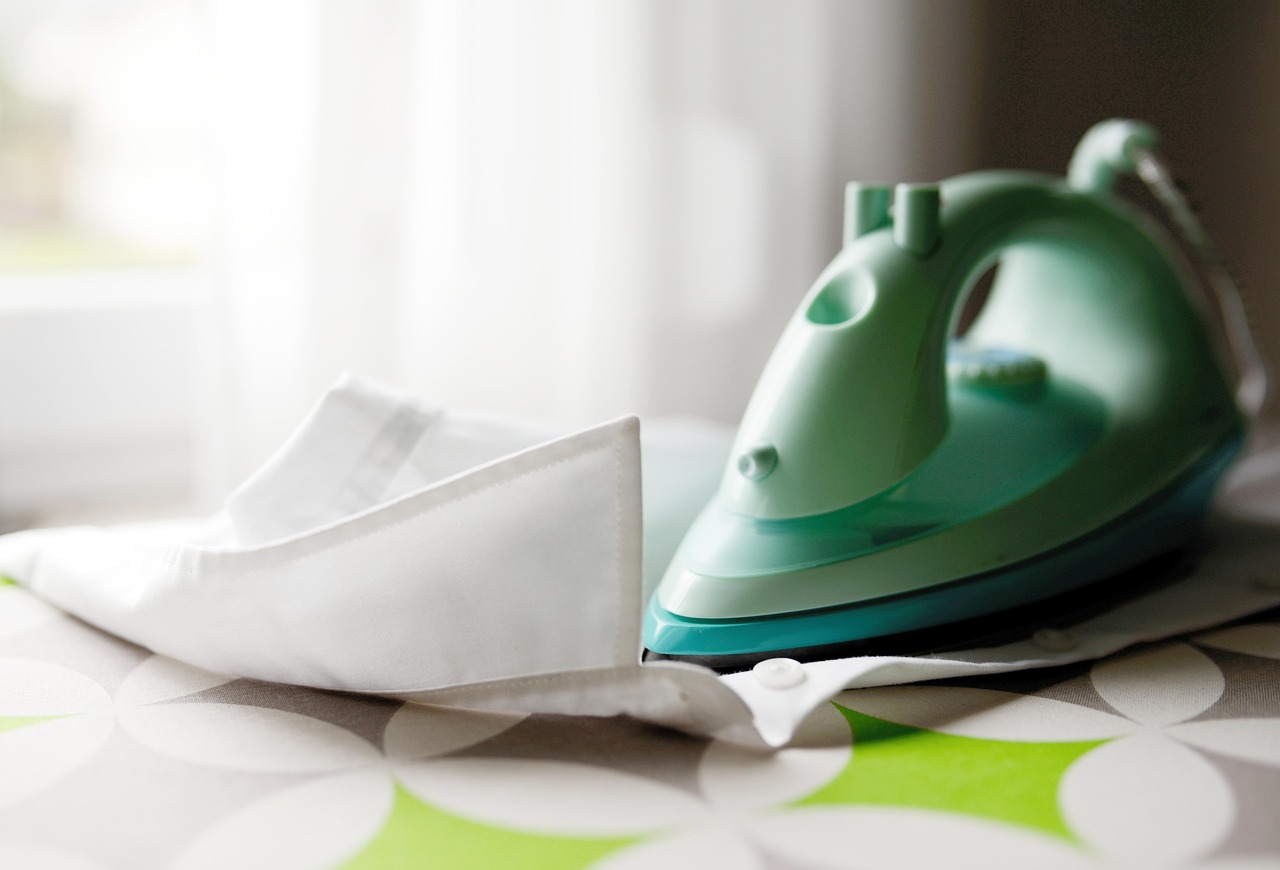
Time efficiency matters just as much as spatial efficiency, especially during hectic weekday mornings. A traditional iron and board setup requires a multi-step routine: unearthing the board, setting it up, plugging in the iron, filling the reservoir, and waiting anywhere from two to five minutes for the heavy metal soleplate to reach the correct temperature. If you need to iron multiple items, you also have to manage the cord and constantly reposition the garment across the tapered end of the board, smoothing out panels and ensuring you do not press new wrinkles into the back of a shirt while flattening the front.
Portable steamers streamline this workflow significantly. Most quality handheld units heat up within 30 to 60 seconds, converting water into a steady stream of pressurized vapor almost instantly. Because you steam garments directly on a hanger, you eliminate the mechanical friction of laying items flat, smoothing them out, flipping them, and fighting accidental creases. For a quick touch-up on a silk blouse, a rayon dress, or a casual button-down shirt, a steamer can have you looking put-together in under three minutes from start to finish. This speed transforms garment care from a dreaded chore into a low-friction habit you can easily manage before heading out the door.
Consider the cumulative time investment over a month. If an ironing board setup and teardown adds five minutes of friction to every laundry session, and you press clothes three times a week, you are spending an hour every month just wrestling with equipment. A steamer reduces that overhead to nearly zero. You simply hang the garment, power on the device, pass the steam head up and down the fabric for sixty seconds, and turn it off. For busy professionals and students living in compact spaces, this time-saving advantage is often the deciding factor.
Fabric Versatility and Wrinkle Removal Mechanics
While steamers win on speed and storage, they do not replace an iron in every scenario. Understanding how each tool interacts with different textiles is critical for maintaining your wardrobe over the long term. Steamers excel at handling delicate, textured, and synthetic fabrics that are easily scorched or flattened by direct heat. Fabrics like silk, chiffon, wool, velvet, cashmere, and polyester blends thrive under gentle steam because the vapor relaxes the weave without crushing delicate pile or leaving shiny press marks on dark trousers. If your wardrobe leans heavily toward athleisure, knitwear, lightweight blouses, and flowy dresses, a steamer treats your clothes with exceptional care.
On the other hand, traditional irons are unmatched when it comes to heavy cottons, stiff linens, and structured garments that require sharp, razor-thin creases. If you wear formal dress shirts with stiff cuffs and collars, or pleated trousers that demand crisp lines, a steamer will fall short. A steamer can eliminate general wrinkles from a cotton dress shirt, but it cannot replicate the knife-edge crease produced by the weight and direct heat of a heavy iron pressed against a padded board. The mechanical pressure of an iron forces fibers flat at a molecular level, whereas a steamer relies solely on moisture and heat to relax the fabric’s internal memory.
It is also worth noting how each tool handles tricky garment construction. Ruffles, pleats, ruching, and multi-layered garments are notoriously difficult to press with an iron because the soleplate tends to catch and create new creases. Steamers glide effortlessly over complex silhouettes, allowing vapor to penetrate multi-layered fabrics without flattening their dimensional details. Conversely, flat panels, heavy denim waistbands, and thick cotton pocket linings respond much better to the weighted downward pressure of a hot soleplate.
Steam Output Rates and Wattage Considerations for Fabrics
When shopping for a garment care tool for a small space, understanding the technical specifications—particularly wattage and steam output measured in grams per minute (g/min)—helps bridge the gap between marketing claims and real-world performance. Handheld steamers typically operate between 1,000 and 1,500 watts, producing a continuous steam output ranging from 15 to 25 grams per minute. Higher-end models deliver denser vapor that relaxes thick fabrics more efficiently, while travel units with lower wattages require slower, more deliberate passes over heavier materials.
Traditional irons, conversely, rely heavily on thermal mass and continuous power delivery, often drawing up to 1,800 watts to keep the soleplate hot. The energy distribution in an iron is concentrated through a flat metal plate, making contact-based heat transfer extremely effective for materials that require high thermal thresholds. When evaluating your apartment wardrobe, take inventory of your fabrics: if more than half of your hanging clothes consist of synthetic blends, knits, or lightweight weaves, a high-output handheld steamer provides more than enough thermal energy to keep your wardrobe crisp without risking scorched fibers or shiny patches.
Energy Consumption and Practical Maintenance
Apartment utility bills and appliance maintenance routines are practical considerations that often fly under the radar until something breaks down. Traditional irons typically draw between 1,000 and 1,800 watts of electricity, ramping up continuous power to keep a heavy metal soleplate hot. Handheld steamers generally operate in a similar wattage range, but because their operating cycles are much shorter due to faster preparation and execution times, they often consume less net energy per laundry session. You are not keeping a massive piece of aluminum or ceramic heated for ten or fifteen minutes while you reposition garments.
Maintenance, however, requires diligence for both tools. Tap water contains minerals that cause limescale buildup inside heating chambers and steam vents. Steamers are particularly sensitive to hard water; neglecting to empty the reservoir or failing to run periodic descaling solutions through a steamer can clog the microscopic nozzles and spit hot water droplets onto your clothes. Irons require similar care with self-cleaning functions, but their wider soleplates are easier to wipe down than intricate steam heads. Using distilled or filtered water in either device significantly extends its lifespan, preventing mineral scale from ruining your garments or choking the heating elements.
Another maintenance factor is storage hygiene. Because portable steamers and irons deal directly with water, leaving water sitting in the reservoir between infrequent uses can lead to stagnant odors or mold growth inside the tank. Developing a habit of emptying the water chamber immediately after every use takes less than ten seconds and ensures your equipment stays fresh and ready for the next laundry cycle.

Apartment Multi-Tasking: Using Steamers Beyond Your Wardrobe
One hidden advantage of owning a portable clothes steamer in a small apartment is its utility far beyond standard garment care. Because high-temperature steam naturally sanitizes and deodorizes surfaces, a handheld steamer doubles as a versatile multi-tasking tool for household upkeep where traditional ironing boards offer zero utility.
For instance, apartment renters dealing with stubborn curtain wrinkles can steam drapes directly while they hang on the living room rod, avoiding the exhausting task of taking down heavy window treatments just to wash and press them. Similarly, steamers work exceptionally well for refreshing upholstered accent chairs, sanitizing throw pillows, and neutralizing lingering cooking odors embedded in fabric headboards. This multi-functional capability makes a compact steamer far more valuable in tight quarters than a specialized ironing board, which serves strictly one purpose.
Comparing the Setup Options: At a Glance
To summarize how these two clothing care systems stack up across key apartment living metrics, consider the following direct comparisons:
- Storage Footprint: Steamers require minimal shelf or drawer space, while ironing boards demand dedicated vertical or linear clearance.
- Setup Friction: Steamers require a hanger and a power outlet; boards require unfolding, clearing floor space, and cord management.
- Crisp Creases: Irons deliver sharp structural lines; steamers relax fibers for a smooth, natural drape.
- Delicate Fabrics: Steamers protect silk, wool, and synthetics from scorching; irons risk melting or flattening textured weaves if misused.
- Portability: Steamers are lightweight and travel-friendly; full-size ironing boards are stationary and strictly bound to home use.
The Hybrid Approach: Tabletop Boards and Compact Irons
For apartment dwellers who find themselves caught in the middle—needing the crisp finish of an iron for workwear but lacking the floor space for a full-sized board—there is a thriving middle ground: the tabletop ironing board paired with a compact travel iron or a lightweight steam iron. These mini boards measure around 30 by 12 inches and feature folding legs that sit directly on top of a dining table, kitchen counter, or bed. When finished, they fold flat enough to slide underneath a bed or stash inside a coat closet.
While tabletop boards still require a flat horizontal surface and a brief setup routine, they eliminate the cumbersome metal legs and massive footprint of traditional floor models. Paired with a lightweight iron, this hybrid setup gives you the best of both worlds if your wardrobe requires structured collars and sharp creases, yet your square footage refuses to accommodate traditional laundry gear.
Frequently Asked Questions About Apartment Clothing Care
Can a portable steamer completely replace an iron?
For most casual wardrobes, yes. If your daily attire consists of athleisure, knitwear, denim, and casual shirts, a steamer handles all necessary wrinkle removal. However, if you wear formal business suits, pleated trousers, and stiff-collared cotton shirts, a steamer will not provide the sharp structural creases that an iron delivers.
Do handheld steamers leak water onto clothes?
Lower-quality steamers or units with mineral buildup can occasionally spit water droplets. To prevent this, always allow the steamer to reach its full operating temperature before pressing the steam button, use distilled water to prevent internal clogging, and avoid tilting the unit at an extreme angle during vertical steaming sessions.
How do I store a garment steamer safely in a small kitchen or closet?
Always ensure the water reservoir is completely emptied and the heating chamber has cooled down before stowing the device away. Most handheld units are compact enough to fit inside standard storage bins, bathroom vanities, or closet shelves alongside everyday toiletries or accessories.
Making Your Final Decision: Which Tool Fits Your Lifestyle?
Ultimately, choosing between a portable clothes steamer and a traditional ironing board depends entirely on the composition of your wardrobe and your lifestyle habits. If your weekly clothing rotation consists primarily of knitwear, athleisure, denim, casual button-downs, and delicate professional wear, a handheld garment steamer is likely all you need. It saves precious floor space, cuts your morning routine in half, and eliminates the physical nuisance of hauling out a folding board.
However, if your professional wardrobe demands heavy cotton dress shirts, tailored suits, and crisp, starched trousers, you will likely find a steamer frustratingly incomplete. In tight apartment spaces, some urban dwellers compromise by investing in a compact tabletop ironing board paired with a lightweight iron, gaining the crispness of traditional pressing without the massive footprint of a full-sized floor board. Assess your actual laundry habits honestly, and choose the setup that keeps your clothes looking sharp without cluttering your home.