Deciding between an electric kettle vs stovetop kettle often comes down to a simple daily kitchen ritual: how quickly you want your morning coffee or evening tea, and how much you care about countertop space versus stove burner availability. While both appliances achieve the exact same end goal of boiling water, the underlying mechanics, energy efficiencies, and user experiences differ dramatically.
Electric kettles have surged in popularity across American kitchens due to their sheer speed and precision features, such as variable temperature settings for green tea or French press coffee. However, traditional whistling stovetop kettles retain a loyal following for their durability, aesthetic charm, and ability to sit indefinitely on a burner without taking up precious counter space. To make the right purchasing decision for your household, you need to look past the marketing claims and examine how these two types of water heaters actually perform in everyday use.
The Physics of Boiling: Direct Heating vs. Conduction
To understand why an electric kettle generally outperforms a stovetop model in speed, you have to look at how each device transfers thermal energy to the water.
A countertop electric kettle contains a concealed heating element embedded directly into the base of the water chamber. When you switch the unit on, electrical resistance rapidly heats that internal coil, transferring heat straight into the water surrounding it. Because the heat source is fully immersed or directly bounded by the water container, very little thermal energy escapes into the surrounding room. Most electric kettles operate between 1,200 and 1,500 watts, focusing that concentrated electrical energy into a relatively small volume of liquid.
Advanced electric kettles even incorporate precise internal thermostats and microprocessors, sometimes using PID (Proportional-Integral-Derivative) controllers to regulate power output as water approaches the target temperature. This prevents violent rolling boils that overshoot delicate brewing thresholds, ensuring exact thermal control for specialized green, white, oolong, and black teas.
A stovetop kettle, on the other hand, relies on indirect heat transfer. Whether placed on a gas flame, a glass-ceramic electric radiant cooktop, or a modern induction range, the burner must first heat the heavy metal base of the kettle by conduction or flame contact. During this process, a significant amount of thermal energy radiates outward into the kitchen air rather than entering the water. Gas burners are particularly inefficient in this regard, as open flames often lick up the sides of the kettle, heating the kitchen more than the contents inside. Even smooth-top electric ranges experience lag time as the heavy glass element slowly reaches peak operating temperature. Induction cooktops perform better than traditional electric coils or gas burners because they use magnetic fields to heat the kettle’s base directly, but they are still bound by the thermal mass of the vessel itself.
Boiling Speed Benchmarks: Measuring the Minutes
Time is usually the primary driver for buyers switching from a stove to a dedicated appliance. In practical terms, a standard 1,500-watt electric kettle will bring four cups (roughly one liter) of water to a rolling boil in about four to five minutes, starting with cold tap water. If you are only boiling two cups for a single mug of tea, that time drops closer to two and a half or three minutes.
A traditional stovetop whistling kettle heating the exact same volume of water on a standard medium-to-high gas or electric burner typically takes anywhere from eight to twelve minutes. The discrepancy widens even further if you use a heavy cast-iron or thick multi-clad stainless steel stovetop kettle, which requires extra thermal mass to heat up before the water even begins to warm.
For households that boil water multiple times a day—for oatmeal, pasta prep shortcuts, tea, and French press coffee—those accumulated minutes represent a noticeable efficiency gain. The speed advantage of a countertop appliance eliminates the passive waiting time associated with watching a stove.
Energy Consumption and Utility Cost Analysis
Speed is closely tied to energy consumption. A common misconception is that plugging a high-wattage appliance into your wall outlet consumes more electricity than running a stove burner. In reality, energy use is a function of power draw multiplied by time.
An electric kettle draws roughly 1,500 watts, but because it completes the boiling cycle in roughly four minutes, its total energy expenditure per boil is relatively low. A standard electric stovetop burner might draw 1,200 to 2,000 watts, but because it takes twice as long to heat the water through a secondary medium, it consumes significantly more kilowatt-hours (kWh) per boiling session.
Gas stovetops introduce a different fuel dynamic. Natural gas is priced by the therm, and while gas burners provide instant visual feedback, open-flame heating wastes a high percentage of thermal energy into the ambient kitchen space. Furthermore, burning natural gas indoors introduces combustion byproducts, whereas electric countertop appliances produce zero indoor emissions.
When you calculate the pennies per boil, the differences on your monthly utility bill will not break your budget either way. However, from a pure thermodynamic efficiency standpoint—meaning the percentage of generated heat that actually enters the water—the enclosed electric kettle wins by a wide margin.
Energy Efficiency Breakdown:
- Electric Kettles: High thermal efficiency (80% to 90% of energy heats the water). Low run time.
- Electric Stovetops: Moderate thermal efficiency, hampered by burner heat-up times and radiant loss.
- Gas Stovetops: Lower overall efficiency due to heat escaping around the perimeter of the kettle base.
Countertop Footprint and Kitchen Ergonomics
While performance metrics favor the countertop appliance, kitchen real estate is a finite resource. This is where the stovetop kettle holds a distinct advantage.
A typical electric kettle requires a permanent home on your countertop, along with proximity to a wall outlet. Even cordless models that lift off a 360-degree base still demand a footprint of roughly six by eight inches of counter space. In smaller apartments, galley kitchens, or homes with minimal counter clearance, adding another plugged-in appliance can exacerbate clutter.
Stovetop kettles, conversely, live on your stove. When you are not using them to boil water, they sit quietly on a burner, taking up zero extra kitchen workspace. If you need the burner for cooking dinner, the kettle can be temporarily moved to a back counter or stored inside a cabinet.
Ergonomically, however, electric models offer superior daily usability. They feature balanced handles designed specifically for comfortable pouring, push-button lid releases, and automatic shutoff mechanisms that trigger the moment the water reaches a rolling boil. You never have to worry about forgetting an electric kettle and boiling it dry, whereas a stovetop whistling kettle requires you to listen for the audio cue and manually turn off the burner.
Material Breakdown: Stainless Steel, Glass, Ceramic, and Plastic
When selecting either an electric or stovetop kettle, the material composition dictates both durability and taste profile. Understanding what your kettle is made of helps prevent unwanted flavor transfer and structural degradation over years of use.
Food-Grade Stainless Steel: The industry standard for both stovetop and electric models. Stainless steel is virtually indestructible, resistant to rust, and does not leach flavors into the water. However, uninsulated single-wall stainless steel kettles can become extremely hot to the touch on the outside.
Borosilicate Glass: Popular in modern electric kettles, glass lets you watch the boiling process and eliminates concerns about metallic tastes. Borosilicate glass handles thermal shock well, but it requires careful handling to avoid accidental chips or cracks against granite countertops.
Ceramic and Enameled Iron: Mostly found in stovetop kettles and select high-end electric models, these offer vibrant aesthetic choices and classic kitchen charm. They retain heat exceptionally well, but porcelain enamel can chip if dropped, and cast-iron models are quite heavy.
Plastic Components: While rare for an entire main chamber nowadays due to consumer health preferences regarding BPA and microplastics, some budget electric kettles feature plastic water windows or internal lid liners. Look for models explicitly marketed as BPA-free or constructed entirely of metal and glass.
Durability, Maintenance, and Build Quality
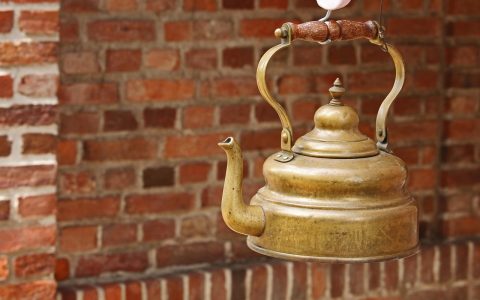
Longevity is an important consideration when evaluating kitchen goods. Stovetop kettles are mechanical workhorses. Because they contain zero electrical components, digital displays, or internal thermostats, they can last for decades. A basic stainless steel or enameled stovetop kettle has virtually nothing to break; even if the handle loosens, a simple screwdriver tightens it back up.
Electric kettles introduce electronics into a high-moisture, high-heat environment. Steam exposure near the handle switch, mineral buildup (limescale) on the internal heating element, and base connection wear can eventually cause failure after several years of heavy use. High-end electric kettles with variable temperature control and digital readouts feature more internal components that can potentially malfunction over time.
Mineral scale is a universal maintenance issue for both types of water heaters, particularly in regions with hard water. However, electric kettles with exposed or concealed coils often require more frequent descaling with a vinegar-and-water solution or commercial descaling powder to prevent mineral crust from interfering with the automatic shutoff sensor.

Safety Features and Risk Factors
Kitchen safety involves both passive design and active user habits. Electric kettles excel in passive safety through built-in auto-shutoff features. If a user turns on an electric kettle and walks away, the unit automatically cuts power seconds after reaching a boil, and it will also shut off if it detects an empty chamber (boil-dry protection).
Stovetop kettles require active vigilance. If you get distracted and leave a whistling kettle on a gas or electric burner after the water boils away, the bottom can scorch, warp, or ultimately pose a serious fire hazard. Additionally, stovetop kettles remain hot long after the burner is turned off, increasing the risk of accidental contact burns if someone brushes against the hot metal body on the stove.
On the other hand, electric kettles have power cords that can occasionally be snagged by children or pets, potentially pulling a vessel of boiling water off the counter. Cord management is a necessary consideration if you have a busy kitchen with small children, and selecting models with short, heavy-duty cords helps mitigate this risk.
Decision Framework: Which Kettle Fits Your Kitchen?
To determine whether you should buy an electric countertop model or stick with a traditional stovetop vessel, evaluate your daily habits against these four practical criteria:
- Beverage Habits: If you drink specialty teas that require precise water temperatures (such as green tea at 175°F or black tea at 212°F), an electric kettle with variable temperature control is practically mandatory. If you only boil water occasionally for standard tea or instant oatmeal, a stovetop model suffices.
- Counter Space: If your kitchen counters are already crowded with coffee makers, air fryers, and toasters, adding an electric kettle may create unwanted clutter. A stovetop kettle keeps your counters clear.
- Boiling Frequency: If you boil water four or more times daily, the speed and energy savings of an electric kettle quickly pay off in convenience.
- Appliance Longevity: If you prefer buy-it-for-life kitchen tools that last a lifetime without electronic failure, a simple stainless steel stovetop kettle is the better investment.
Common Buyer Mistakes to Avoid
When shopping for either type of kettle, consumers often fall into a few predictable traps. First, buying an electric kettle with a cheap plastic water chamber rather than glass, ceramic, or food-grade stainless steel can lead to undesirable taste transfer in your water. Second, ignoring the handle ergonomics on stovetop kettles often leads to awkward, wrist-straining pours over hot burners. Third, failing to check the minimum fill line on electric kettles can lead to burned-out heating elements if the unit is run nearly empty. Finally, assuming all stovetop kettles work on induction ranges is a costly mistake; buyers with induction cooktops must verify that the kettle base contains magnetic stainless steel.
Frequently Asked Questions
Do electric kettles use more electricity than a microwave?
Electric kettles typically draw between 1,200 and 1,500 watts, which is comparable to a standard kitchen microwave. However, because electric kettles heat water via a dedicated element surrounded directly by the liquid, they are often more energy-efficient for boiling full cups of water than microwaving individual mugs sequentially.
Can you use a stovetop kettle on an induction cooktop?
Only if the kettle base is made of magnetic metal, such as cast iron or magnetic stainless steel. Pure copper, aluminum, or standard non-magnetic stainless steel kettles will not function on an induction burner unless they feature an integrated induction-compatible bottom plate.
How do I clean mineral scale out of my kettle?
Mix equal parts white vinegar and water, fill the kettle, bring it to a boil, and let it sit for 30 to 60 minutes. For electric kettles, do not submerge the base in water. Rinse thoroughly and boil plain water once or twice afterward to remove any residual vinegar taste.
Conclusion
The choice between an electric kettle and a stovetop kettle ultimately highlights a trade-off between modern convenience and minimalist simplicity. Electric kettles deliver unmatched boiling speed, superior energy efficiency, precise temperature control, and safety auto-shutoffs, making them the ideal choice for dedicated tea and coffee drinkers. Stovetop kettles offer timeless durability, zero countertop footprint, and rugged reliability for cooks who do not mind waiting a few extra minutes. Assess your counter space, boiling frequency, and brewing preferences to select the kettle that best serves your daily kitchen routine.